Habitat
 Depth
 Group
 Role
WHAT DOES IT LOOK LIKE?
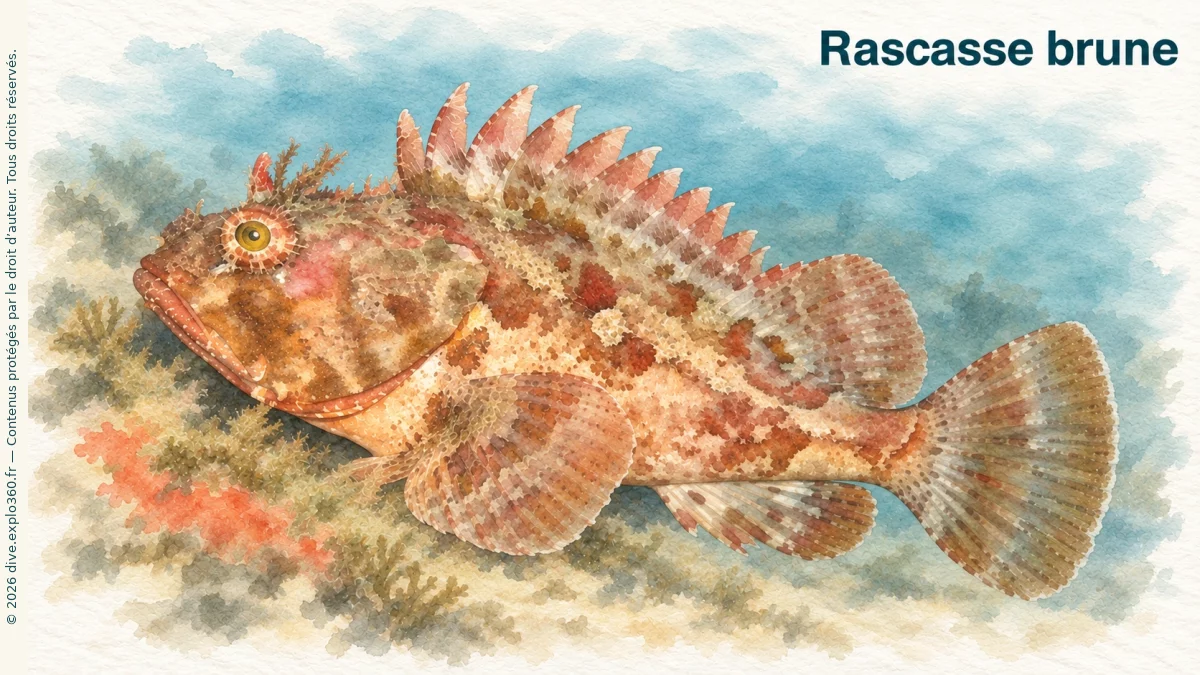
This scorpionfish often measures twenty-two to twenty-five centimetres and may approach thirty. Its massive head has a large mouth, ridges and spines. Numerous small skin flaps complement the body’s mottled pattern.
The two long flaps above the eyes are characteristic. None hang beneath the lower jaw, unlike in the red scorpionfish. Body scales are small and numerous. Colour is usually brown but may become pinker, violet or red, and three dark bands often cross the tail.
WHERE DOES IT LIVE?
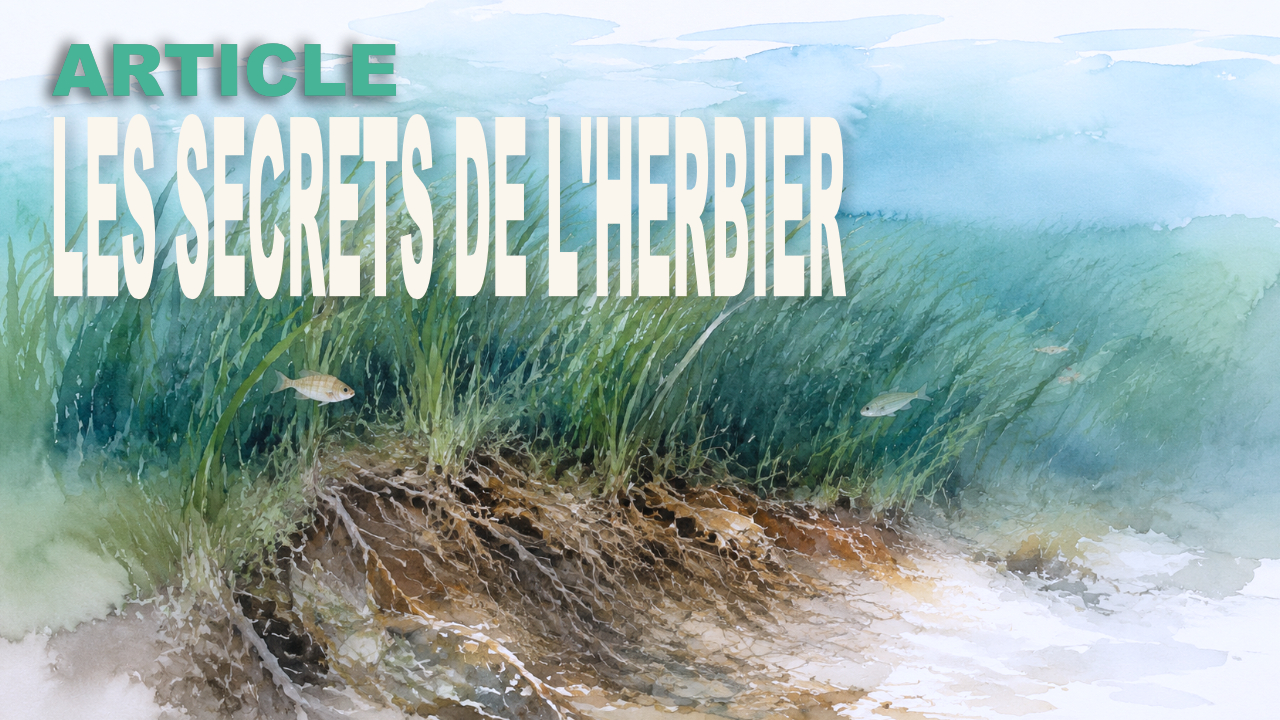
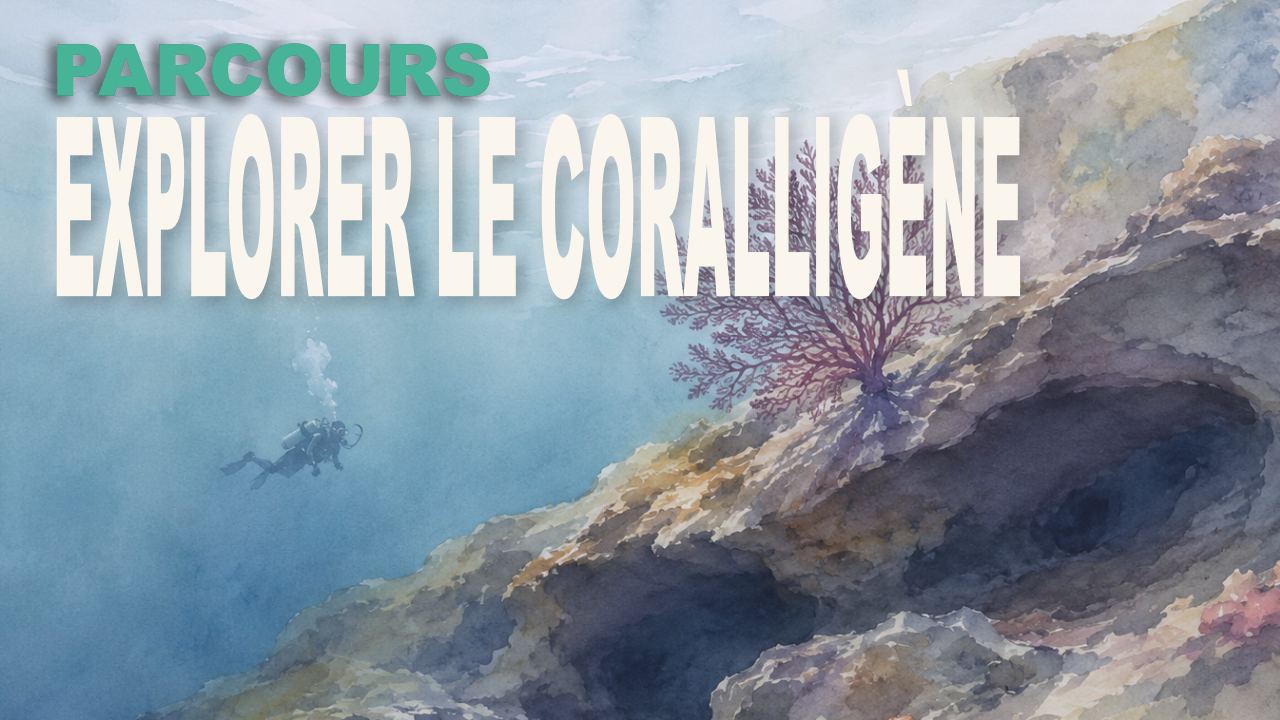
It lives on algae-covered rocky ground, in seagrass meadows, some lagoons and coralligenous habitats, structures built partly by lime-producing algae. Divers frequently encounter it between five and twenty metres; it also occurs deeper.
Its range includes the Mediterranean, Black Sea and eastern Atlantic. It is often solitary and sedentary, remaining within an area rather than making long journeys.
WHAT DOES IT EAT?
It waits for prey to come within reach, then captures it in a brief attack. Crustaceans, including crabs and shrimps, and small fishes such as blennies and gobies make up its diet.
Studies show that these resources do not contribute equally everywhere. In the Gulf of Valencia, an examination of 230 black scorpionfish revealed the importance of crustaceans, notably crabs, in the observed diet.
GO FURTHER WITH AMIGANSEAU
Unlock the full profile
Deepen your knowledge with the exclusive chapters and interactive resources included in an AMIGANSEAU licence.
- HOW DOES IT REPRODUCE?
- OUR OBSERVATIONS
- ARTICLE
Also included in the full profile
- Advanced navigation between description, ecological context, observations and behaviour
- Interactive food chain to explore the species’ feeding relationships