Habitat
 Depth
 Group
 Role
WHAT DOES IT LOOK LIKE?
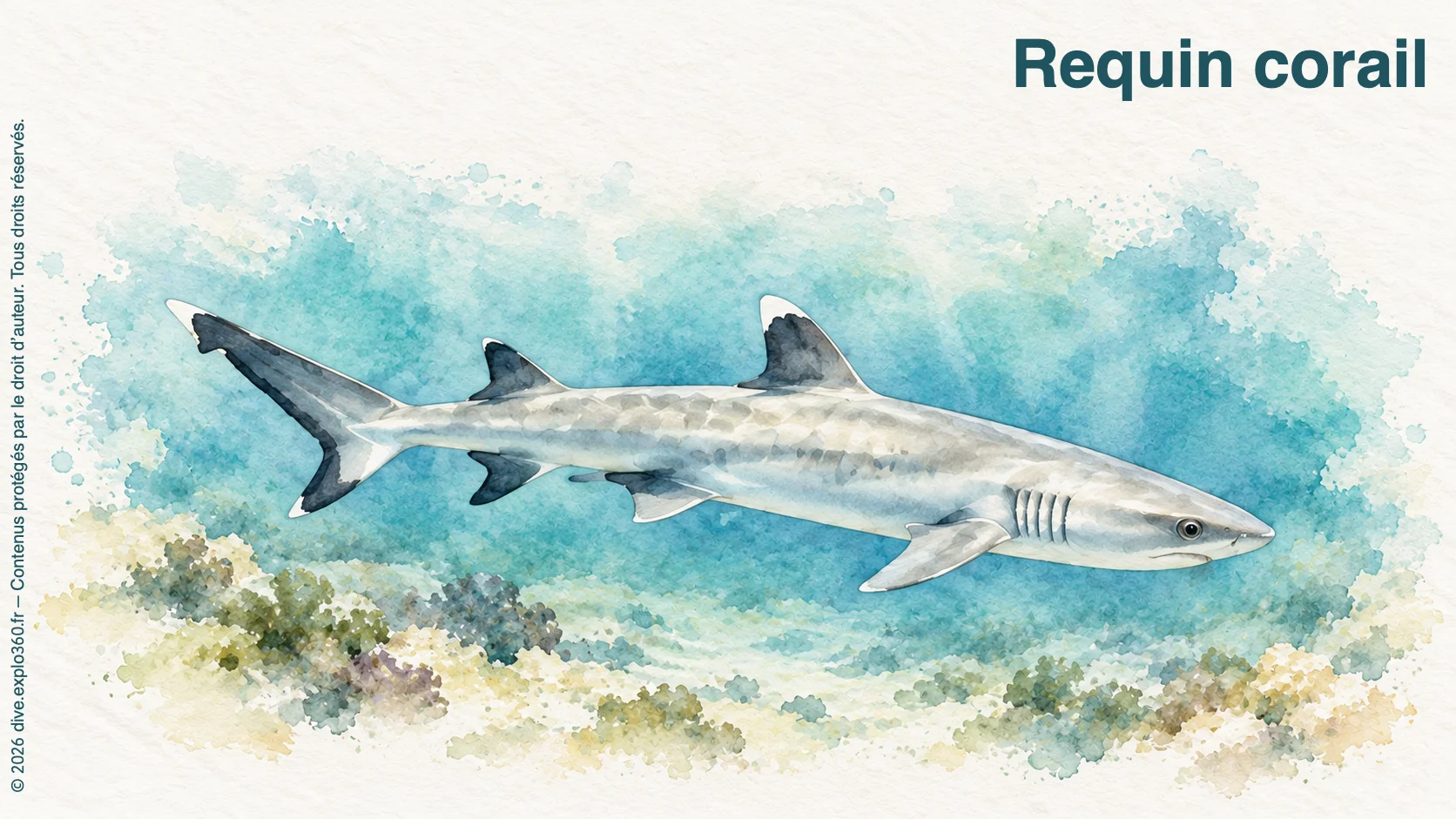
The slender body and short, broadly rounded snout accompany white tips on the first dorsal fin and upper tail lobe. The second dorsal fin is relatively large. Most individuals are below 1.6 m, with a published maximum of 2.13 m.WHERE DOES IT LIVE?
It occupies coral reefs and structures with cavities, where several individuals may rest together. It can ventilate its gills while stationary. Its natural range includes the Red Sea and tropical Indo-Pacific.WHAT DOES IT EAT?
Prey include fishes, cephalopods and crustaceans. The slender, flexible body assists exploration of reef cavities. Prey groups are documented, but the footage shows neither a capture nor a particular consumed species.GO FURTHER WITH AMIGANSEAU
Unlock the full profile
Deepen your knowledge with the exclusive chapters and interactive resources included in an AMIGANSEAU licence.
- HOW DOES IT REPRODUCE?
- OUR OBSERVATIONS
Also included in the full profile
- Advanced navigation between description, ecological context, observations and behaviour
- Interactive food chain to explore the species’ feeding relationships
- Infographic and illustrated summary profile