Habitat
 Depth
 Group
 Role
WHAT DOES IT LOOK LIKE?
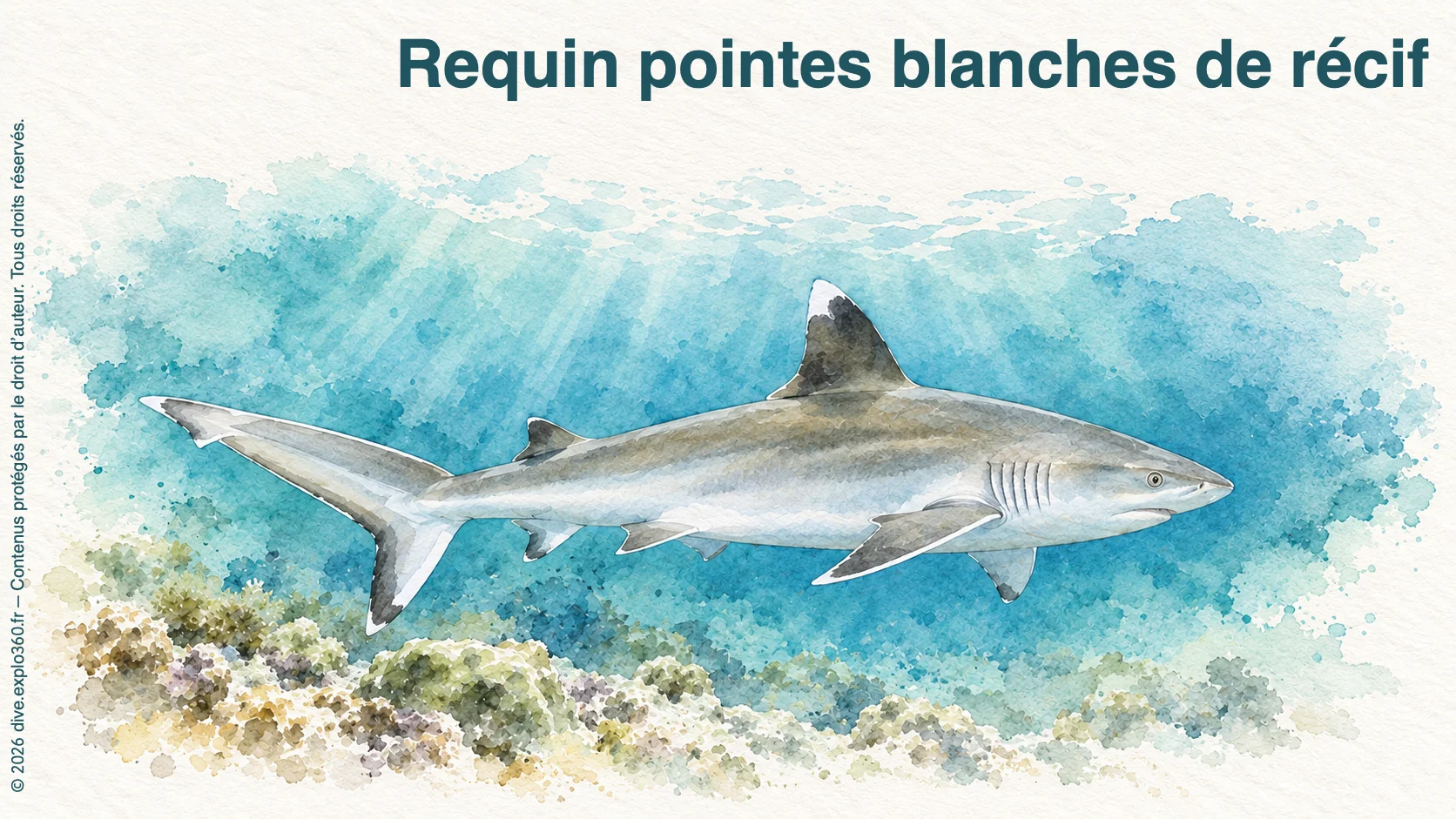
The grey-to-grey-brown body has a pale underside and white tips on the first dorsal, pectoral and caudal fins. An interdorsal ridge is present. The second dorsal is much smaller than the first. Published maximum length is about 3 m.WHERE DOES IT LIVE?
It occupies continental shelves, offshore islands and outer reefs. Adults range widely, while juveniles use shallower coastal waters more often. Its presence in the Maldives does not mean it is endemic there.WHAT DOES IT EAT?
Its diet includes benthic and pelagic fishes, rays and cephalopods. Feeding links retain their documented precision: no link to the filmed manta or a particular ray is created without evidence for that relationship.GO FURTHER WITH AMIGANSEAU
Unlock the full profile
Deepen your knowledge with the exclusive chapters and interactive resources included in an AMIGANSEAU licence.
- HOW DOES IT REPRODUCE?
- OUR OBSERVATIONS
Also included in the full profile
- Advanced navigation between description, ecological context, observations and behaviour
- Interactive food chain to explore the species’ feeding relationships
- Infographic and illustrated summary profile