


Partners and information

Contact us

Verification code

Blacktip reef sharkProtected

Distribution : Maldives and tropical Indian Ocean. Also found in the Red Sea and tropical Pacific. Also recorded at Waigeo in the Raja Ampat archipelago.

A decade after French Polynesia banned shark fishing, the findings of a nine-year survey around Moorea appeared in a scientific journal in 2023. Researchers had examined ten coastal areas to understand where young blacktip reef sharks were most frequently found. Their densities remained broadly stable over time, yet two areas consistently stood out for their higher concentrations. Behind those figures lies a more precise question: what makes one stretch of shoreline particularly attractive to the young of this species?

Images being acquired · Your video or photos here

Habitat of Blacktip reef shark Habitat
Coral reef, Sand
Depth range of Blacktip reef shark Depth
0-70 m
Biological group of Blacktip reef shark Group
Ecological role of Blacktip reef shark Role
Predator

Size

Often 1–1.5 m; up to about 2 m

Good to know

This species is legally protected in the Maldives. Observe from a distance without feeding, chasing or contact. Follow site guidance and leave a clear route.

WHAT DOES IT LOOK LIKE?

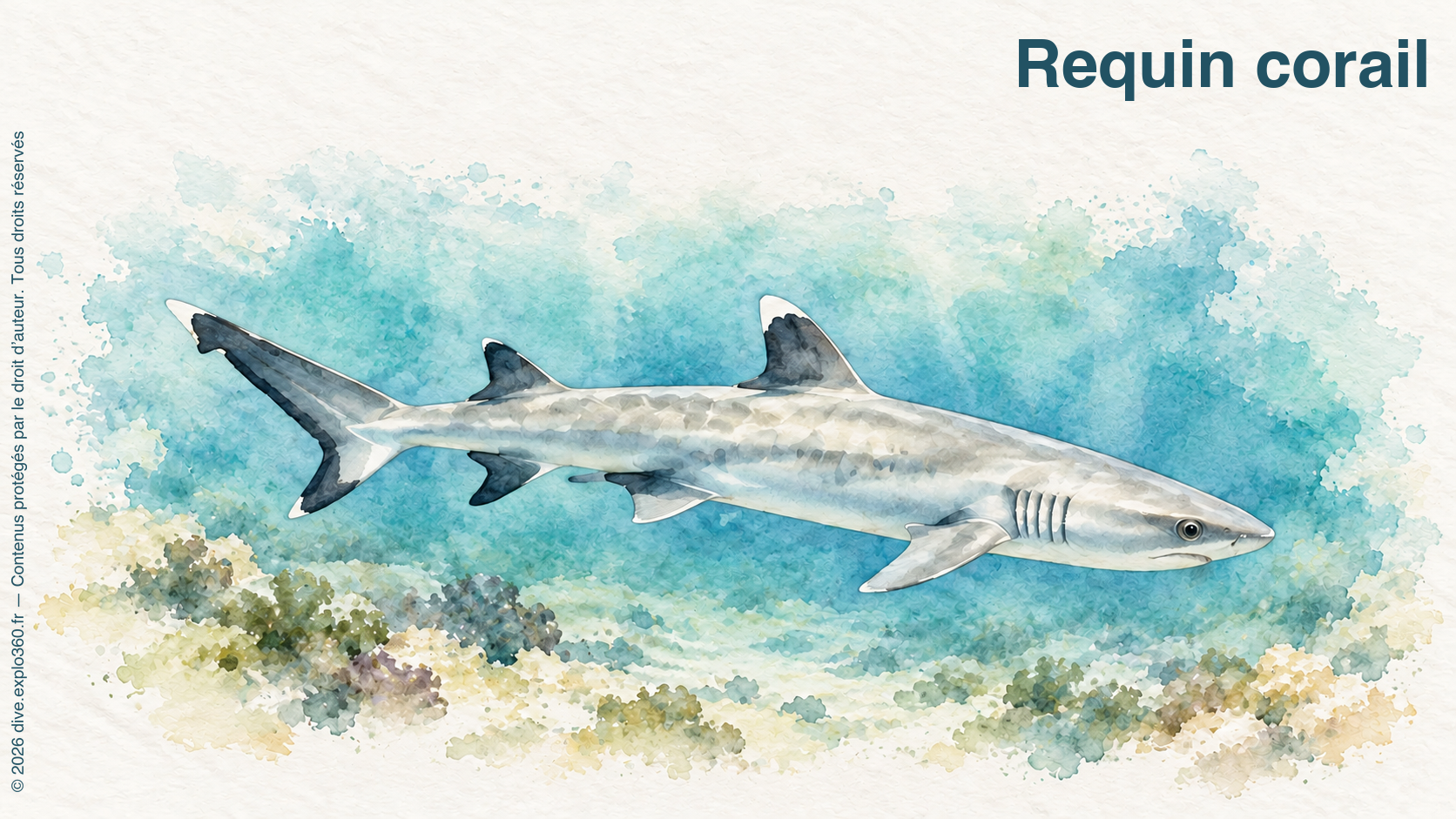
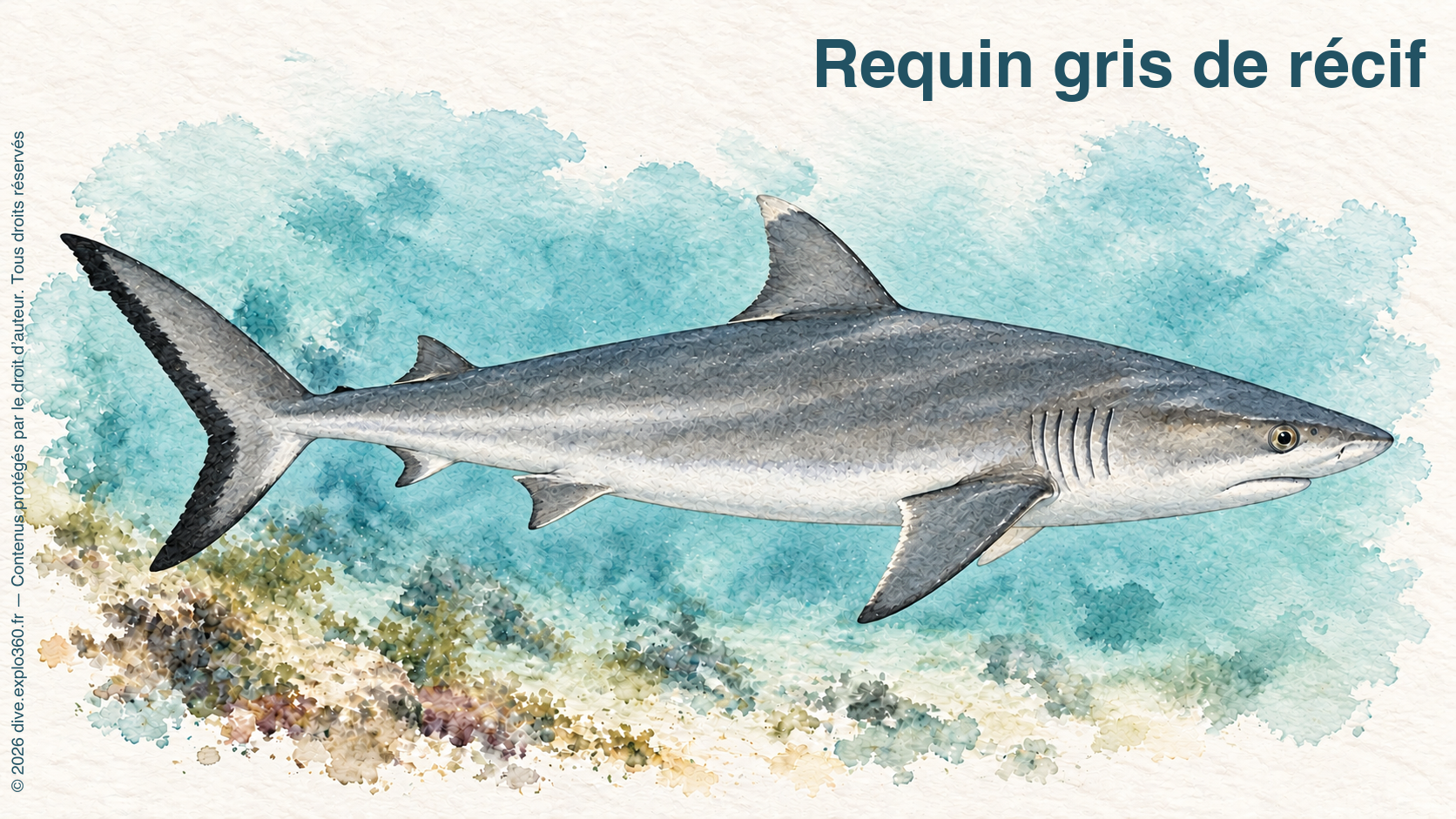
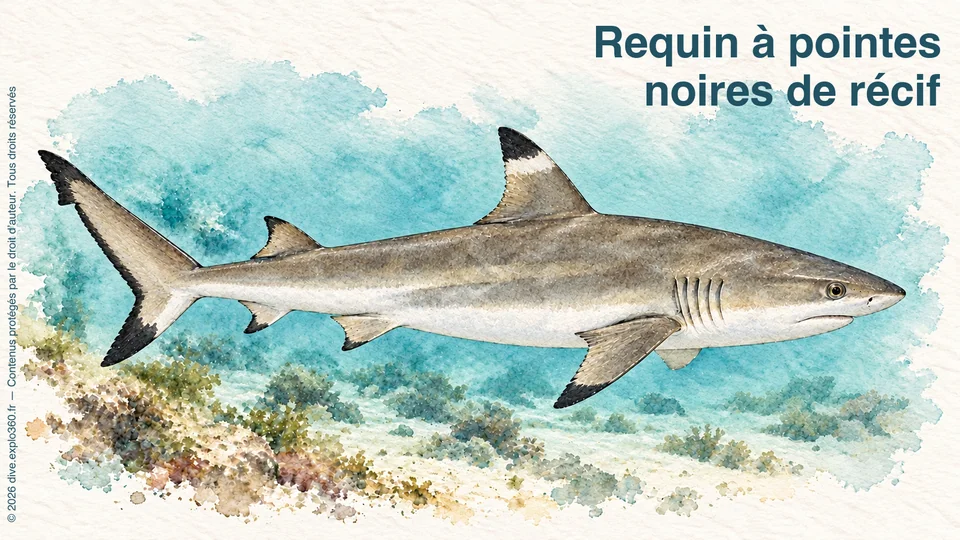
The black tip broadly outlined in pale colour provides a feature of the blacktip reef shark (Carcharhinus melanopterus). It caps the first back fin above a streamlined greyish-brown and white body. The tail has a longer upper lobe. Maximum length is about two metres.

WHERE DOES IT LIVE?

It uses lagoons and shallow reefs. Young sharks may swim very close to shore in very little water. Its range includes the Maldives, Red Sea and tropical Indo-Pacific. Adults also use deeper water.

Records extend to about 70 metres. Coastal habitat must be understood through its connections to channels and reefs. One beach does not represent the whole habitat.

WHAT DOES IT EAT?

Fish, crustaceans and molluscs provide food for the blacktip reef shark. Fish are important, while cephalopods and other invertebrates broaden its resources. The jaws carry narrow serrated teeth for seizing food.

GO FURTHER WITH AMIGANSEAU

Unlock the full profile

Deepen your knowledge with the exclusive chapters and interactive resources included in an AMIGANSEAU licence.

Choose my licence
  • HOW DOES IT REPRODUCE?
  • OUR OBSERVATIONS
  • ARTICLE

Also included in the full profile

  • Advanced navigation between description, ecological context, observations and behaviour
  • Interactive food chain to explore the species’ feeding relationships
An active licence gives access to enriched profiles and AMIGANSEAU exploration tools.
Blacktip reef shark

Understand the species

What is this species’ ecological role?

AMIGANSEAU Explorer Premium

Access enriched species profiles with advanced content (audio, infographics and detailed articles).

Explore all species easily through a single interface.

Enjoy a smooth, fast learning experience suited to every level.

🔒 The full profile is available with a paid subscription only.

Discover licences

POURSUIVRE L’EXPLORATION

Explore further

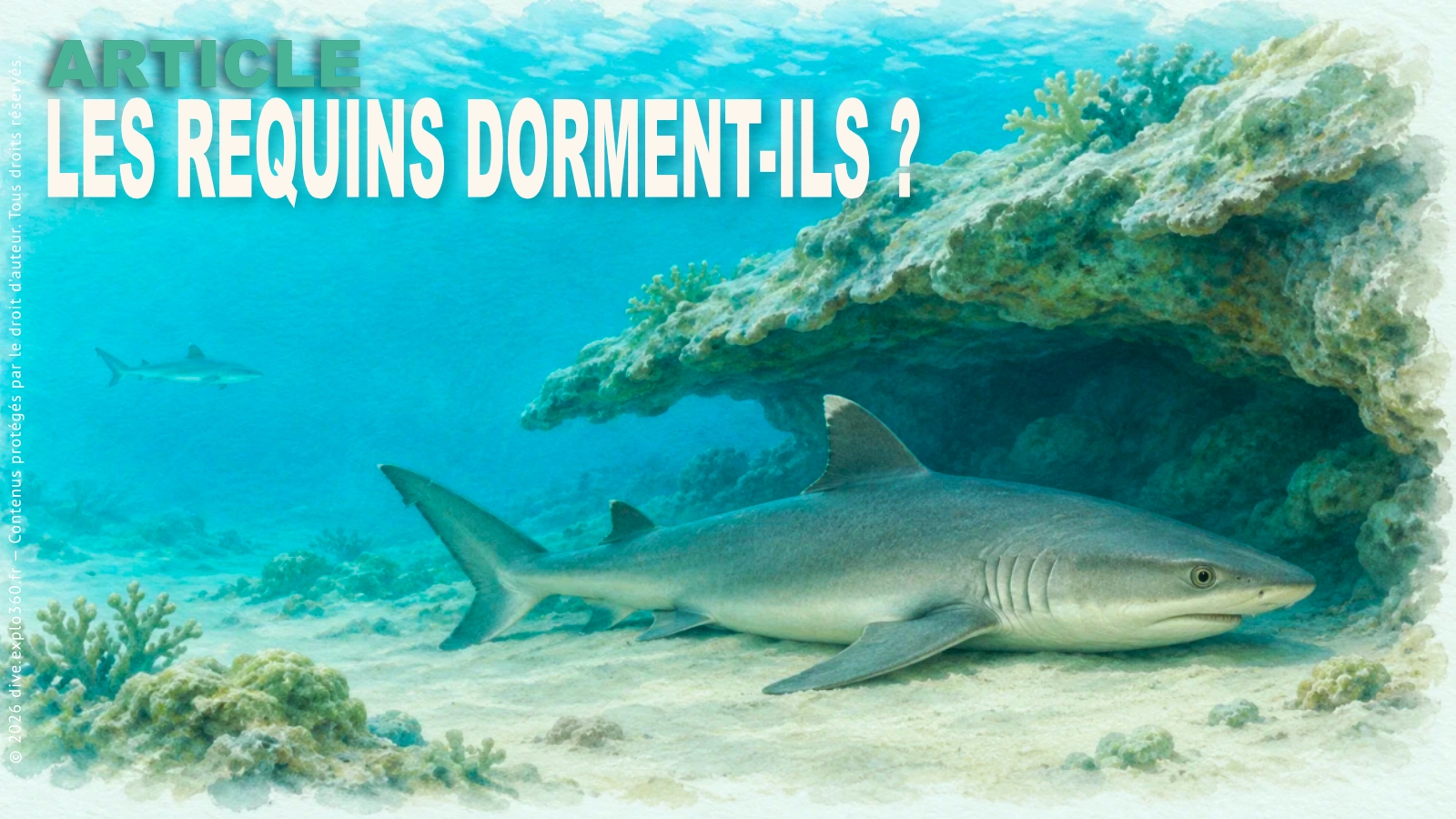
ArticleDo sharks sleep?Read the article →ArticleWhat marine animals do and why it mattersRead the article →ArticlePHYLA WITHOUT THE FUSSRead the article →