Habitat
 Depth
 Group
 Role
 Average size
WHAT DOES IT LOOK LIKE?
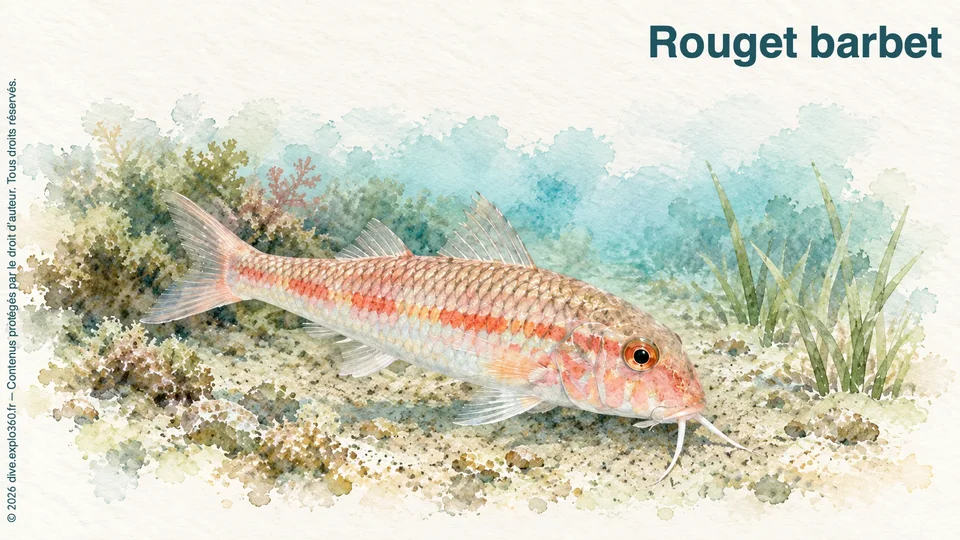
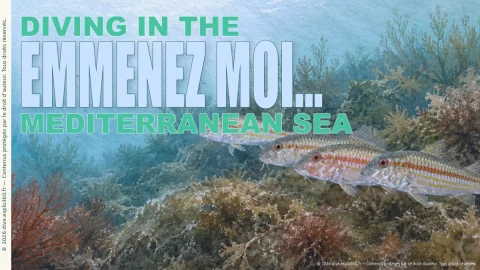
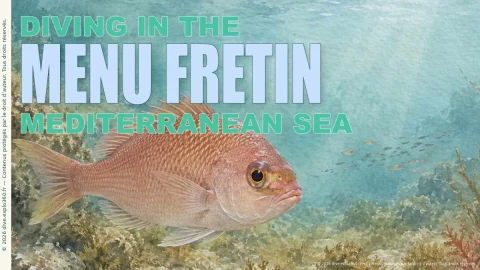
Yellow bands on the first back fin add a useful feature to the striped red mullet (Mullus surmuletus). They complement lengthwise flank lines and two long barbels, the chin filaments.
Its outline is elongated, with large scales and a sloping head profile. Colour varies through pinkish and red shades, while the fin pattern adds more detail than red alone.
WHERE DOES IT LIVE?
It occurs on varied seabeds, particularly rocky, sandy or mixed, from shallow water down to about one hundred metres. It often frequents structured areas such as rocks, seagrass beds or the surroundings of wrecks.
WHAT DOES IT EAT?
A small sediment cloud often reveals striped red mullet foraging. Barbels explore the surface, while vision also helps locate food. Prey and sediment enter the mouth together and are sorted. Worms, crustaceans and molluscs provide the principal resources, living on or within the seabed. Juveniles use more very small crustaceans, including copepods and amphipods. Digging reveals access to otherwise hidden food. Other fish may follow the mullet and take small animals disturbed by its activity.
GO FURTHER WITH AMIGANSEAU
Unlock the full profile
Deepen your knowledge with the exclusive chapters and interactive resources included in an AMIGANSEAU licence.
- HOW DOES IT REPRODUCE?
- OUR OBSERVATIONS
- ARTICLE
Also included in the full profile
- Advanced navigation between description, ecological context, observations and behaviour
- Interactive food chain to explore the species’ feeding relationships
- Infographic and illustrated summary profile
- Additional photographic observations




 Understand the species