


 Habitat
 Depth
 Group
 Role
 Average size
WHAT DOES IT LOOK LIKE?
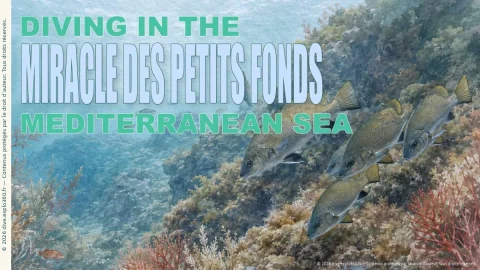
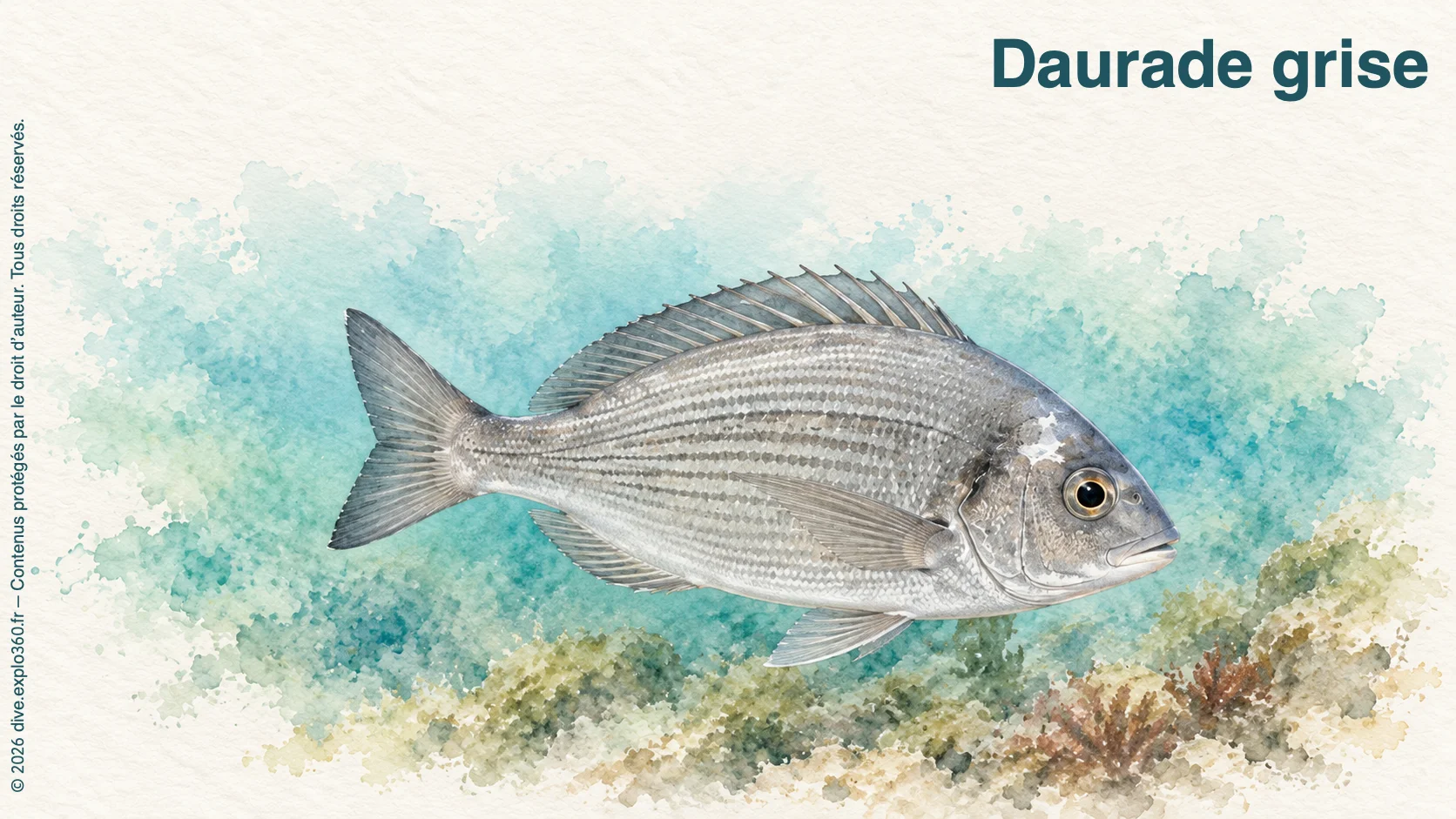
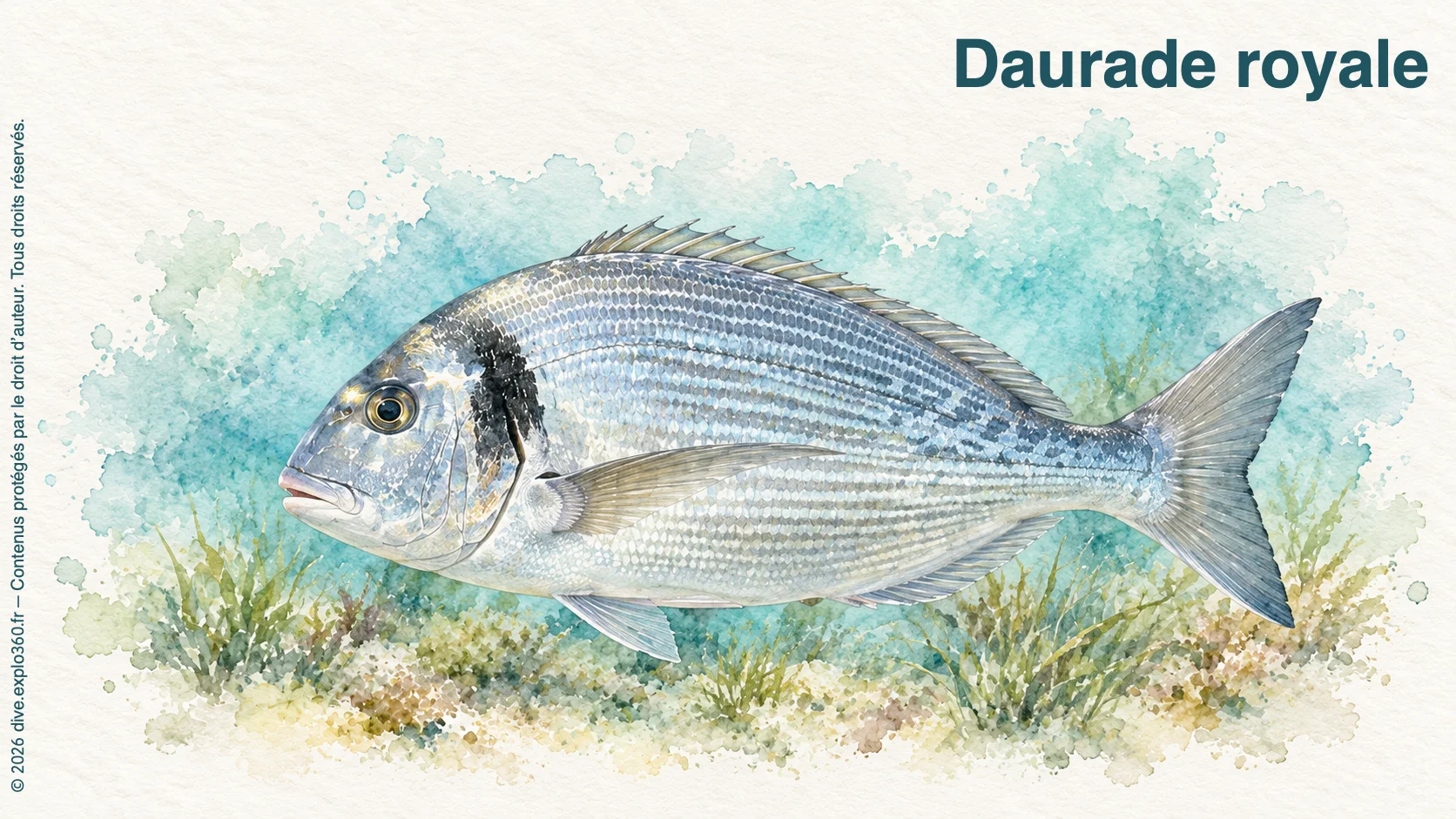
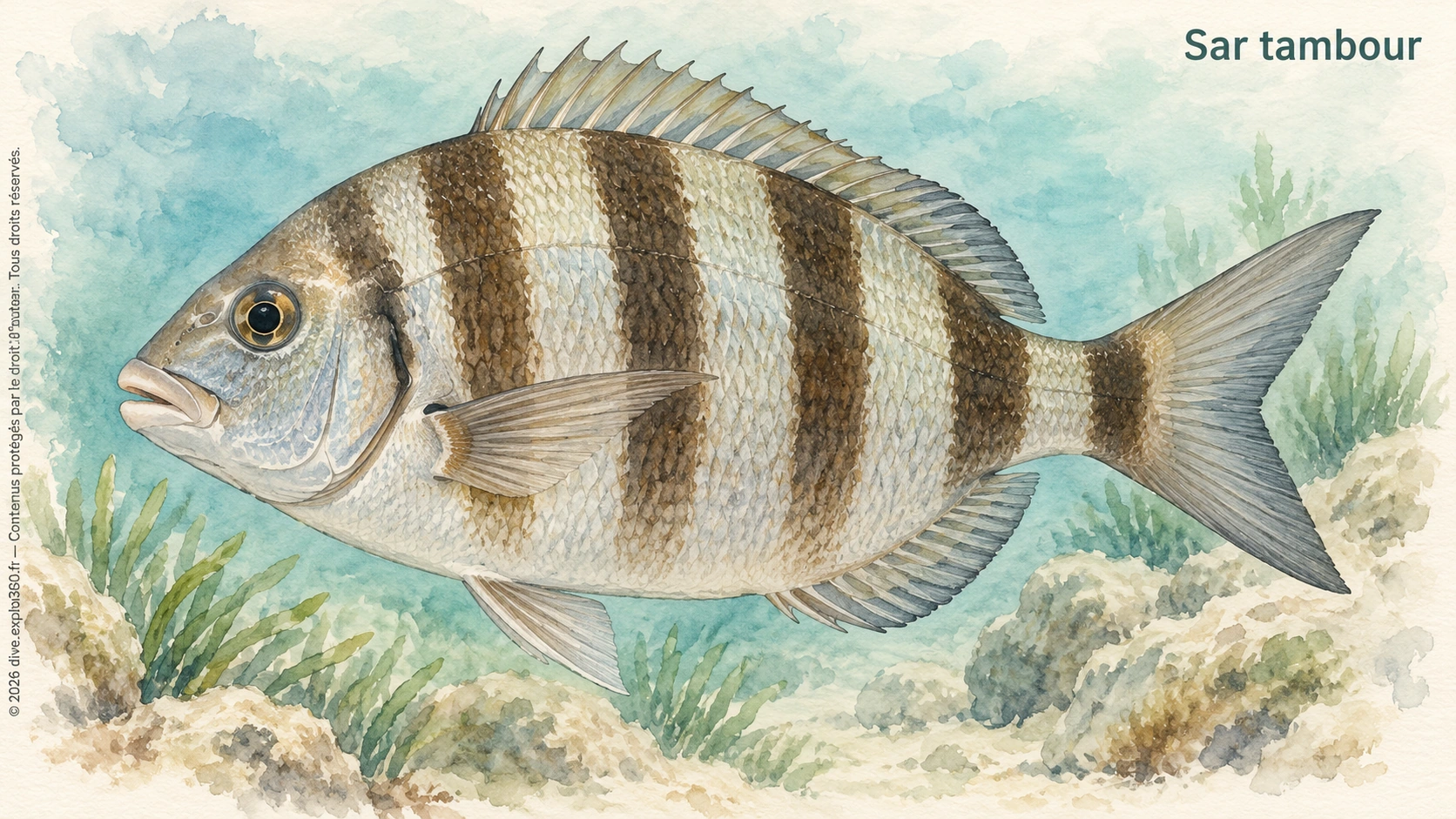
Silver flanks end in a black tail-base patch in the white seabream (Diplodus sargus). Its oval body is flattened from side to side and may reflect golden or greenish shades.
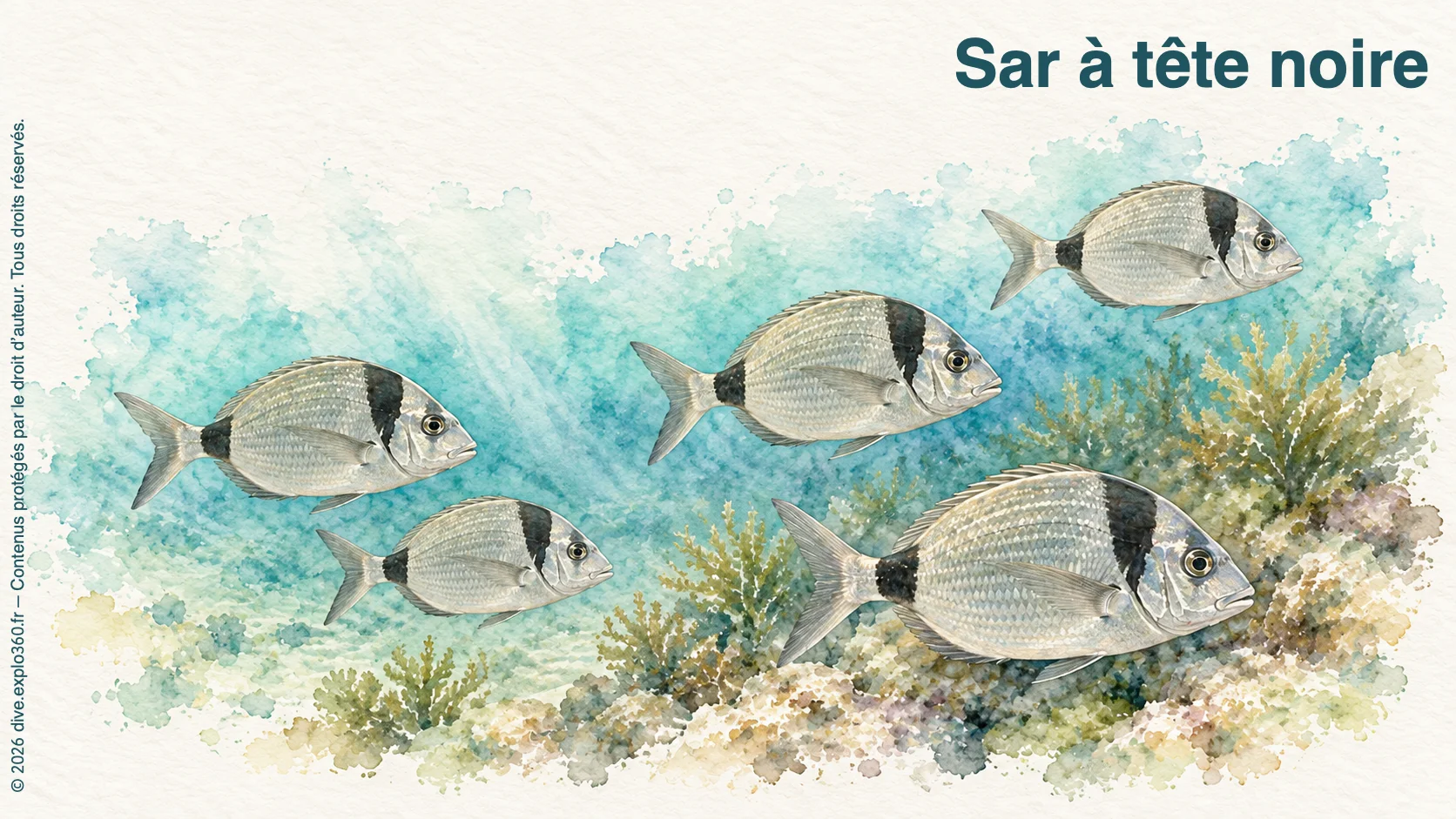
Dark vertical bars differ in visibility. Often clearer in young fish, they do not form a constant striped pattern in every individual.
WHERE DOES IT LIVE?
It frequents coastal areas over varied seabeds: rocks, seagrass beds and mixed areas. The young often occupy very shallow water, while adults may move to deeper areas depending on conditions.
WHAT DOES IT EAT?
White seabream can remove and crush animals protected by hard coverings. Mussels and sea urchins are characteristic foods; robust molars provide access to tissues through shells and tests. Crabs, shrimps and worms supplement meals. Juveniles use smaller prey and have a more omnivorous diet that may include algae. Growth changes the range of resources used.
GO FURTHER WITH AMIGANSEAU
Unlock the full profile
Deepen your knowledge with the exclusive chapters and interactive resources included in an AMIGANSEAU licence.
- HOW DOES IT REPRODUCE?
- OUR OBSERVATIONS
- ARTICLE
Also included in the full profile
- Advanced navigation between description, ecological context, observations and behaviour
- Interactive food chain to explore the species’ feeding relationships
- Infographic and illustrated summary profile
- Additional photographic observations


 Understand the species