Habitat
 Depth
 Group
 Role
WHAT DOES IT LOOK LIKE?
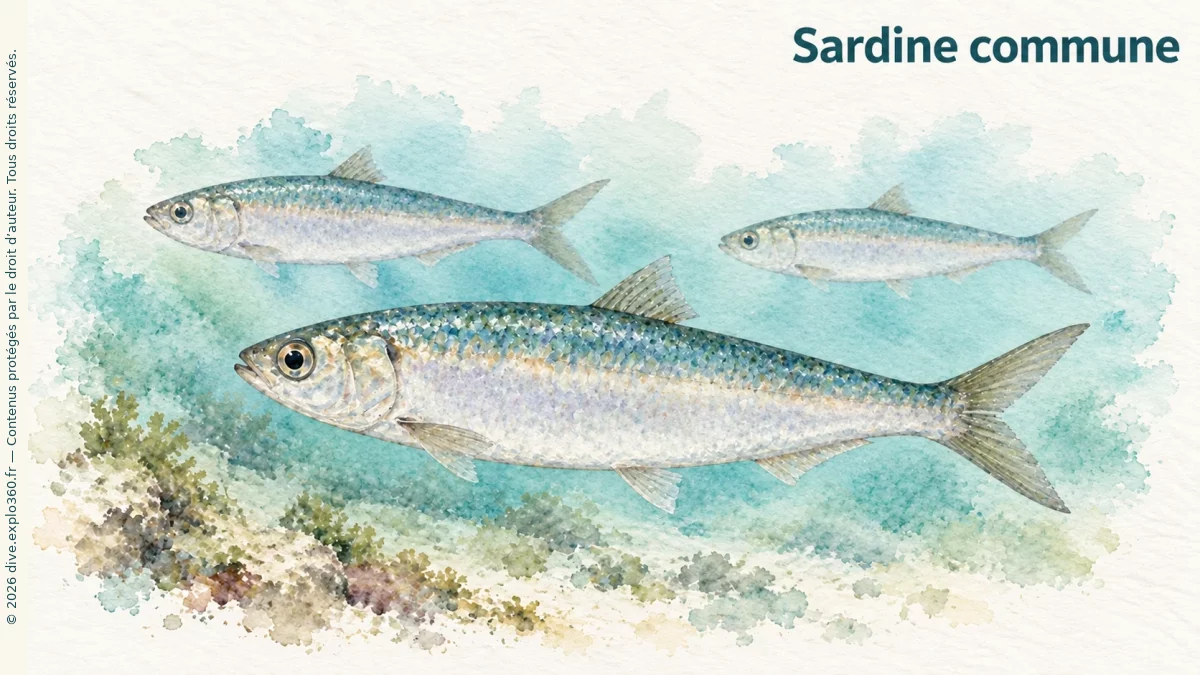
The European sardine has a streamlined laterally compressed body and terminal mouth. Green or bluish back reflections contrast with silver sides and a pale belly. A single dorsal occupies midback; pelvic origins lie behind the dorsal origin. A grooved operculum and prolonged last two anal rays help comparison. Dark side spots may occur without being readable during every encounter.
WHERE DOES IT LIVE?
The range includes the northeastern Atlantic, Mediterranean and Black Sea. Open-water movements connect coastal and offshore settings. It lives down to about a hundred metres and can change depth during the day, partly in response to food availability.
WHAT DOES IT EAT?
Small zooplankton, including copepods, provides important food. Filtration retains particles from water passing through mouth and gill structures. This supports the forage-fish role, supplying many fish, birds and mammals. Grouping can affect individual risk and movement but does not make sardines immune to capture.
GO FURTHER WITH AMIGANSEAU
Unlock the full profile
Deepen your knowledge with the exclusive chapters and interactive resources included in an AMIGANSEAU licence.
- HOW DOES IT REPRODUCE?
- OUR OBSERVATIONS
- ARTICLE
Also included in the full profile
- Advanced navigation between description, ecological context, observations and behaviour
- Interactive food chain to explore the species’ feeding relationships