Habitat
 Depth
 Group
 Role
 Average size
 Good to know
WHAT DOES IT LOOK LIKE?
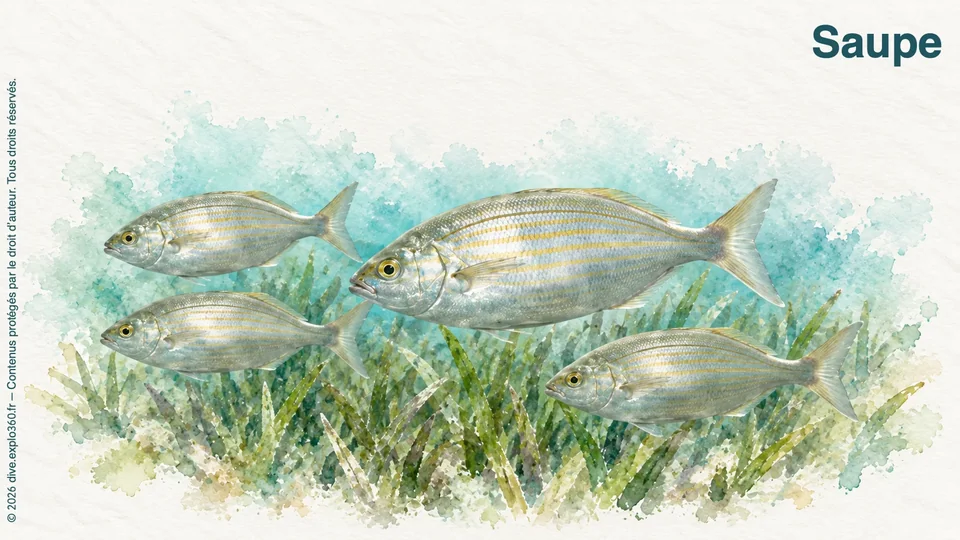
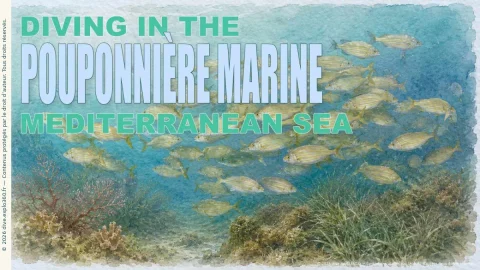
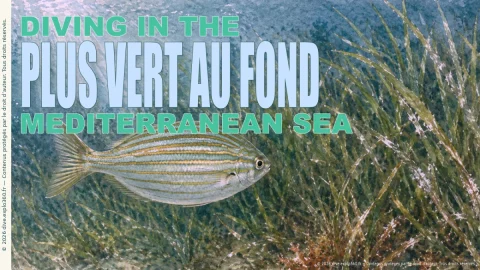
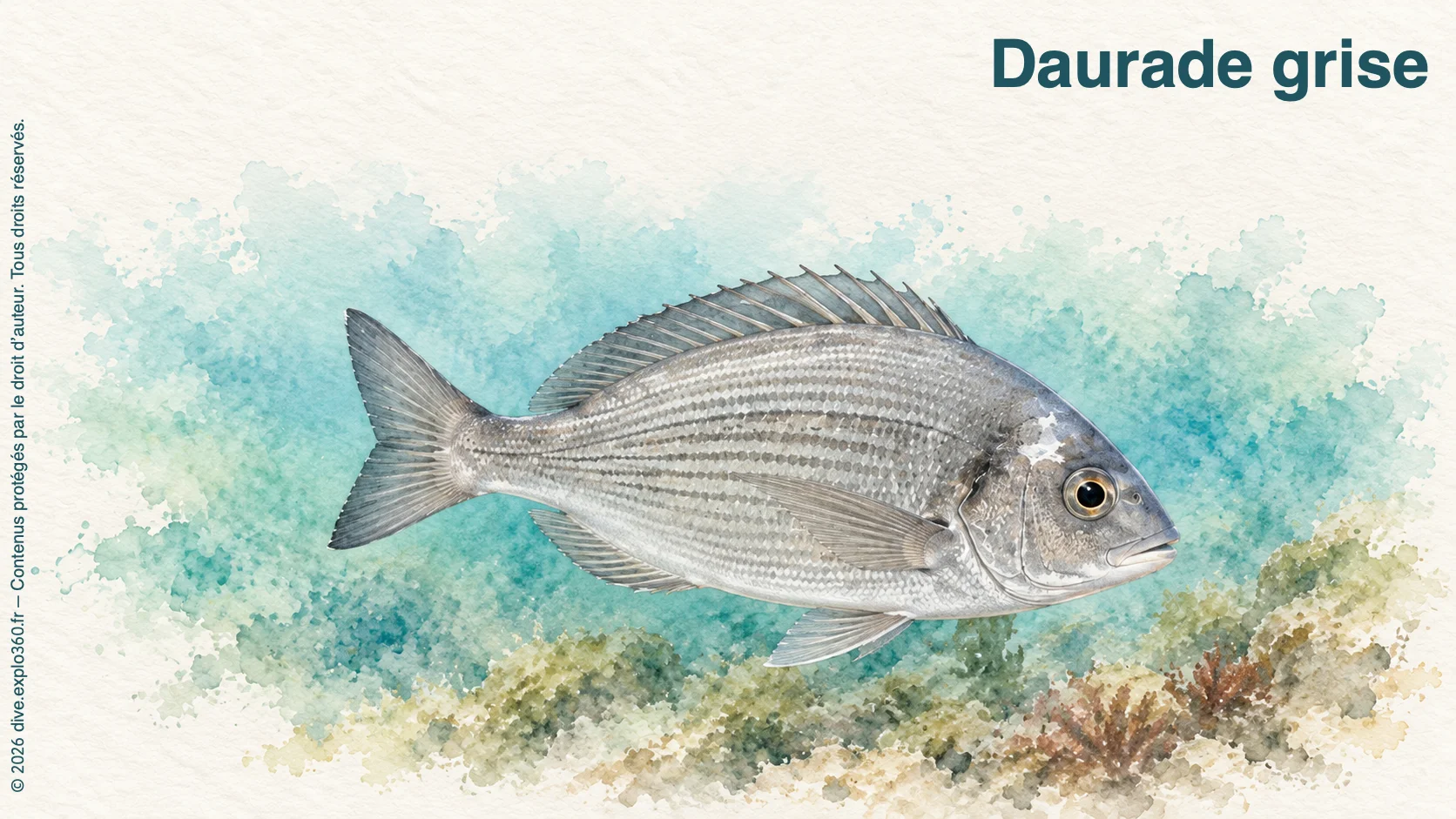
Fine parallel gold lines highlight the silver flanks of the salema (Sarpa salpa). The pattern follows an elongated body, moderately flattened from side to side.
The head is small in proportion to the body and ends in a narrow mouth. These proportions accompany the regular striped pattern.
WHERE DOES IT LIVE?
It mainly frequents shallow coastal areas, particularly Neptune grass beds and rocky seabeds. It is generally observed between the surface and about thirty metres deep.
WHAT DOES IT EAT?
A salema shoal may pause to graze algae or Neptune grass leaves. Fish grasp vegetation and detach portions with their incisors. This reflects the mainly herbivorous feeding of individuals beyond the earliest stages. The youngest salema eat plankton; algae become important next, and seagrass leaves may contribute more in large individuals. Mediterranean studies document these differences. Repeated bites on leaves make meals particularly recognisable even within a moving shoal.
GO FURTHER WITH AMIGANSEAU
Unlock the full profile
Deepen your knowledge with the exclusive chapters and interactive resources included in an AMIGANSEAU licence.
- HOW DOES IT REPRODUCE?
- OUR OBSERVATIONS
- ARTICLE
Also included in the full profile
- Advanced navigation between description, ecological context, observations and behaviour
- Interactive food chain to explore the species’ feeding relationships
- Infographic and illustrated summary profile
- Additional photographic observations

 Understand the species