Habitat
 Depth
 Group
 Role
 Average size
WHAT DOES IT LOOK LIKE?
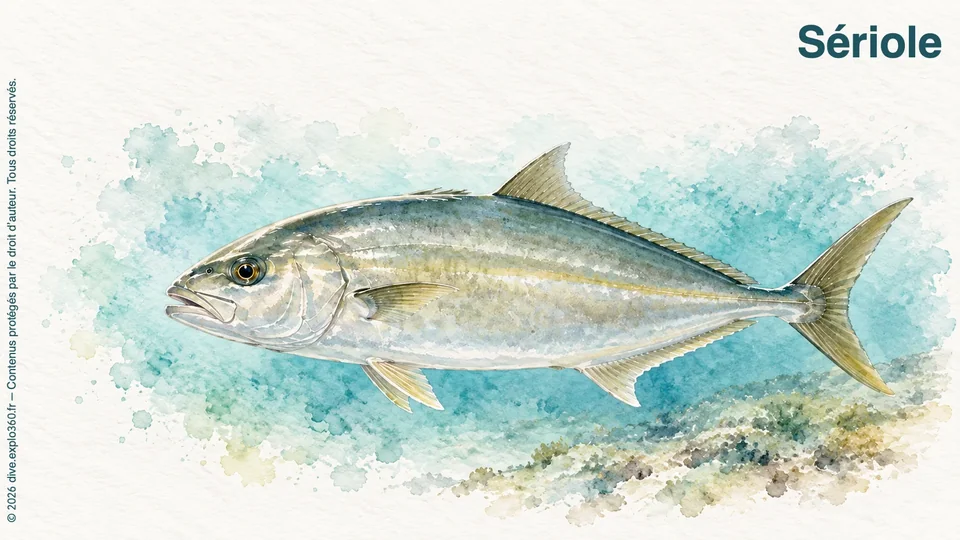
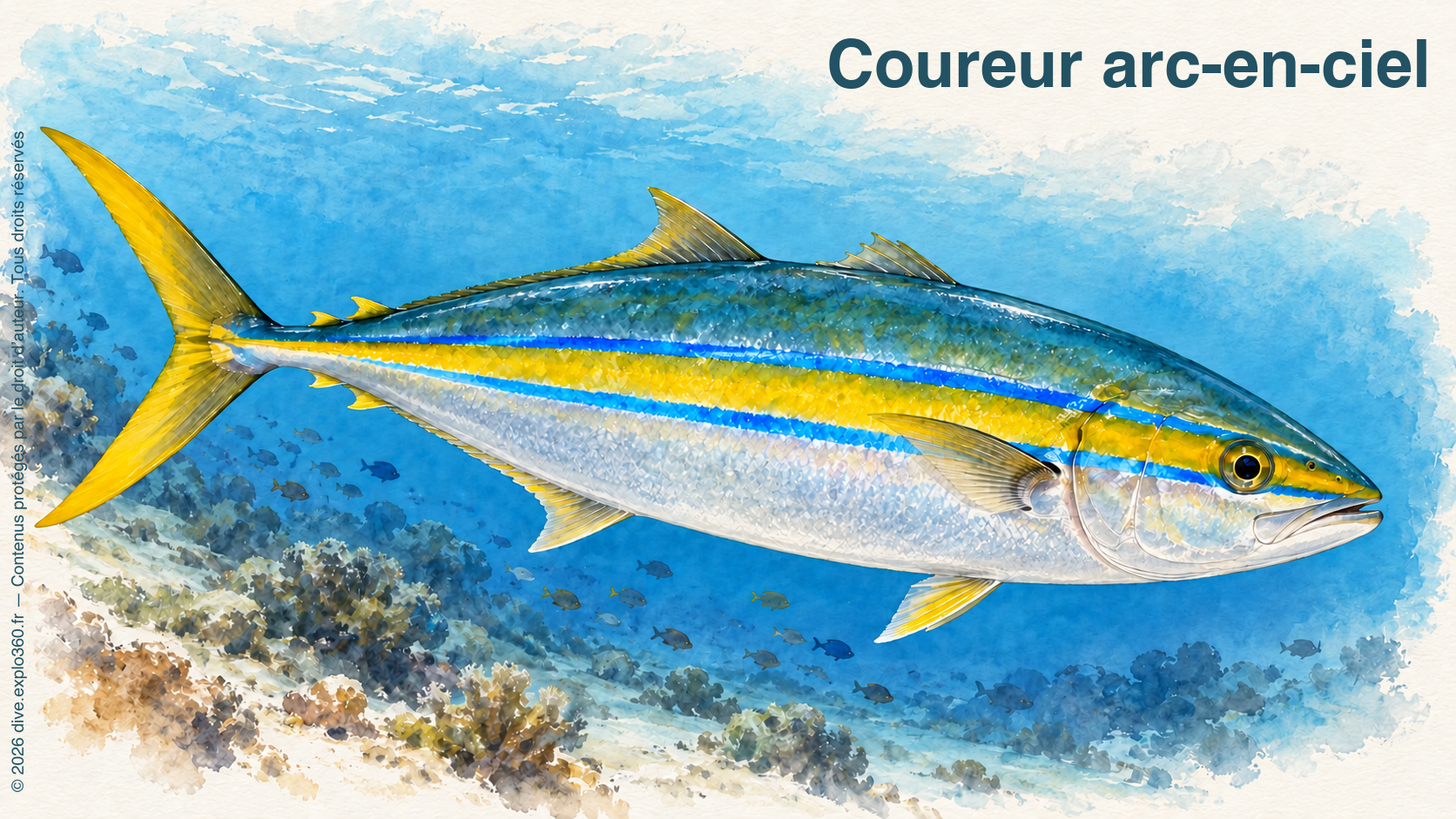
A dark eye band accompanies the contrasting colours of the greater amberjack (Seriola dumerili): a dark blue to green back, silver flanks and sometimes a yellowish line running lengthways.
The elongated, thick body narrows towards a deeply forked tail. Its two lobes continue the streamlined outline.
WHERE DOES IT LIVE?
Living in open water, it frequents both offshore areas and places near reliefs such as walls, pinnacles or wrecks. The young often live in groups, while adults are more often solitary or in small groups. It can move at different depths, from the surface down to several tens of metres.
WHAT DOES IT EAT?
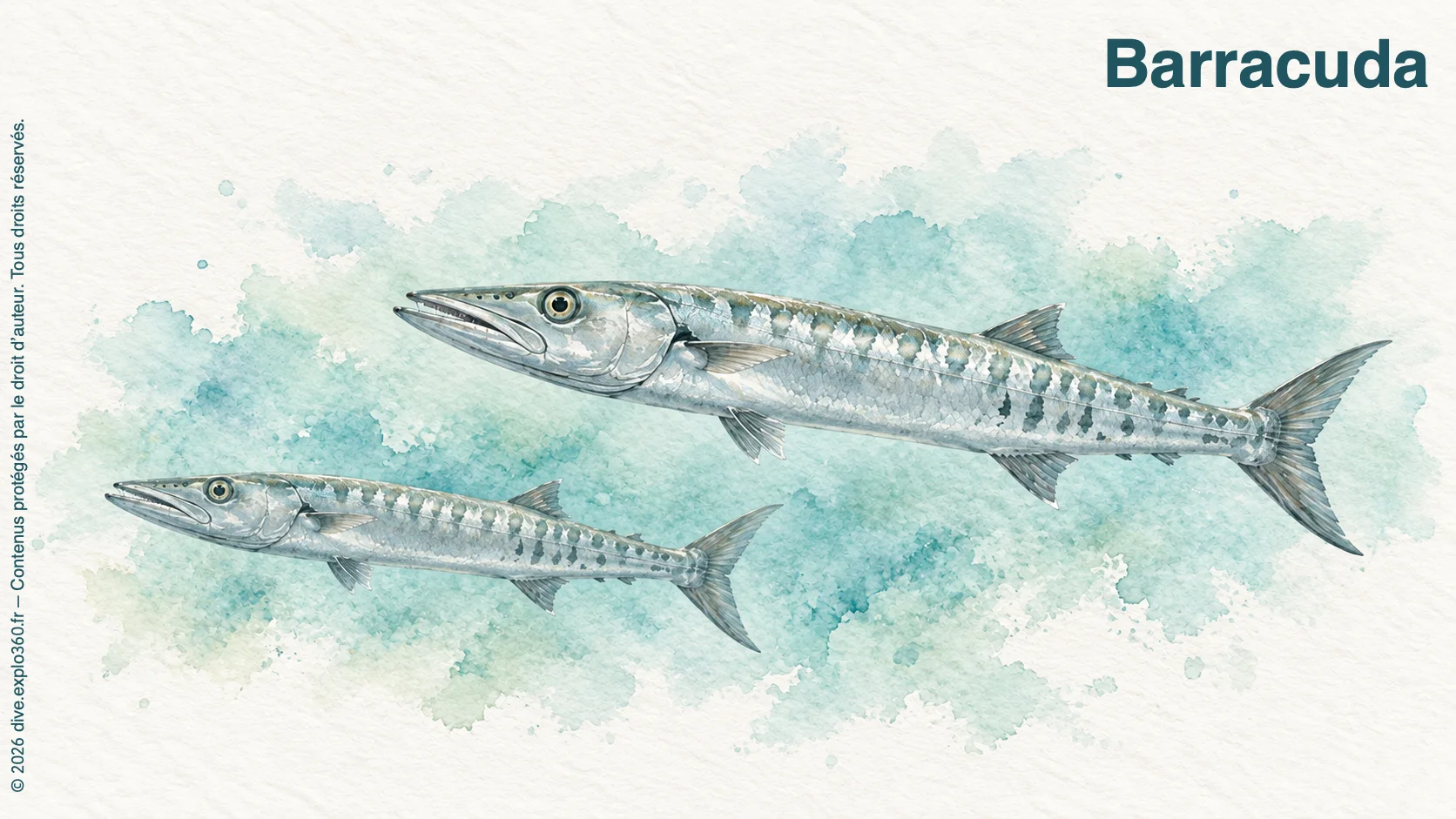
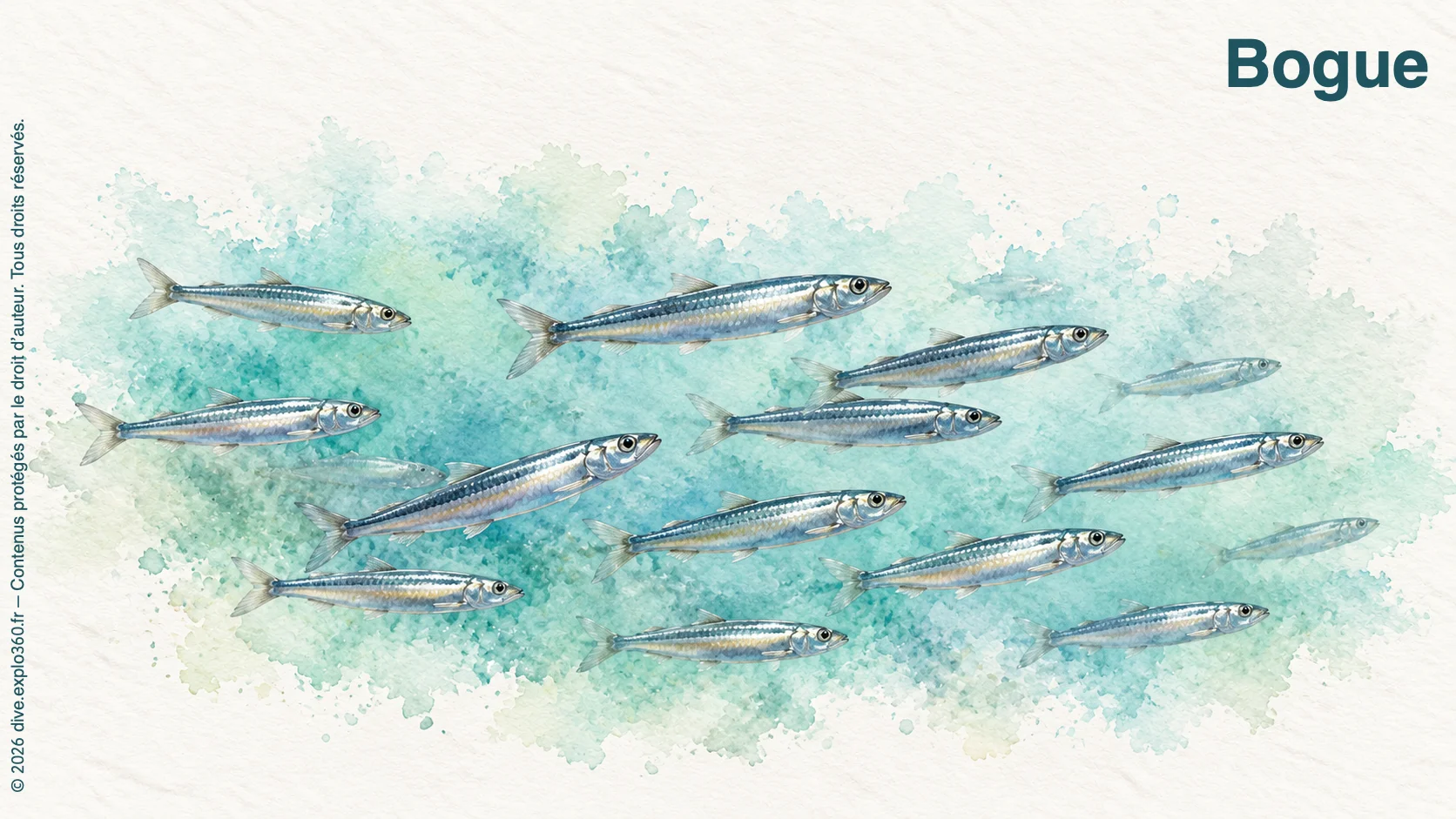
Greater amberjack meals rely extensively on fish, supplemented by crustaceans and cuttlefish. Mullets and garfish are among reported catches. Prey occupies different positions in the water, from near-surface swimmers to bottom-associated animals. Its diet thus draws on several kinds of mobile prey. Seeing a greater amberjack swim past does not necessarily mean it is hunting. To identify a catch, you need to see it approach and capture the prey.
GO FURTHER WITH AMIGANSEAU
Unlock the full profile
Deepen your knowledge with the exclusive chapters and interactive resources included in an AMIGANSEAU licence.
- HOW DOES IT REPRODUCE?
- ARTICLE
Also included in the full profile
- Advanced navigation between description, ecological context, observations and behaviour
- Interactive food chain to explore the species’ feeding relationships
- Infographic and illustrated summary profile
- Additional photographic observations
 Understand the species