Habitat
 Depth
 Group
 Role
WHAT DOES IT LOOK LIKE?
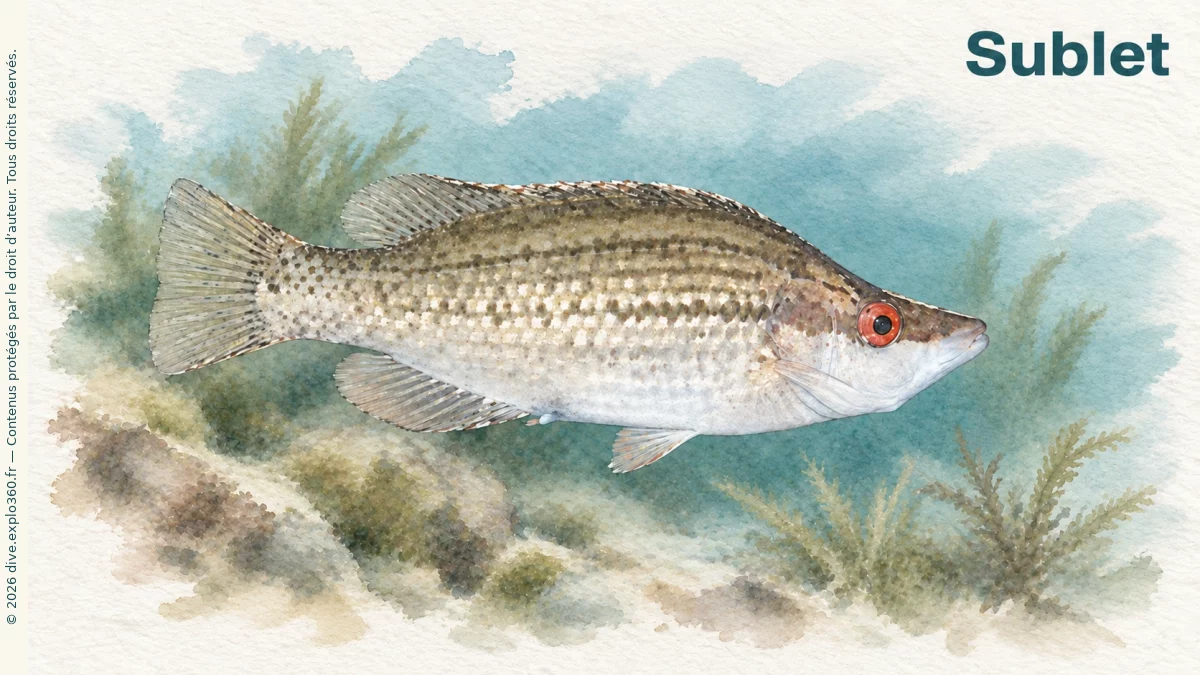
This small wrasse generally measures 8 to 13 centimetres. Its long, pointed snout has a slightly concave upper outline. The mouth is protrusible: it can extend forwards to catch prey.
Colours are green or greenish-brown, sometimes with a white stripe and dark lines running along the body. Green alone is therefore not enough to identify it.
Males and females have similar colours. Snout shape remains the best clue to the species.
WHERE DOES IT LIVE?
Long-snouted wrasse frequent seagrass beds and neighbouring rocky areas. Rocks also provide supports for nests.
They often remain among the leaves, sometimes head down. This posture is used particularly during sleep and can surprise someone seeing the species for the first time.
WHAT DOES IT EAT?
They mainly catch small crustaceans and also eat bryozoans, tiny attached animals that form colonies.
A fine, mobile mouth lets them pick food delicately. Look close to leaves and other surfaces rather than expecting a pursuit of large prey.
GO FURTHER WITH AMIGANSEAU
Unlock the full profile
Deepen your knowledge with the exclusive chapters and interactive resources included in an AMIGANSEAU licence.
- HOW DOES IT REPRODUCE?
- OUR OBSERVATIONS
- ARTICLE
Also included in the full profile
- Advanced navigation between description, ecological context, observations and behaviour
- Interactive food chain to explore the species’ feeding relationships