Habitat
 Depth
 Group
 Role
WHAT DOES IT LOOK LIKE?
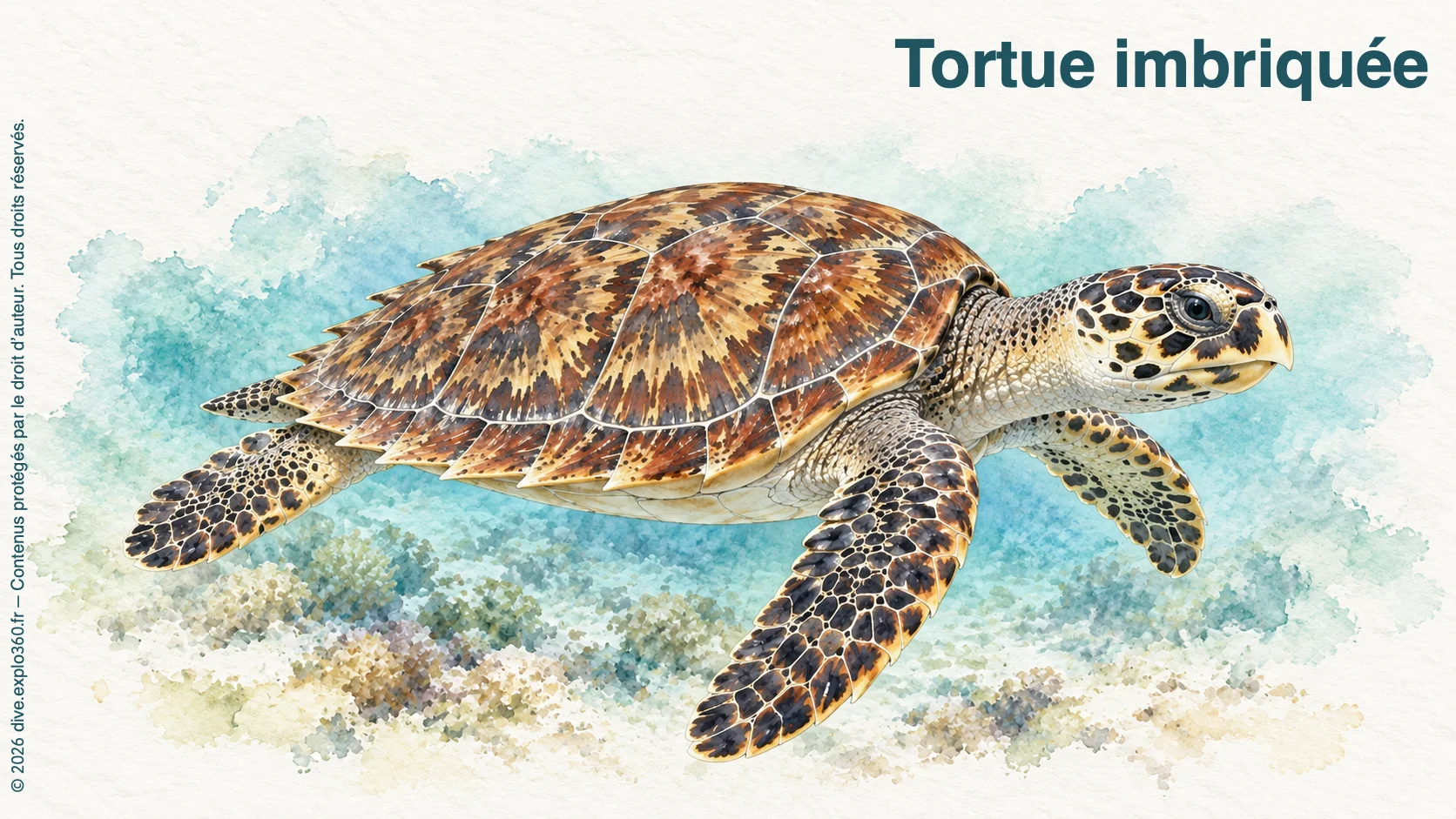
A pointed beak and overlapping shell scutes with a serrated rear edge are distinctive. Two pairs of prefrontal scales distinguish it from the green turtle. Straight shell length commonly approaches 80 cm and may reach about 100 cm.WHERE DOES IT LIVE?
Adults mainly use coastal reefs for feeding. Juveniles and migrating animals may occupy open water. It must surface to breathe.WHAT DOES IT EAT?
Sponges form an important part of its diet, with geographical variation. It also consumes other invertebrates; the film does not identify any food it takes.GO FURTHER WITH AMIGANSEAU
Unlock the full profile
Deepen your knowledge with the exclusive chapters and interactive resources included in an AMIGANSEAU licence.
- HOW DOES IT REPRODUCE?
- OUR OBSERVATIONS
Also included in the full profile
- Advanced navigation between description, ecological context, observations and behaviour
- Interactive food chain to explore the species’ feeding relationships
- Infographic and illustrated summary profile