Habitat
 Depth
 Group
 Role
WHAT DOES IT LOOK LIKE?
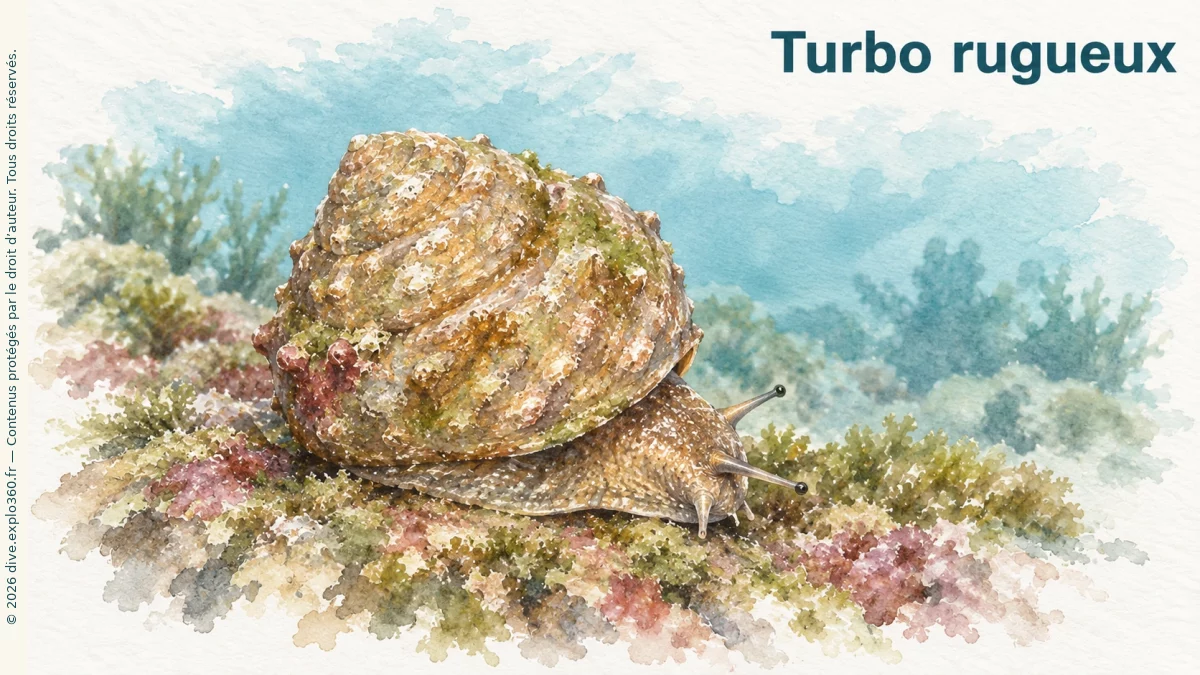
Its strong shell coils into a low spiral and is wider than it is tall. It measures around five centimetres high and six across, with larger individuals occurring. Juveniles often have clearer spiny projections than adults.
Attached organisms frequently hide the brown to greenish colour. The rounded opening is pearly. The operculum, a thick calcareous piece carried on the foot, has a pinkish-orange outer face and closes the entrance when the body withdraws.
WHERE DOES IT LIVE?
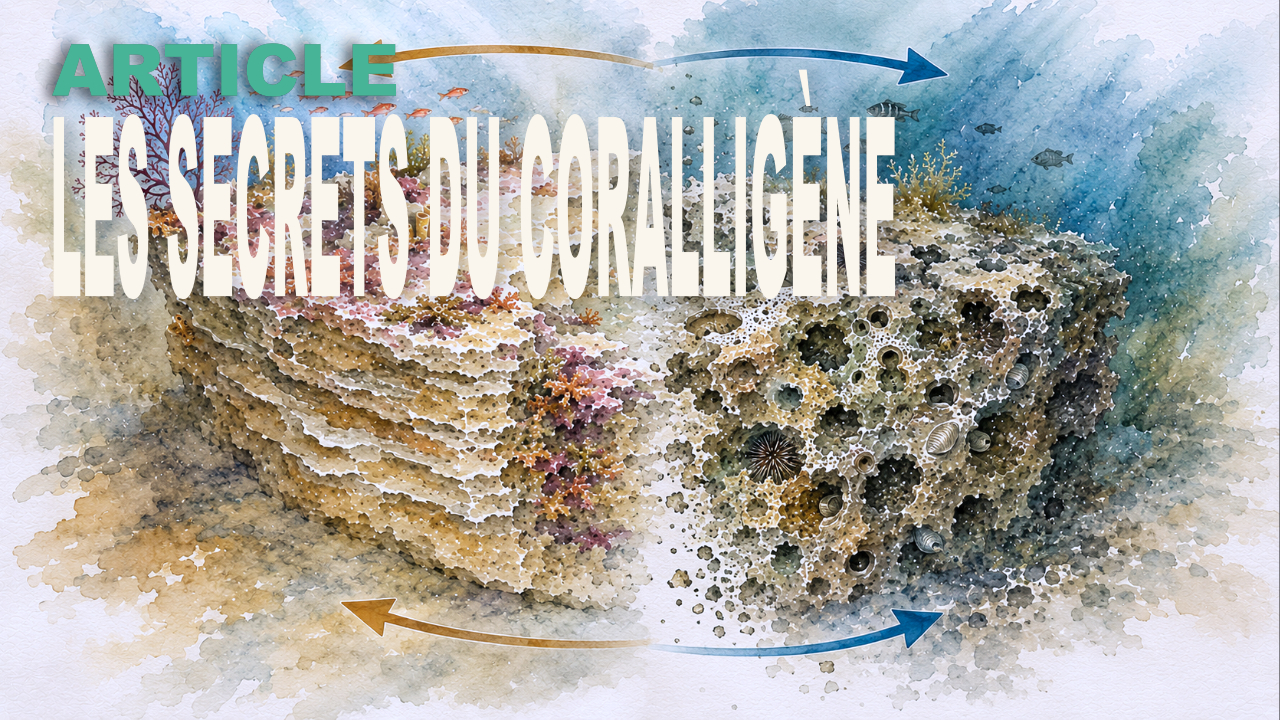
The snail uses algae-rich rocks, Neptune-grass meadows and coralligenous seabeds, structures partly built by lime-producing algae. Records range from a few metres to around a hundred.
Algae and small organisms colonising the shell blur its outline. A living individual may therefore blend into its support.
WHAT DOES IT EAT?
It is herbivorous, mainly grazing soft algal parts. Its radula, a band with many microscopic teeth, removes food from surfaces.
The foot provides movement during feeding. The snail therefore uses seabed algae rather than filtering particles from water.
GO FURTHER WITH AMIGANSEAU
Unlock the full profile
Deepen your knowledge with the exclusive chapters and interactive resources included in an AMIGANSEAU licence.
- HOW DOES IT REPRODUCE?
- OUR OBSERVATIONS
- ARTICLE
Also included in the full profile
- Advanced navigation between description, ecological context, observations and behaviour
- Interactive food chain to explore the species’ feeding relationships