


 Habitat
 Depth
 Group
 Role
 Size
 Good to know
WHAT DOES IT LOOK LIKE?
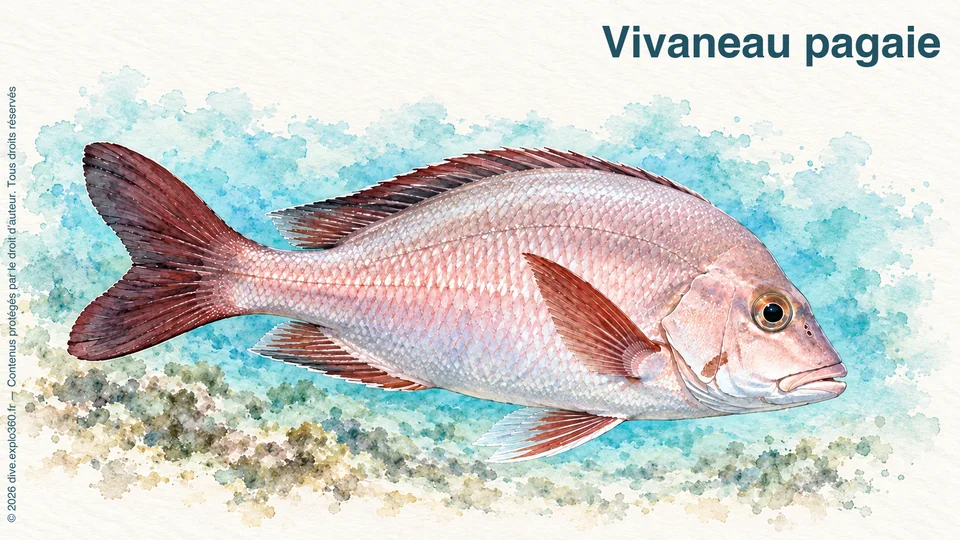
Rounded lobes give the forked tail of the paddletail snapper (Lutjanus gibbus) a distinctive outline. Often dark, from deep red to black, it extends a grey to pink-red body.
The back forms a marked hump above a head with a dipped forehead. Wine-red side fins may complete this deep outline.
WHERE DOES IT LIVE?
From Red Sea coasts to tropical Pacific islands, it inhabits coral reefs, slopes and drop-offs. Channels linking lagoons to the open sea may also hold gatherings. Large solitary individuals are sometimes found near wrecks. Young fish favour more sheltered coastal areas, including mangroves, woodlands whose roots extend into the water, shallow sand-and-coral habitats and areas close to the shore. Adults and young fish therefore do not always occupy the same parts of the coastline.
WHAT DOES IT EAT?
The humpback red snapper combines fishes with several invertebrate groups. Shrimps, crabs, spiny lobsters and mantis shrimps represent crustaceans; octopuses and squids belong to the cephalopods also consumed. Brittle stars are among its prey too. This diet spans soft-bodied animals and prey protected by hard coverings.
GO FURTHER WITH AMIGANSEAU
Unlock the full profile
Deepen your knowledge with the exclusive chapters and interactive resources included in an AMIGANSEAU licence.
- HOW DOES IT REPRODUCE?
- ARTICLE
Also included in the full profile
- Advanced navigation between description, ecological context, observations and behaviour
- Interactive food chain to explore the species’ feeding relationships
- Infographic and illustrated summary profile
 Understand the species