


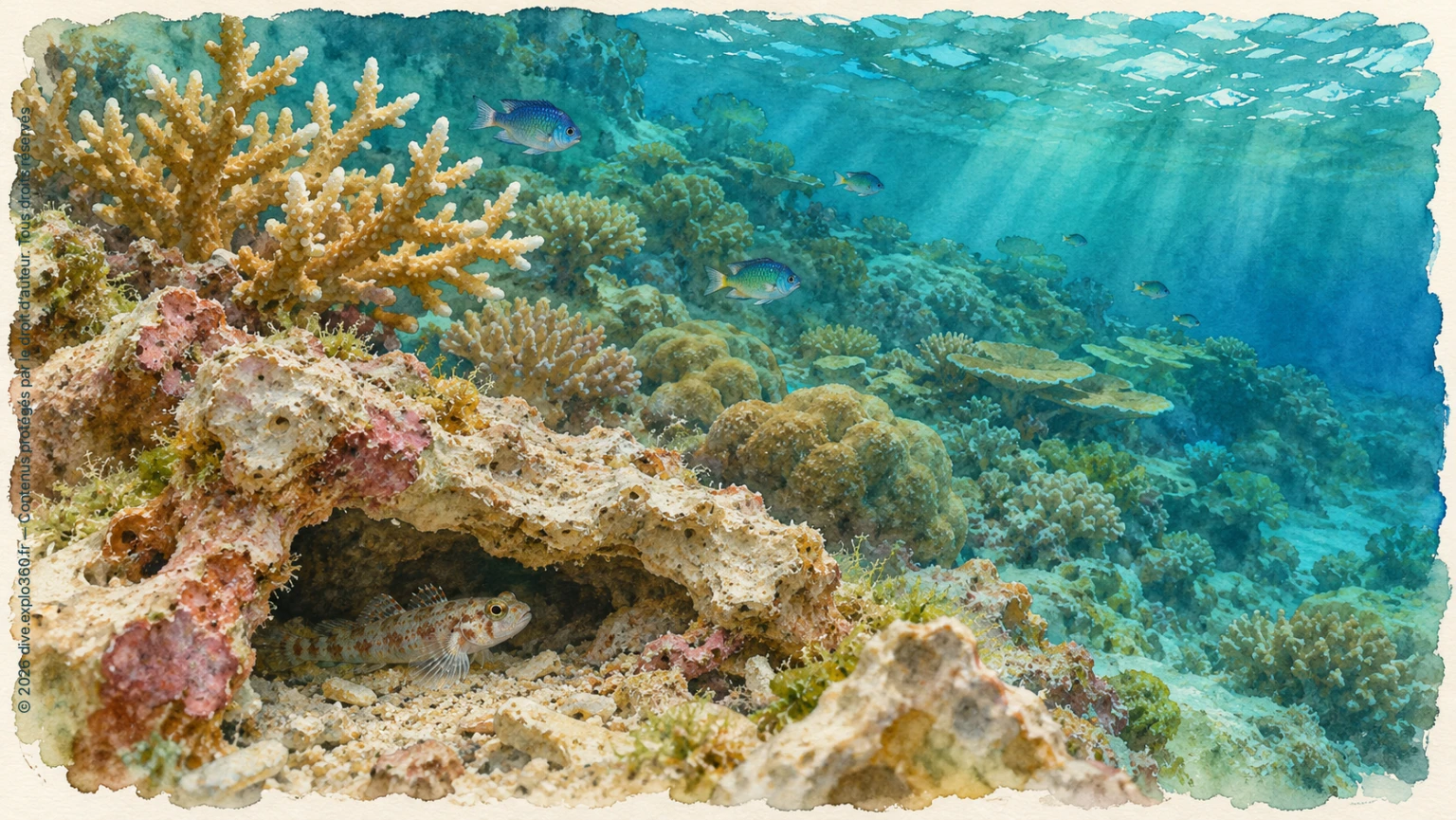
Beneath the tiny coral animals
The coral skeleton forms an internal habitat distinct from living tissue. Organisms settle or bore tunnels within it.
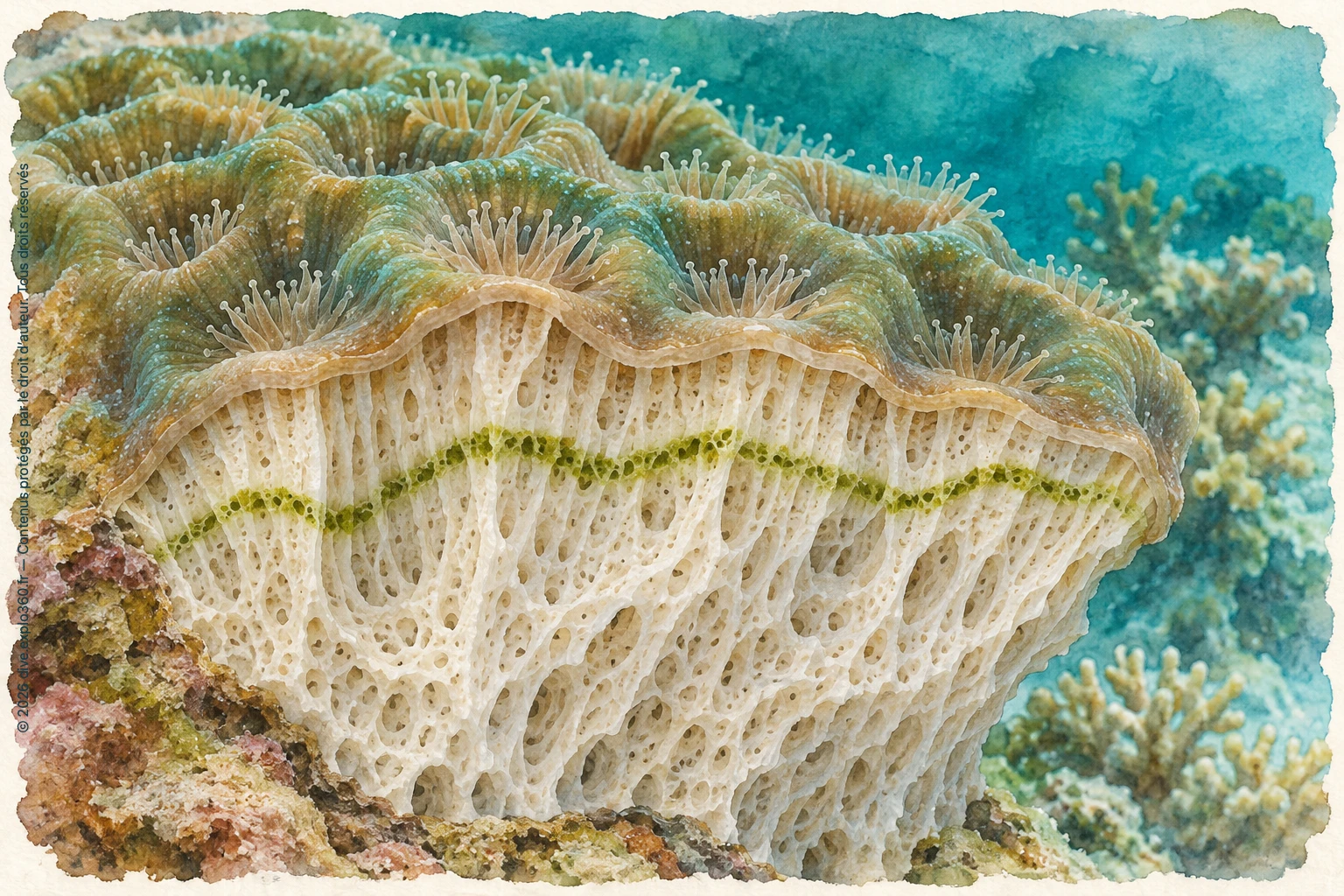
Endolithic algae
Ostreobium grows inside the mineral skeleton, where it can photosynthesise with very little light. Its habitat lies below the living tissue that houses the coral’s photosynthetic symbionts.
Sponges that dig
Boring sponges remove carbonate and extend a network of tunnels through the substrate. This contributes to bioerosion.
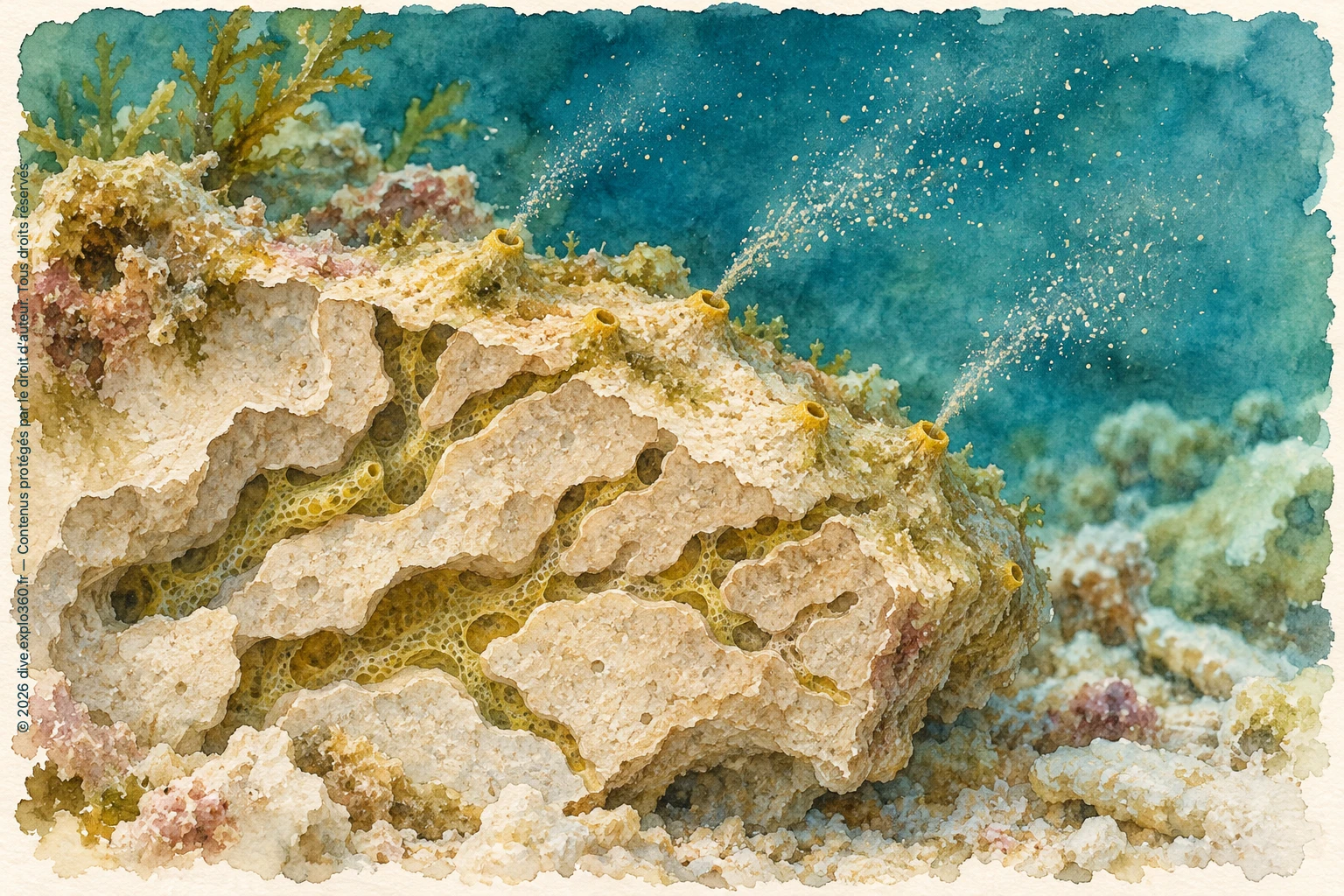
Construction and bioerosion
Polyps deposit calcium carbonate. Boring sponges remove some of it and create galleries. The balance of these processes helps shape the reef.
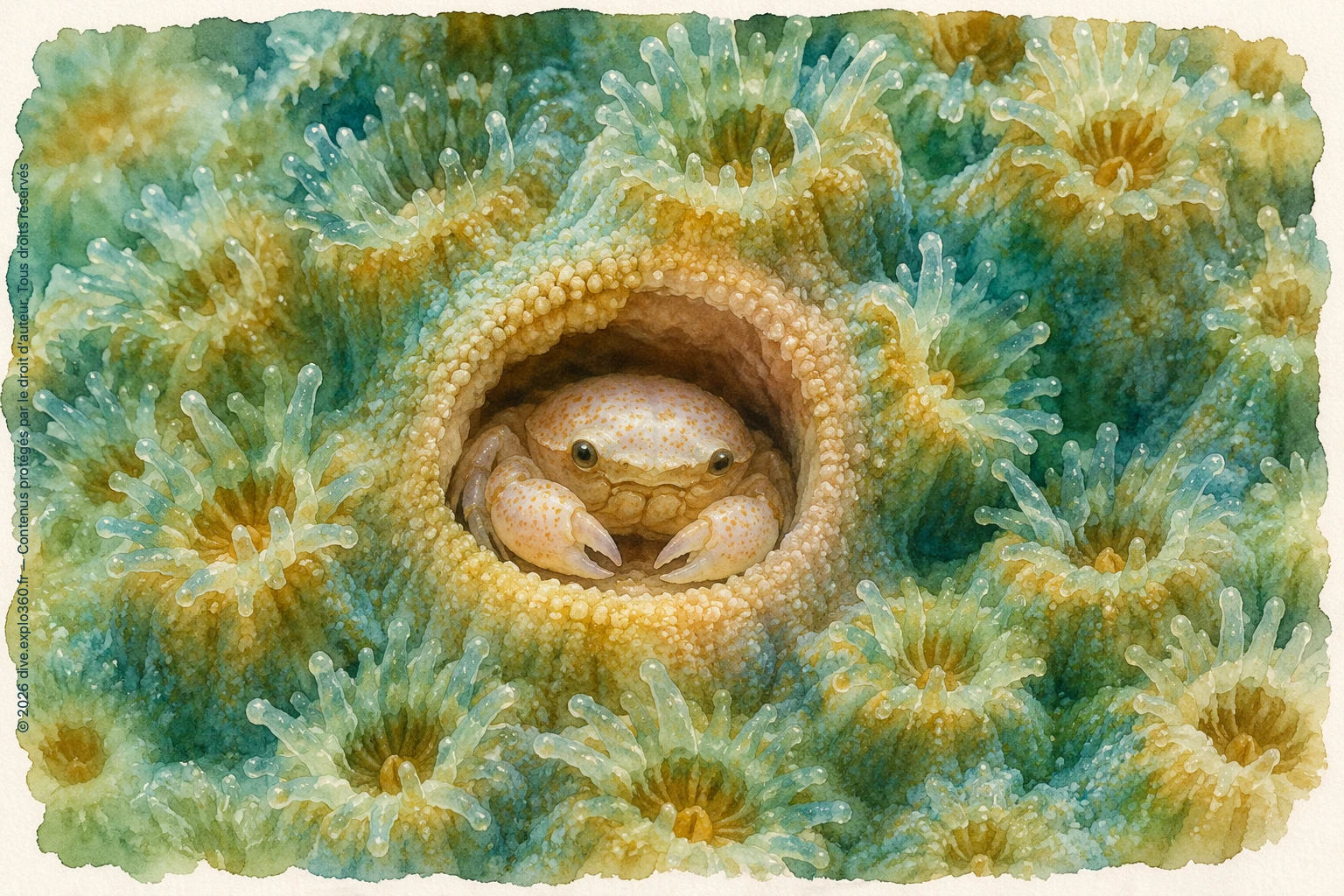
A crab inside the coral
Females of some coral-dwelling crabs remain in a chamber within the colony. Its opening may be too narrow for them to leave as adults.
GO FURTHER WITH AMIGANSEAU
Continue reading
Discover full species guides, in-depth content and interactive tools available with your licence.
Dive.Explo360 is an independent, self-funded nonprofit. Every licence helps us create new content, improve our teaching tools and keep some of our resources free and ad-free.
Choose a licence that suits your needs for personal, educational or professional use.
Open-access resources remain available without a subscription.