


The day two seas were joined
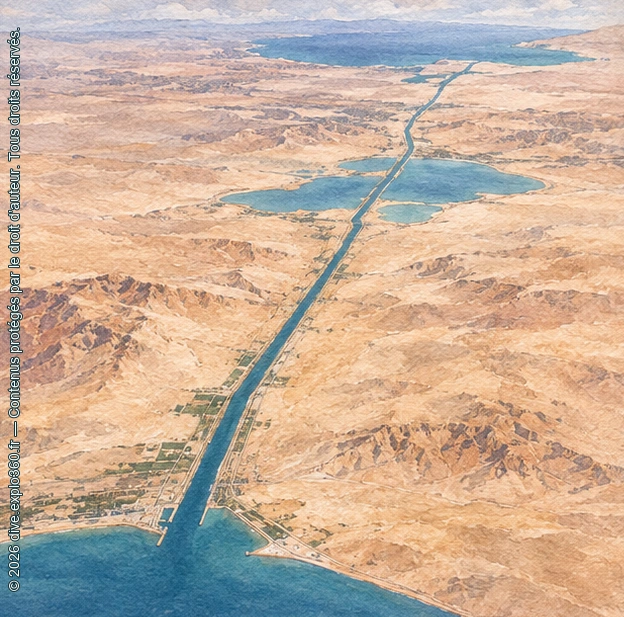
Before 1869 there was no direct navigable sea route between the Red Sea and the Mediterranean. The Isthmus of Suez lay between them. Fish could move within their own seas, but there was no permanent route across that strip of land. On 17 November 1869, the Suez Canal opened a route between the two seas.
For the first time in the modern era, a direct waterway linked the two seas. Ships started using it at once. Marine organisms began crossing this new boundary more gradually. At first, the canal was far from an easy passage. It crossed the Bitter Lakes, whose waters were once extremely salty. At its Mediterranean end, fresh water from the Nile also made conditions different from those in the Red Sea.
These conditions limited the passage of many species. Over time, the barrier weakened. Water exchange reduced the extreme salinity of the lakes. The Aswan High Dam altered inflows from the Nile. Successive enlargements of the canal changed how water moved through it. Some of the obstacles that had held marine organisms back became less effective.
Species that could never have reached the Mediterranean naturally by this route now had a way through. This is known as Lessepsian migration, after Ferdinand de Lesseps, who was involved in building the canal. It differs from the seasonal journeys of birds. It is a gradual process of colonisation that can play out over several generations.
Crossing the canal is only the beginning
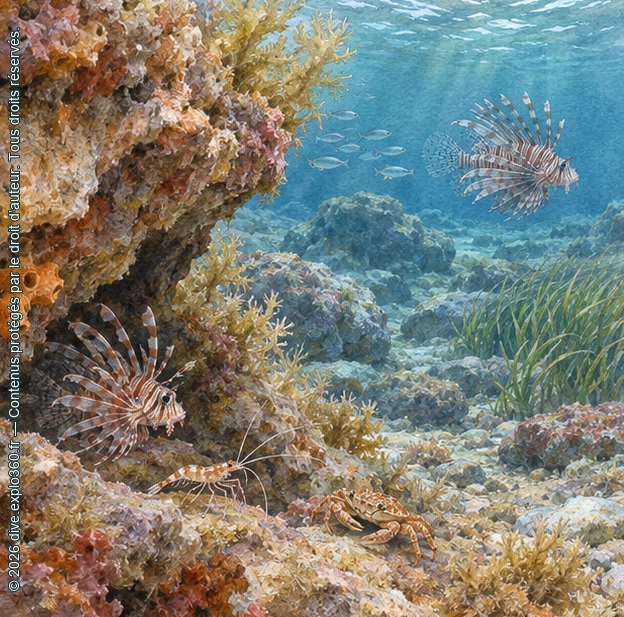
Imagine a fish from the Red Sea making its way through the Suez Canal. It reaches the eastern Mediterranean. Getting through the canal is the first hurdle. To stay, the fish has to survive in unfamiliar waters. It needs food, shelter and water at a temperature it can tolerate.
It also has to escape predators already living there. Above all, one fish on its own is rarely enough to start a new population. For a species to become established, individuals must survive and breed, and their offspring must be able to breed in turn. That is what separates a lone sighting from successful colonisation.
A fish may be recorded once along a coast and never be seen there again. Conversely, a species may go almost unnoticed for years, until it becomes common enough to attract attention. The first sighting therefore need not coincide with the first arrival. The hurdles also vary from species to species.
Some benefit from a varied diet and can use several habitats. Others depend on particular resources that are scarce or absent in their new sea. Being able to breed successfully under Mediterranean conditions gives fish a further advantage. That is what makes the lionfish’s story so interesting.
Lionfish, from an isolated sighting to breeding populations
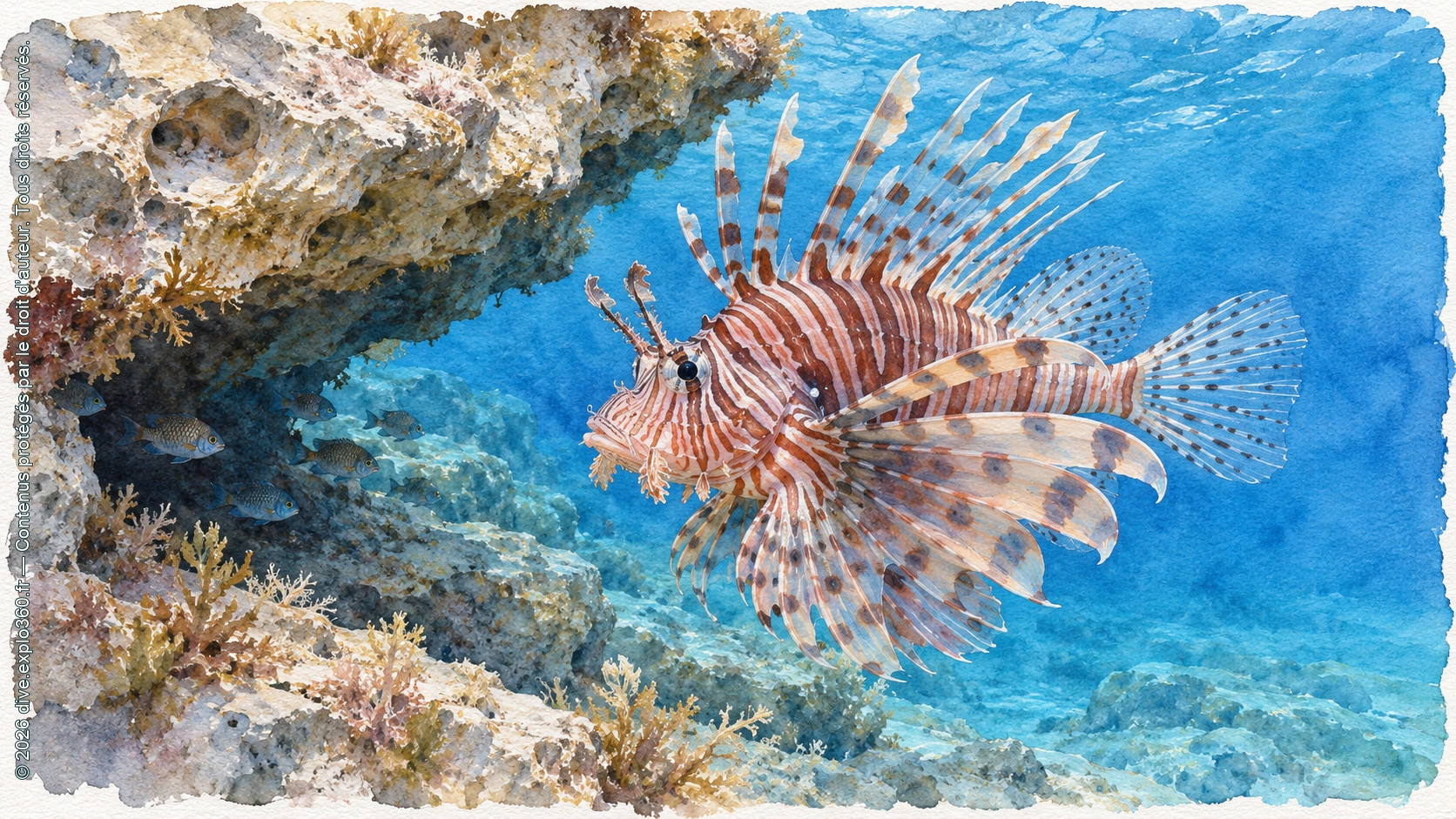
The earliest known Mediterranean record of Pterois miles dates to 1991, off Israel. For years this was the only known Mediterranean record. Then, in 2012, two lionfish were reported off Lebanon. Records multiplied over the following years.
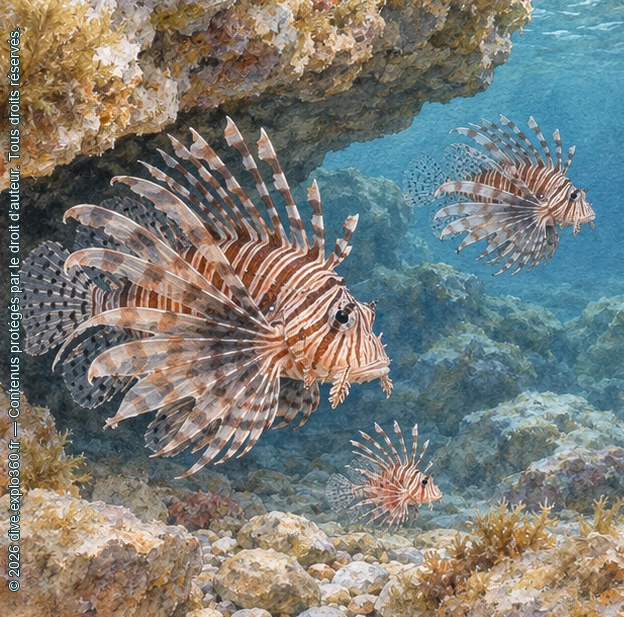
The species turned up around Cyprus, Turkey, Greece and other eastern Mediterranean coasts. This time there were signs of more than occasional visitors. Fish of different sizes were present, including juveniles. Adults were breeding and new generations were appearing. Around Cyprus, populations grew rapidly.
On some rocky reefs, lionfish grew numerous enough to form gatherings that would have been unheard of in these waters only decades before. Several traits help explain their success. They use crevices, overhangs, rocks and some artificial habitats. They eat a wide variety of small fish and crustaceans. Venomous spines on their dorsal, anal and pelvic fins defend them against many potential predators.
They can also breed prolifically. In the eastern Mediterranean populations studied, breeding can continue for much of the year, especially in the warm months. Young fish do not have to swim hundreds of kilometres for the species to reach new regions. Currents can carry them while they are still in their earliest stages of life.
That gives the colonisation another means of spreading.
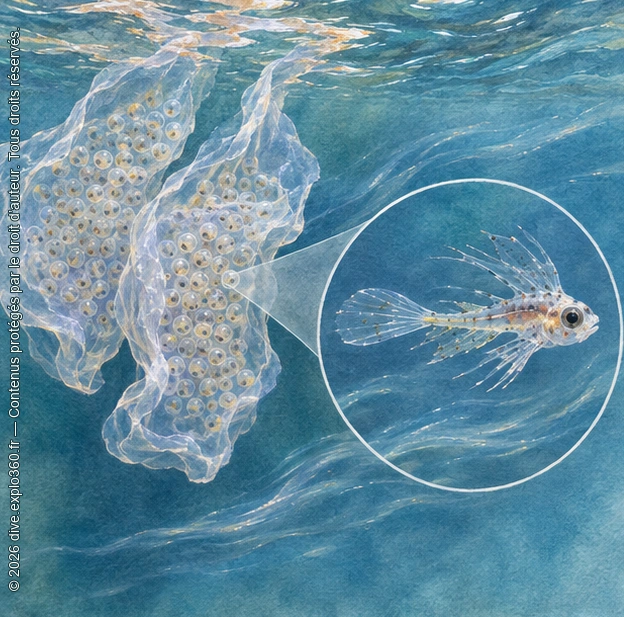
The invisible travellers carried by currents
An adult lionfish may stay on one patch of reef while its young travel to distant shores. When lionfish breed, females release their eggs in gelatinous masses. Early development takes place in the water, where currents can carry the young away. They may drift far from the spawning site before reaching suitable habitat. A population can therefore spread even when the adults stay put.
An established reef population can produce young that reach other coasts. If some survive and breed, a new population forms. It can in turn supply young to neighbouring areas. Each new breeding site can become a starting point for the next generation. Currents carry the larvae, but where and when they arrive matters as much as how far they travel.
Water temperature, the availability of prey and suitable habitat can all halt their progress. Conditions vary across the Mediterranean. Its warmer eastern coasts differ from those of the Gulf of Lion or the northern Adriatic. Lionfish have nevertheless continued to spread westwards. Sightings have been recorded as far as Sicily, Malta, the Adriatic and occasionally Sardinia.
These records differ from evidence of lasting populations. In 2026, lionfish are well established across much of the eastern Mediterranean, while establishment in the western basin has yet to be demonstrated. A single record tells us little about whether an entire region has been colonised.
GO FURTHER WITH AMIGANSEAU
Continue reading
Discover full species guides, in-depth content and interactive tools available with your licence.
Dive.Explo360 is an independent, self-funded nonprofit. Every licence helps us create new content, improve our teaching tools and keep some of our resources free and ad-free.
Choose a licence that suits your needs for personal, educational or professional use.
Open-access resources remain available without a subscription.
Scientific references
These studies follow non-native fish introduced through Suez, using geographical records, genetic evidence, observations of feeding and breeding, and models of dispersal by currents. Experiments test rabbitfish grazing and track changes in native fish after the removal of invasive species. Evidence from one species cannot be generalised to all introduced fish. Western lionfish sightings do not by themselves demonstrate the existence of established breeding populations.