A colony made of polyps
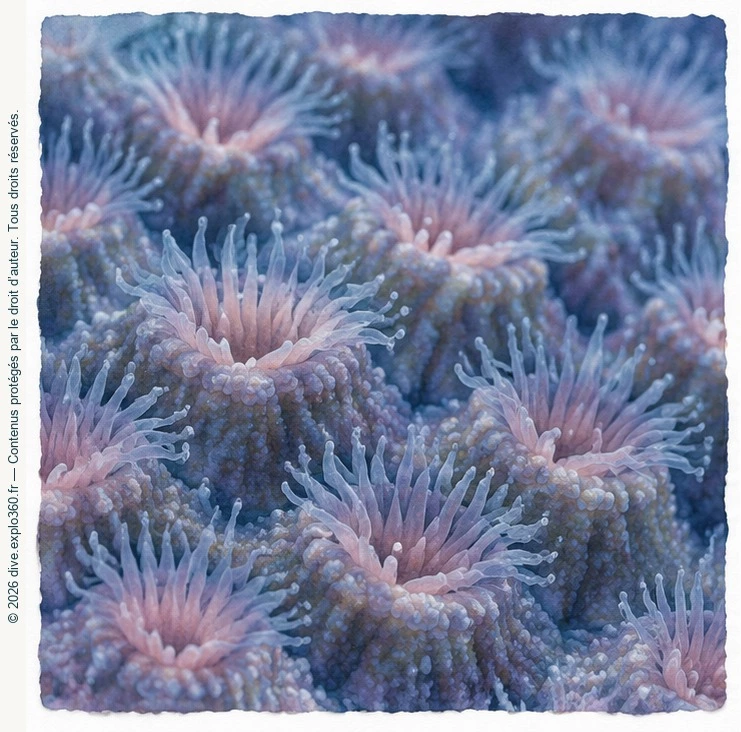
Look closely at a coral and you may see rows of little mouths, each surrounded by tentacles. Each mouth belongs to an animal called a polyp. In reef-building corals, the polyps live together and build a hard skeleton.
Spawning in the water
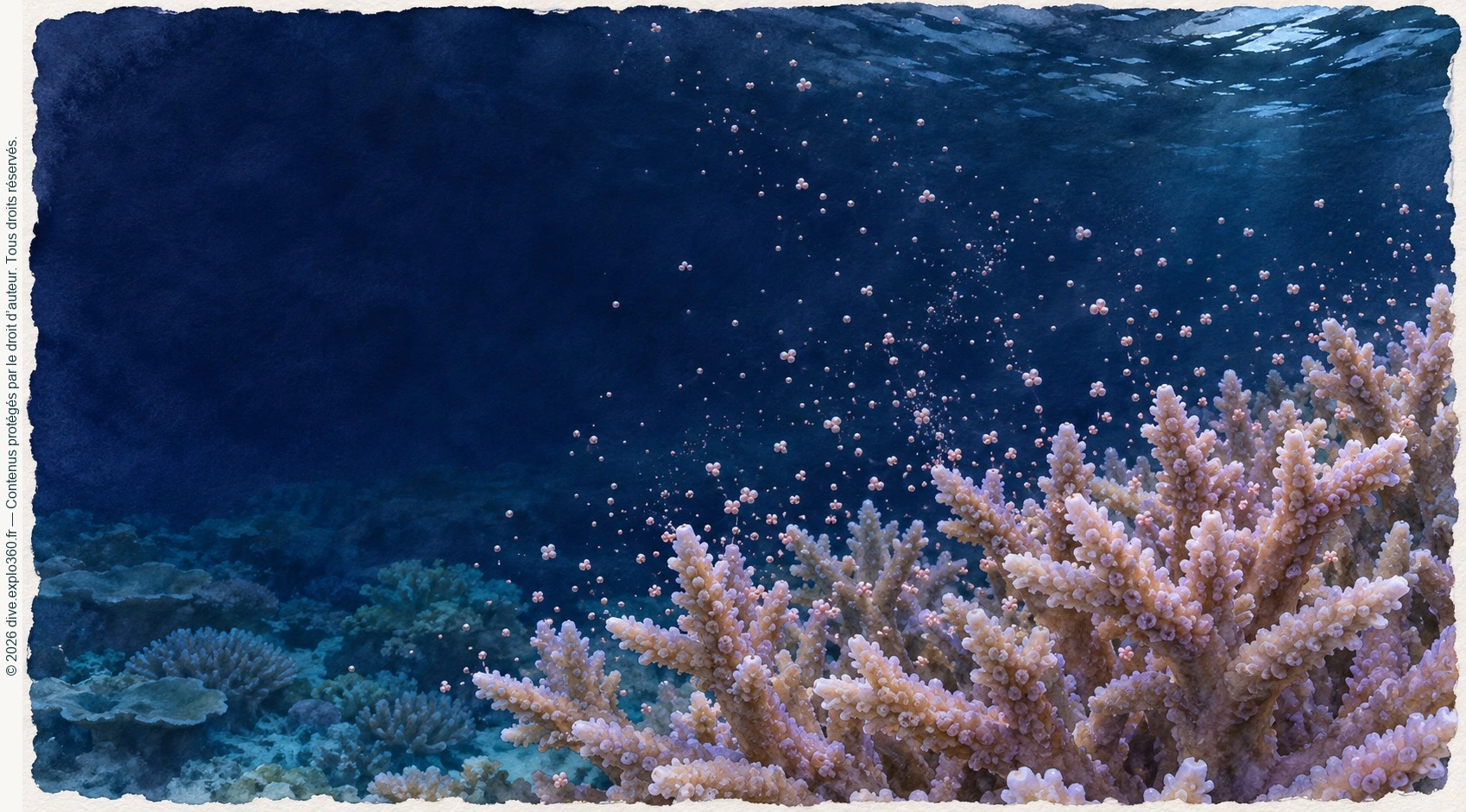
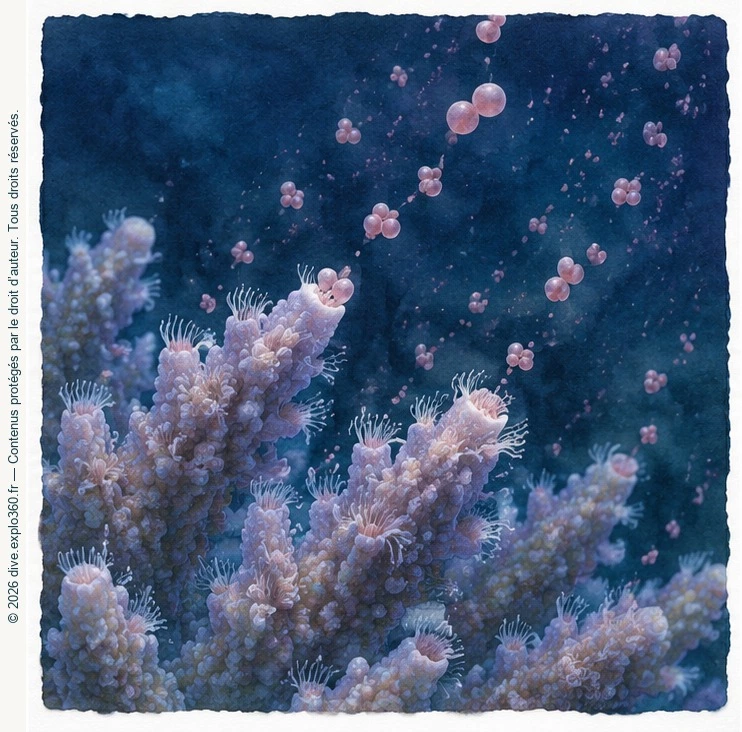
Some corals let go of their bundles on the same night. The bundles rise and break apart. When a sperm cell joins an egg, the egg can start to grow.
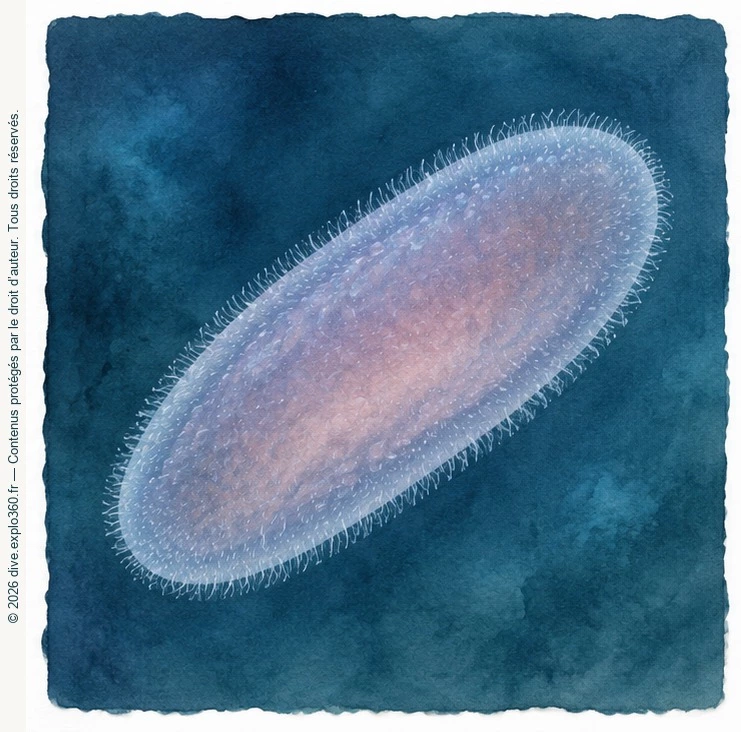
A swimming larva
A young coral that can swim is called a planula. Tiny hairs beat along its body and move it through the water. The current can carry it to another part of the reef.
Larvae under shelter
Some corals keep their young inside the polyps for a while. When the tiny larvae come out, they are already able to swim.
GO FURTHER WITH AMIGANSEAU
Continue reading
Discover full species guides, in-depth content and interactive tools available with your licence.
Dive.Explo360 is an independent, self-funded nonprofit. Every licence helps us create new content, improve our teaching tools and keep some of our resources free and ad-free.
Choose a licence that suits your needs for personal, educational or professional use.
Open-access resources remain available without a subscription.