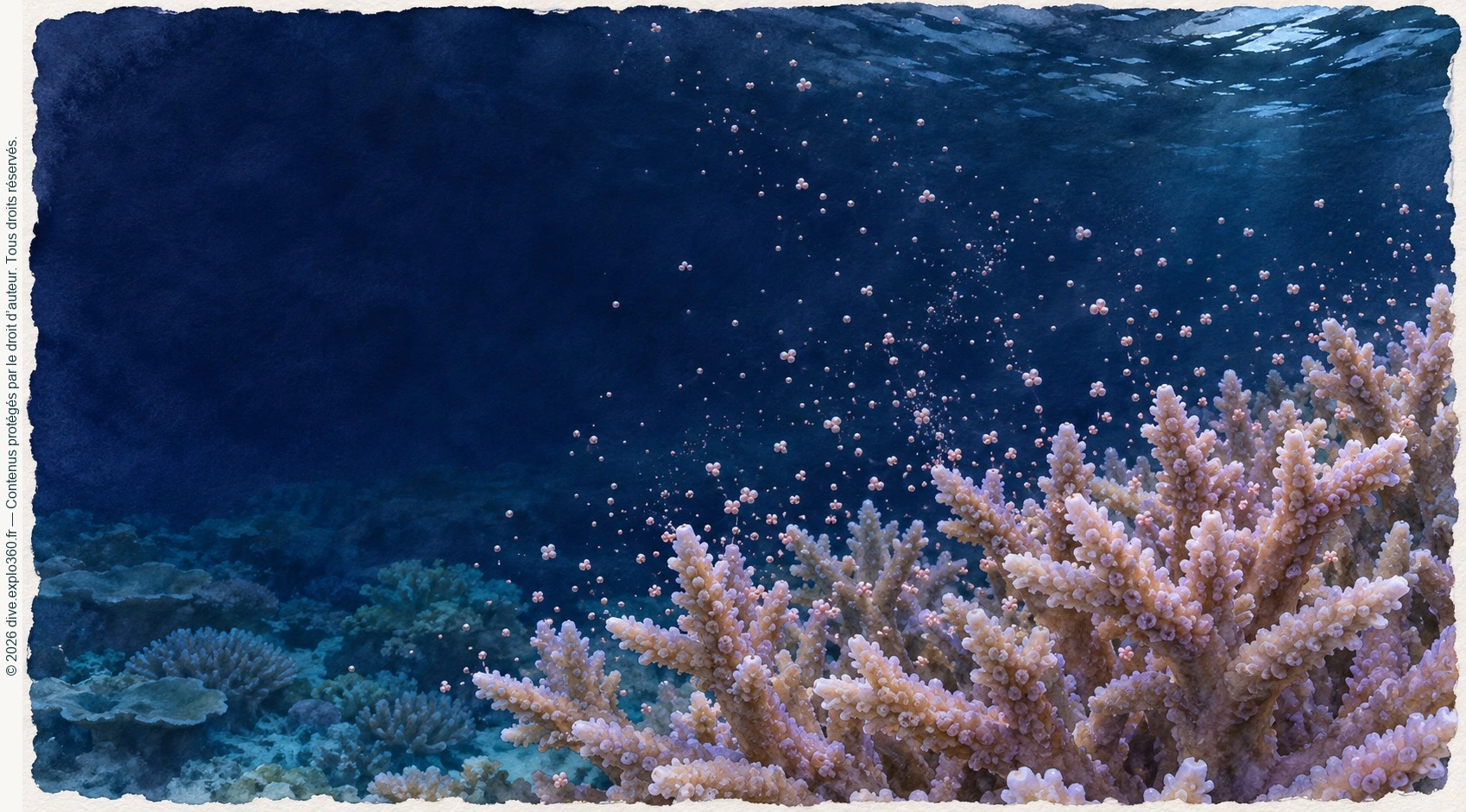
A colony made of thousands of animals
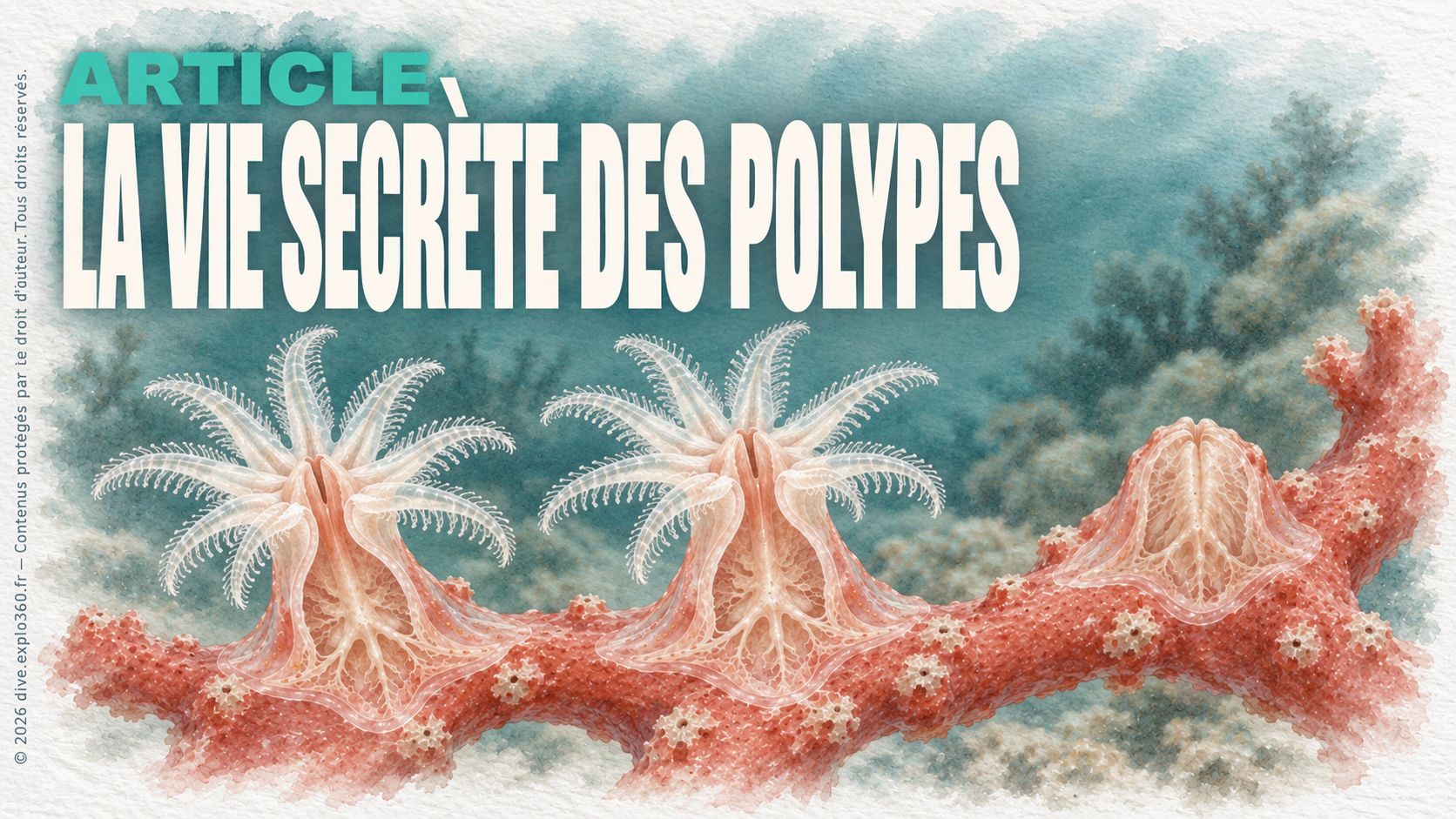
A reef-building coral colony consists of polyps linked by living tissue. Each has a mouth ringed with tentacles and helps lay down a shared skeleton of calcium carbonate. The colony can develop for decades, sometimes much longer, depending on the species and the conditions of the environment. It grows by asexual multiplication of its polyps, allowing a founding polyp to produce an entire colony.
Budding adds polyps to the colony already in place. A new colony elsewhere can start with a larva. Some corals produce both eggs and sperm, while others have separate sexes. In many hermaphroditic broadcast spawners, eggs and sperm leave the colony together in small bundles. Once those bundles break apart, gametes from colonies fixed metres apart can meet in the water.
A rendezvous around the full moon
How do colonies fixed to the seabed release eggs and sperm within the same short window?
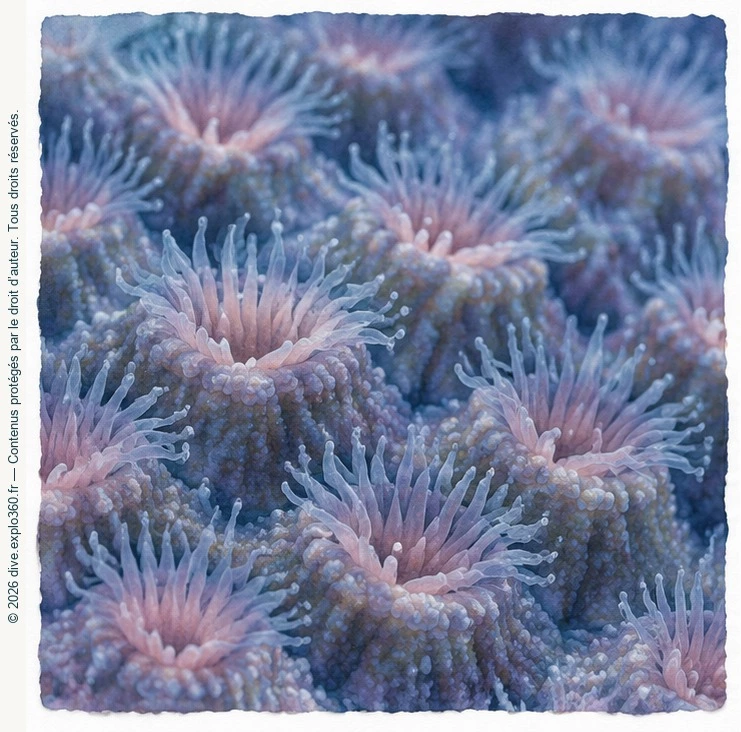
Seasonal changes, including water temperature, help set the period when gametes mature. Lunar cycles can narrow that window. On parts of the Great Barrier Reef, researchers observed dozens of species spawning a few nights after the late spring full moon. Experiments on Dipsastraea speciosa point to a particular cue after the full moon. The Sun sets before the Moon rises, leaving a dark interval that helps trigger spawning.
Timing varies across species and locations. Even colonies on the same reef may release gametes at different times. Once gametes enter the water, currents begin to dilute them. When compatible colonies spawn close together in time, their eggs and sperm have a better chance of meeting. Even within a mass spawning event, many eggs remain unfertilised.
From fertilisation to a swimming larva
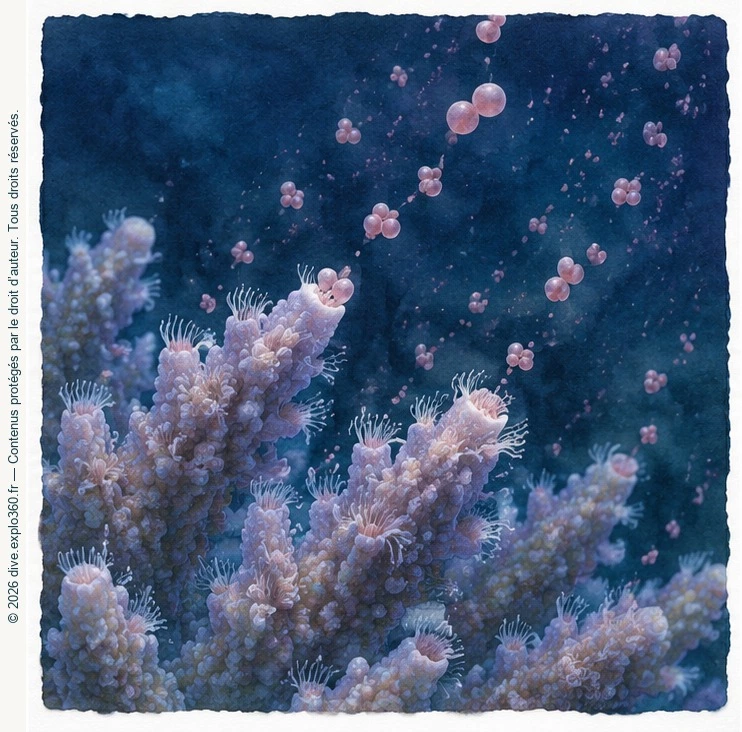
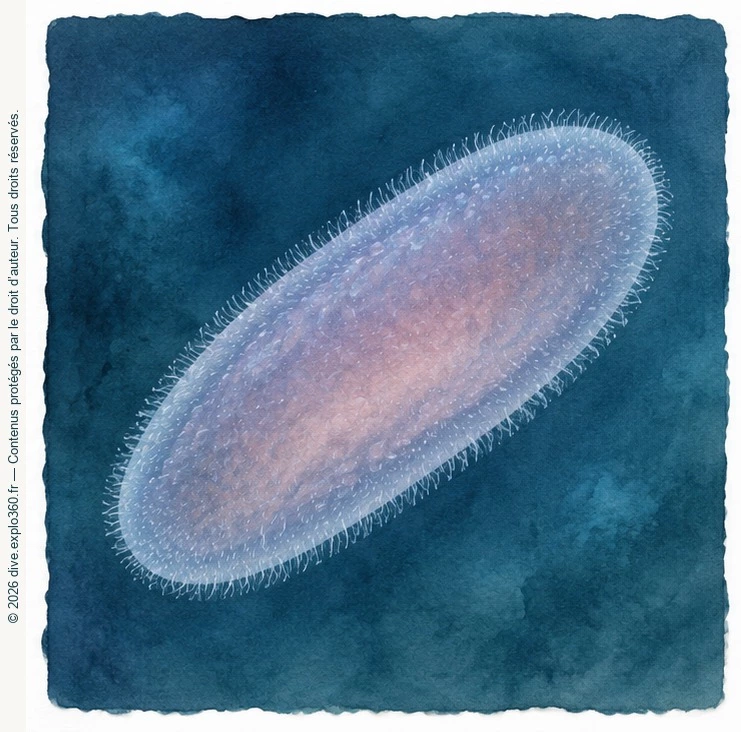
Near the surface, the bundles break apart and release eggs and sperm into the water. A fertilised egg divides and develops into a swimming larva called a planula. Tiny beating hairs called cilia cover its body and propel it through the water. At this stage the larva is mobile. After settlement it will develop tentacles and begin to lay down a skeleton.
The planula larvae can remain in the water column for several days or weeks, sometimes more. The currents drive them beyond their original reef, while their own movements influence their position in the water. Currents can carry some larvae far enough to establish colonies on other reefs. Along the way, planktonic organisms and other animals eat some eggs and larvae. Many larvae never reach a suitable surface.
Only a fraction of the offspring produced during a spawning event establish themselves on a reef.
Other corals brood their larvae
Other corals release young that are already able to swim. In brooding species, fertilisation and some embryonic development take place within the polyps. Larvae then grow in the internal tissues or cavities of polyps before being released into the water. Some larvae are ready to attach within hours of release.
The branching coral Seriatopora hystrix, present in the Indo-Pacific, is one of the species capable of producing larvae by incubation. In several corals of this type, larvae may be released repeatedly over different periods of the year.
Brooded larvae often settle near their parent colonies, though some can drift farther and colonise other habitats. On a single reef, one species can release gametes into the water while another releases developed larvae.