An anemone can sting
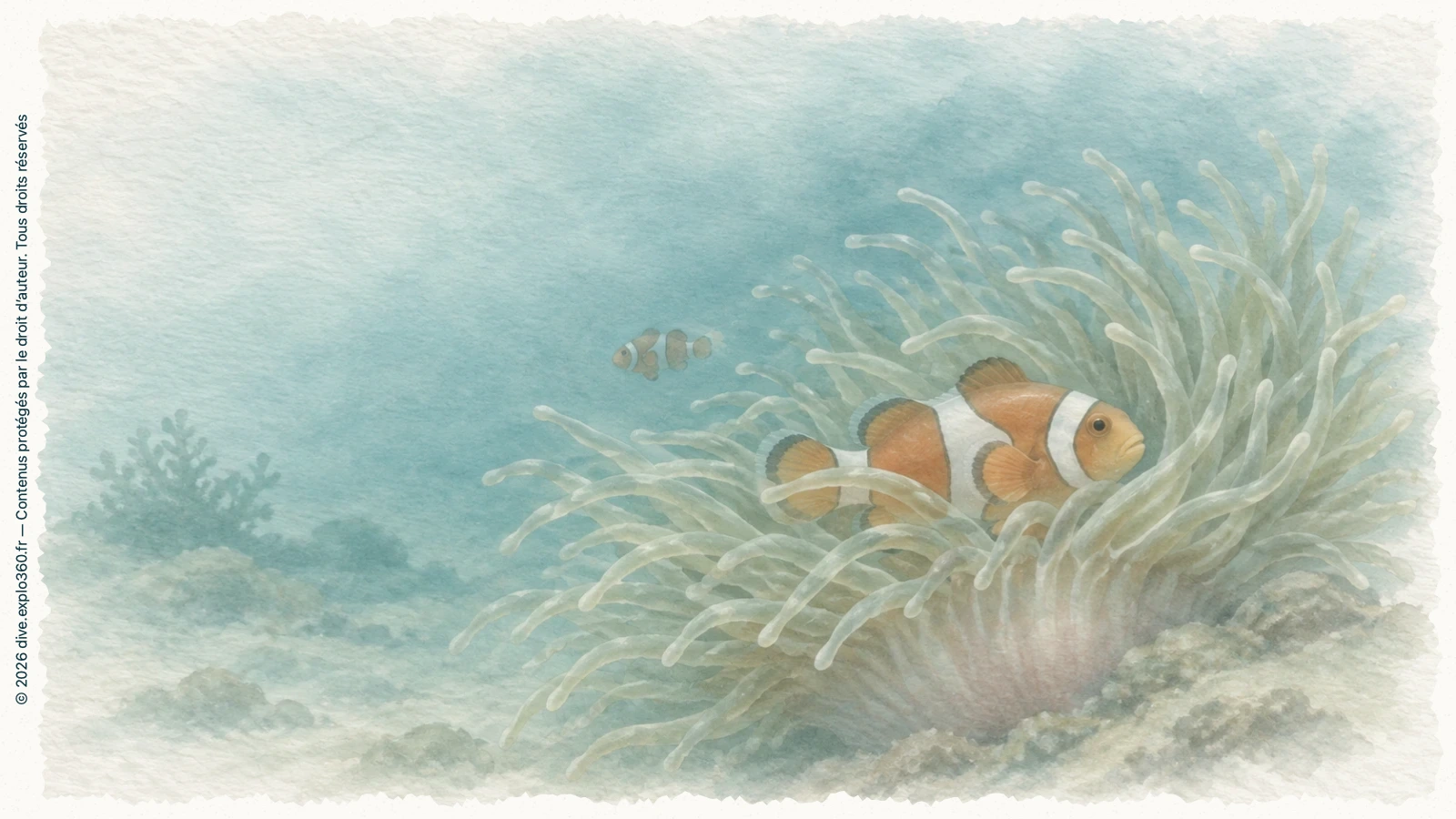
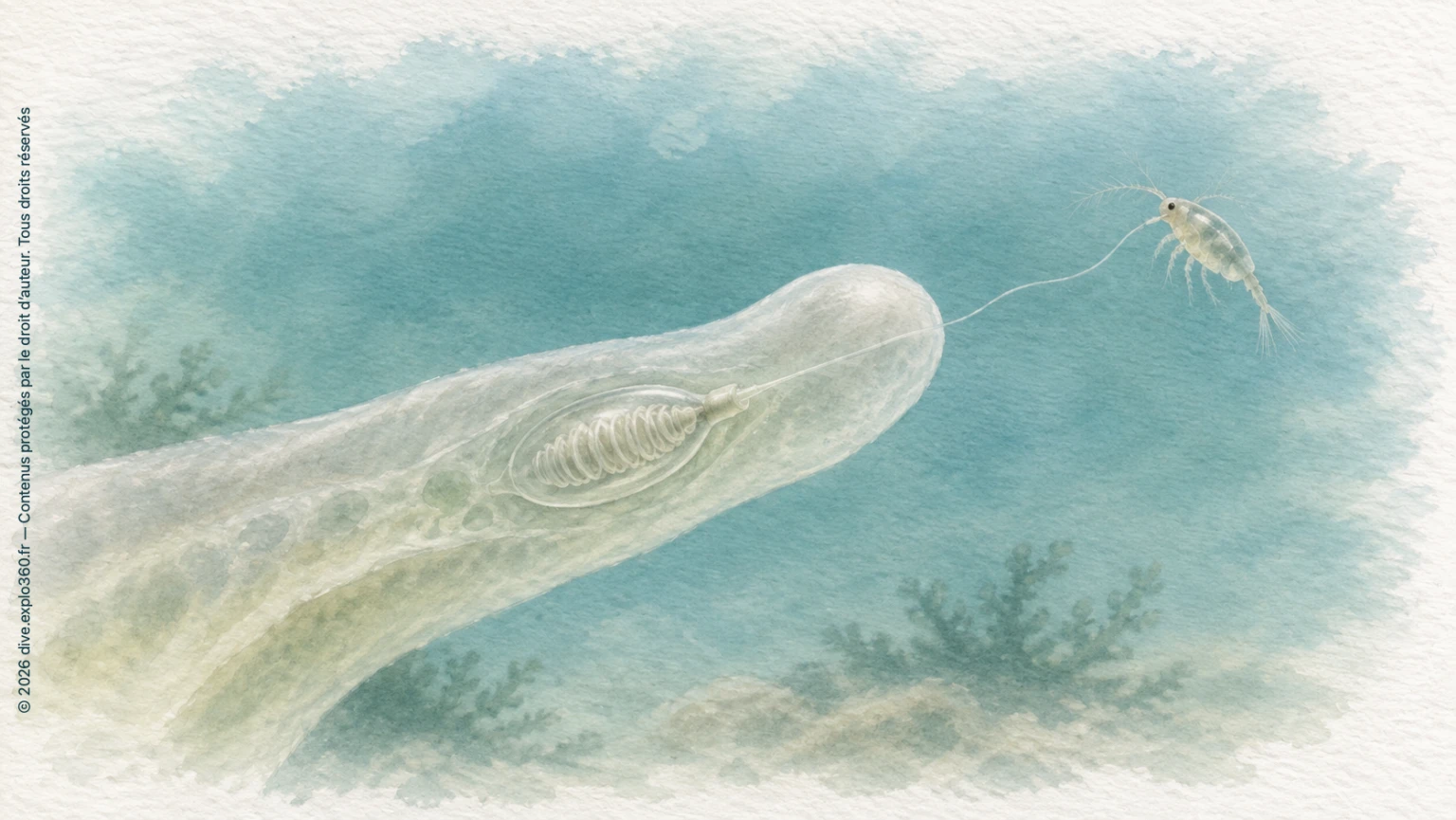
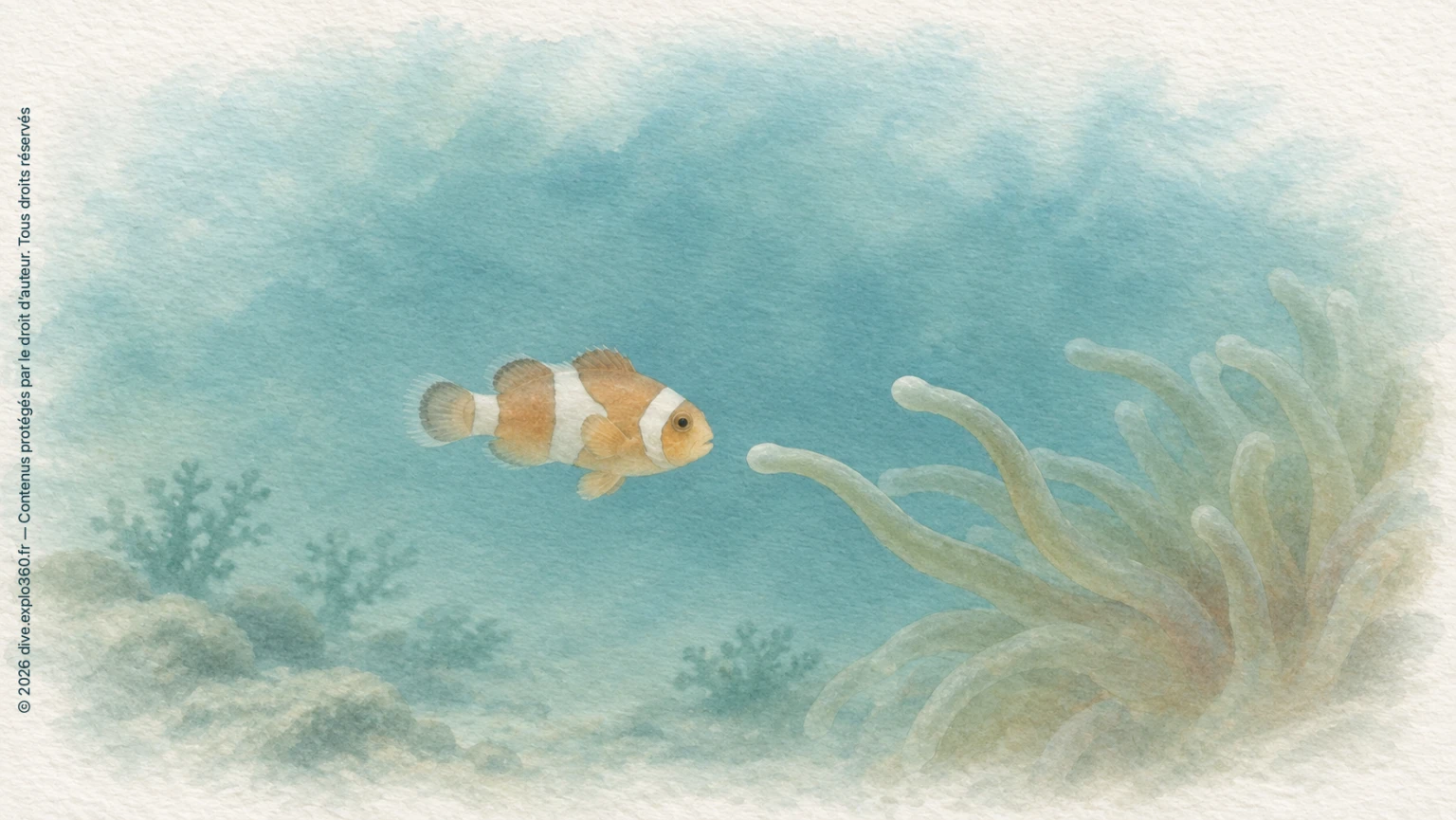
An anemone looks like a flower, but it catches its meals with its tentacles. Tiny capsules in the tentacles can shoot out threads that sting.
Clownfish have mucus
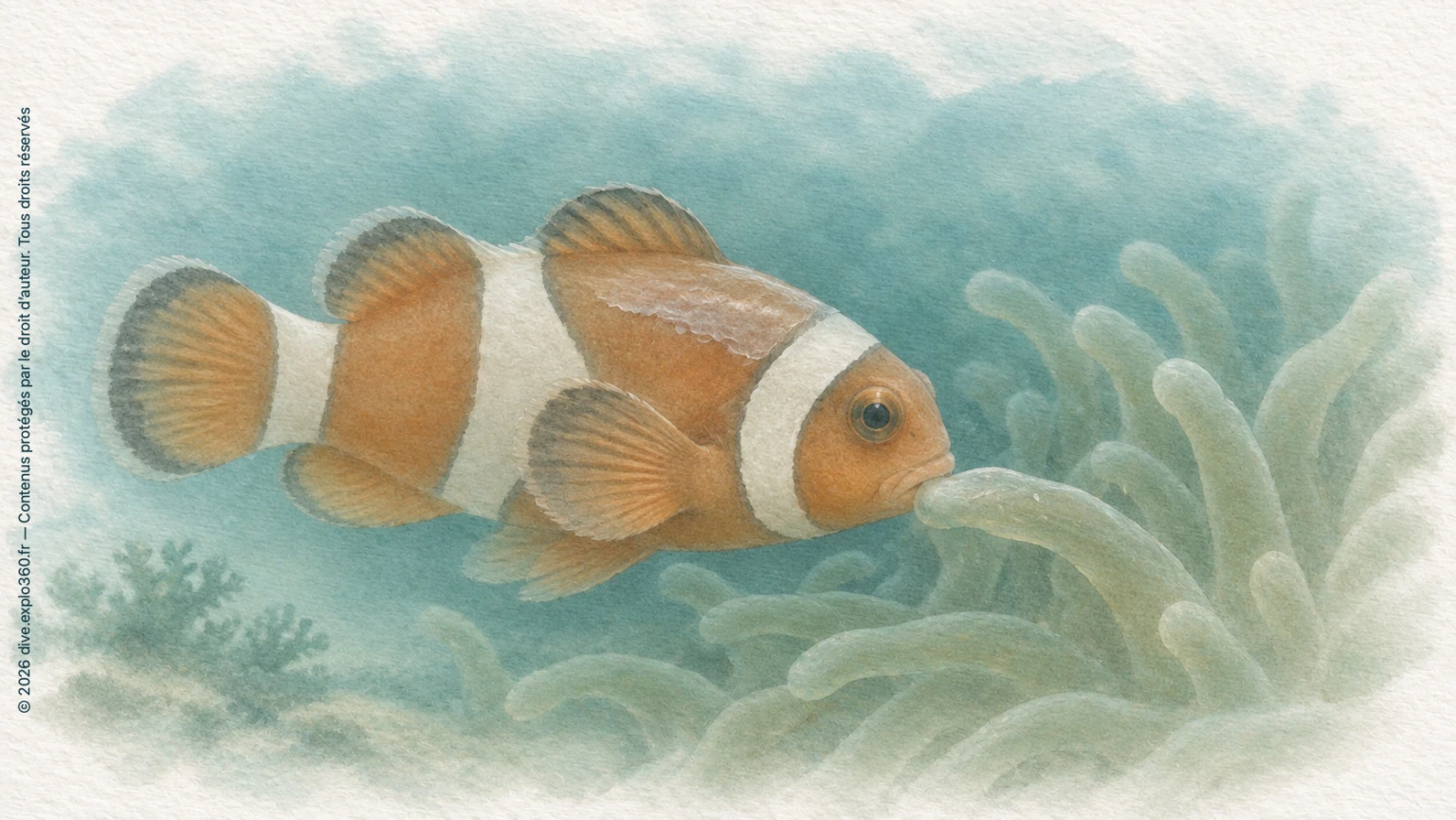
The clownfish’s skin is covered in a slippery layer called mucus. In the fish scientists studied, this coat contained less of some of the substances that can set off a sting.
Approaching gradually
A young clownfish may brush a tentacle, swim back and then try again. It can get used to its new home a little at a time.
A suitable anemone
Clownfish have different kinds of anemones they can live with. A good home for one kind of clownfish may be dangerous to another.
GO FURTHER WITH AMIGANSEAU
Continue reading
Discover full species guides, in-depth content and interactive tools available with your licence.
Dive.Explo360 is an independent, self-funded nonprofit. Every licence helps us create new content, improve our teaching tools and keep some of our resources free and ad-free.
Choose a licence that suits your needs for personal, educational or professional use.
Open-access resources remain available without a subscription.