Light enters the sea
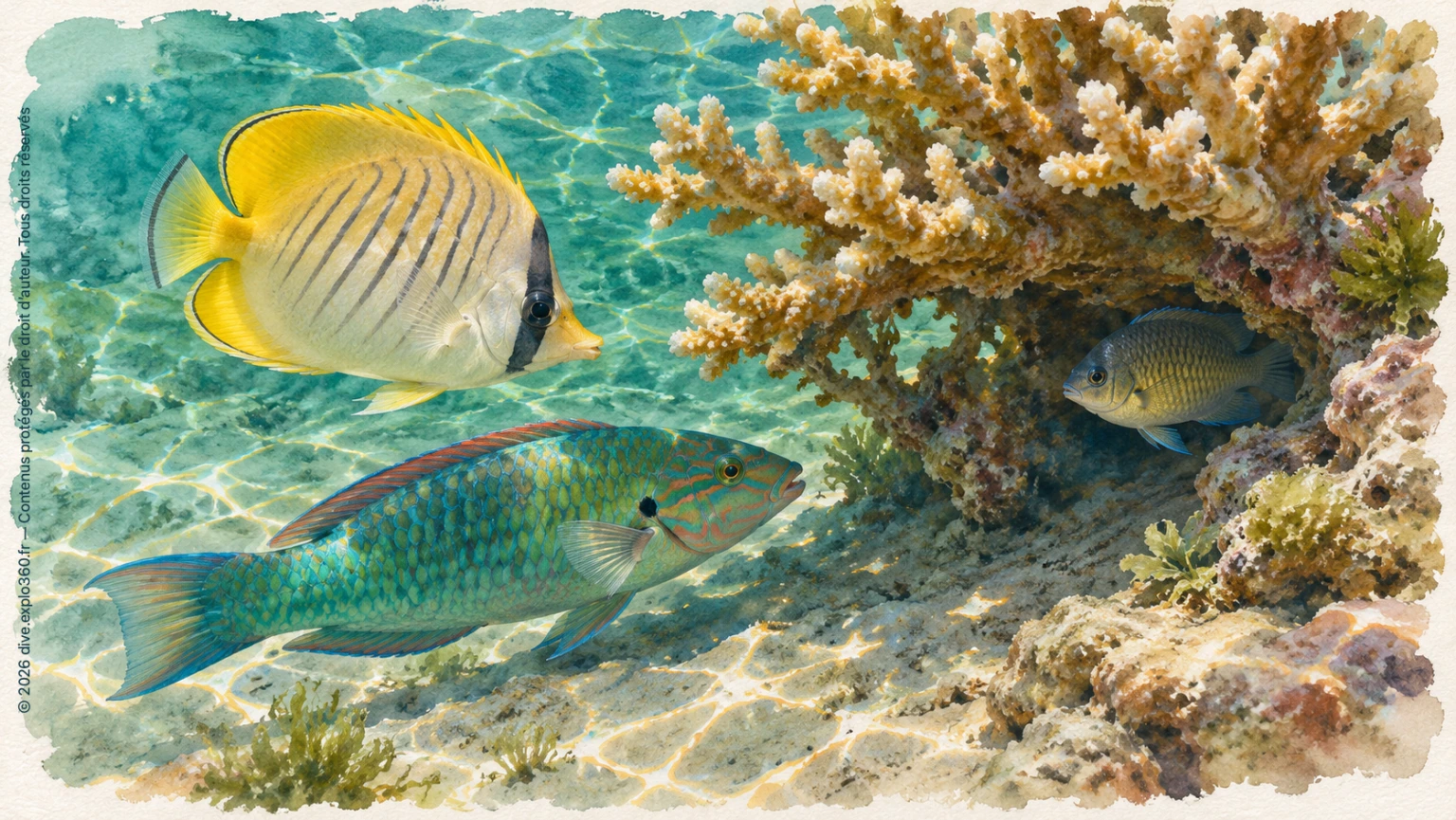
Water absorbs and scatters ultraviolet radiation. How far it penetrates depends on the wavelength, dissolved substances and suspended particles. In clear, shallow water, appreciable UV can still reach fish.
Pigments under the scales
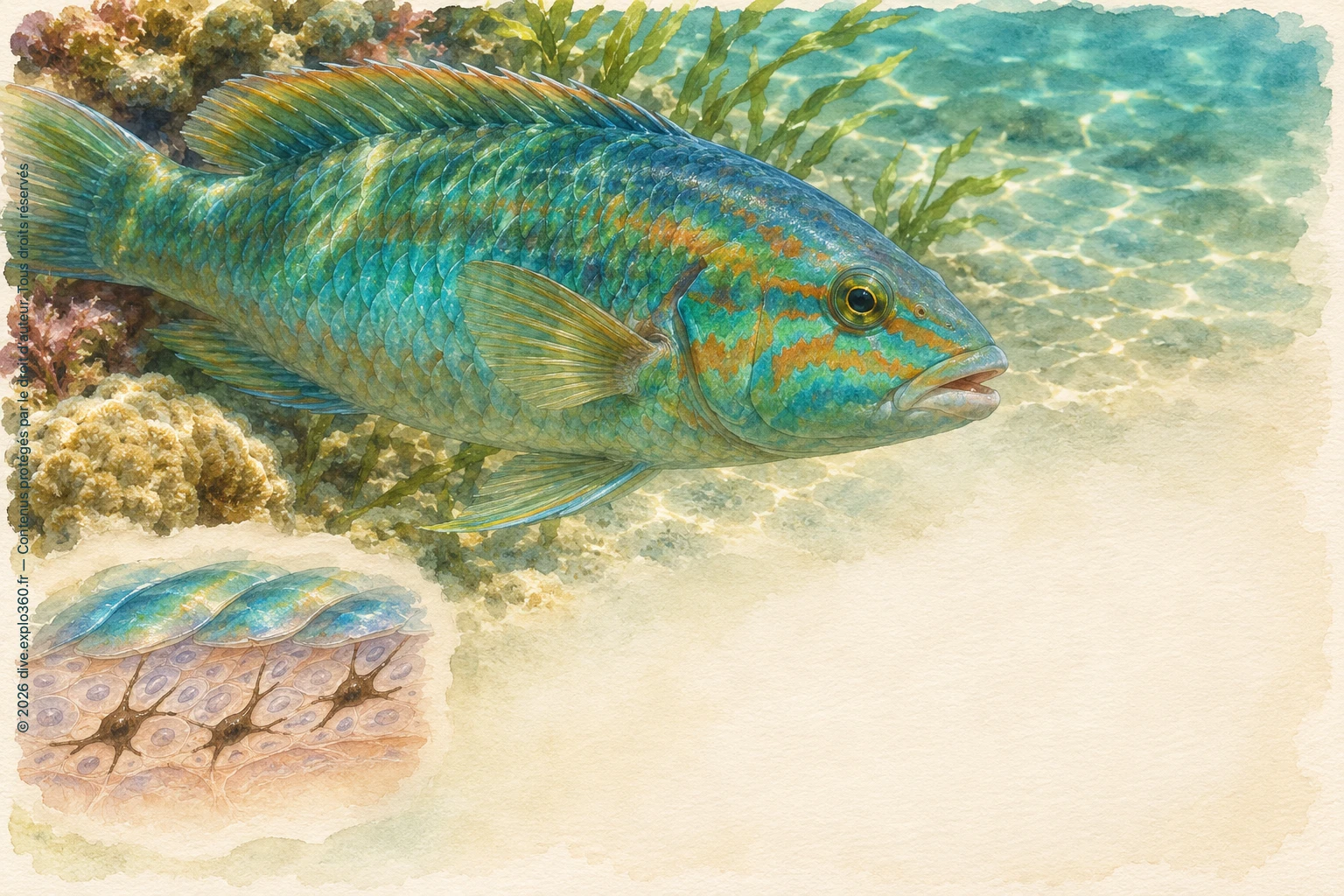
Melanin in pigment cells absorbs some UV. Its contribution depends on how much pigment is present and where it lies in the tissue. Visible colour alone tells you little about the strength of the UV filter.
Chemical filters at the surface
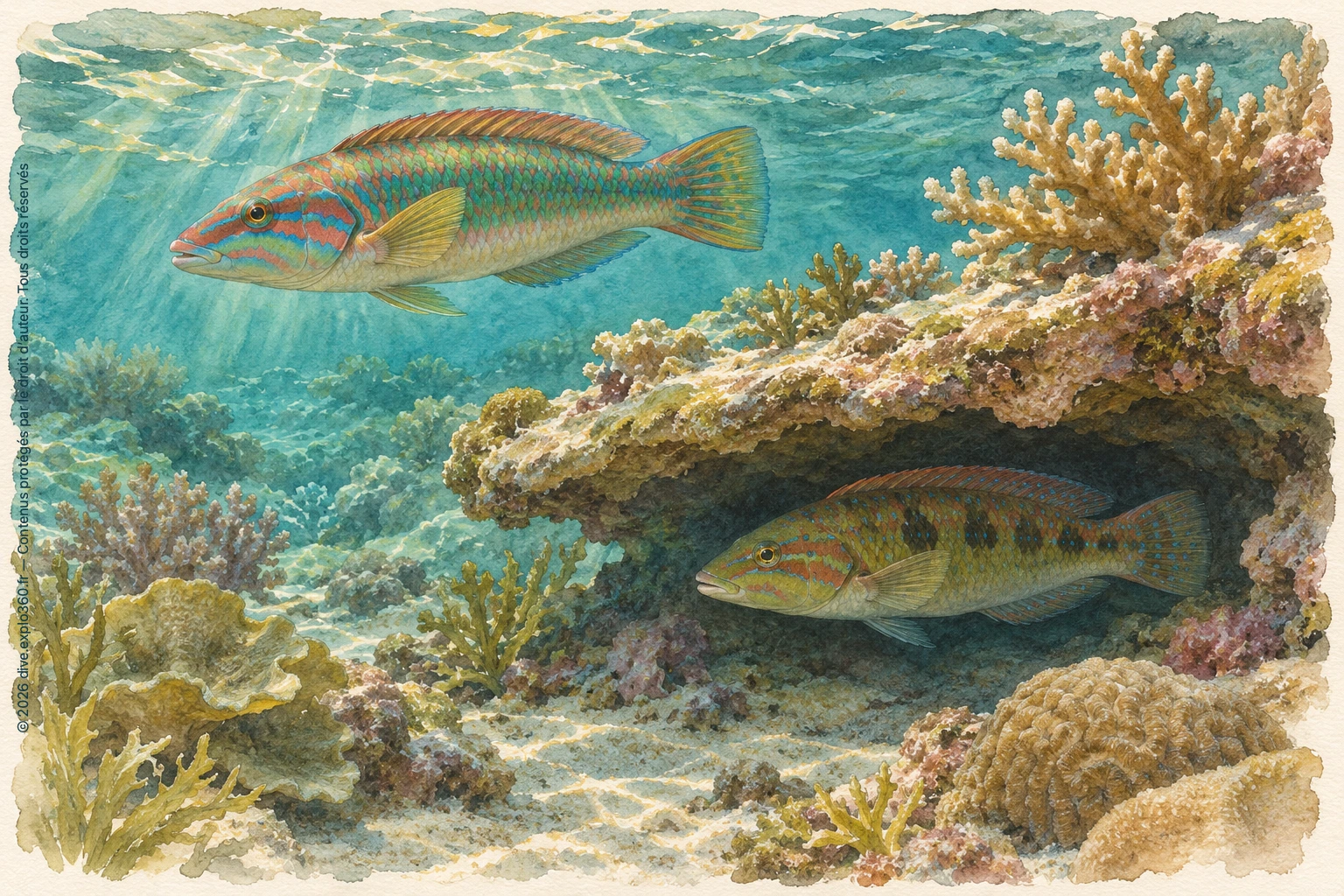
In some species, the mucus contains mycosporine-like amino acids (MAAs), which absorb particular UV wavelengths. Moon wrasses and Ambon damselfish differ both in how much UV their mucus absorbs and in how that absorption changes after exposure.
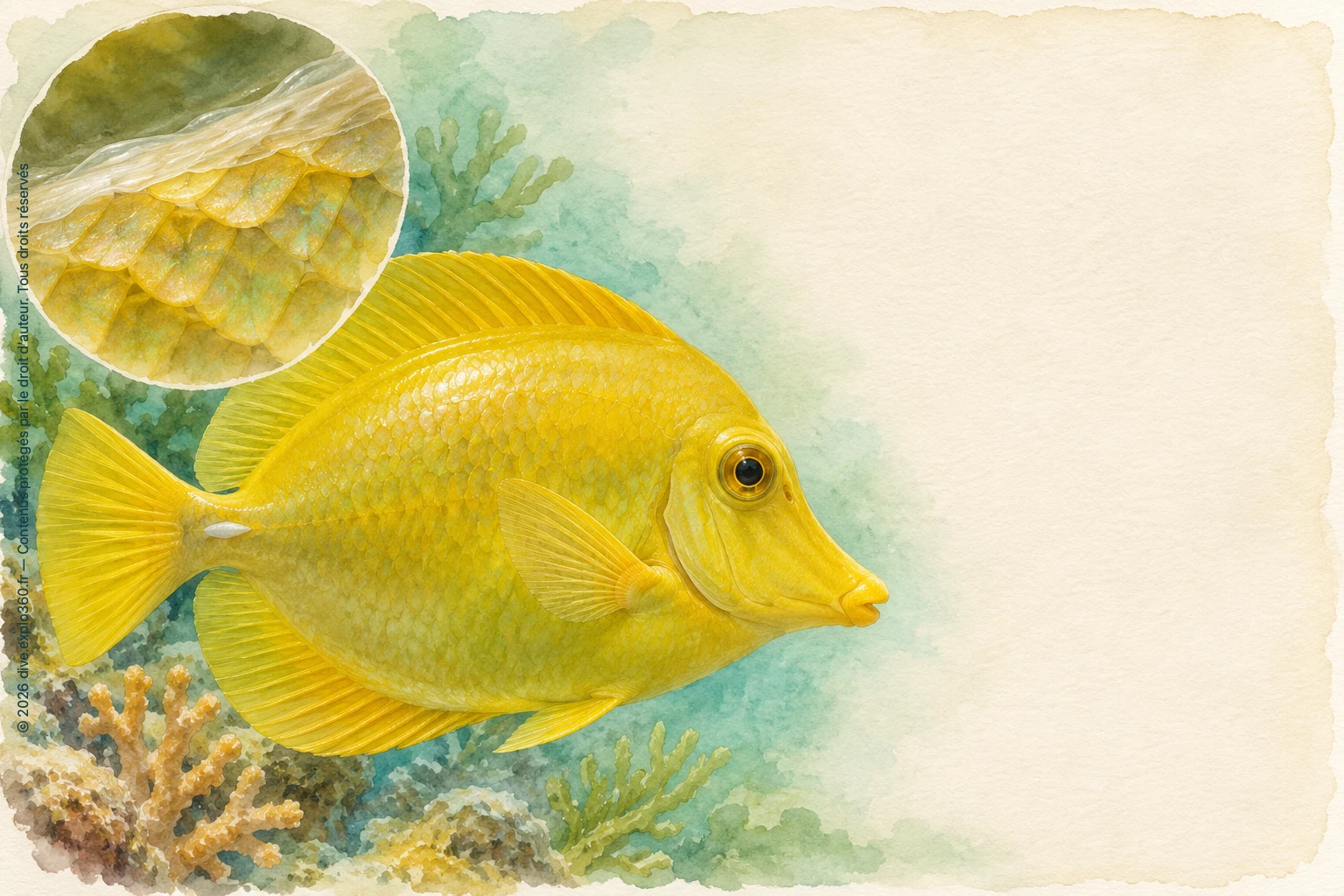
Fish do not all respond in the same way
Under controlled UV exposure, fish whose mucus absorbed more radiation showed fewer DNA lesions in the skin. Comparing the species under the same conditions makes differences in their mucus easier to study.
GO FURTHER WITH AMIGANSEAU
Continue reading
Discover full species guides, in-depth content and interactive tools available with your licence.
Dive.Explo360 is an independent, self-funded nonprofit. Every licence helps us create new content, improve our teaching tools and keep some of our resources free and ad-free.
Choose a licence that suits your needs for personal, educational or professional use.
Open-access resources remain available without a subscription.
Explore the same world