


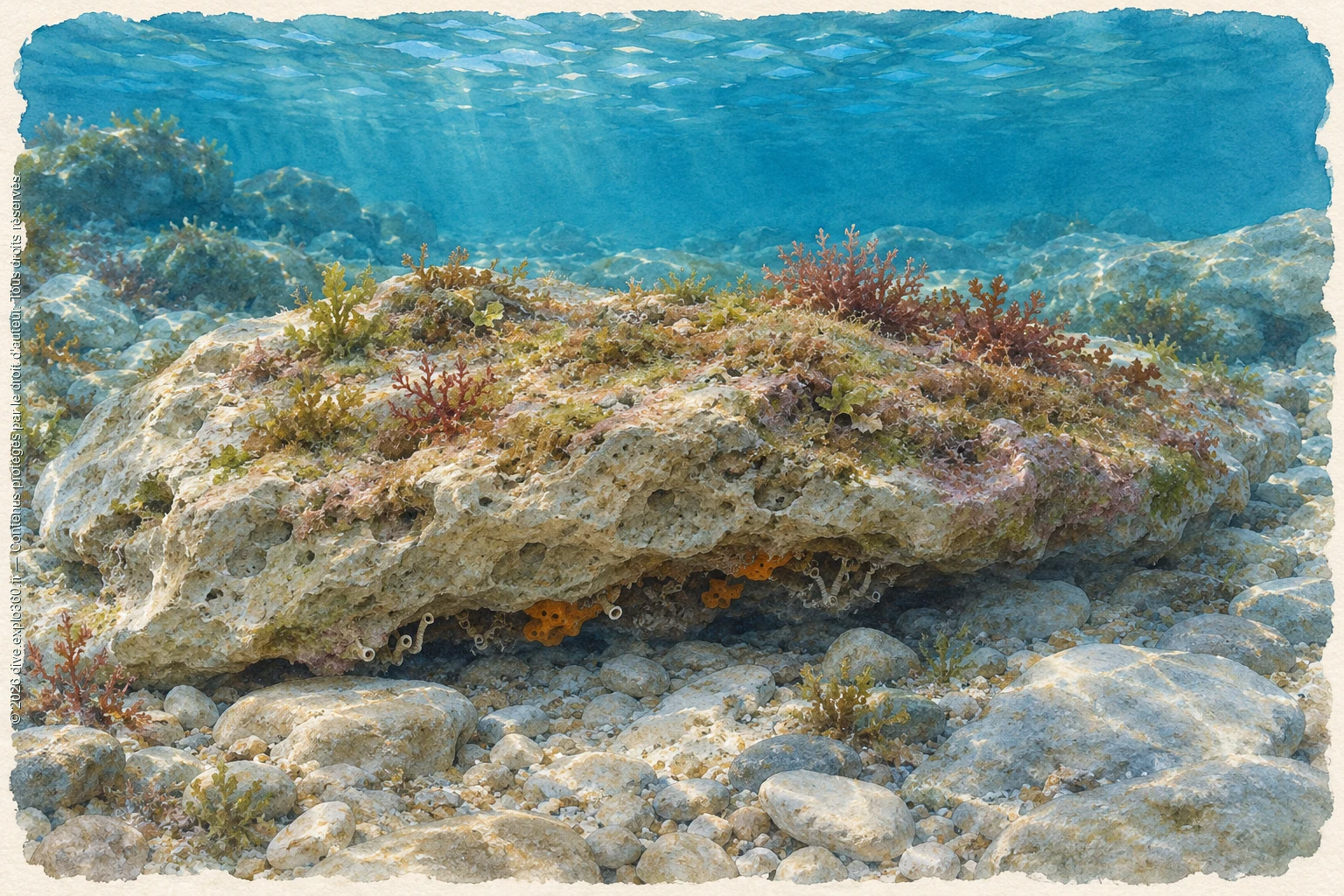
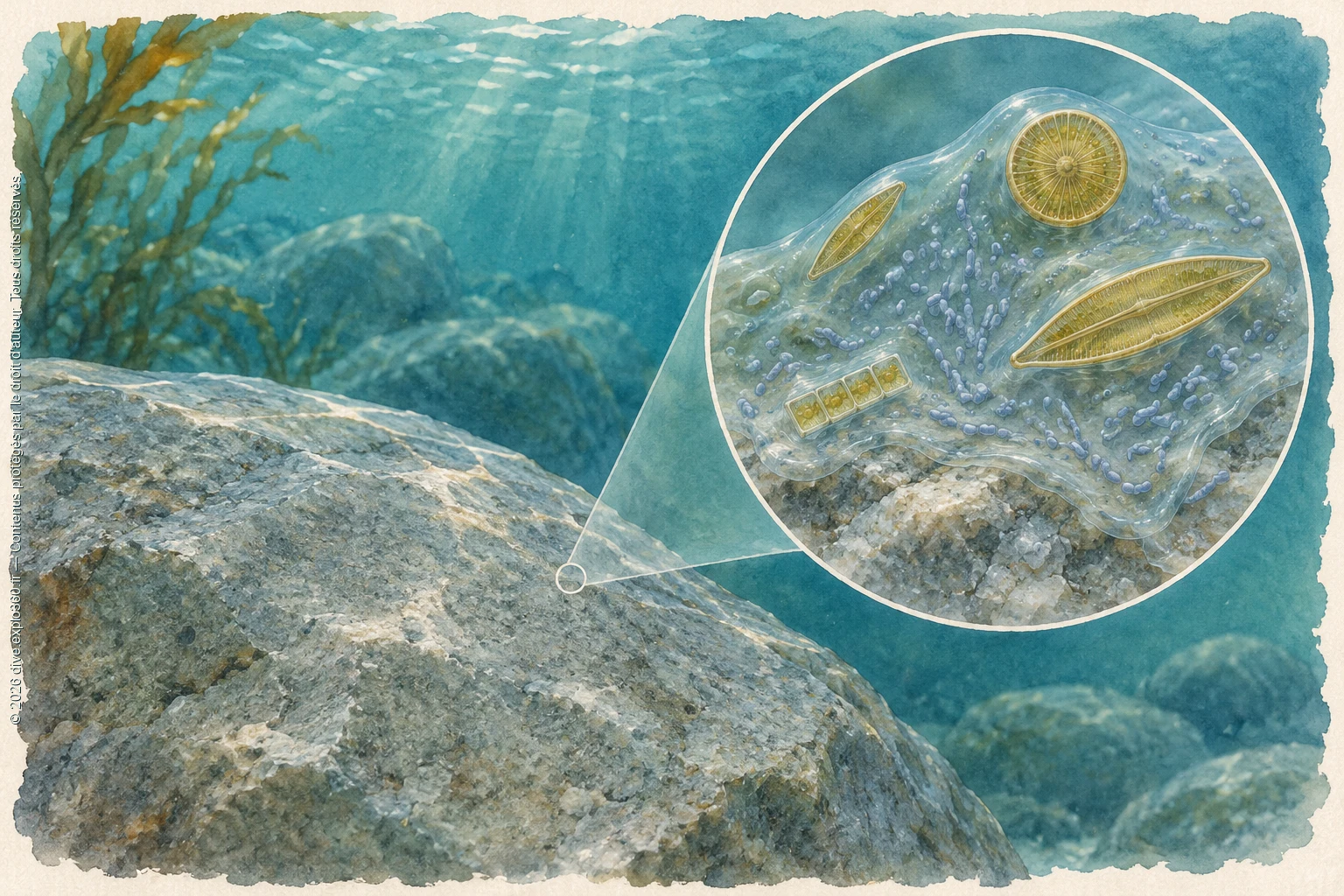
A biofilm starts the story
Organic molecules dissolved in seawater stick to the stone and change its surface chemistry. Bacteria attach, multiply and make substances that help them stay put. If there is enough light, tiny algae called diatoms may join them. These have silica coverings. Microbes and their secretions form a thin coating called a biofilm. The rock may look bare, but a community is already at work. Chemicals from some bacteria encourage larvae to settle; others discourage them.
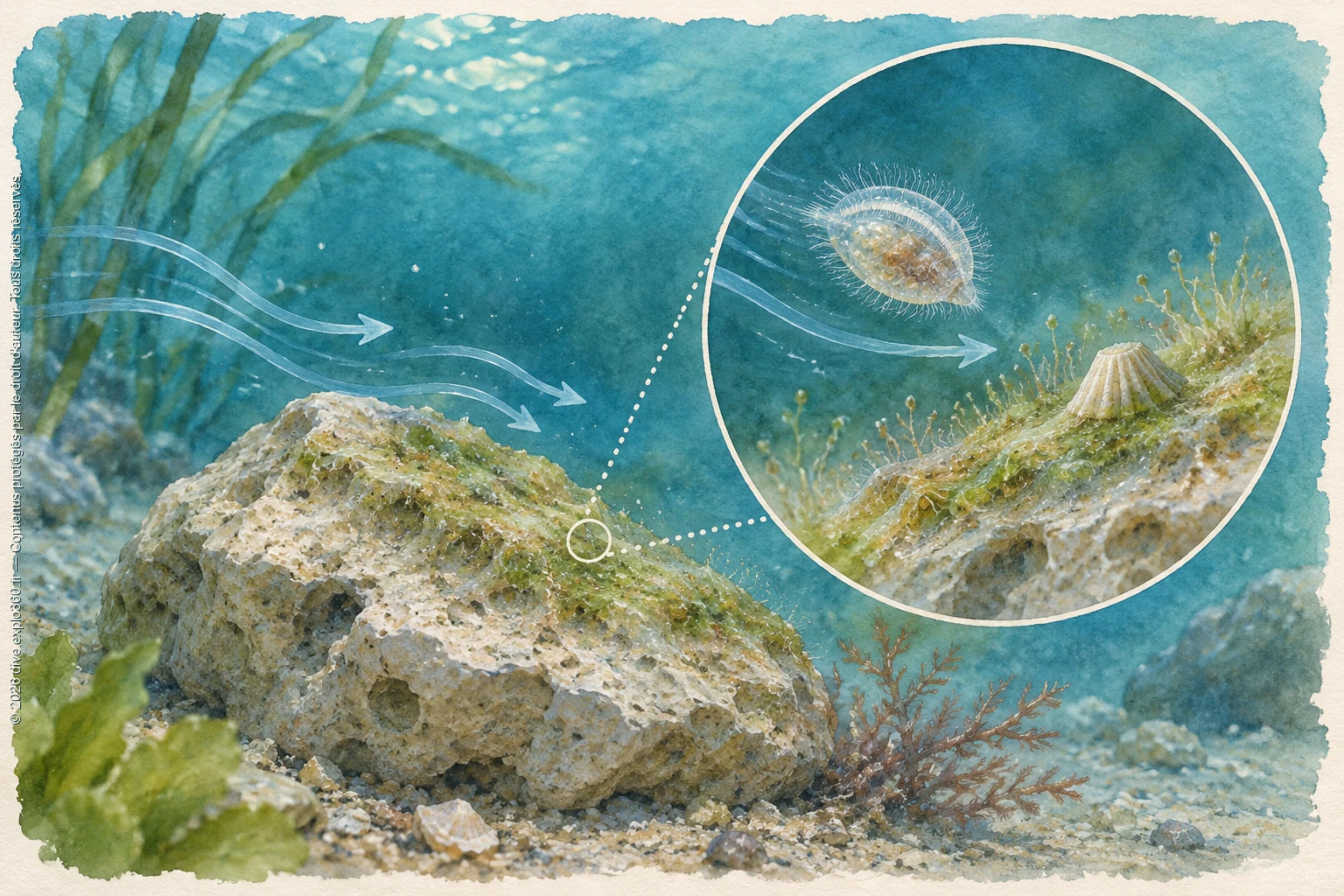
Larvae carried by currents
An adult sponge, sea fan, bryozoan or sea squirt stays attached. But many begin life as larvae, free in the water. Their journey may last hours, days or weeks, depending on the species. Currents carry them, while their own movements allow limited changes of position. When ready to settle, they may explore a surface. Roughness, light, chemical clues and neighbours can influence the choice. Metamorphosis then changes the body into a young bottom-dweller. A stone may receive arrivals whose parents live far away.

Tiny builders at work
Over weeks or months, algae grow, sponges spread and worms build tubes. Spirorbid worms make coiled limestone tubes just millimetres across, reaching out with a feeding crown to catch particles. A bryozoan colony can begin with one individual that buds off more, called zooids. These stay connected, forming crusts or branches depending on the species. The growing community adds gaps, hollows and raised surfaces: more places for other life to settle.
A sunny top and a shaded underside
Light favours green, brown and red algae on the upper surface of a shallow stone. They can form tufts, threads or crusts. Underneath, many algae cannot get enough light. Animals feeding from the water may find less competition from them. Sponges pump water through their bodies to collect bacteria and particles; sea squirts filter it; bryozoans use tentacles with tiny moving hairs. Currents, sediment, predators and stability matter too. Similar contrasts occur between walls, overhangs and cave entrances.
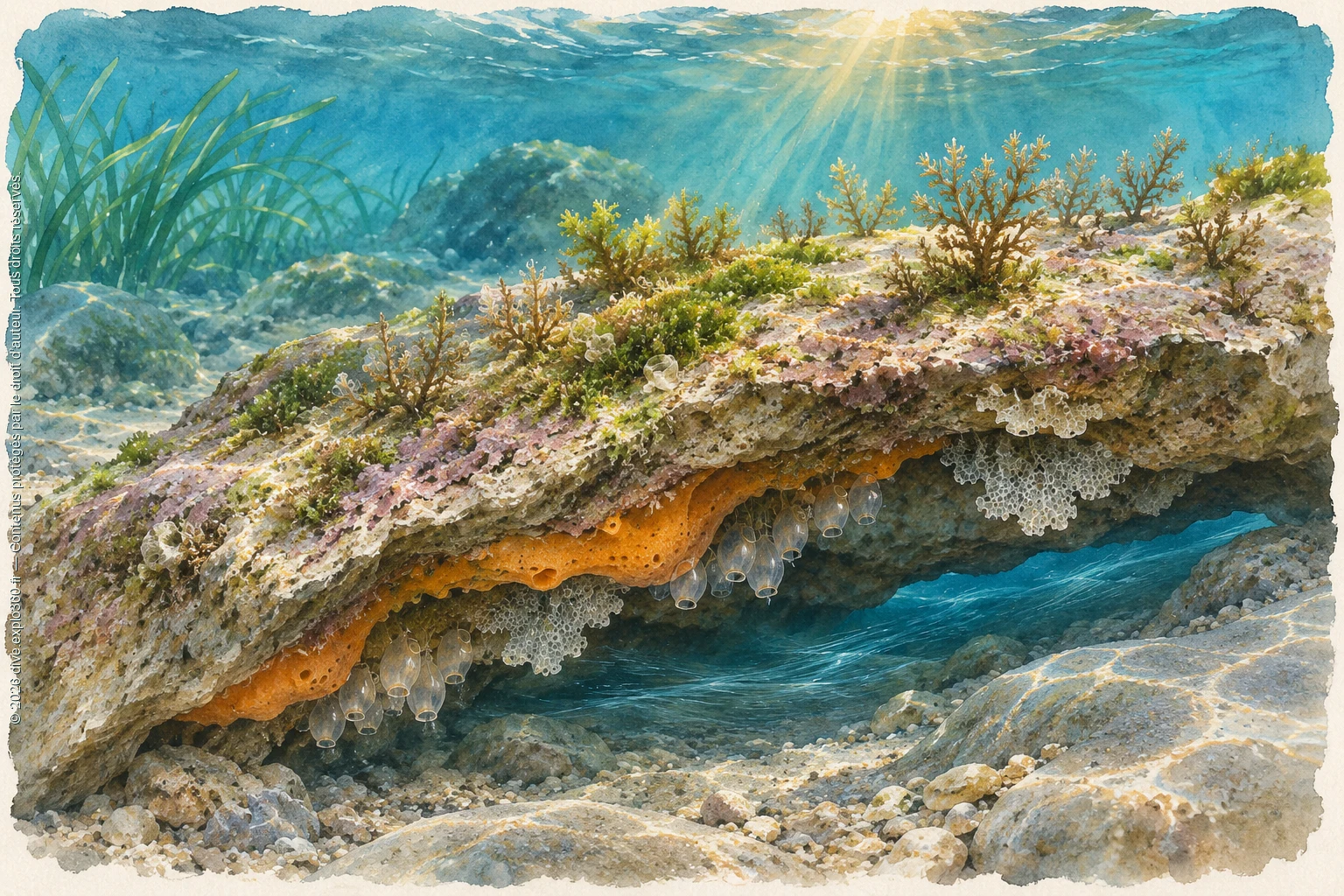
Space becomes a resource
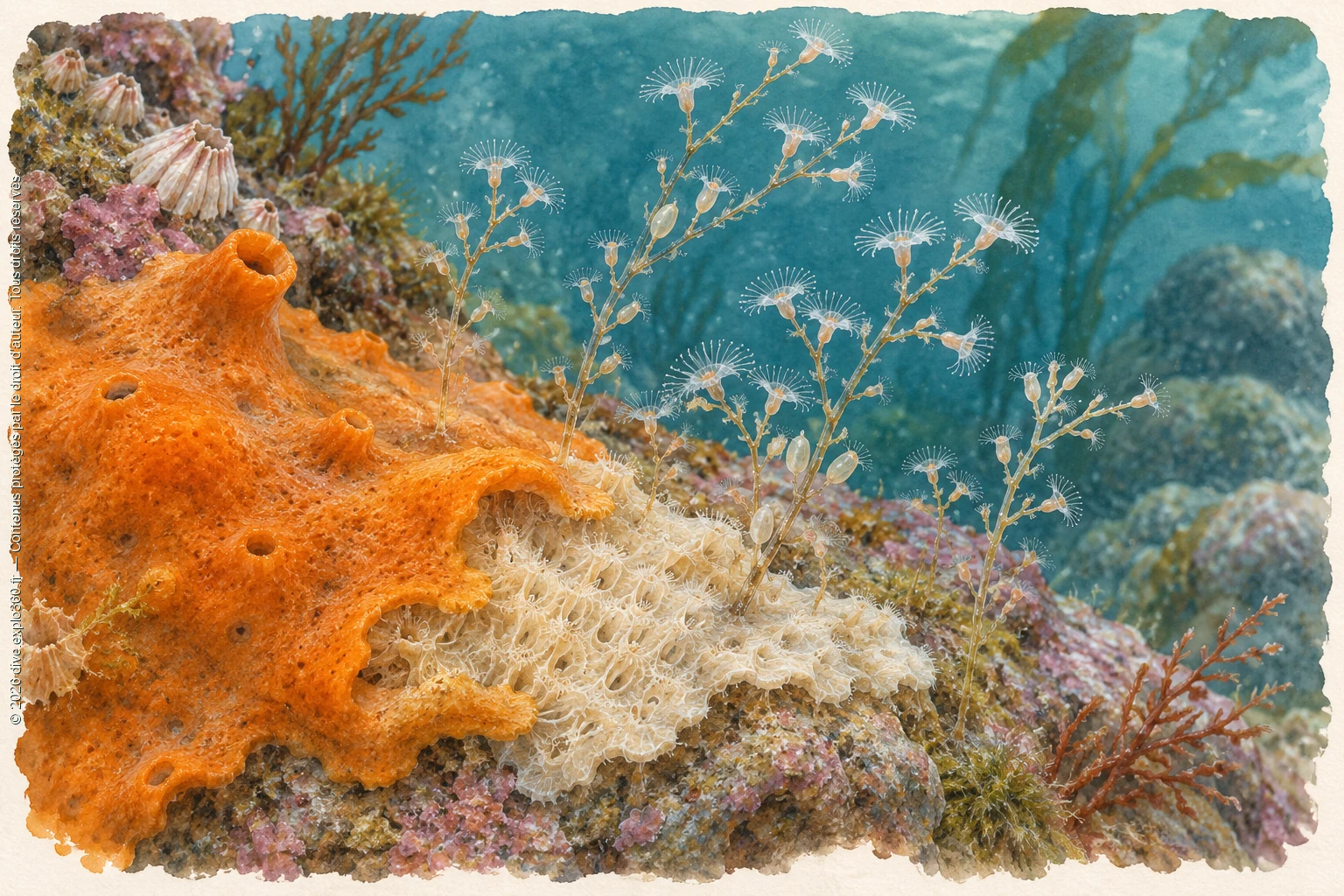
Space becomes scarce as colonies grow. Some stop where they meet a neighbour; others grow over it. A sponge may cover bryozoans, or a sea squirt take a patch once occupied by algae. Some sponges also produce chemicals that limit other organisms under certain conditions. Hydroids grow upwards instead, lifting their feeding polyps on fine branches into flowing water and passing prey.
GO FURTHER WITH AMIGANSEAU
Continue reading
Discover full species guides, in-depth content and interactive tools available with your licence.
Dive.Explo360 is an independent, self-funded nonprofit. Every licence helps us create new content, improve our teaching tools and keep some of our resources free and ad-free.
Choose a licence that suits your needs for personal, educational or professional use.
Open-access resources remain available without a subscription.