


Biofilms prepare a surface
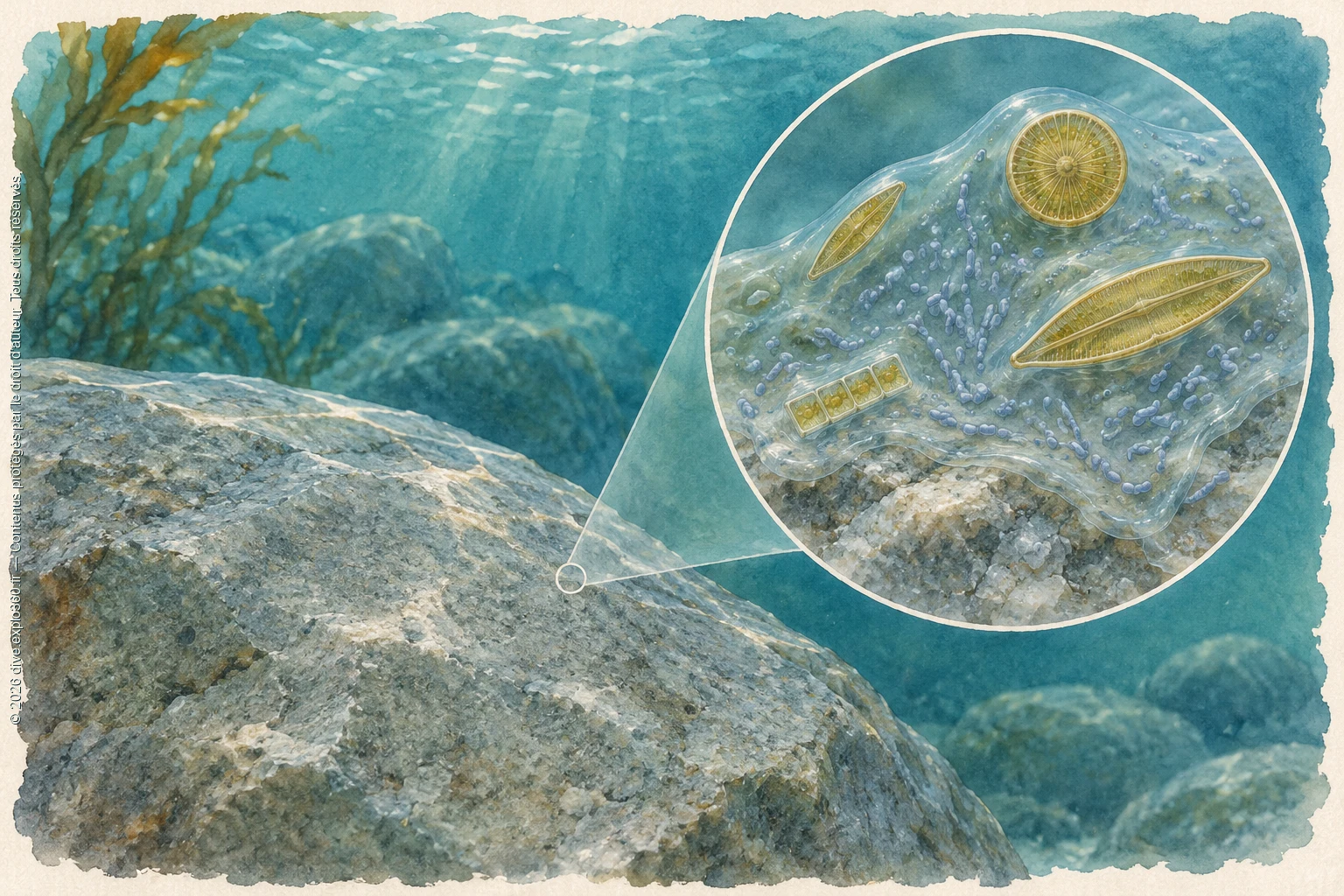
Dissolved organic molecules quickly attach to a submerged mineral surface, changing its chemistry. This attachment is called adsorption. Bacteria settle, multiply and secrete material around themselves; diatoms, tiny algae with silica coverings, may join where light permits. Microbes and their secretions form a biofilm. An apparently bare surface is already biologically active. Chemicals from some bacteria promote larval settlement, while others can discourage it.
Dispersal, settlement, metamorphosis
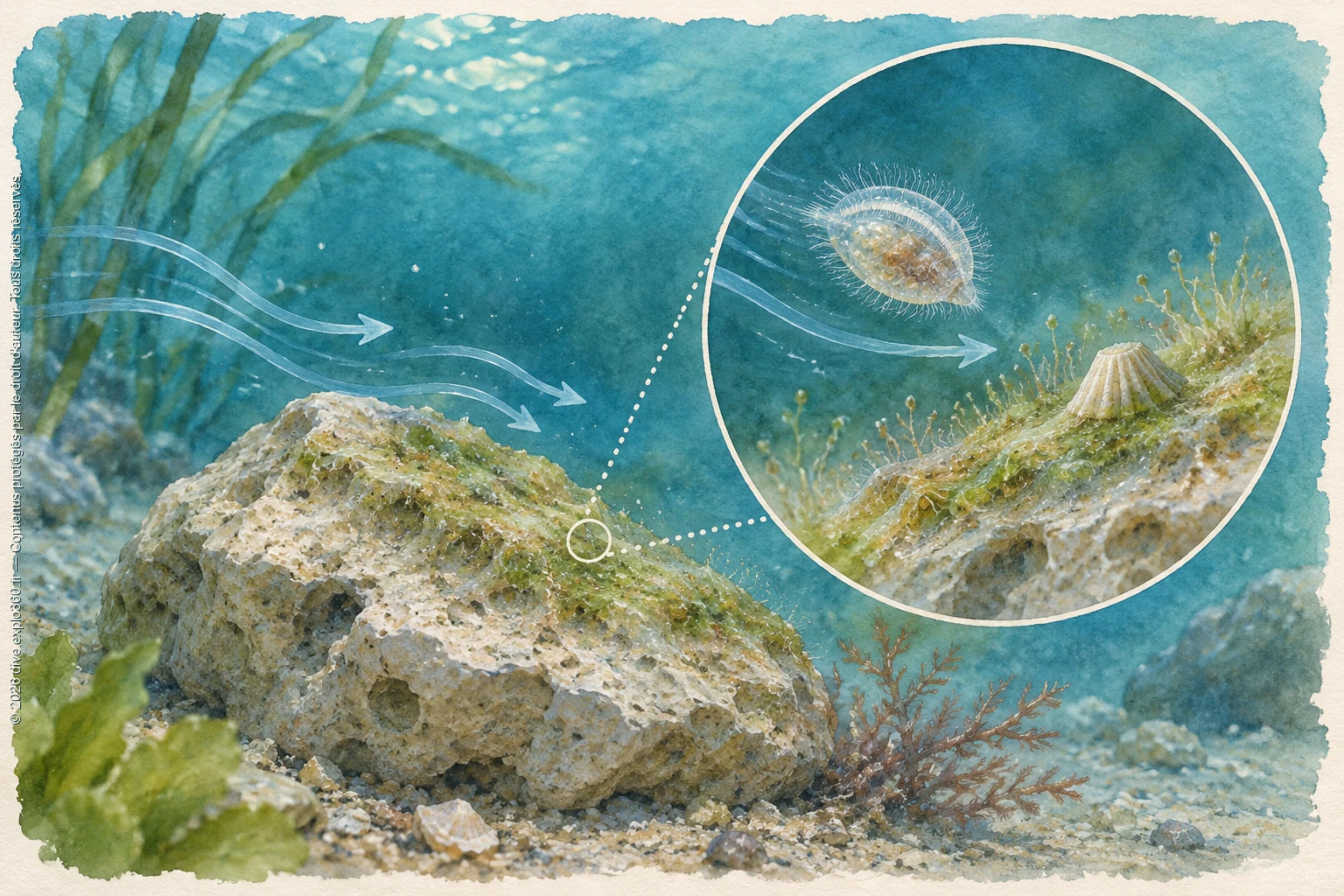
Many attached animals, including sponges, sea fans, bryozoans and sea squirts, disperse as larvae. Depending on the species, this planktonic stage lasts hours, days or weeks. Currents carry larvae, while their movements allow limited changes of position. When ready to settle, they may explore surfaces, responding to roughness, light, chemical signals and neighbours. Settlement is generally followed by metamorphosis into a young bottom-dweller. A local community can therefore receive recruits from distant populations.

Tiny builders at work
Algae, tube worms, sponges and bryozoans gradually change the surface at rates set by local conditions. Spirorbid worms build tiny coiled limestone tubes and capture particles with a tentacle crown. A bryozoan larva can found a colony that grows by budding connected individuals, or zooids. Some form crusts of adjoining chambers; others branch upwards. These structures add gaps, hollows and surface area for later arrivals.
A sunny top and a shaded underside
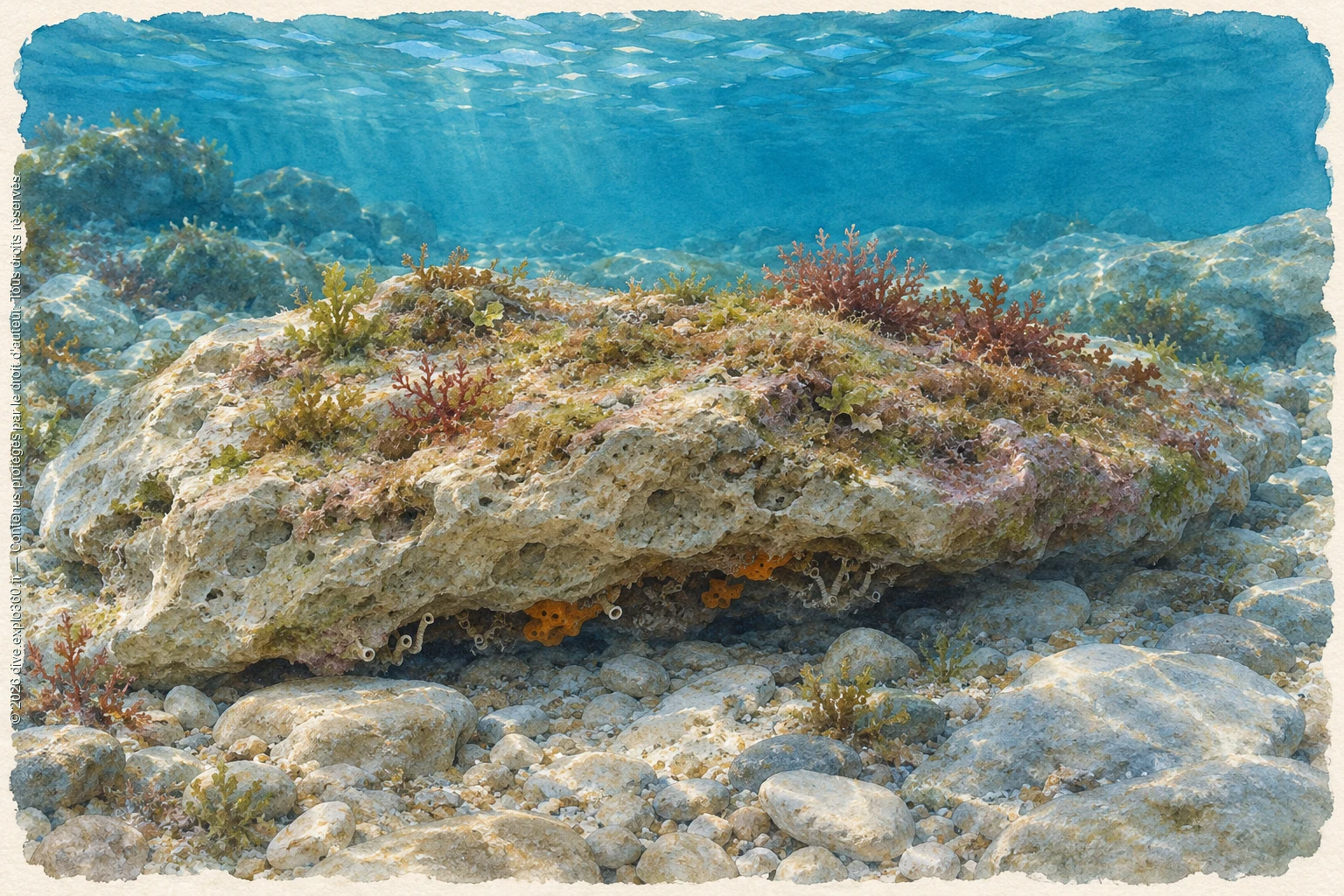
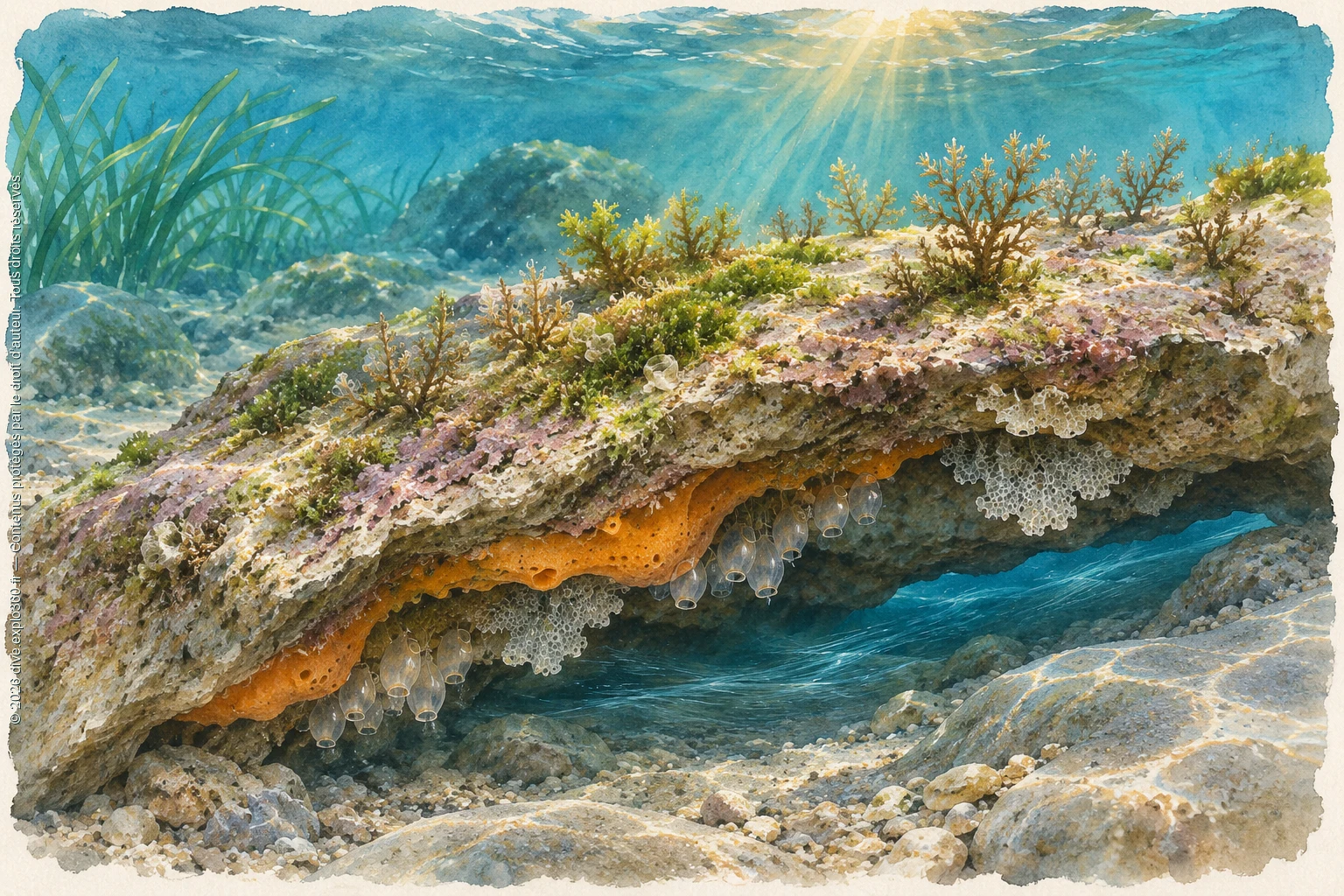
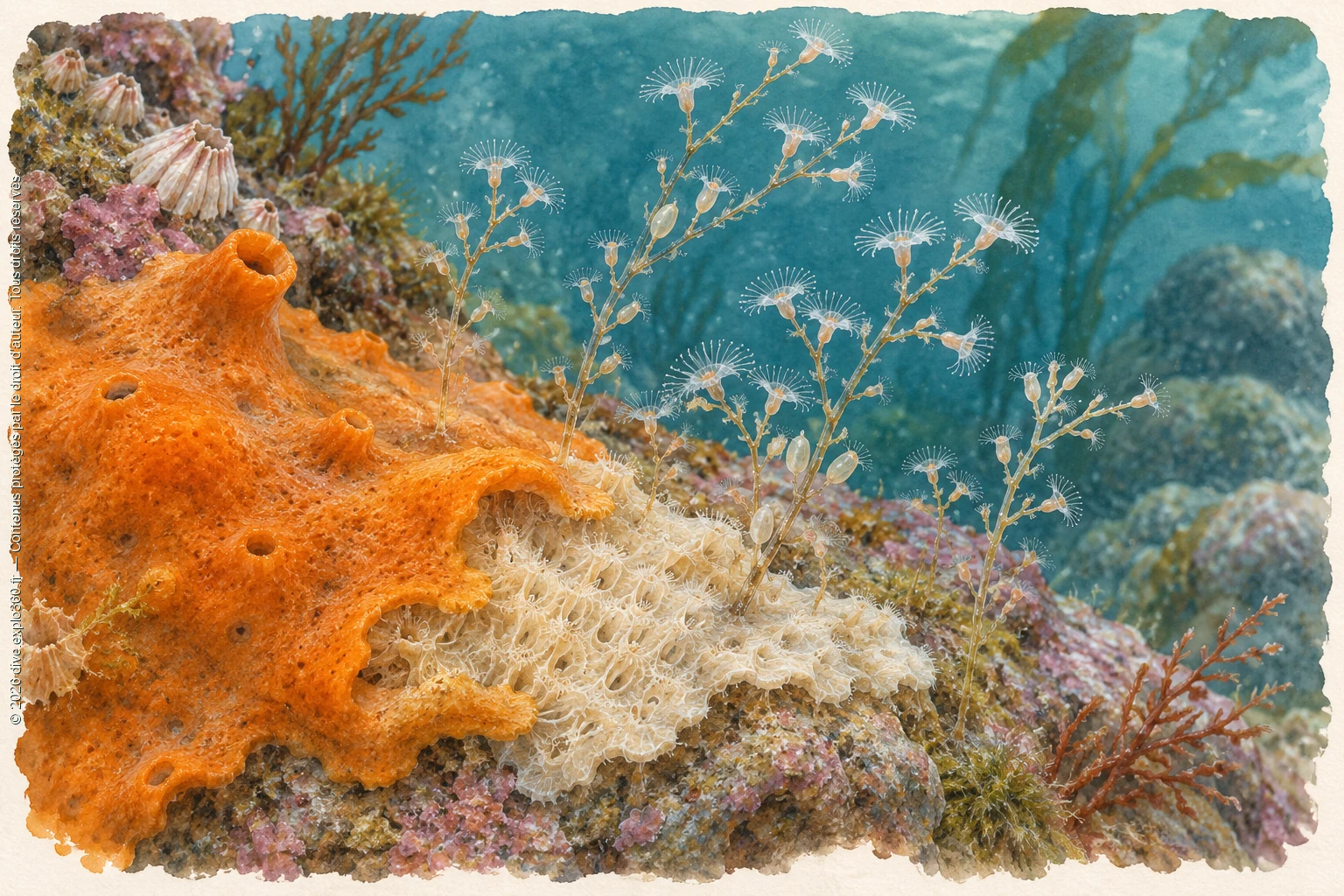
On the top of a shallow stone, light favours photosynthetic algae, growing as tufts, filaments or crusts. Underneath, low light limits many algae and may reduce their competition with animals collecting waterborne food. Sponges circulate water to catch bacteria and particles, sea squirts filter it, and bryozoans use crowns of ciliated tentacles. Water flow, sediment, predators and stability also shape the community. Larger contrasts occur across walls, overhangs and cave entrances.
Competition for space
For organisms fixed in place, space is a resource. Colonies may stop at a neighbour or grow over it. Sponges can cover bryozoans; sea squirts can occupy formerly algal patches. Some sponges release chemicals that limit settlement or growth under particular conditions. Hydroids exploit the space above the rock, lifting polyps into moving water and passing prey.
GO FURTHER WITH AMIGANSEAU
Continue reading
Discover full species guides, in-depth content and interactive tools available with your licence.
Dive.Explo360 is an independent, self-funded nonprofit. Every licence helps us create new content, improve our teaching tools and keep some of our resources free and ad-free.
Choose a licence that suits your needs for personal, educational or professional use.
Open-access resources remain available without a subscription.