The first inhabitants are invisible
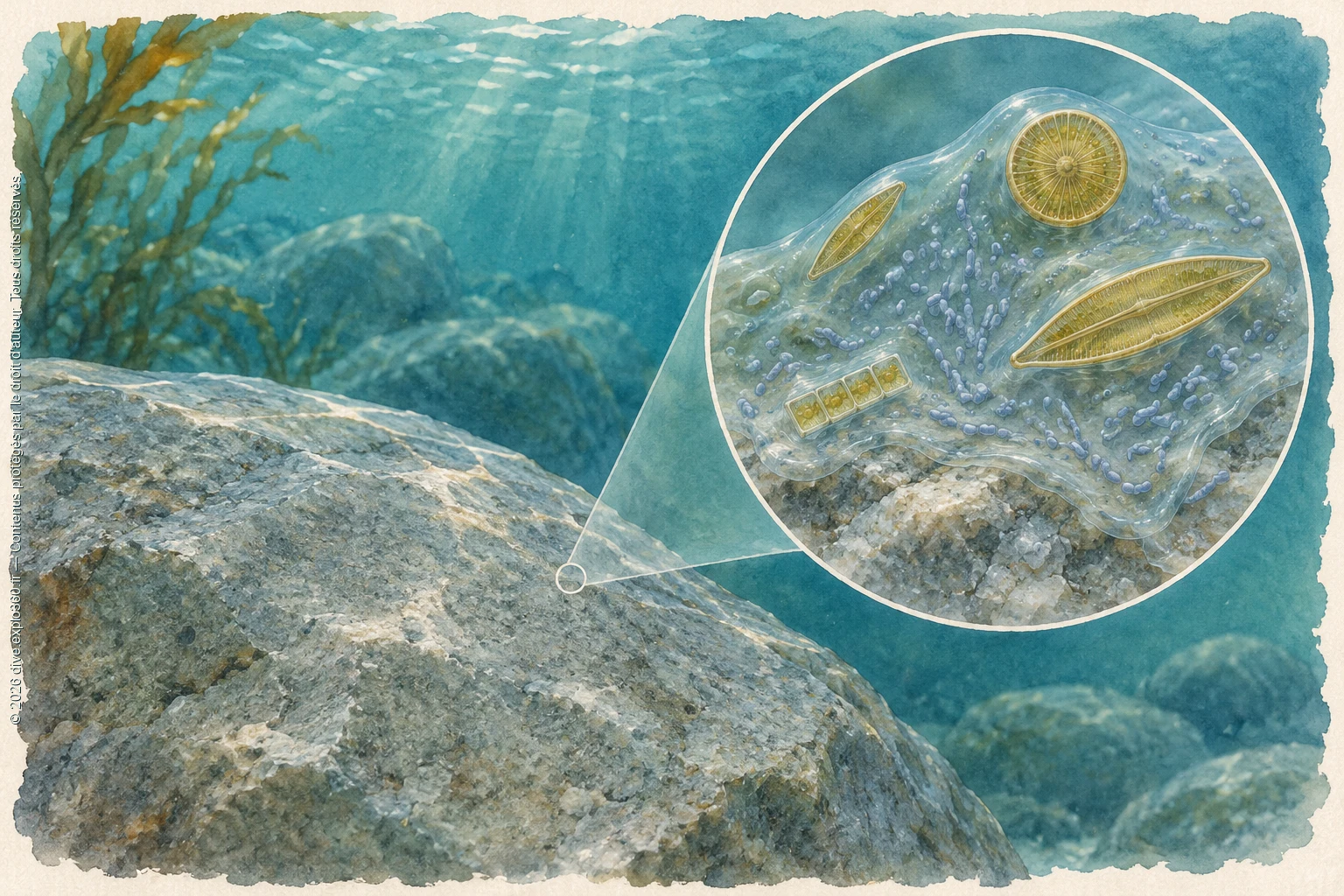
The first arrivals are not animals, or even microbes. Dissolved organic molecules cling to a newly submerged mineral surface, changing its chemistry.
Bacteria attach, multiply and release substances that help them stick. Where there is enough light, diatoms, tiny algae with silica coverings, may join them.
Together, the microbes and their secretions form a thin coating called a biofilm.
The stone may still look bare, but its surface is already alive with feeding, reproduction and interactions.
This invisible community can influence who comes next. Chemicals from some bacteria encourage marine larvae to settle; others can put them off.
Animals arriving on the currents
An adult sponge cannot swim over from the next rock. Nor can an attached sea fan, bryozoan or sea squirt.
Their young often make the journey instead.
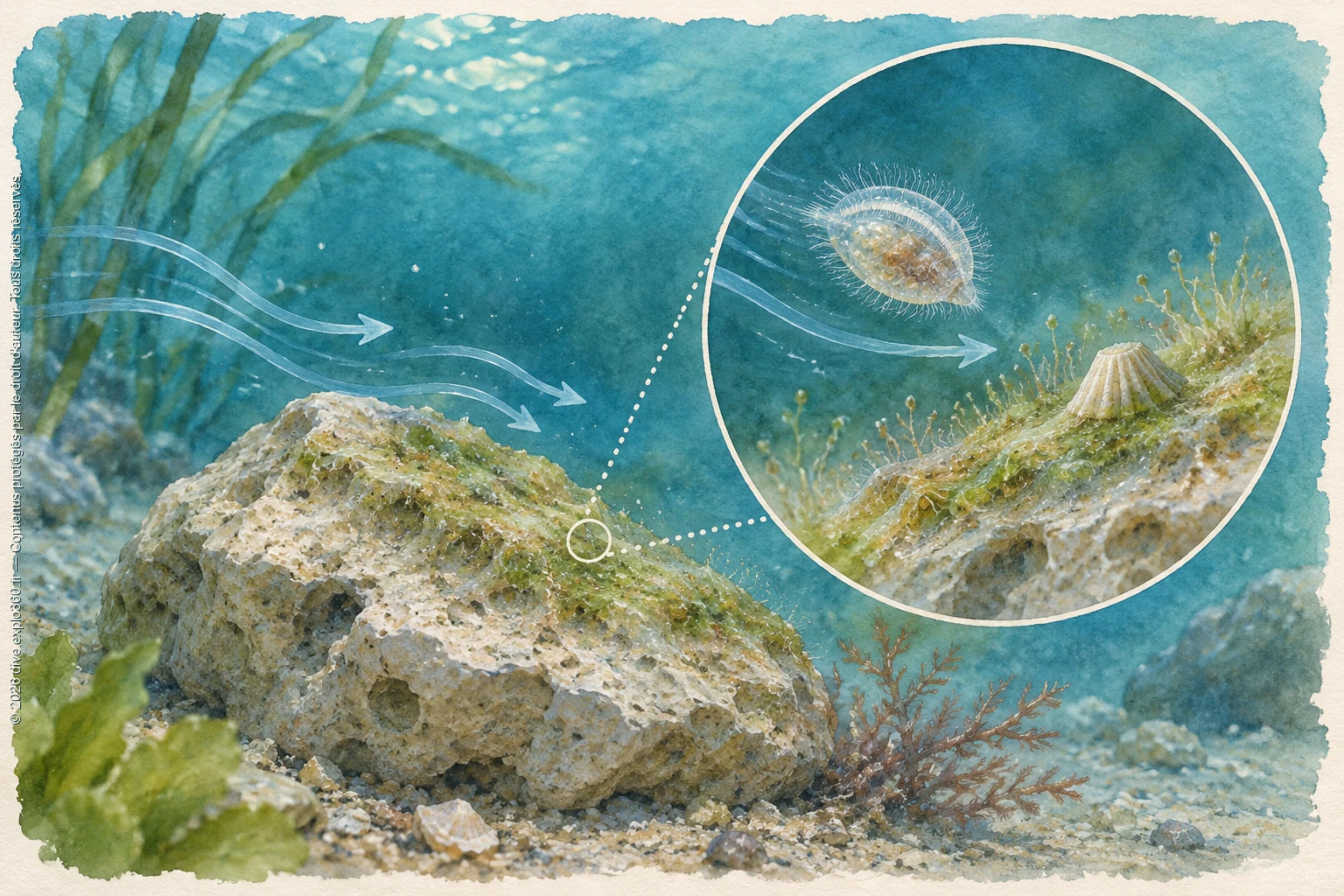
Many marine animals spend part of their early lives as larvae in the plankton, free in the water rather than fixed to the seabed.
Some remain there for weeks; others for only hours or days. Currents carry them, while their own movements allow limited changes of position.
When ready to settle, a larva may explore a surface. Roughness, light, chemical signals and nearby organisms can all influence its choice.
Settlement is generally followed by metamorphosis: the body changes into that of a young animal equipped for life on the bottom.
A small stone can therefore receive newcomers whose parents live on distant rocks.

Tiny builders at work
Over weeks or months, as conditions allow, the surface begins to look different.
Algae grow, worms build tubes, bryozoan colonies spread and sponges cover patches of rock.
Among the tiny builders are spirorbid worms. Their coiled limestone tubes are often only a few millimetres across. When conditions are favourable, a crown of tentacles reaches out to catch food particles.
A bryozoan colony may start with one individual formed from a larva. It buds off more individuals, called zooids, which remain connected.
Some species build crusts of hundreds of adjoining chambers; others grow branching colonies.
Life adds its own contours to the stone. Gaps, hollows and raised surfaces provide more places for other organisms to settle.
A sunny top and a shaded underside
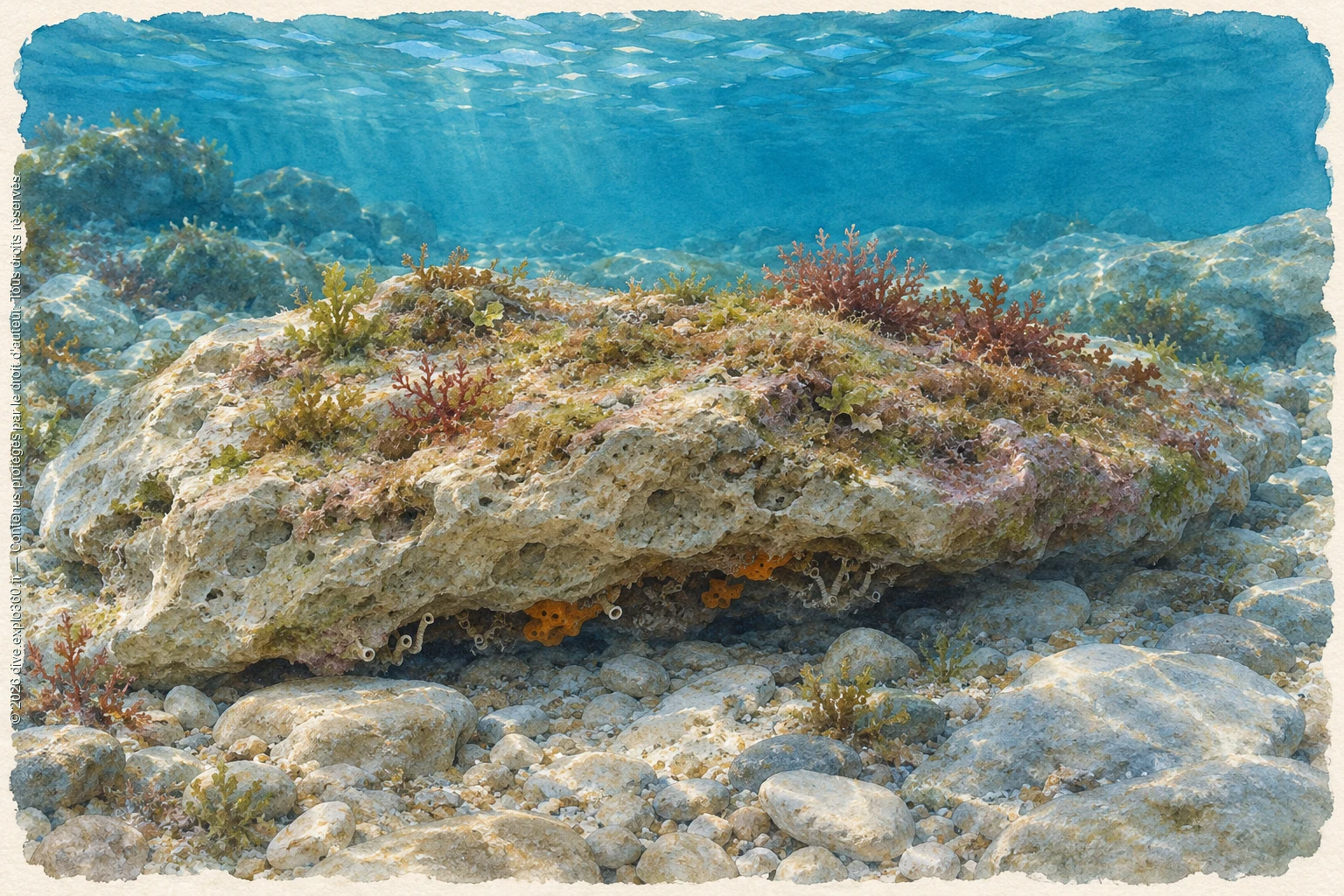
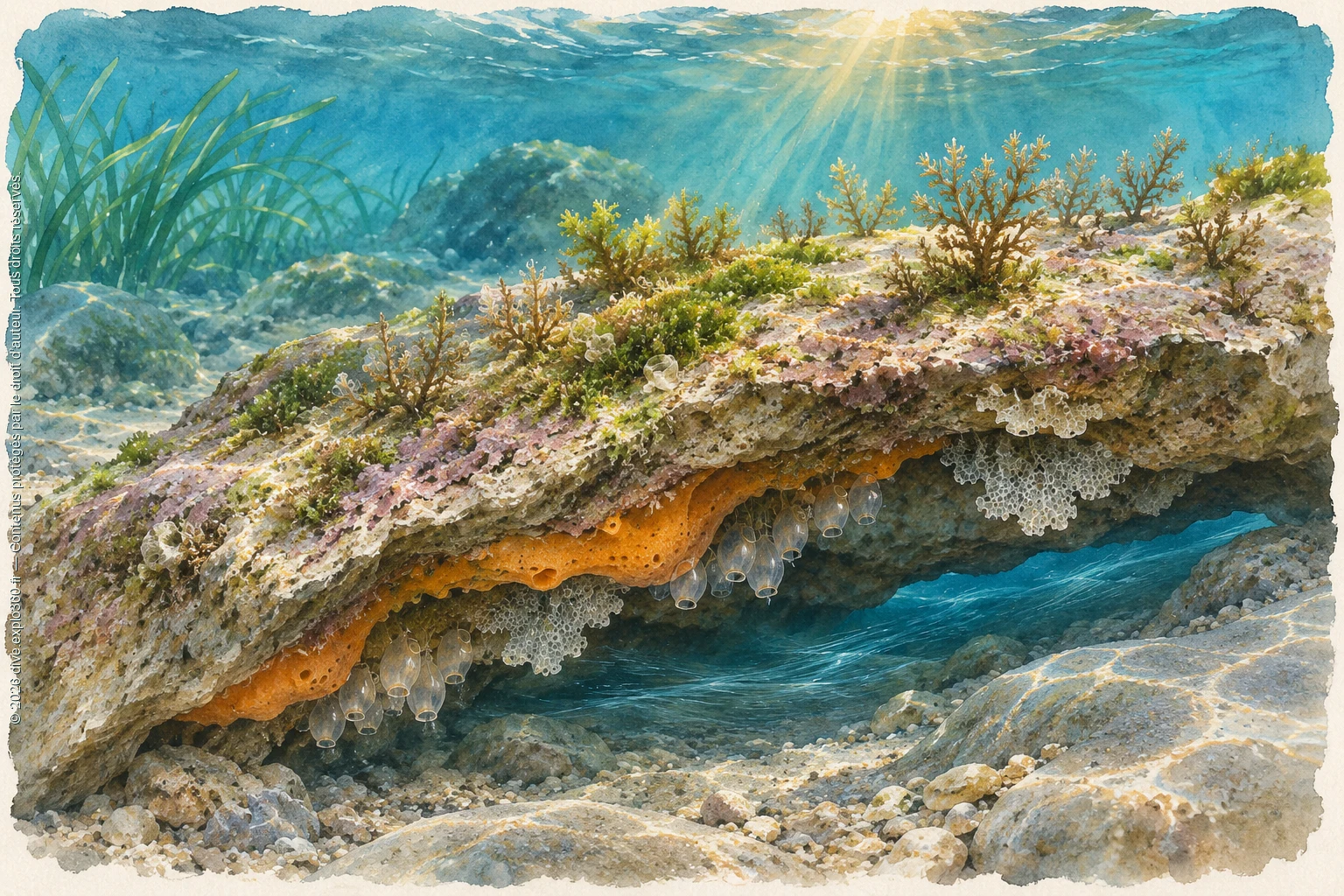
On the top of a shallow stone, sunlight favours organisms that make food by photosynthesis.
Green, brown and red algae can grow as tufts, threads or crusts pressed close to the rock.
Underneath, there is too little light for many algae. Animals that collect food from the water may find space with less competition from them.
Sponges pump water through their bodies, catching bacteria and tiny particles. Sea squirts filter water too, while bryozoans feed with crowns of tentacles bearing minute moving hairs, or cilia.
Light does not explain everything. Water flow, settled sediment, predators and the stability of the stone also influence who lives where.
The same contrasts play out on a larger scale along a Mediterranean drop-off. A wall, an overhang and a cave entrance can host very different communities.
A few precious millimetres
For an animal fixed in place, room to grow is as precious as food.
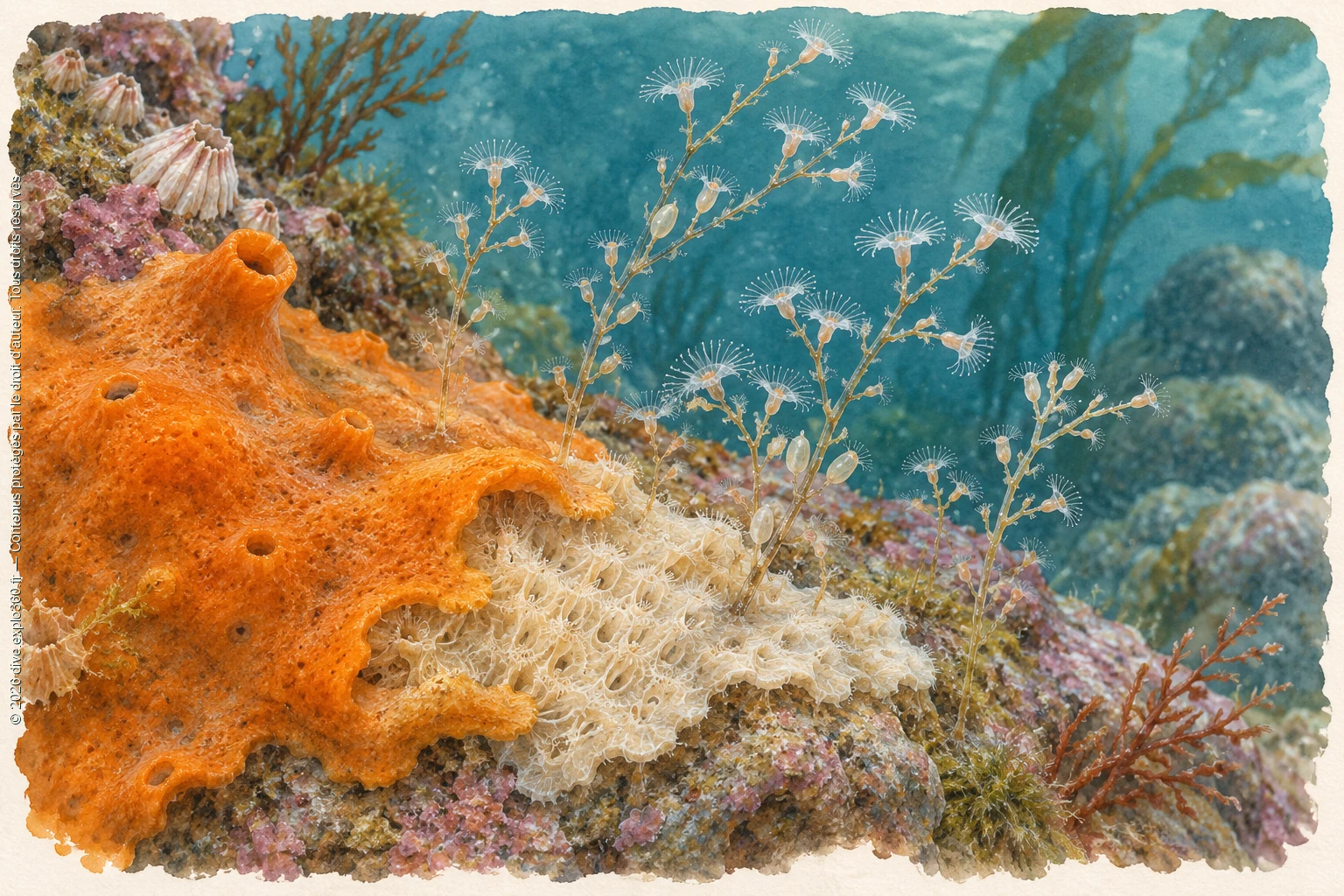
As colonies spread, bare rock becomes scarce. Neighbours meet. Some stop at the boundary; others grow over what is already there.
An encrusting sponge may cover bryozoans, or a sea squirt take a patch once occupied by algae. Each arrival changes conditions for those nearby.
Growth is not the only weapon. Some sponges release chemicals that, under certain conditions, limit other organisms’ settlement or development.
Hydroids take another route: upwards. Their fine branches lift feeding polyps into the flow of water and the small prey it carries.
GO FURTHER WITH AMIGANSEAU
Continue reading
Discover full species guides, in-depth content and interactive tools available with your licence.
Dive.Explo360 is an independent, self-funded nonprofit. Every licence helps us create new content, improve our teaching tools and keep some of our resources free and ad-free.
Choose a licence that suits your needs for personal, educational or professional use.
Open-access resources remain available without a subscription.