The first inhabitants are tiny
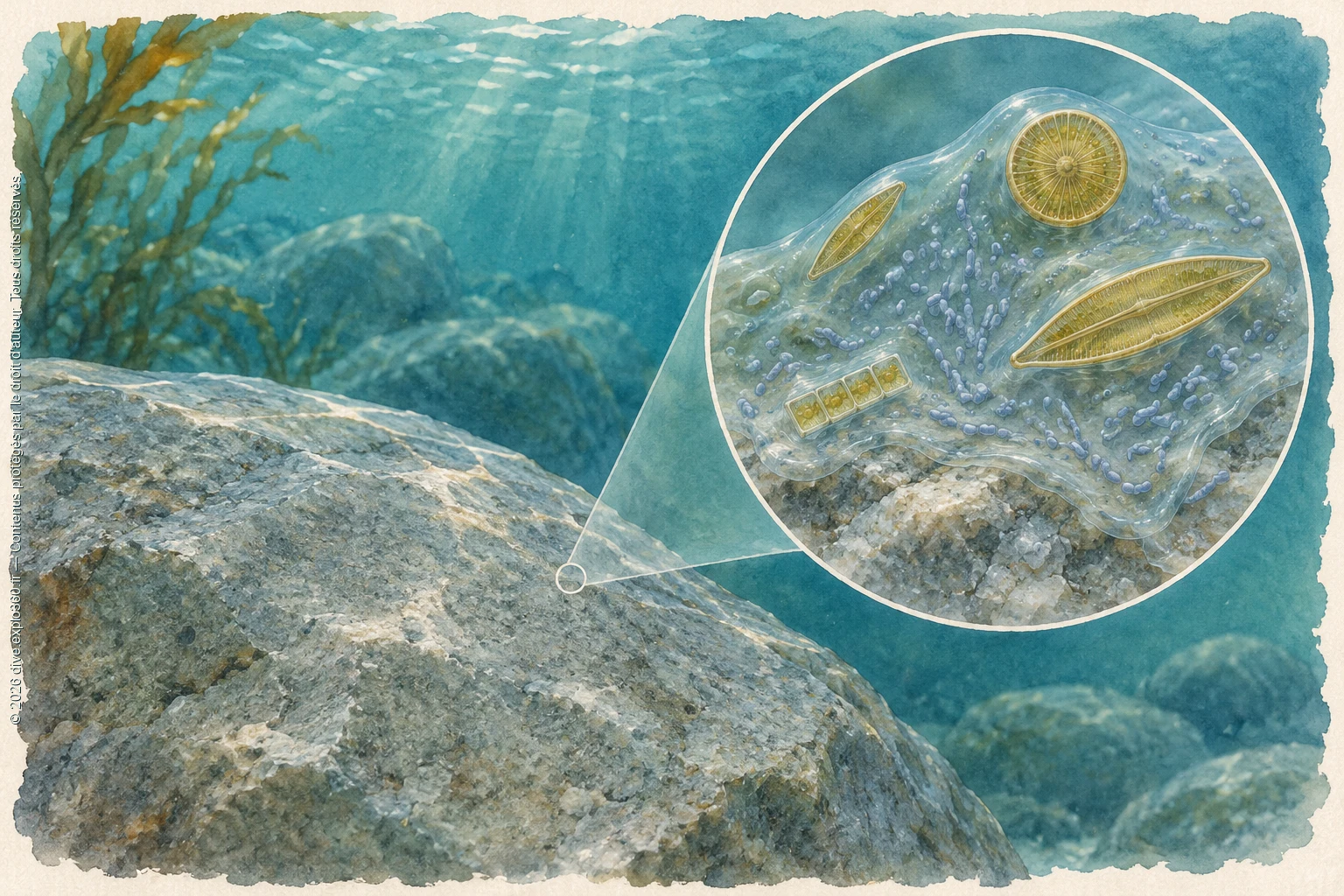
First, molecules in seawater stick to the stone. Bacteria arrive and make sticky substances that help them stay there. With enough light, tiny algae called diatoms may join them. These have hard silica coverings. The microbes and the material they make form a thin coating called a biofilm. The stone looks bare, but life is already busy.
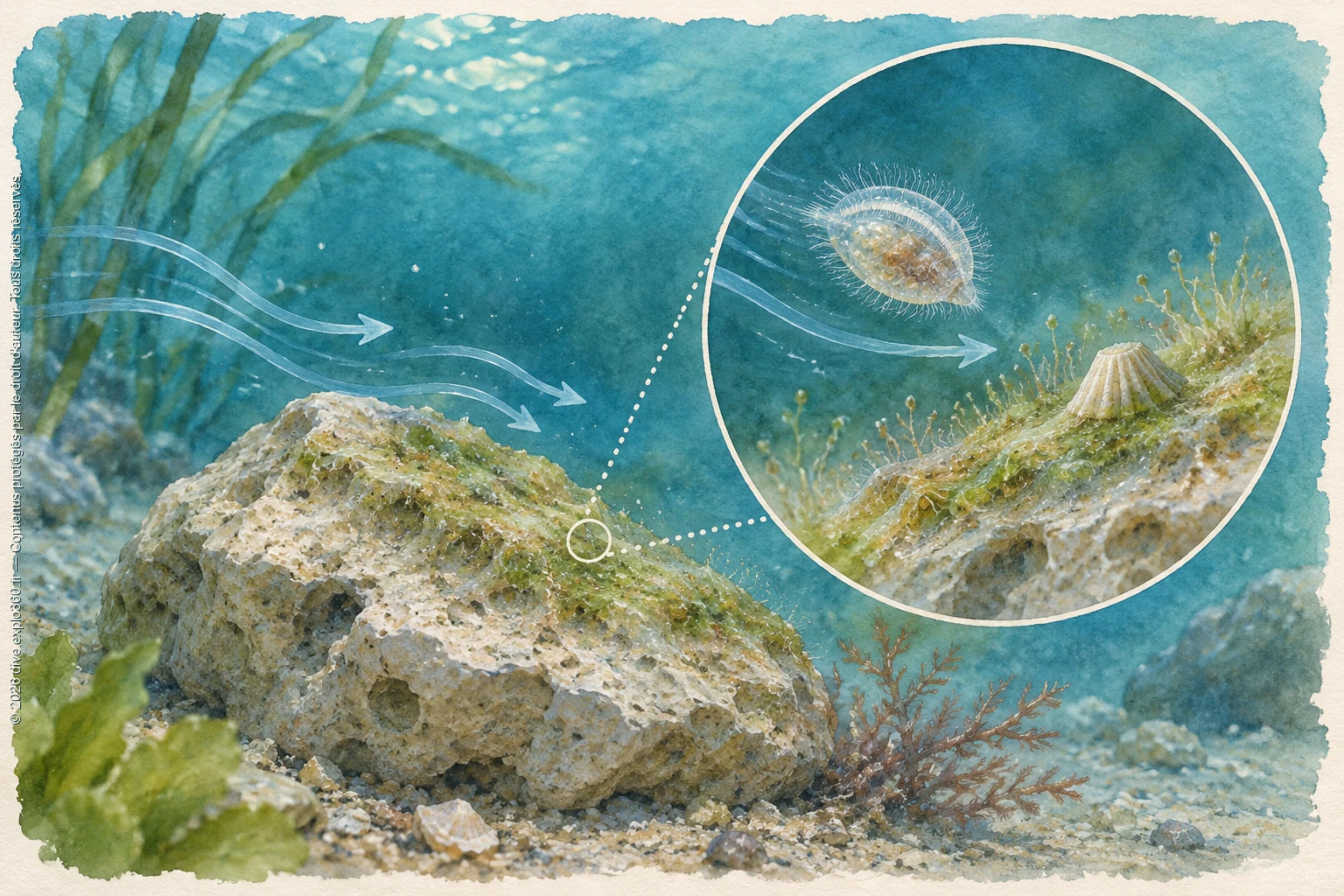
Travellers in the water
An adult sponge or sea fan cannot swim to a new rock. But many attached animals start life as tiny larvae in the water. Currents carry them, and they can move a little too. The journey lasts hours, days or weeks, depending on the animal. When ready to settle, a larva may explore a surface. Light, roughness and chemical clues can affect where it stays. Then its body changes. This is metamorphosis: it becomes a young animal ready for life on the seabed.

Tiny builders at work
Algae grow, sponges spread and little worms build tubes. Spirorbid worms make coiled limestone tubes, often only a few millimetres across. A feeding crown reaches out to catch tiny food particles. Bryozoans grow in groups called colonies. One individual makes more by budding, and they stay connected. These individuals are called zooids. Some colonies form crusts; others grow branches. Their gaps and bumps make new places for other life.
A sunny top and a shaded underside
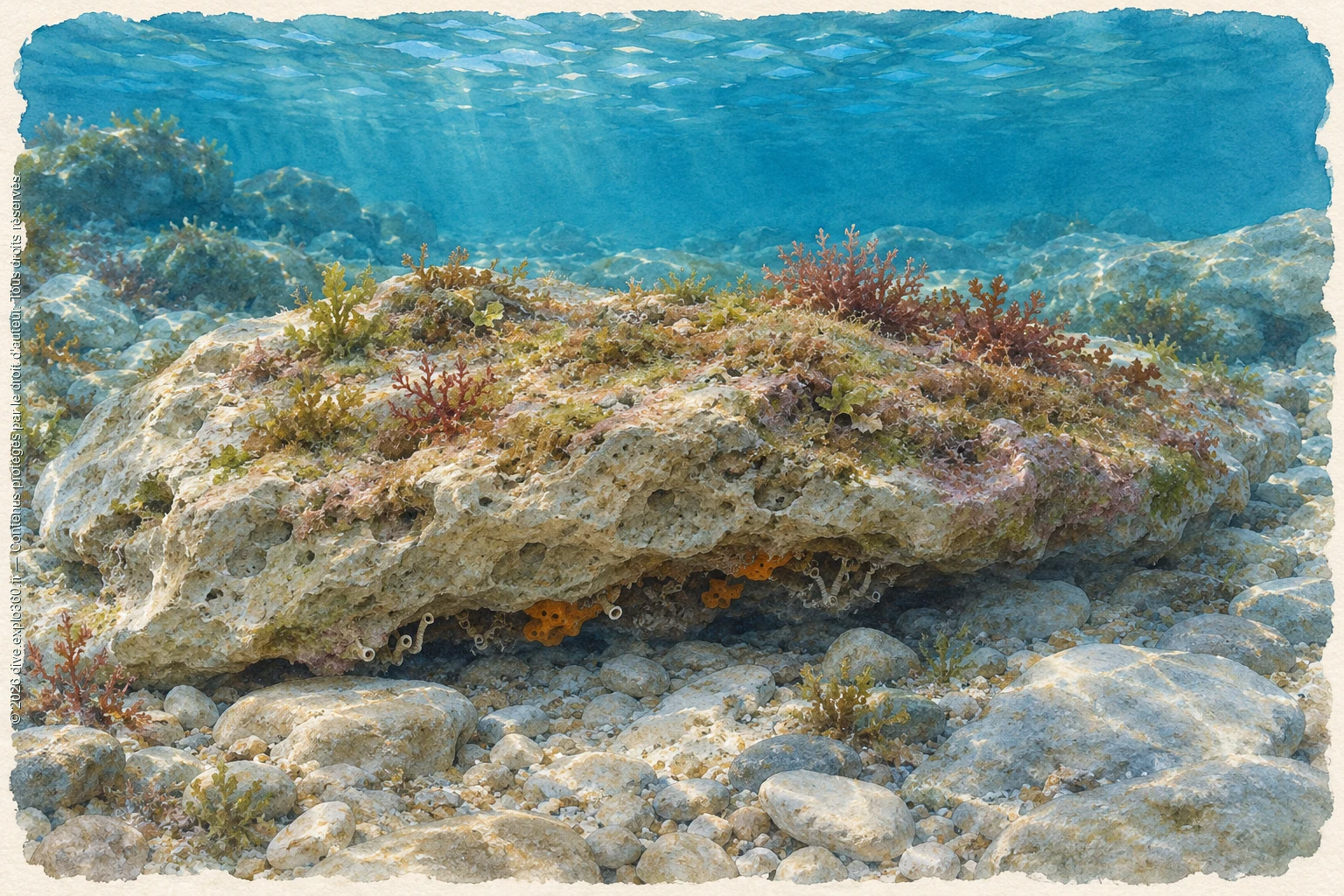
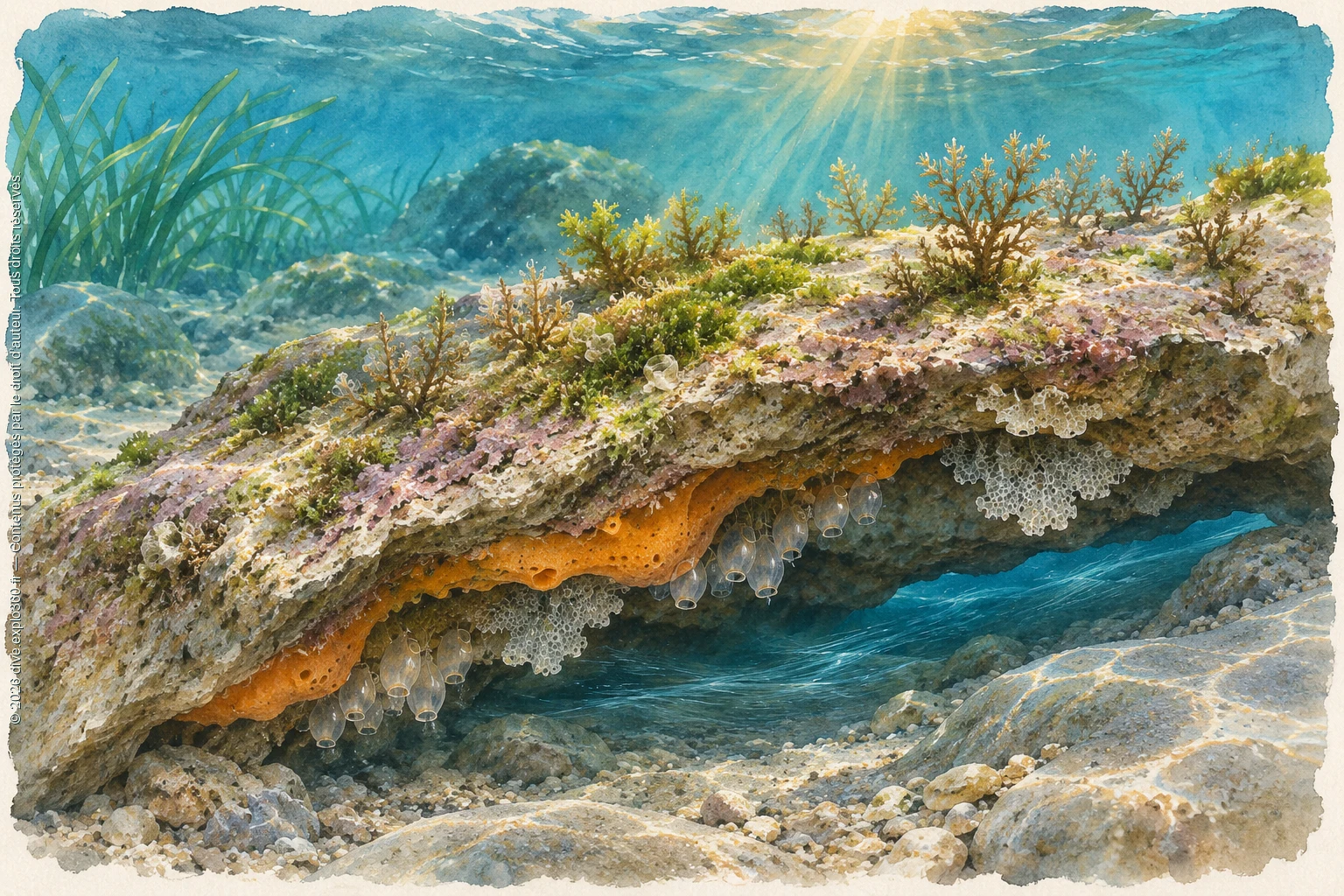
Sunlight helps green, brown and red algae grow on top. Many algae cannot get enough light underneath. Animals that catch food from the water may find more room there. Sponges pump water through their bodies. Sea squirts filter it, and bryozoans use tiny tentacles with moving hairs. Currents, settling sediment, predators and whether the stone stays still also matter. Walls, overhangs and caves can have different inhabitants for similar reasons.
Finding room
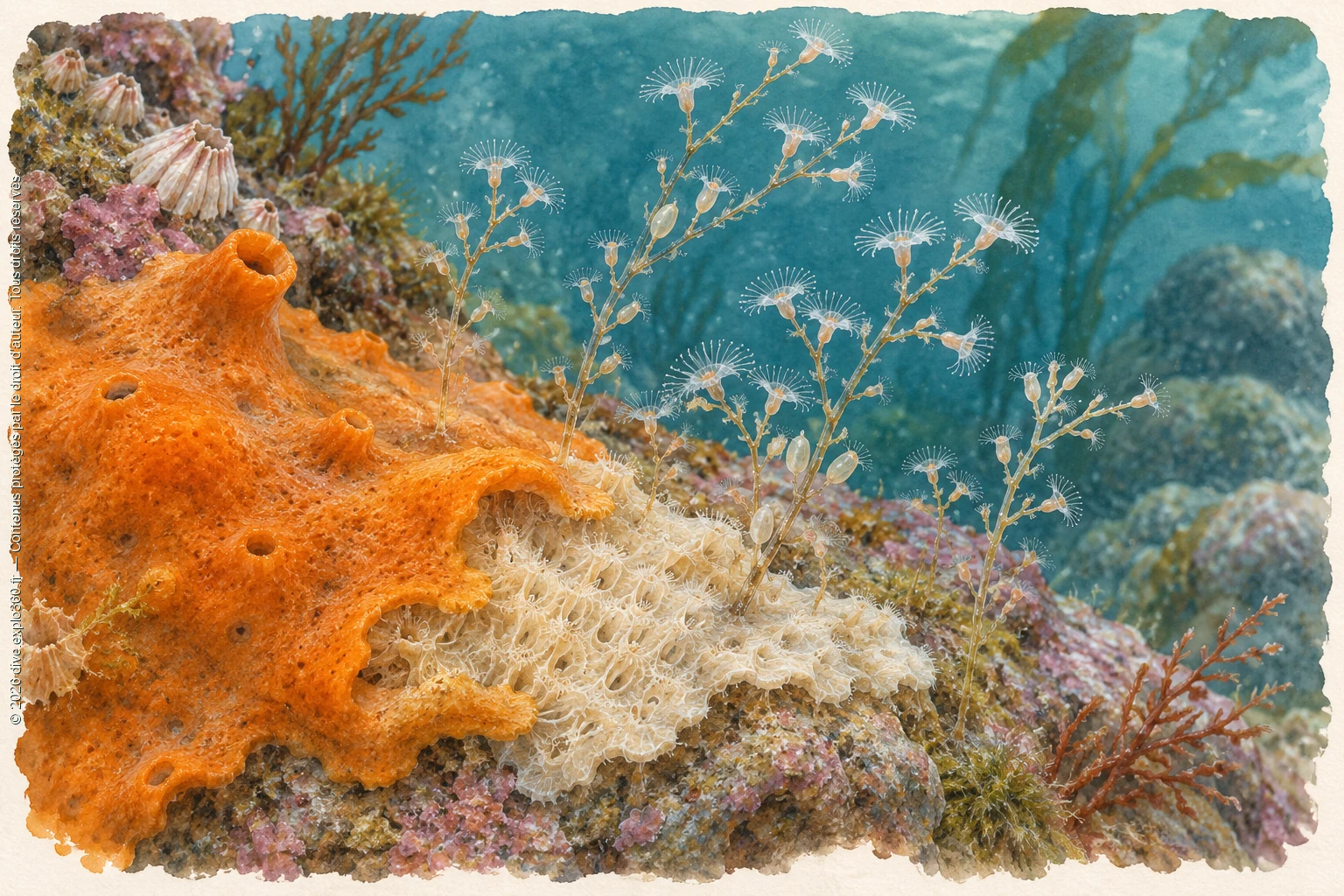
Soon there is less room to grow. Colonies meet. Some stop, while others spread over their neighbours. A sponge may cover bryozoans. Some sponges make chemicals that can hinder other organisms in certain conditions. Hydroids grow upwards instead. Their fine branches hold tiny animals called polyps, which catch prey from the passing water.
GO FURTHER WITH AMIGANSEAU
Continue reading
Discover full species guides, in-depth content and interactive tools available with your licence.
Dive.Explo360 is an independent, self-funded nonprofit. Every licence helps us create new content, improve our teaching tools and keep some of our resources free and ad-free.
Choose a licence that suits your needs for personal, educational or professional use.
Open-access resources remain available without a subscription.