An animal beneath the tentacles
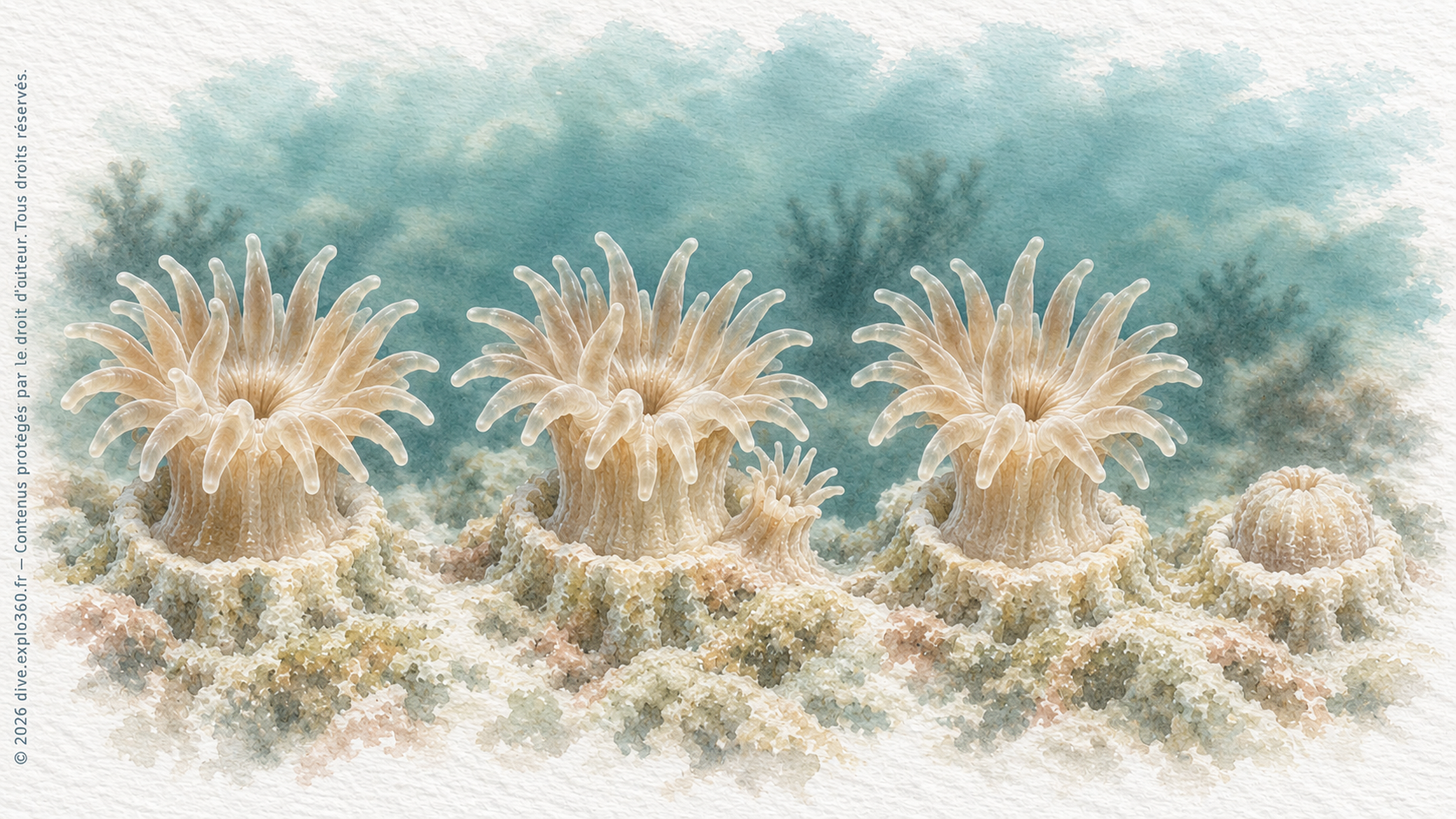
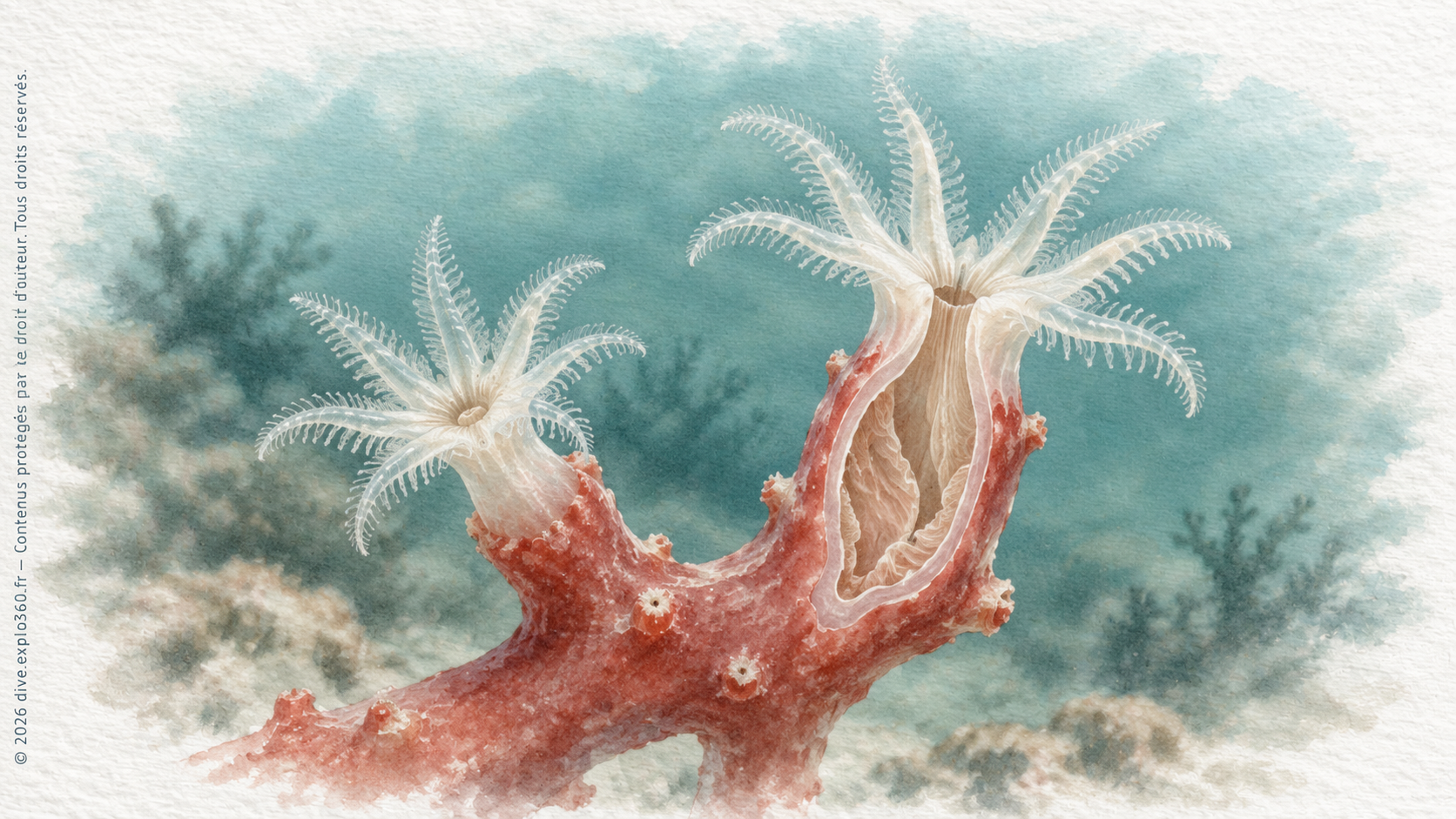
Close up, a coral’s “flowers” reveal a mouth surrounded by tentacles. Each belongs to a polyp. The mouth opens into a gastrovascular cavity: an internal pouch used for digestion that also takes part in exchanges of substances. A living wall separates this space from the surrounding seawater.
Red coral (Corallium rubrum) has white polyps with eight pinnate tentacles, edged with small side branches that give them a feathery shape. The purple sea fan (Paramuricea clavata) belongs to the same group, the octocorals, recognised by these eight tentacles. Stony reef corals have a different organisation, generally with simple tentacles.
Red coral (Corallium rubrum) has white polyps with eight pinnate tentacles, edged with small side branches that give them a feathery shape. The purple sea fan (Paramuricea clavata) belongs to the same group, the octocorals, recognised by these eight tentacles. Stony reef corals have a different organisation, generally with simple tentacles.
What enters through a mouth
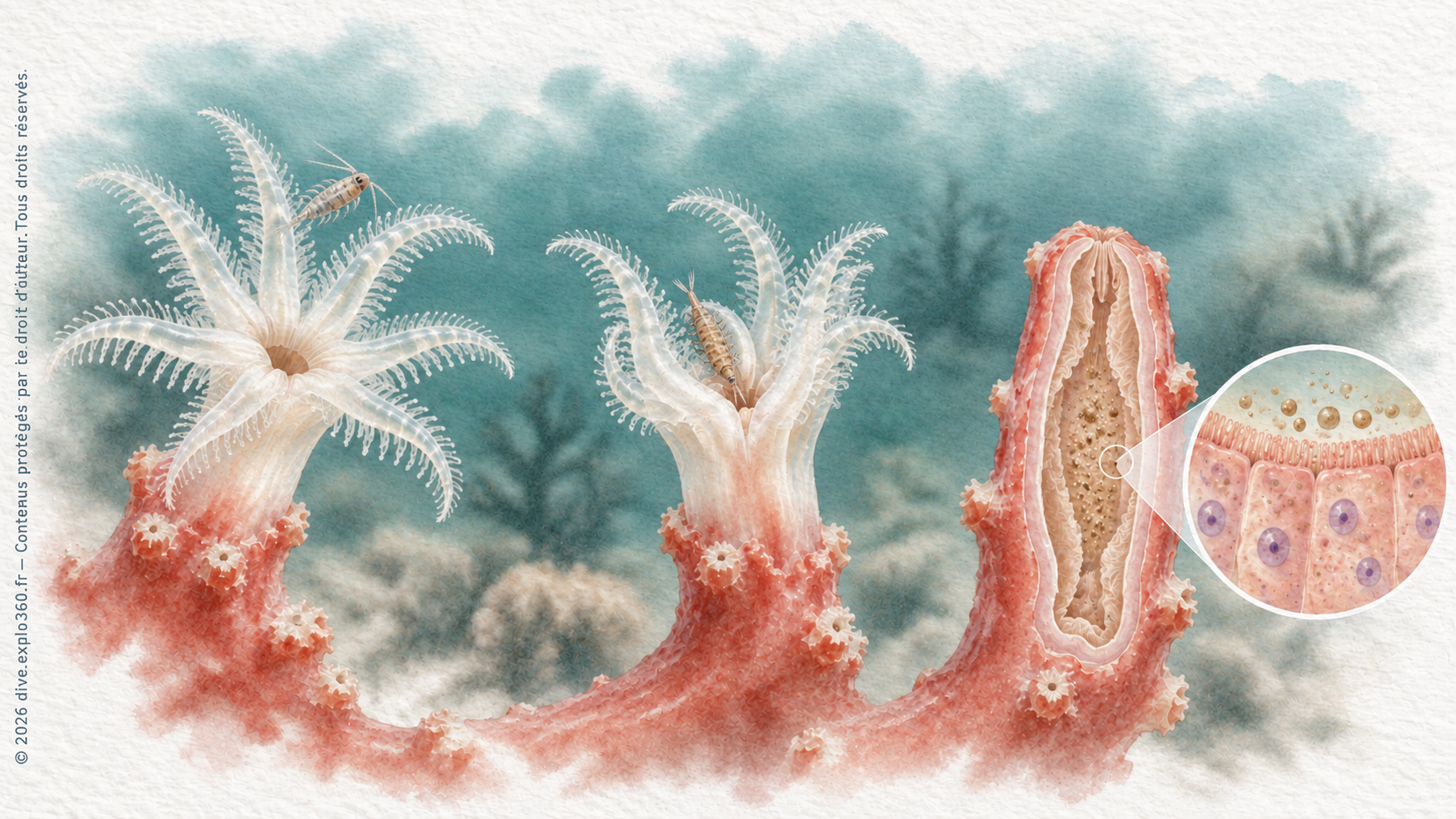
The current brings prey and suspended particles. Tentacles can hold them with help from mucus, a sticky secretion, and stinging cells, which can release a thread useful in capture. These methods matter to different degrees in different species. The size and organisation of a polyp also affect which prey it can catch.
After the meal passes through the mouth, enzymes, substances that speed up chemical reactions, begin breaking it down in the digestive cavity. Cells absorb the products; some particles continue being digested inside cells. Nutrients, the usable substances obtained from food, support the activity and renewal of tissues. Undigested remains can leave through the mouth: there is no anus.
After the meal passes through the mouth, enzymes, substances that speed up chemical reactions, begin breaking it down in the digestive cavity. Cells absorb the products; some particles continue being digested inside cells. Nutrients, the usable substances obtained from food, support the activity and renewal of tissues. Undigested remains can leave through the mouth: there is no anus.
A meal’s route through the colony
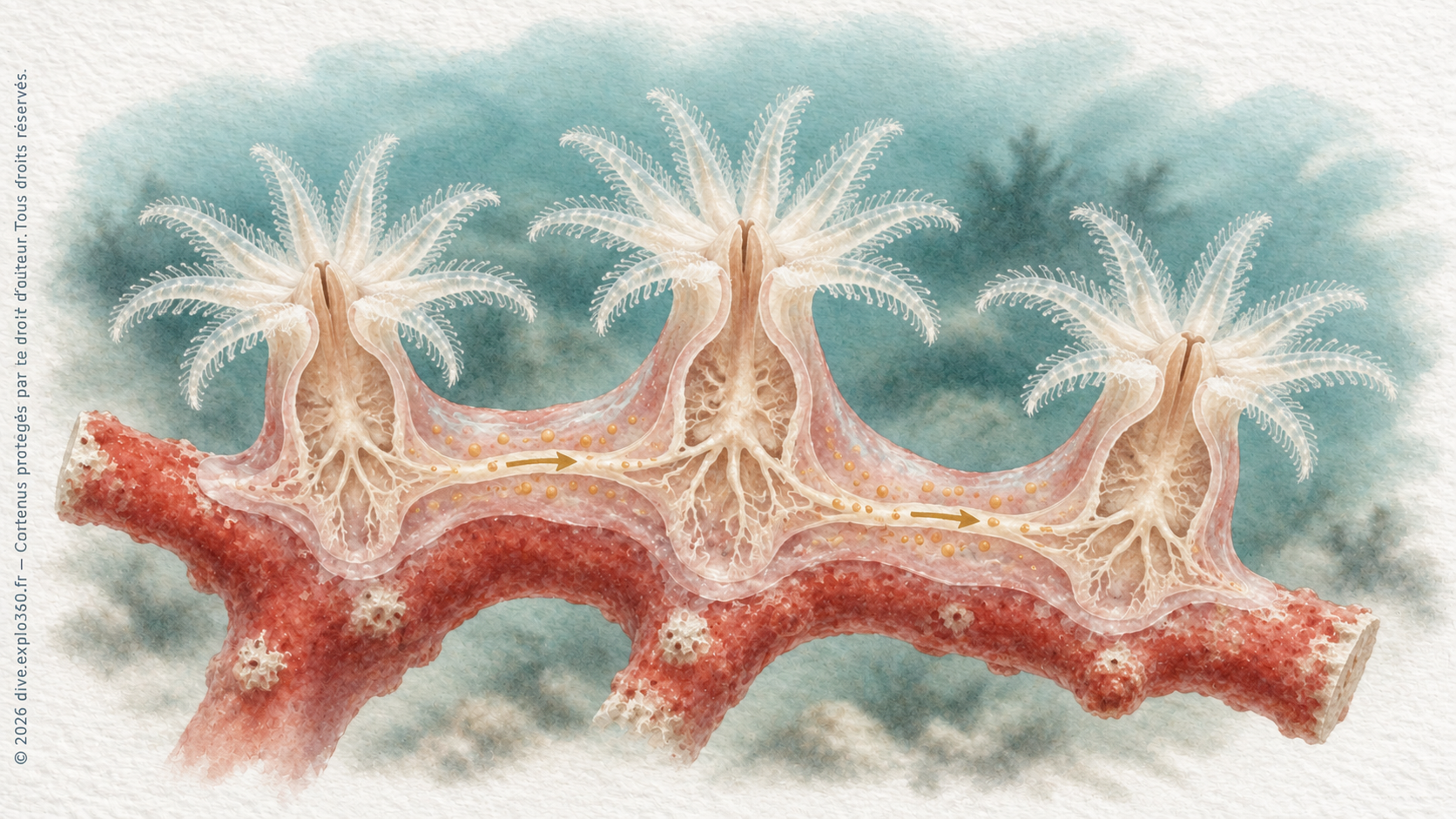
Beneath the surface of a sea fan branch, the polyps are not isolated. The coenenchyme, the shared living tissue surrounding the central support, contains gastrovascular canals: passages connected to the digestive cavities. Connections also occur in the shared tissues of colonial stony corals.
Some substances obtained from a meal can reach another region. These are not necessarily pieces of prey: digestion may already have transformed them. Cells away from the capture site may then receive materials for their activity or growth.
Liquids circulate without a heart or a blood system. Cilia, tiny moving projections on cells, can help move them. The arrangement of the passages and the needs of different regions influence exchanges. This does not show that each meal is shared equally among all polyps.
Growing by budding
In a growing area, a new polyp may form by budding: it develops from tissue already present. It acquires a mouth and tentacles while staying connected to the colony. Shared tissues and the support also grow.
This is asexual multiplication, without fertilisation: male and female reproductive cells do not join. It enlarges the existing colony. Details vary between corals; the stony-coral bud shown in the illustration does not describe every sea fan.
This is asexual multiplication, without fertilisation: male and female reproductive cells do not join. It enlarges the existing colony. Details vary between corals; the stony-coral bud shown in the illustration does not describe every sea fan.