An animal beneath the tentacles
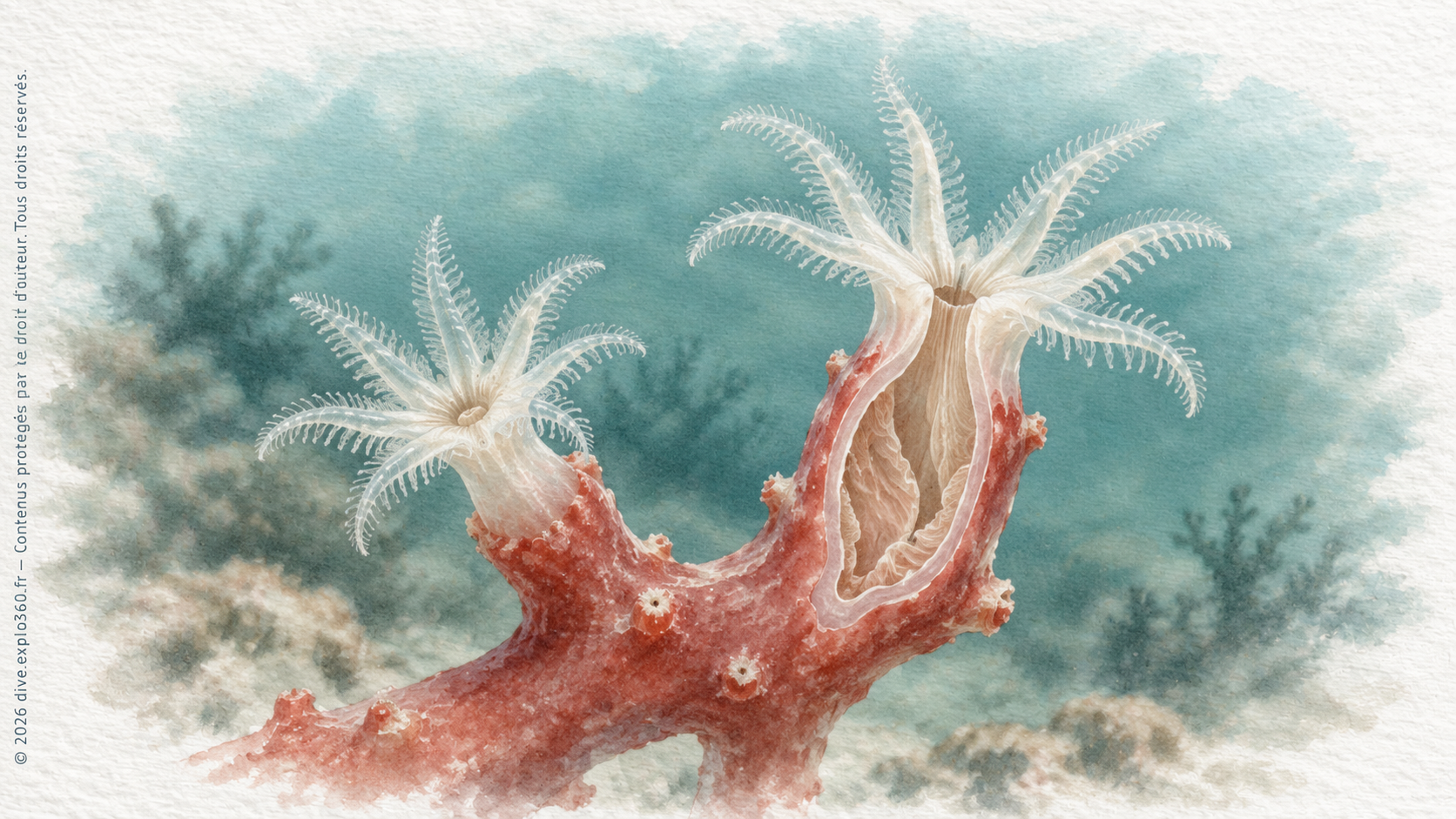
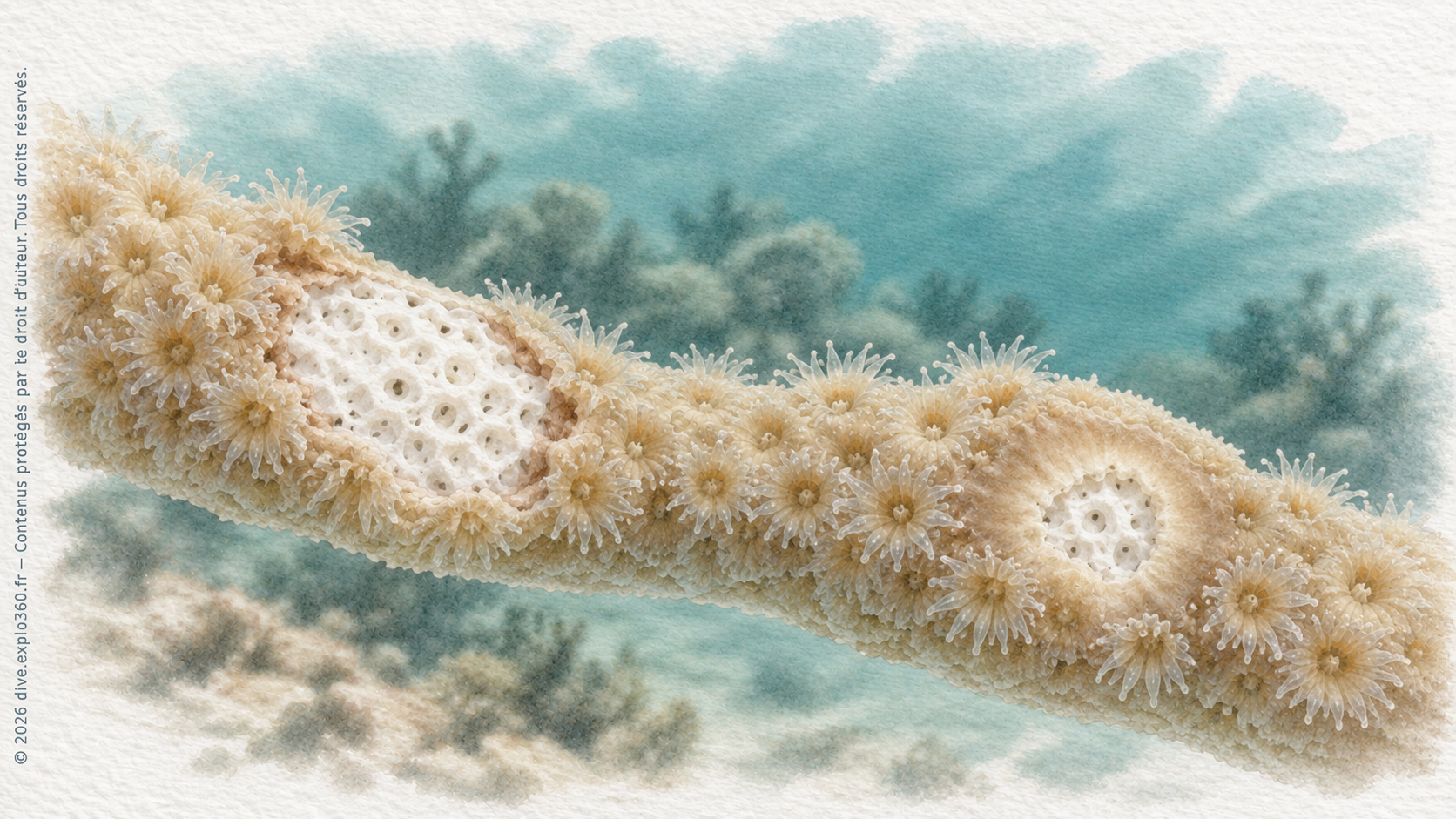
A polyp’s tentacles surround its mouth. The mouth leads to a gastrovascular cavity: an internal pouch where food is digested and from which substances can circulate. Cells in its wall take part in digestion and exchanges with the water.
Red coral (Corallium rubrum) and the purple sea fan (Paramuricea clavata) are octocorals, the group whose polyps have eight pinnate tentacles with small side branches. Stony reef corals belong to another group and generally have simple tentacles.
Red coral (Corallium rubrum) and the purple sea fan (Paramuricea clavata) are octocorals, the group whose polyps have eight pinnate tentacles with small side branches. Stony reef corals belong to another group and generally have simple tentacles.
What enters through a mouth
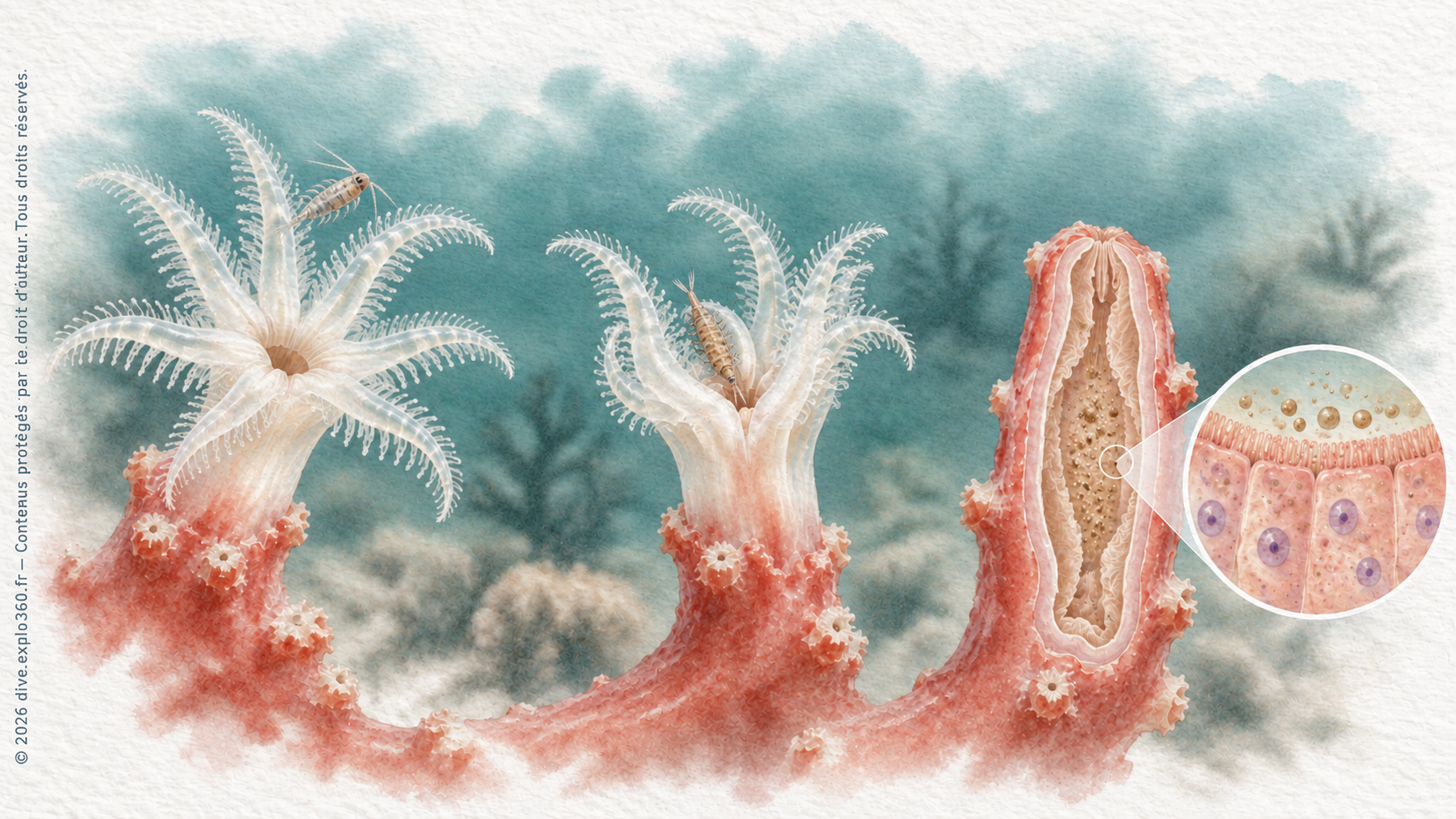
Suspended prey comes into contact with the tentacles. Capture may involve mucus, a sticky secretion, and cnidocytes, cells containing a capsule that can release a thread. Their contributions vary between species. Tentacles then move the prey towards the mouth.
In the digestive cavity, enzymes, substances that speed up chemical reactions, break food down. Cells absorb the products; some particles finish being digested inside cells. The resulting nutrients support the body’s activity and the making of new tissue. Undigested remains can leave through the mouth.
In the digestive cavity, enzymes, substances that speed up chemical reactions, break food down. Cells absorb the products; some particles finish being digested inside cells. The resulting nutrients support the body’s activity and the making of new tissue. Undigested remains can leave through the mouth.
A meal’s route through the colony
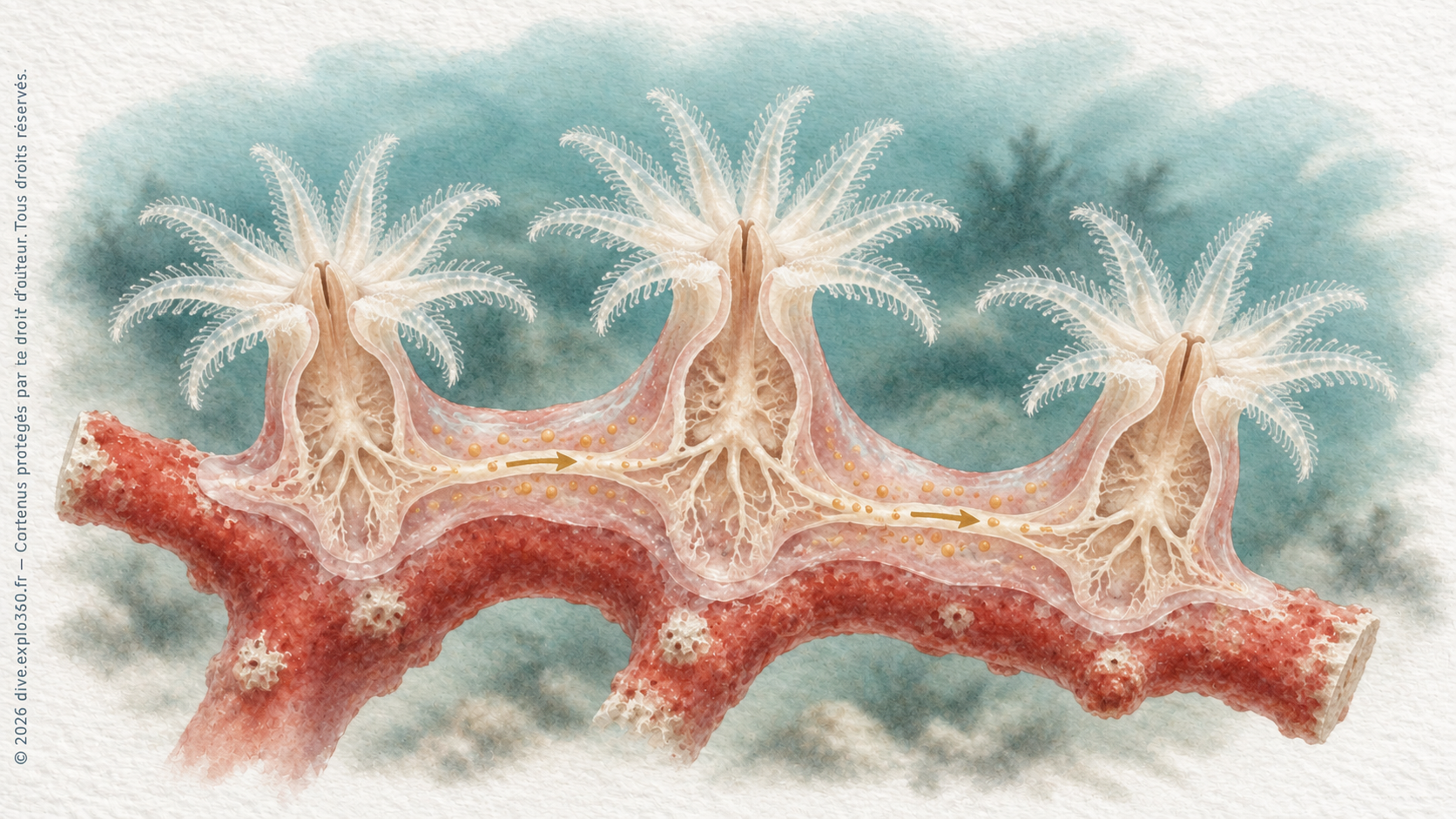
In a sea fan, the coenenchyme, the shared living tissue surrounding the supporting axis, connects the polyps. It contains gastrovascular canals: passages linked to the digestive cavities. Shared tissues also establish connections in colonial stony corals.
Substances obtained from a meal may reach another region. This does not necessarily mean whole prey travels between mouths: the transported material may already have been altered by digestion.
Liquids move through these networks. Cilia, tiny moving projections on cells, can contribute to the flows. This circulation does not depend on a heart and blood. Nor does it ensure equal sharing: routes and local needs can differ.
Growing by budding
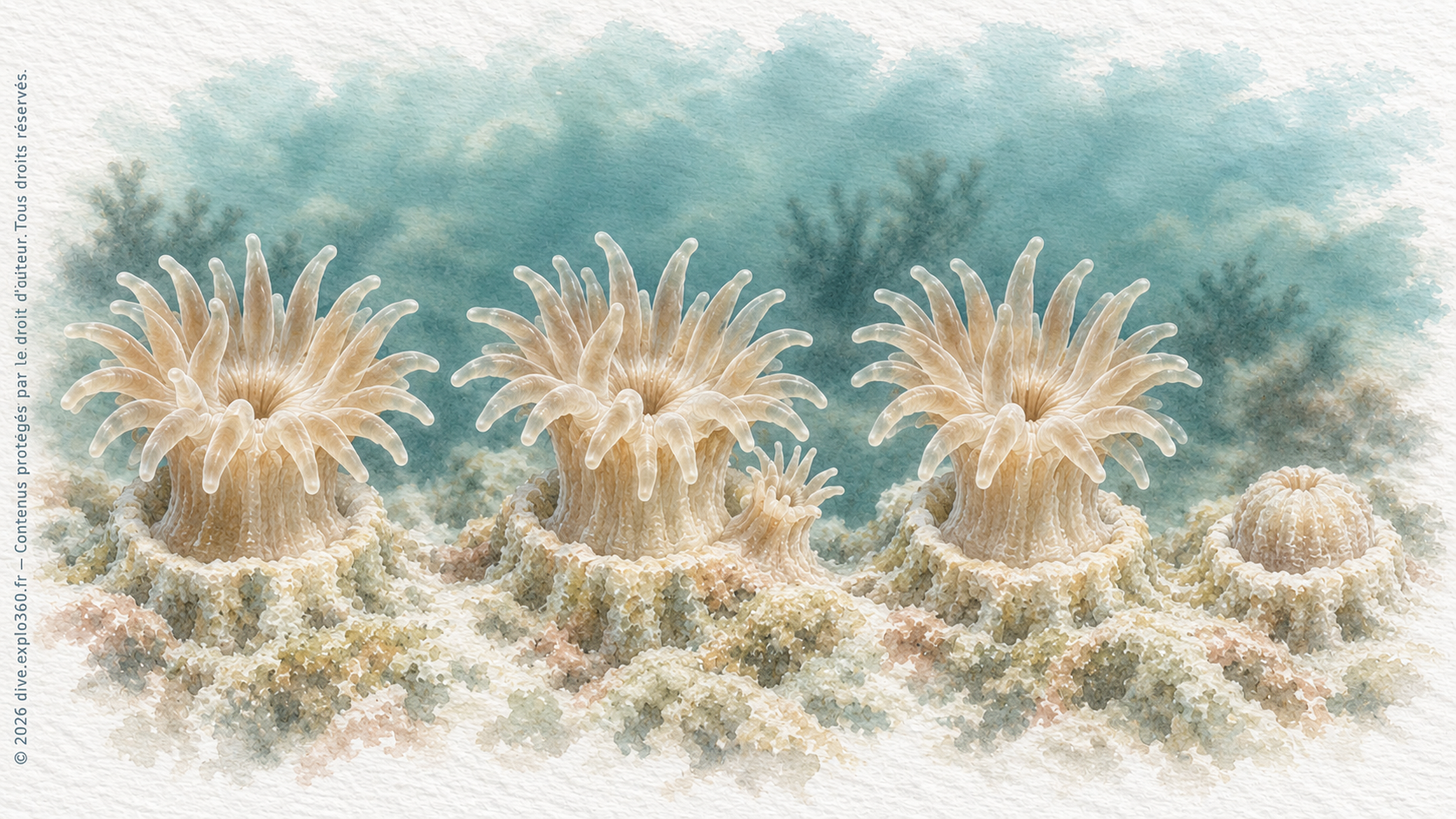
During budding, the formation of a new polyp from existing tissue, a new mouth and tentacles develop. The young polyp remains connected to the colony.
This is asexual multiplication, without fertilisation: there is no joining of male and female reproductive cells. Its form varies. In some stony corals, a bud appears outside the ring of tentacles. The process is not identical in every coral.
This is asexual multiplication, without fertilisation: there is no joining of male and female reproductive cells. Its form varies. In some stony corals, a bud appears outside the ring of tentacles. The process is not identical in every coral.
How does a colony begin?
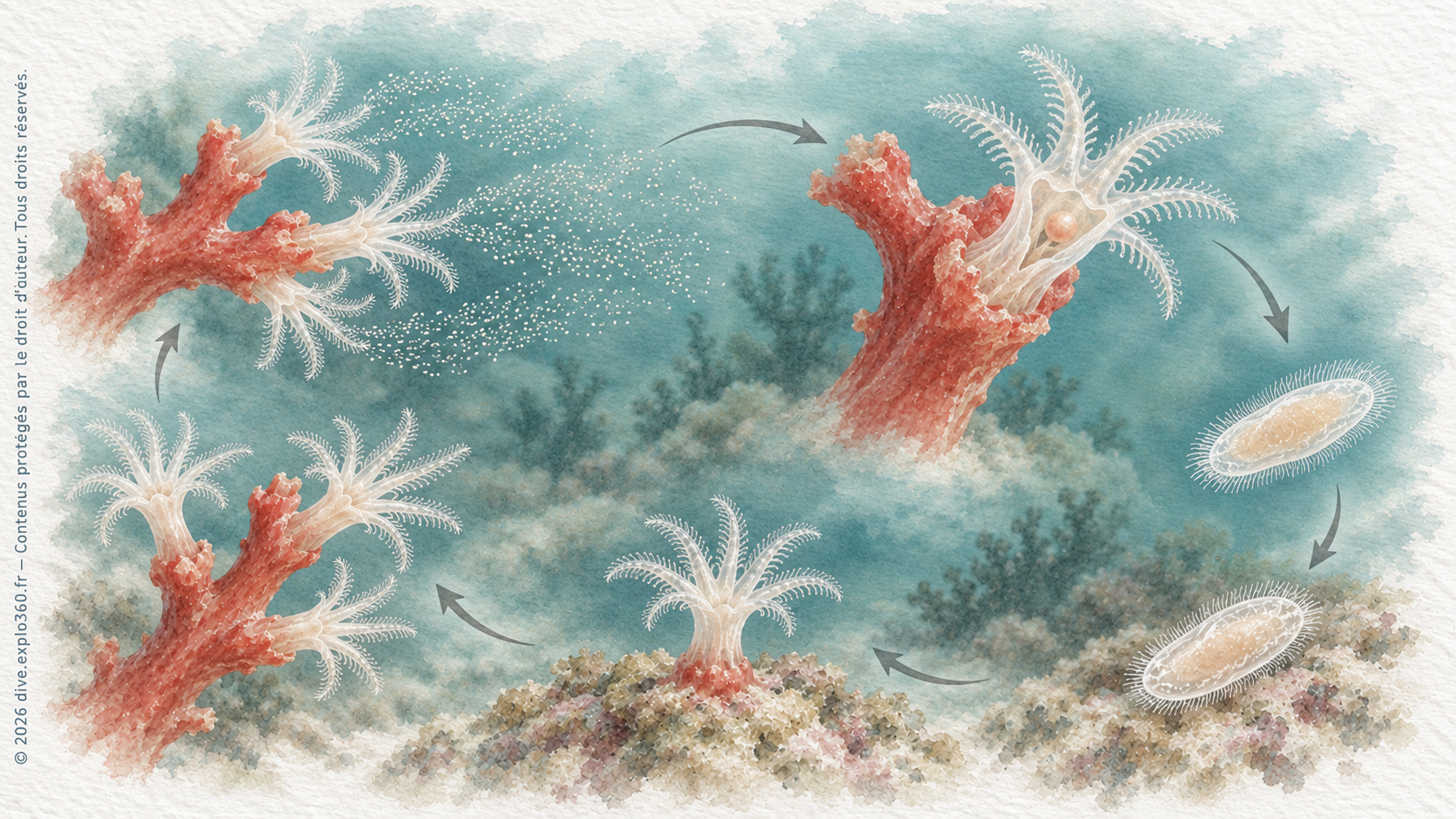
Sexual reproduction involves fertilisation, the joining of two reproductive cells. Red coral (Corallium rubrum) generally has separate male and female colonies. Males release sperm into the water. Fertilisation and early development take place inside female polyps.
A planula, a small larva covered with moving cilia, is then released. If it settles on a suitable surface, metamorphosis, a change in its body organisation, can produce the first polyp. Budding then develops the colony. In other corals, fertilisation takes place in the water.
A planula, a small larva covered with moving cilia, is then released. If it settles on a suitable surface, metamorphosis, a change in its body organisation, can produce the first polyp. Budding then develops the colony. In other corals, fertilisation takes place in the water.
When polyps close
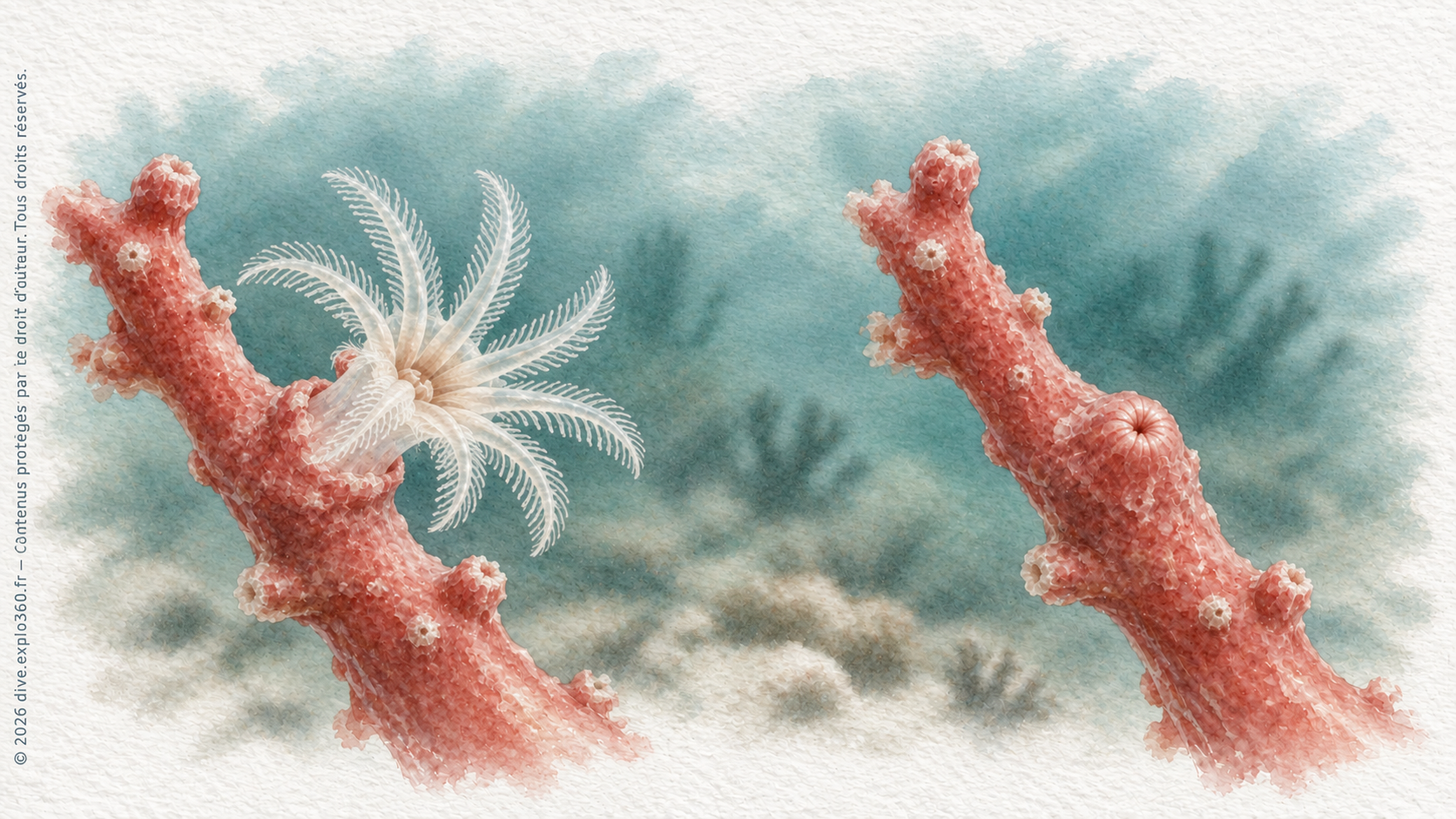
Muscular contraction can fold the tentacles. Retraction, the withdrawal of a polyp into tissue or a skeletal cup depending on the species, can go further than simply closing. Red coral (Corallium rubrum) can withdraw its polyps completely into the branch’s tissue.
Touch and environmental changes can affect their activity. A single observation cannot establish with certainty that light or current caused a closure. Behaviour depends on the species and conditions.
Touch and environmental changes can affect their activity. A single observation cannot establish with certainty that light or current caused a closure. Behaviour depends on the species and conditions.
Breathing without lungs
Dissolved oxygen passes through tissue by diffusion: molecules move in response to a difference in concentration. Carbon dioxide produced by cell activity can pass into the water. Thin surfaces allow these exchanges without lungs or gills.
Water renewal near the tissue influences exchange conditions. Removing waste produced by cells is different from expelling food remains through the mouth.
Water renewal near the tissue influences exchange conditions. Removing waste produced by cells is different from expelling food remains through the mouth.
Different kinds of support
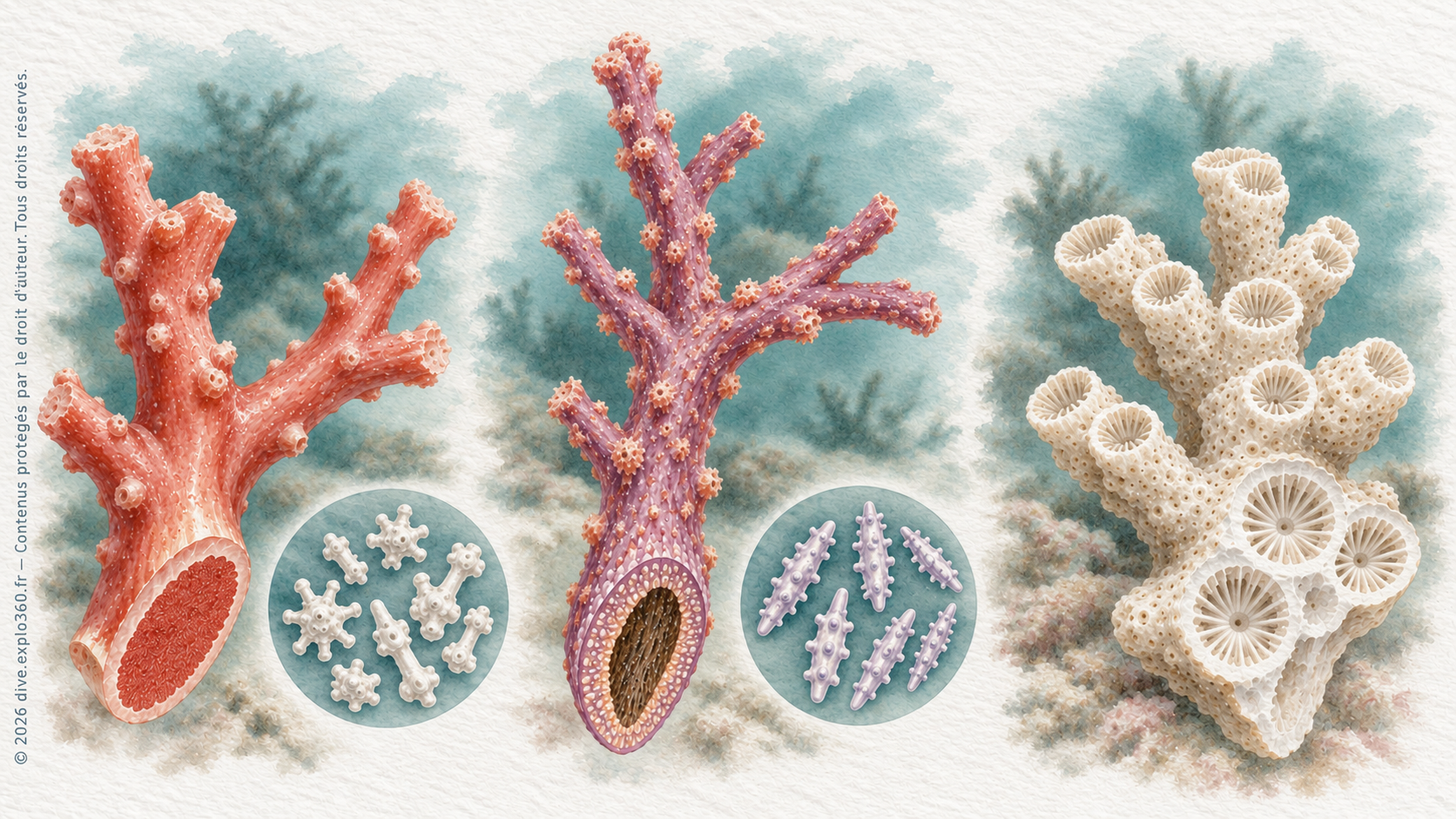
The axis of red coral (Corallium rubrum) is made of magnesium calcite, a calcium-carbonate mineral containing magnesium. Its tissue contains sclerites: small mineral pieces. In the purple sea fan (Paramuricea clavata), the axis is rich in organic material, substances made by living organisms, and the tissues also contain sclerites.
Scleractinians, the stony corals, mainly build a skeleton of aragonite, another mineral form of calcium carbonate. The cups supporting their polyps are not equivalent to the scattered mineral pieces inside a sea fan’s tissue.
Scleractinians, the stony corals, mainly build a skeleton of aragonite, another mineral form of calcium carbonate. The cups supporting their polyps are not equivalent to the scattered mineral pieces inside a sea fan’s tissue.
Light, for some corals
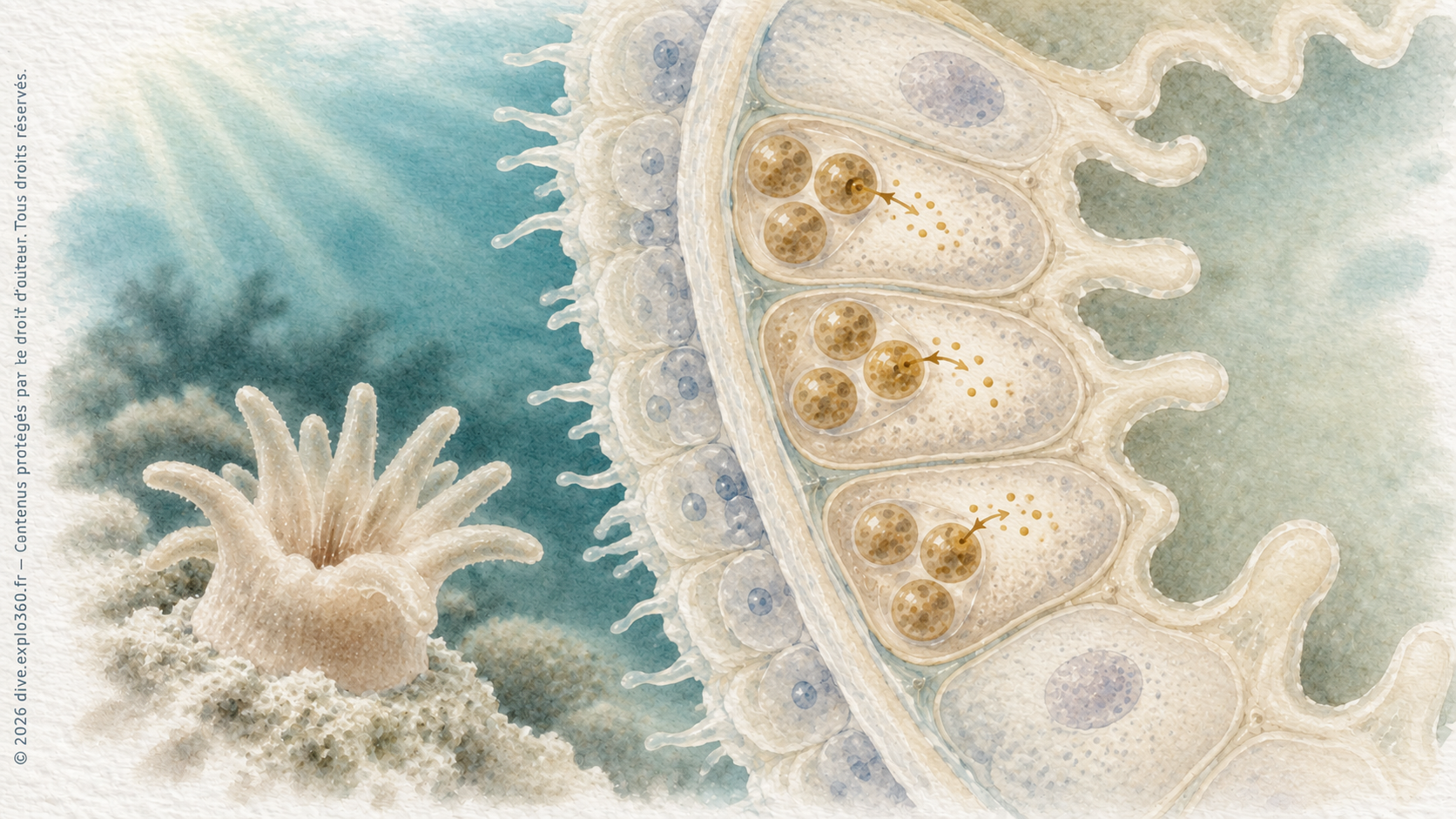
Many reef corals shelter photosynthetic symbionts: microscopic partners living inside their cells that use light to make organic material, such as sugars. Some of this production reaches the coral. The coral provides the partners with a place to live, among other benefits.
Red coral (Corallium rubrum) and the purple sea fan (Paramuricea clavata) lack these partners. In corals that have them, bleaching involves a reduction in symbionts or their pigments, the substances that give them colour. A bleached coral may still be alive, but recovery is not certain.
Red coral (Corallium rubrum) and the purple sea fan (Paramuricea clavata) lack these partners. In corals that have them, bleaching involves a reduction in symbionts or their pigments, the substances that give them colour. A bleached coral may still be alive, but recovery is not certain.
Connected polyps, one colony
A colony’s functioning depends on connections between its polyps. Each retains a mouth and the ability to respond. Shared tissues nevertheless allow exchanges over a larger area than a single polyp.
Some species can close wounds and reorganise their tissues. Repair depends on the species, the injury and the environment. Dead areas can remain next to living tissue without the whole colony dying. This does not mean every injury will heal.
Some species can close wounds and reorganise their tissues. Repair depends on the species, the injury and the environment. Dead areas can remain next to living tissue without the whole colony dying. This does not mean every injury will heal.
Interactive quiz
Try it yourself
Five questions about what you have just read. Choose one answer for each question.
Interactive quiz
Try it yourself
Question 1 out of 5Score: 0
1
Where are connections between a sea fan’s polyps found?
Gastrovascular canals, passages connected to digestive cavities, run through shared tissues.
2
What happens to some of the meal after capture?
Digestion begins in the cavity and may continue inside cells.
3
Which statement describes the life cycle of red coral (Corallium rubrum)?
Fertilisation, the joining of reproductive cells, and early development occur inside female polyps.
4
Which difference between supports is correct?
Sclerites are small mineral pieces in tissues; stony corals’ cups are a different organisation.
5
What can be said about a bleached coral?
Bleaching involves a reduction in microscopic partners or their pigments, the substances giving them colour.
Final result
Quiz completed
correct answers
Understanding what we observe
Colonial life depends on a physical organisation: polyps connected by living tissues, exchanges of substances and growth through budding. Sexual reproduction can begin other colonies. Feeding mechanisms, skeletons and photosynthetic partners vary between groups; an observation in one coral cannot describe them all.
Sources
Natural history accounts and publications used to check the mechanisms described.
NOAA — What is Zooxanthellae?oceanservice.noaa.gov↗Bouderlique et al. (2022). Surface flow for colonial integration in reef-building corals. Current Biology.doi.org↗Palmer et al. (2011). Corals Use Similar Immune Cells and Wound-Healing Processes as Those of Higher Organisms. PLoS ONE.doi.org↗Newcastle University — Surface flow for colonial integration in reef-building coralseprints.ncl.ac.uk↗