An animal beneath the tentacles
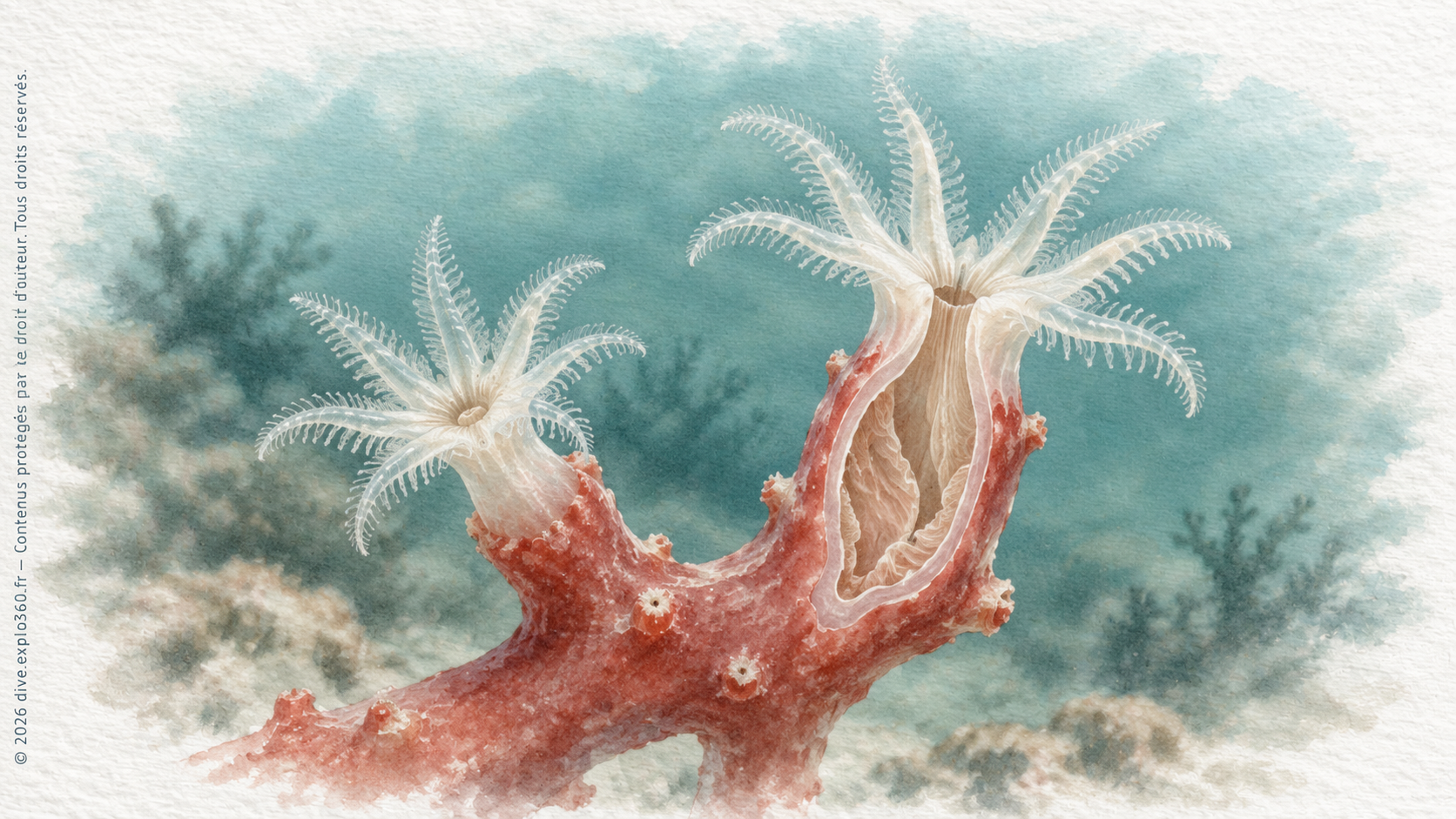
Polyps can look like tiny flowers. They are animals. Each has a mouth surrounded by tentacles: soft arms that catch food.
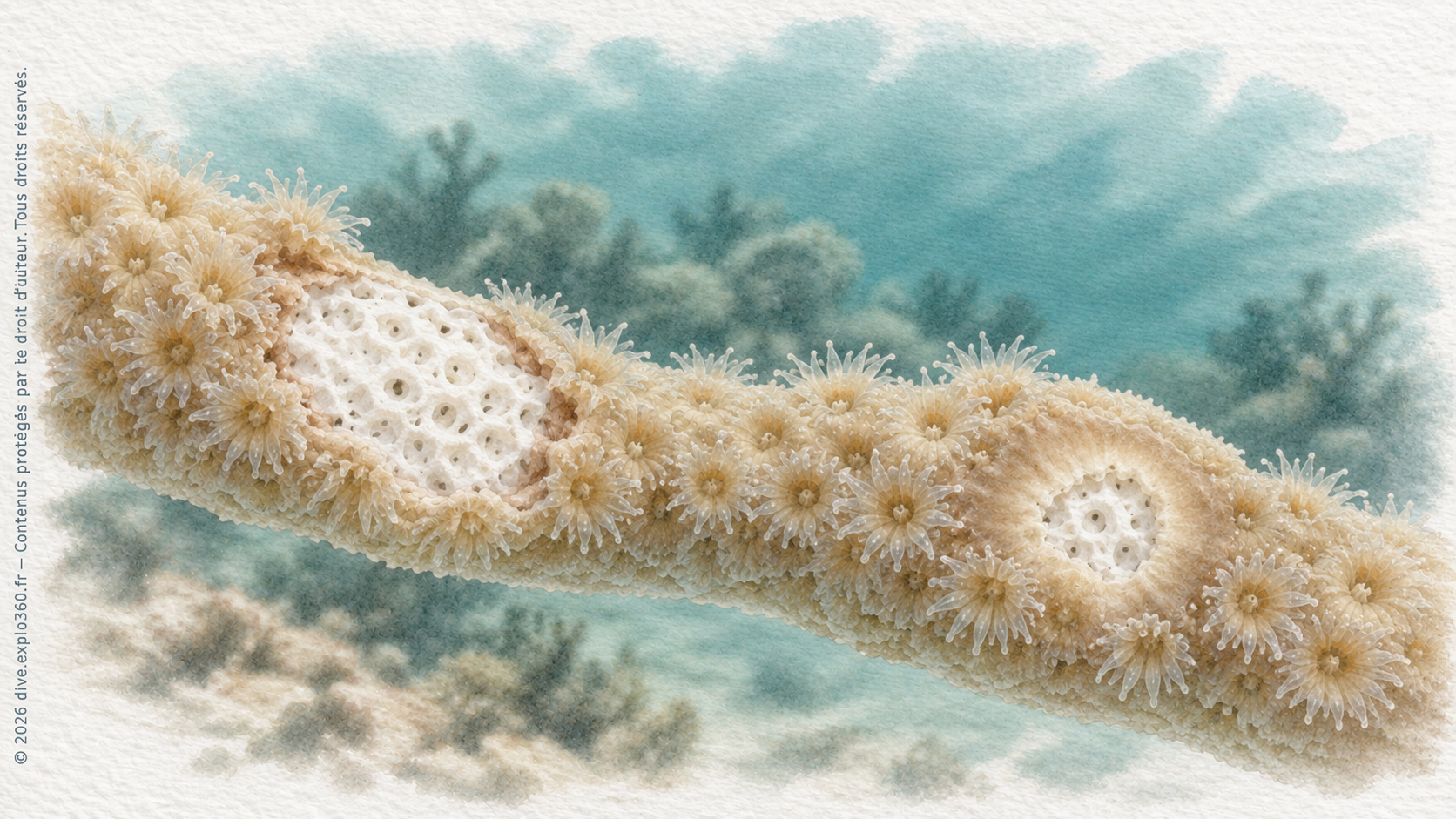
Red coral has white polyps with eight tentacles. Small side branches give each tentacle a feathery shape.
Red coral has white polyps with eight tentacles. Small side branches give each tentacle a feathery shape.
What enters through a mouth
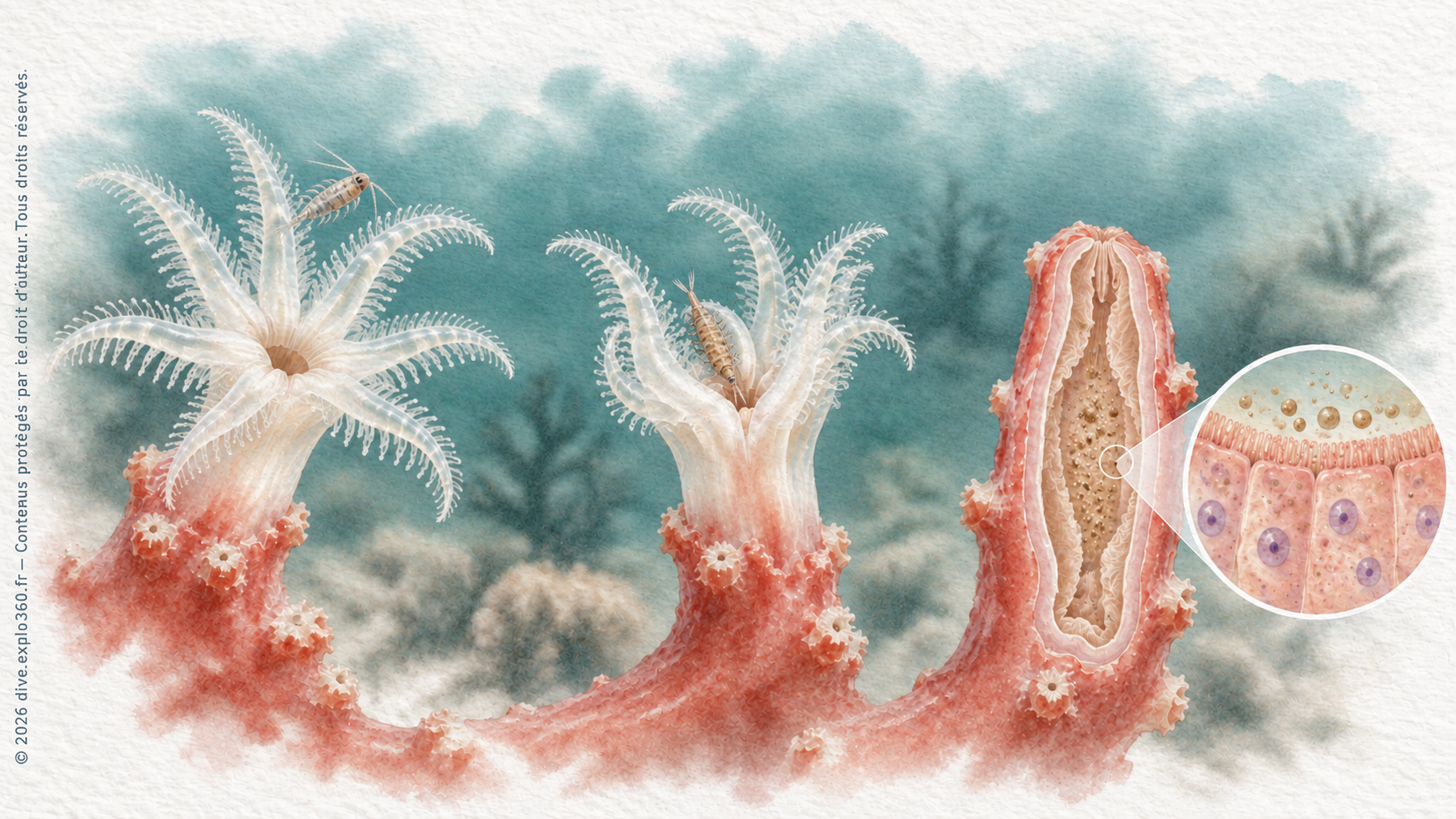
The current carries tiny animals past the coral. Tentacles can hold them and bring them to the mouth. The food enters a pouch inside the polyp.
It is broken down there. The body can then use some of it. Undigested remains leave through the mouth.
It is broken down there. The body can then use some of it. Undigested remains leave through the mouth.
A meal’s route through the colony
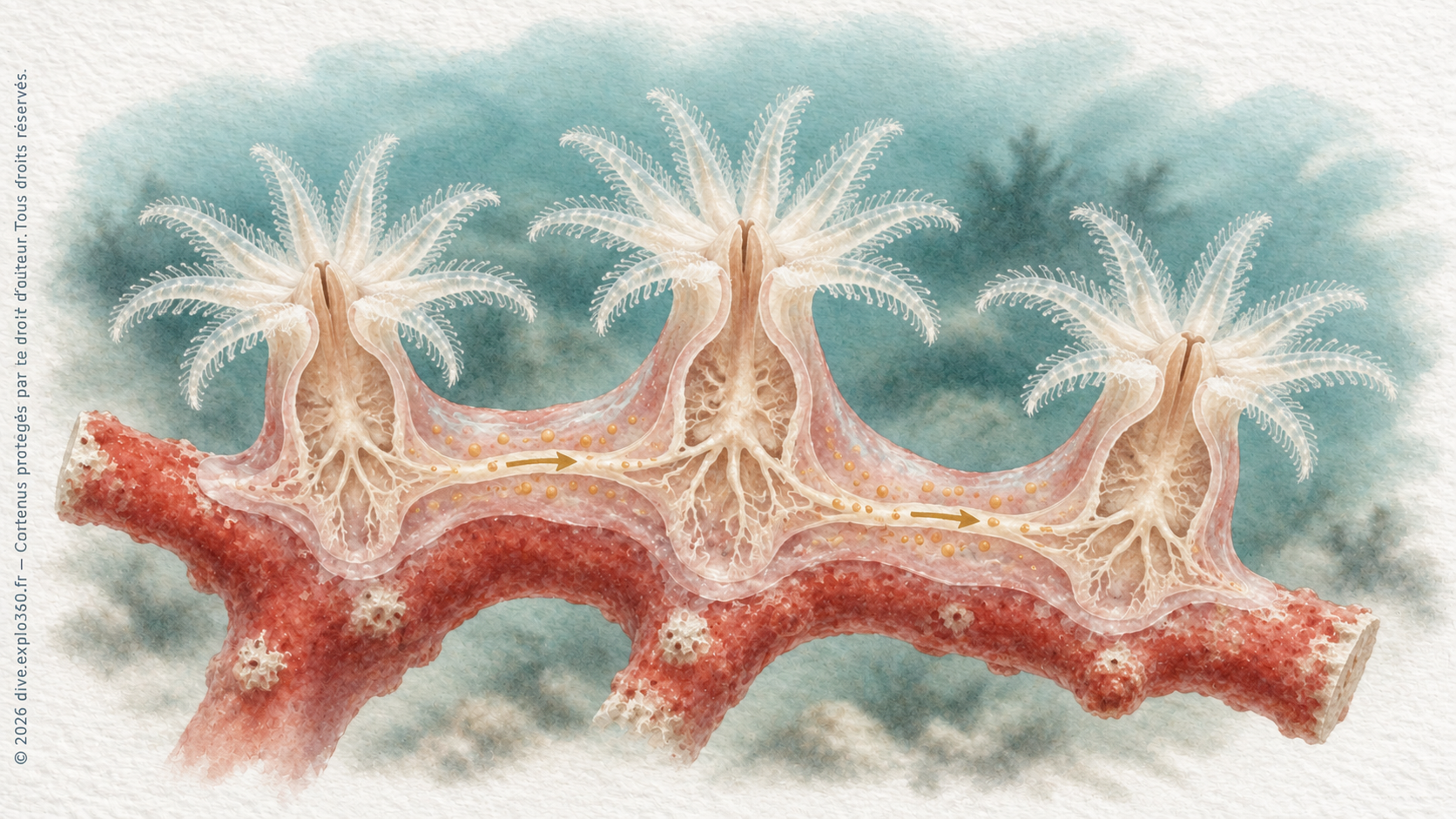
Polyps in the same colony stay joined by living tissue. Small passages connect their digestive pouches.
Some of the food that has been broken down can reach another part of the colony. This does not mean every polyp receives exactly the same amount.
Some of the food that has been broken down can reach another part of the colony. This does not mean every polyp receives exactly the same amount.
Growing by budding
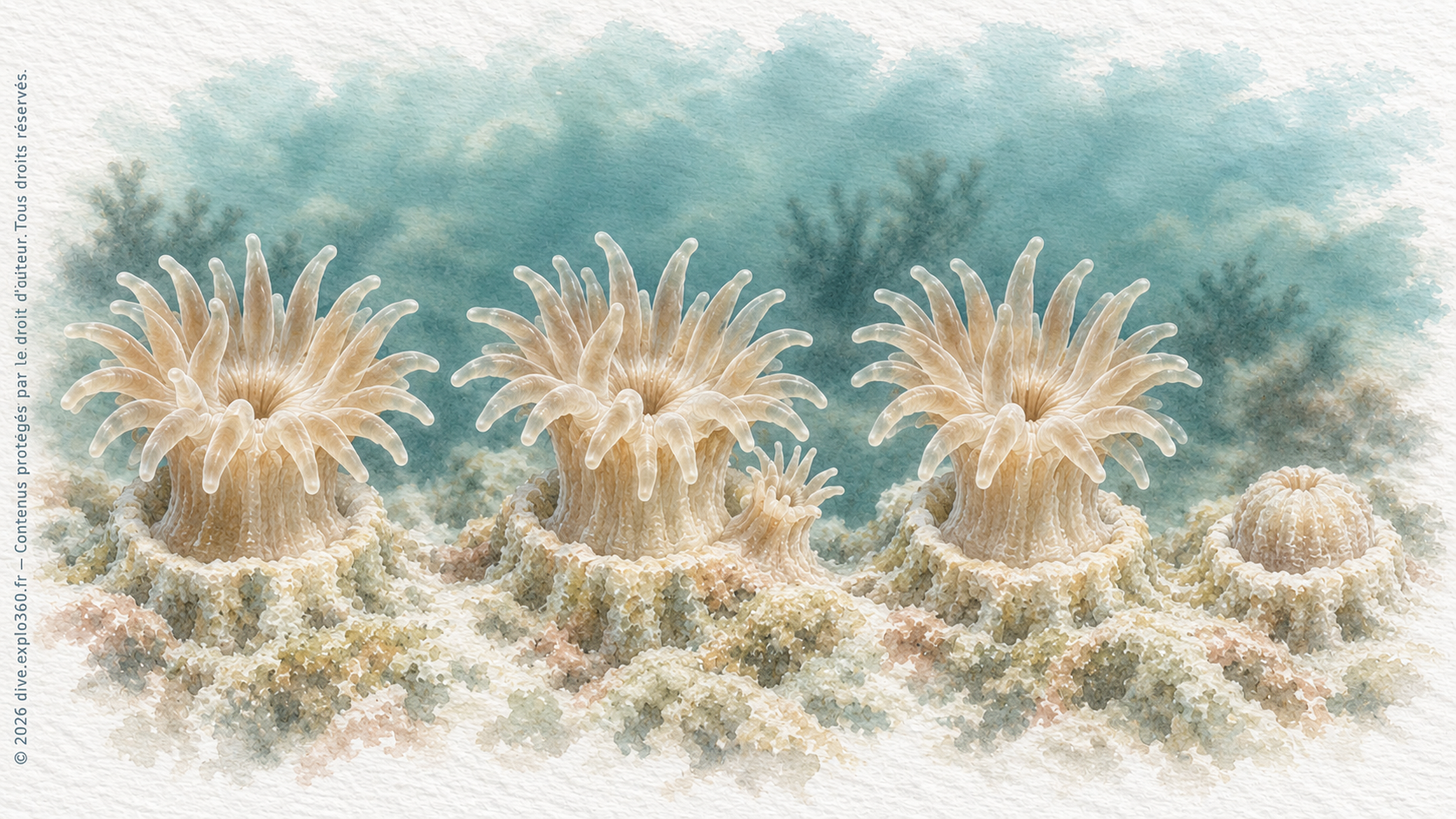
A small bump appears in the colony’s living tissue and develops into a new polyp. This is called budding: a polyp grows from tissue that is already there.
It stays connected to its neighbours. The colony grows.
It stays connected to its neighbours. The colony grows.
How does a colony begin?
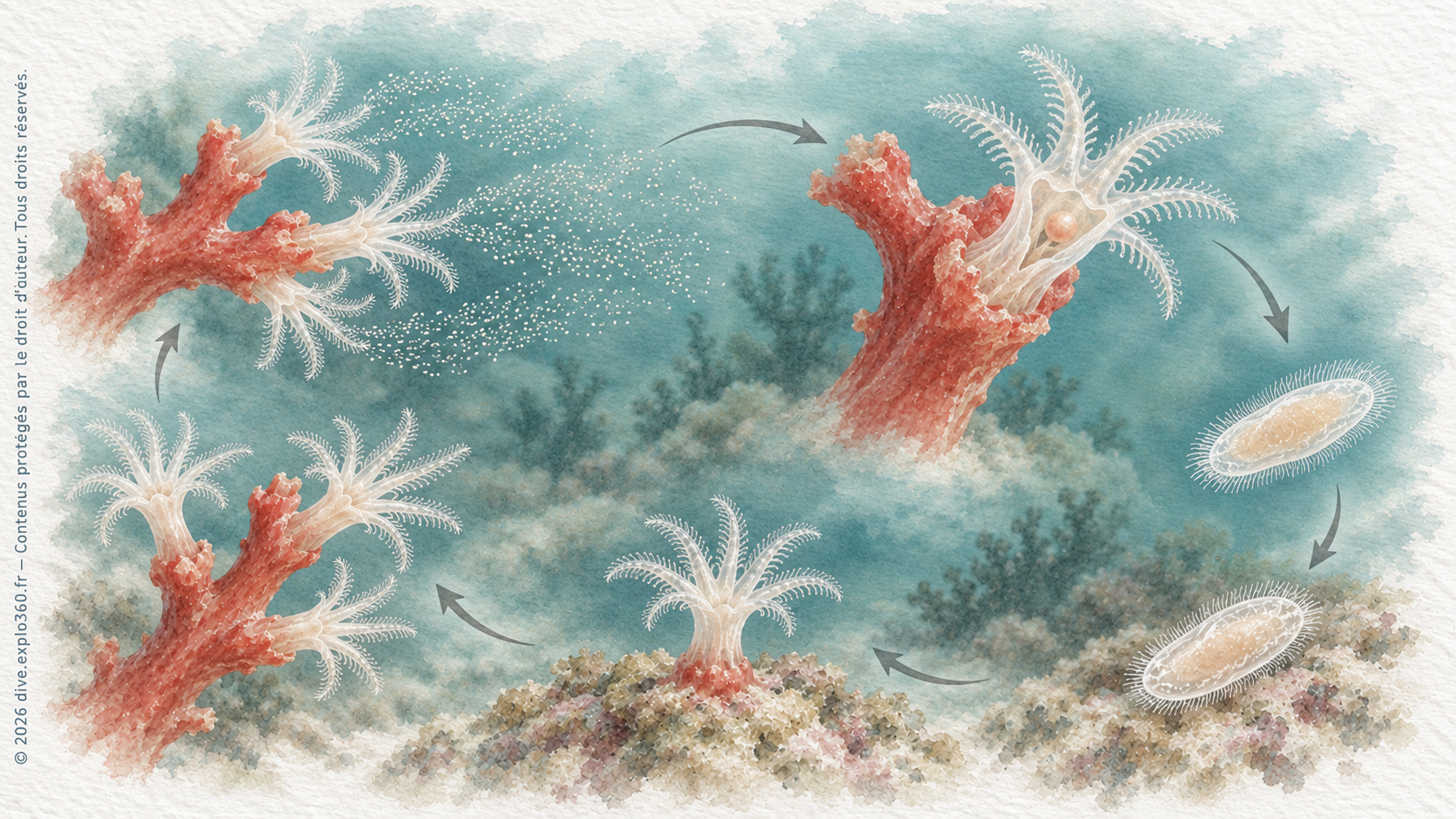
Red coral also produces larvae: small animals that look very different from adults. They form after a male reproductive cell joins a female reproductive cell.
A larva released into the water may attach to a surface. It changes into the first polyp of a new colony.
A larva released into the water may attach to a surface. It changes into the first polyp of a new colony.
When polyps close
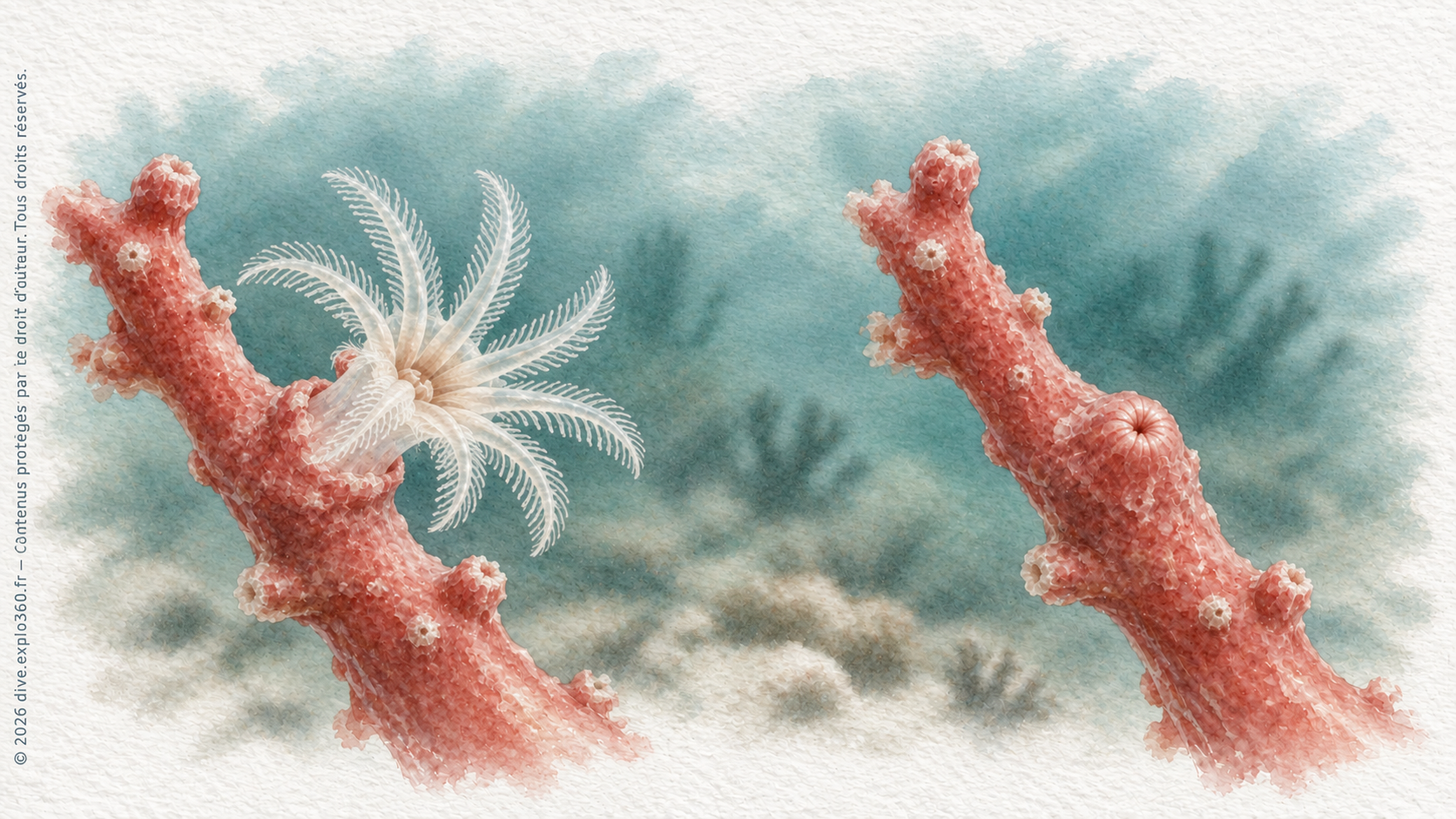
An open polyp can fold its tentacles. In red coral, it can even withdraw into the branch’s living tissue.
Touch can cause this response. A closed polyp is not necessarily ill: its activity can change.
Touch can cause this response. A closed polyp is not necessarily ill: its activity can change.
Breathing without lungs
A polyp has no lungs. Oxygen from the water passes through its body wall.
Carbon dioxide, a gas produced by the animal’s activity, passes back into the water.
Carbon dioxide, a gas produced by the animal’s activity, passes back into the water.
Different kinds of support
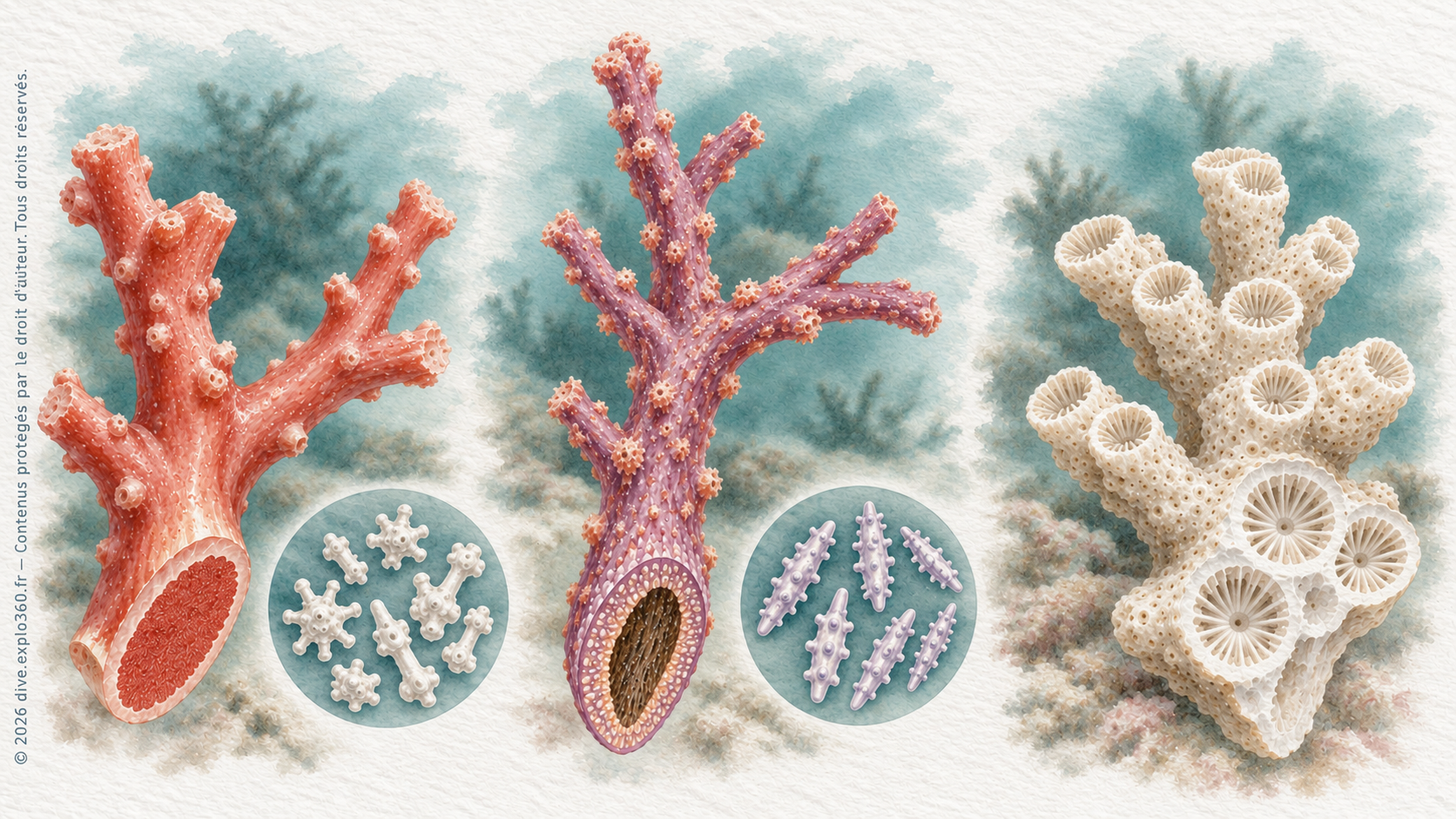
The living tissue of red coral surrounds a hard support. This helps the branch keep its shape.
Corals do not all have the same skeleton. Some build large stony structures. Others, including many sea fans, have a more flexible support.
Corals do not all have the same skeleton. Some build large stony structures. Others, including many sea fans, have a more flexible support.
Light, for some corals
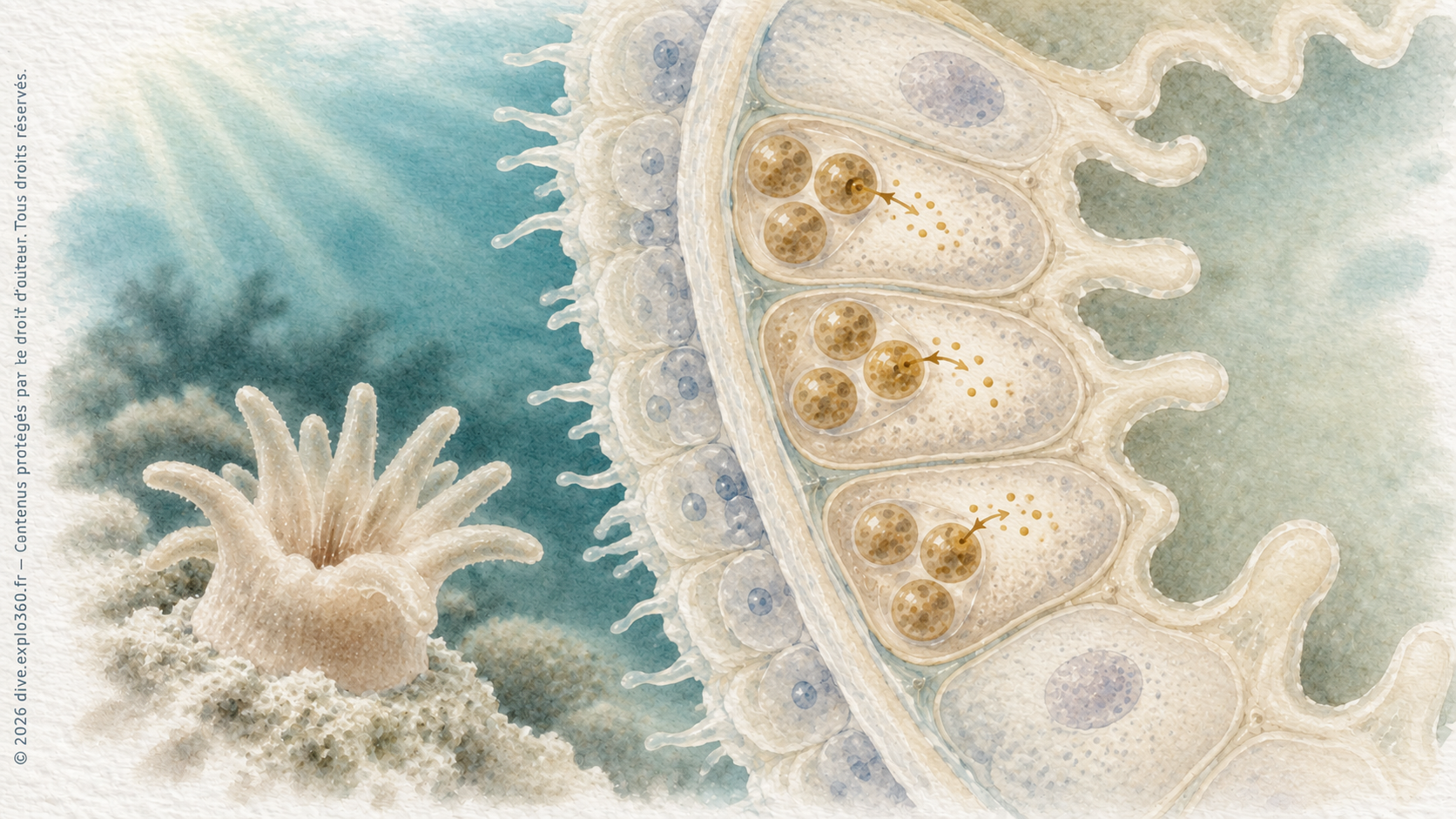
Some corals shelter tiny living partners inside their cells. These partners use light to make food. Some of it can be used by the coral.
Red coral does not have these partners. Corals do not all feed in the same way.
Red coral does not have these partners. Corals do not all feed in the same way.
Connected polyps, one colony
Each polyp has its own mouth. Its connections with the others help the colony function.
A small wound may sometimes close. This depends on the coral and the size of the injury. A colony cannot repair every kind of damage.
A small wound may sometimes close. This depends on the coral and the size of the injury. A colony cannot repair every kind of damage.
Interactive quiz
Try it yourself
Five questions about what you have just read. Choose one answer for each question.
Interactive quiz
Try it yourself
Question 1 out of 5Score: 0
1
What are polyps?
Each polyp is an animal with a mouth and tentacles.
2
What do tentacles do?
Tentacles hold small prey and bring it towards the mouth.
3
How can a new polyp enlarge a colony?
A new polyp can form from tissue already present.
4
How do polyps receive oxygen?
Oxygen in the water passes through the body wall.
5
Do all corals have partners that use light to make food?
Red coral does not have these partners.
Final result
Quiz completed
correct answers
Understanding what we observe
The crowns visible on a coral belong to connected animals. Their tentacles catch food, their tissues allow exchanges and new polyps can enlarge the colony. Understanding a coral means looking at its polyps and the connections between them.
Sources
Natural history accounts and publications used to check the mechanisms described.
NOAA — What is Zooxanthellae?oceanservice.noaa.gov↗Bouderlique et al. (2022). Surface flow for colonial integration in reef-building corals. Current Biology.doi.org↗Palmer et al. (2011). Corals Use Similar Immune Cells and Wound-Healing Processes as Those of Higher Organisms. PLoS ONE.doi.org↗Newcastle University — Surface flow for colonial integration in reef-building coralseprints.ncl.ac.uk↗