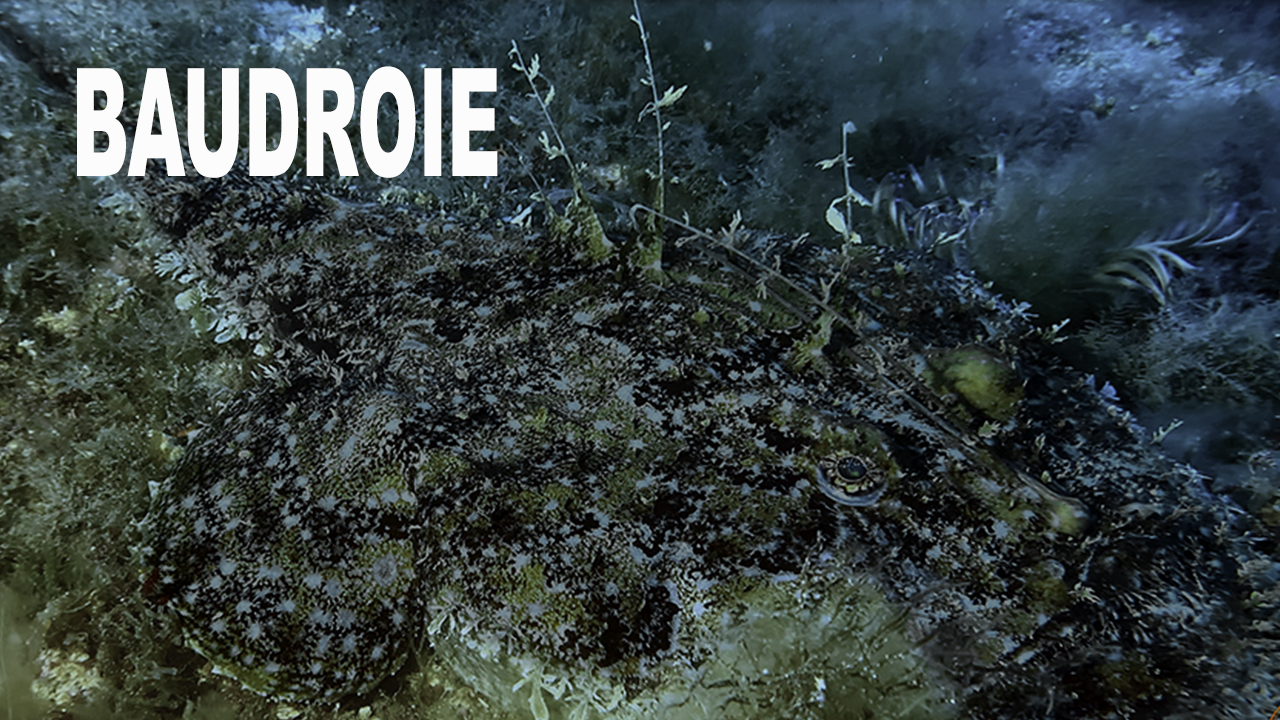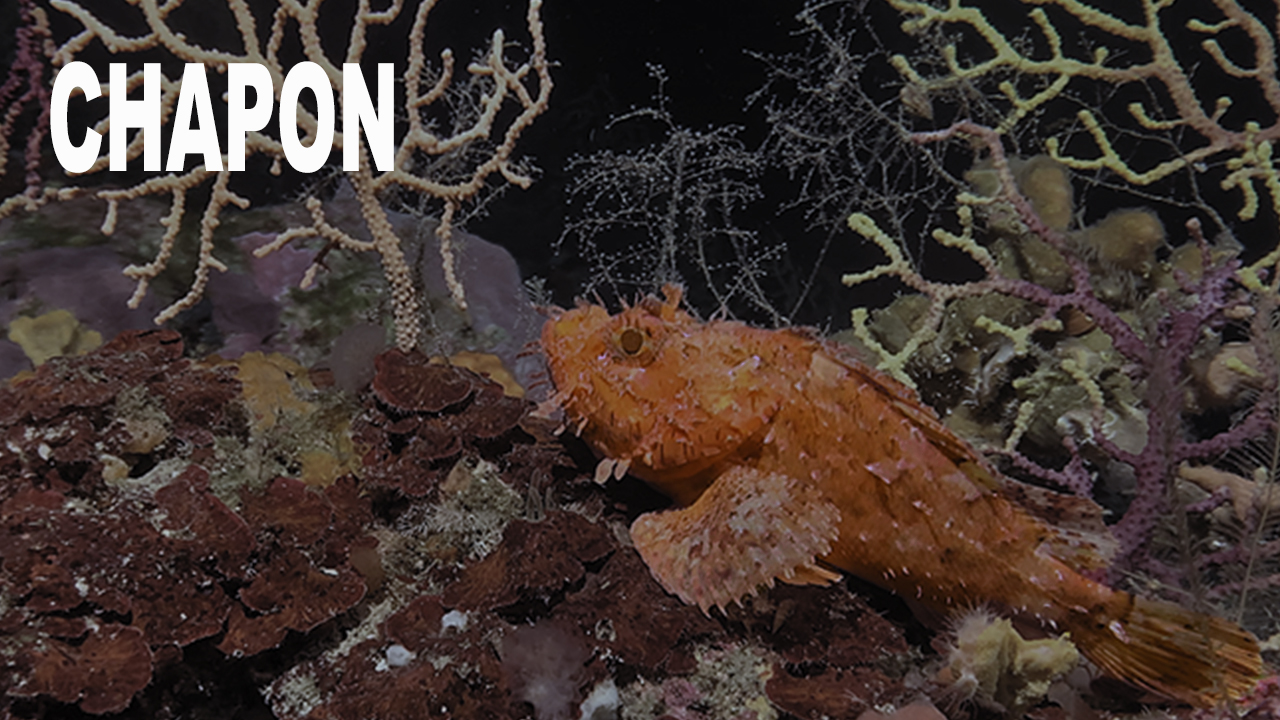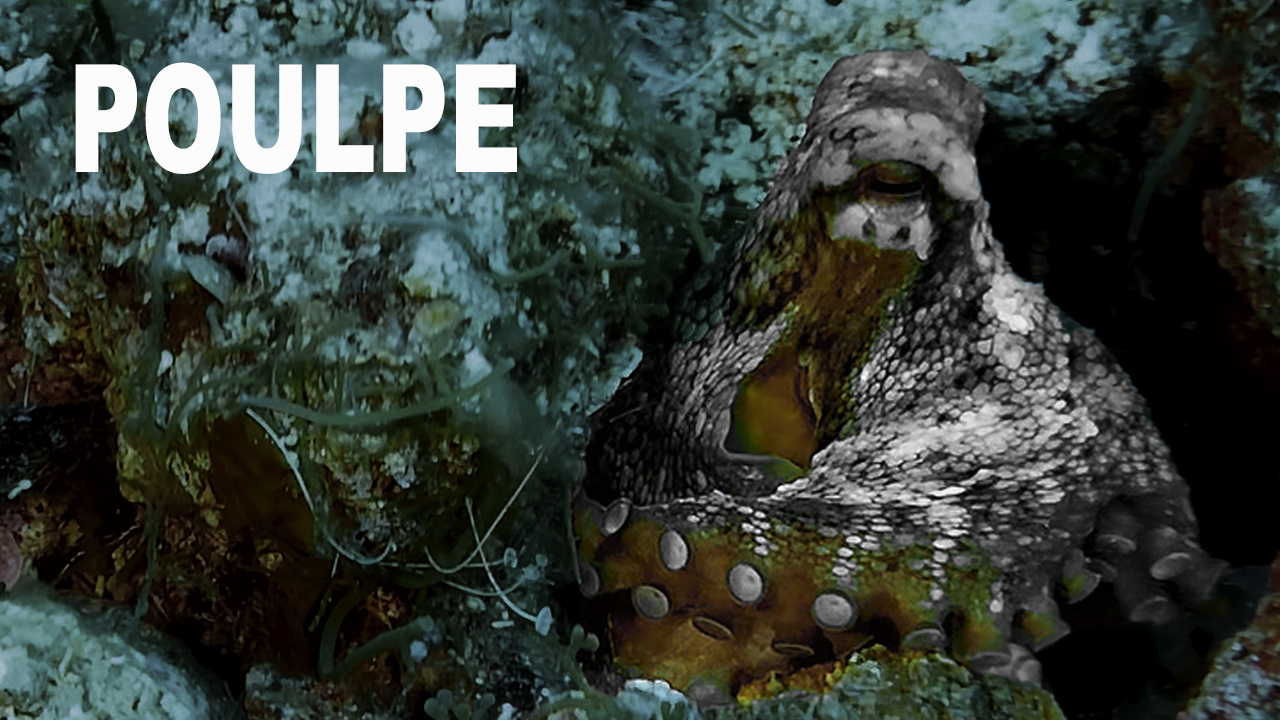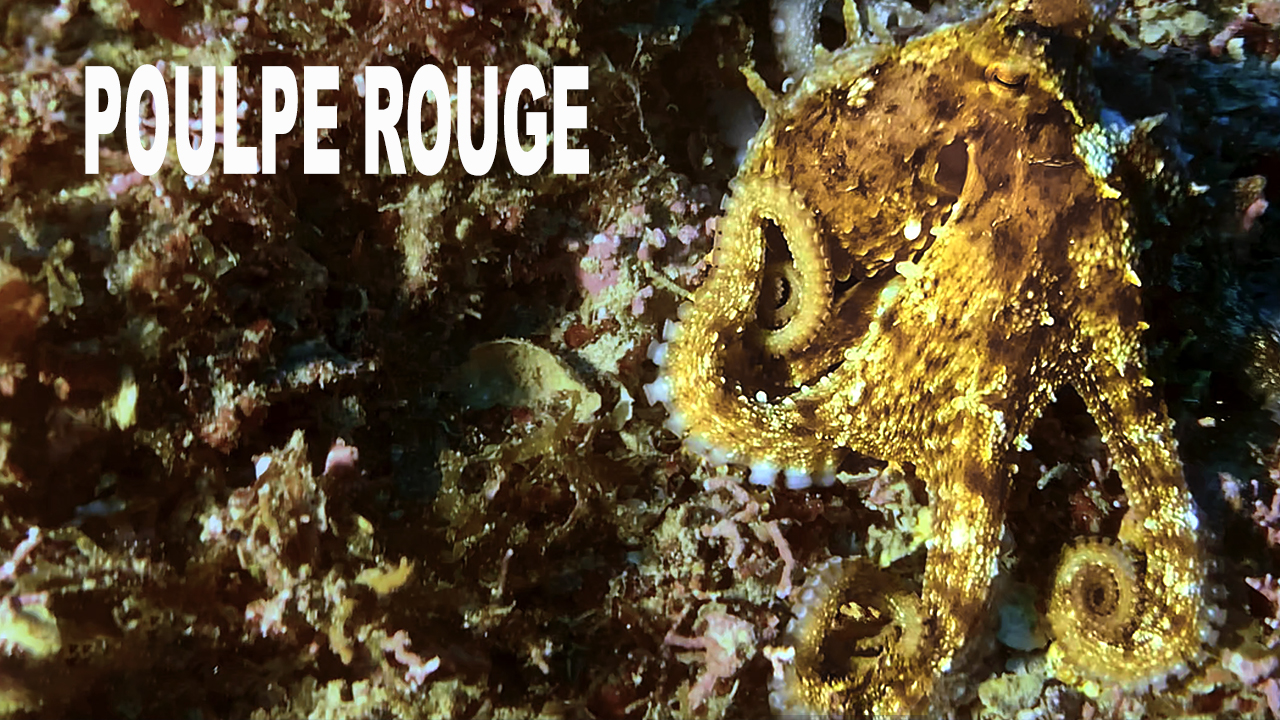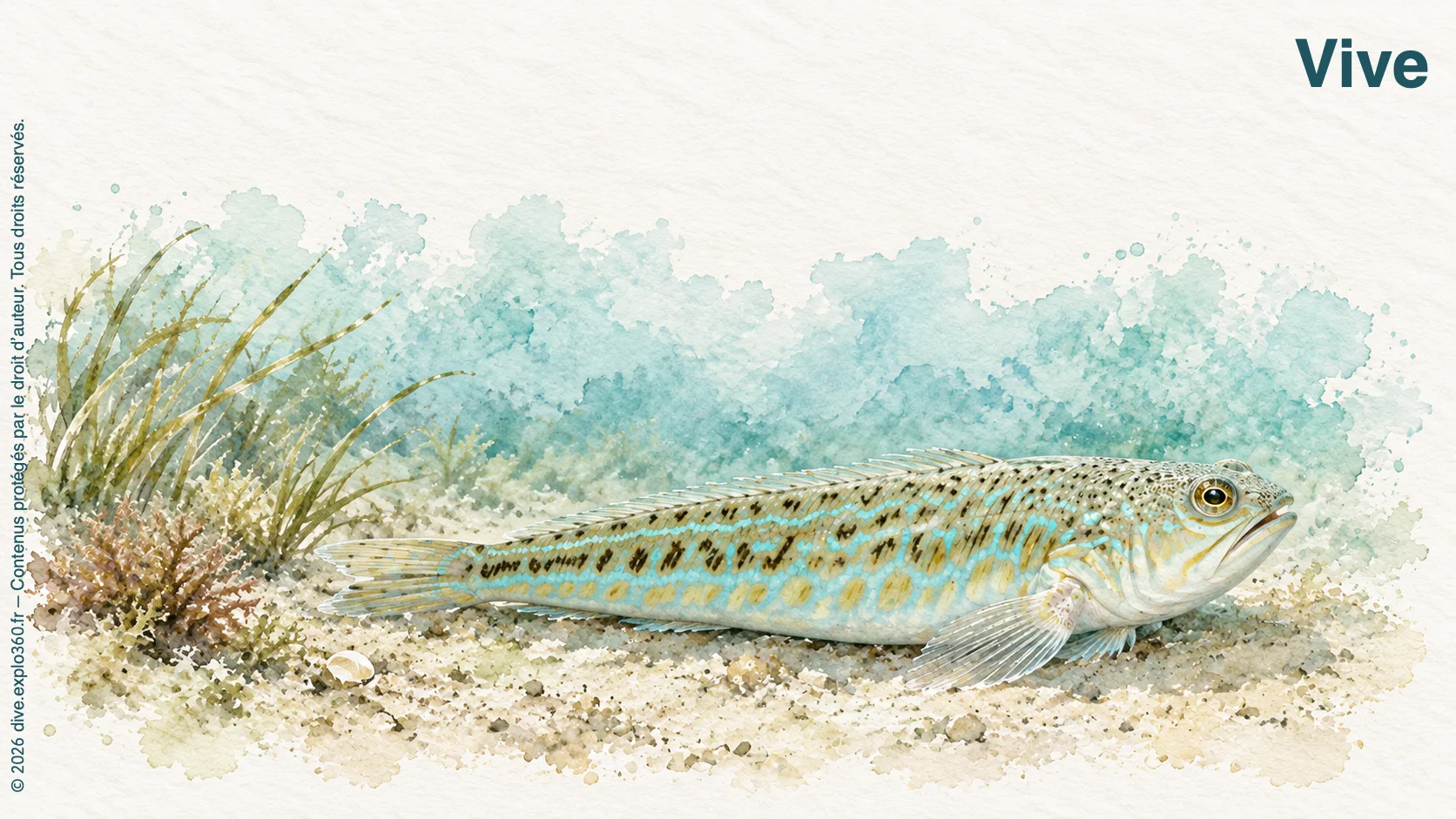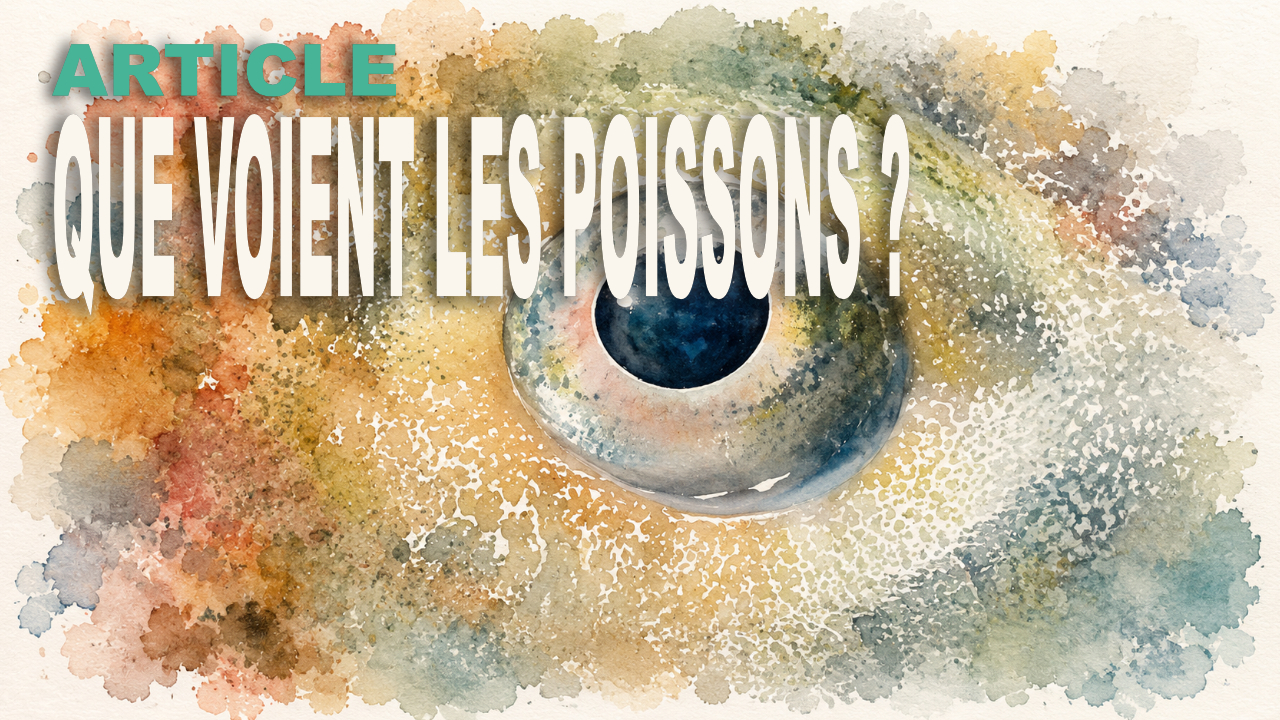

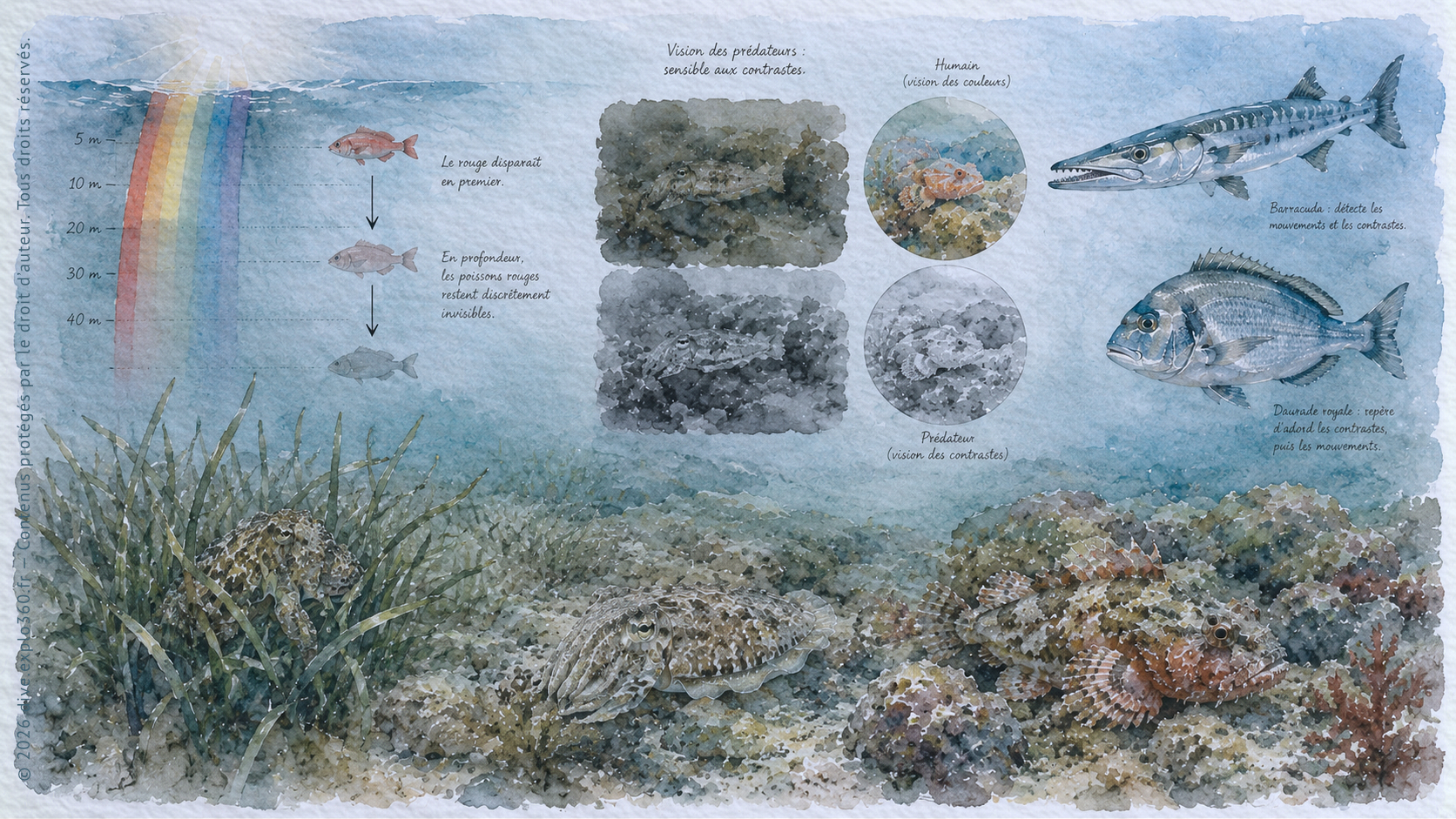
- Most fish do not perceive all the colours of the visible spectrum as humans do. At depth, for example, red is the first colour to disappear, which explains why many deep-water fish have a reddish tint that makes them virtually invisible.
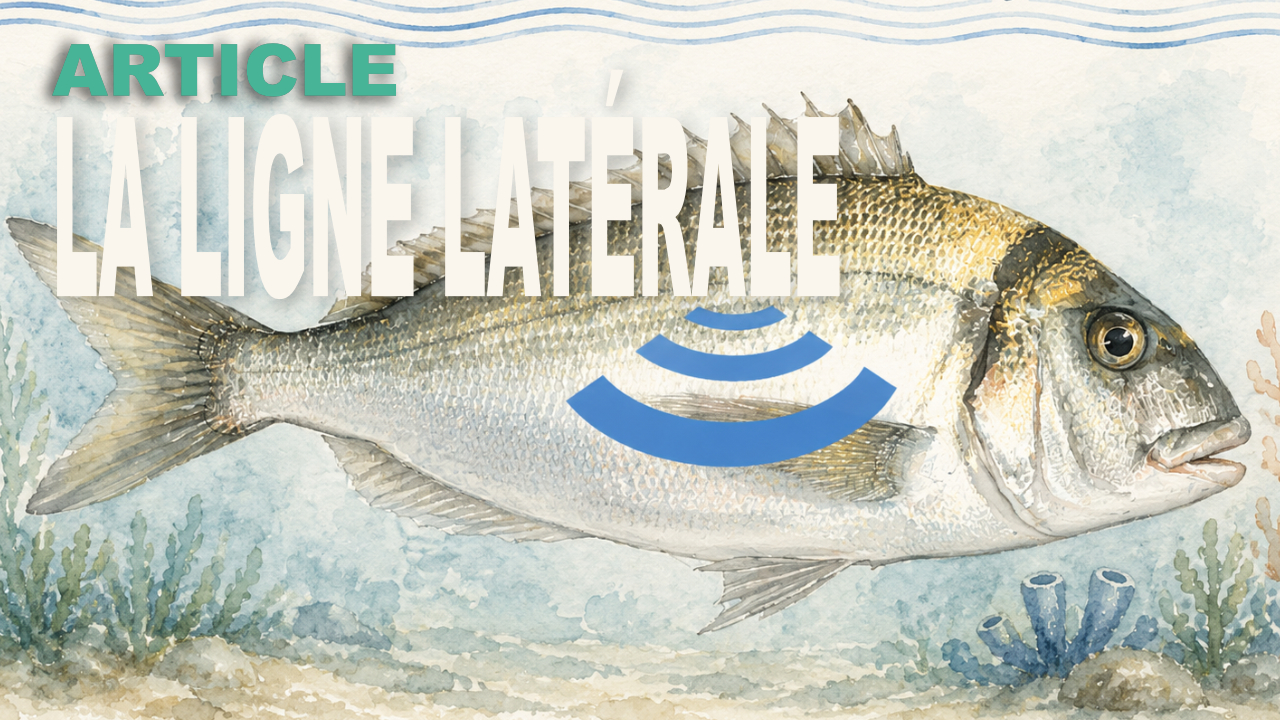
- Predators such as barracuda or gilthead seabream are particularly sensitive to movement and contrast rather than fine colour detail.
ACTIVE CAMOUFLAGE
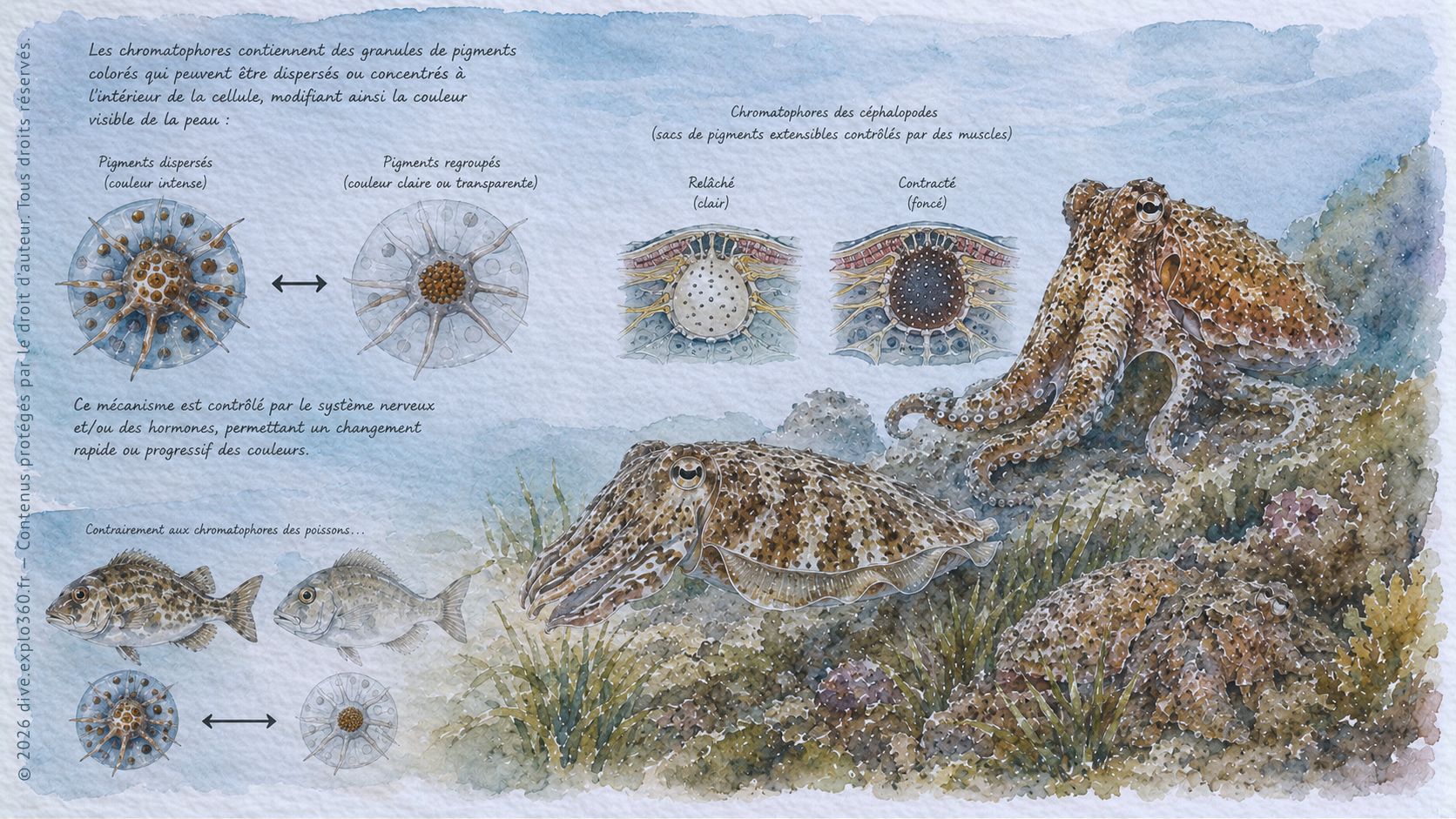
Chromatophores contain coloured pigment granules that can be dispersed or concentrated within the cell, changing the visible colour of the skin:
- When pigments disperse, the colour becomes more intense.
- When pigments gather at the centre of the cell, the skin becomes lighter or transparent.
This mechanism is controlled by the nervous system and/or hormones, allowing rapid or gradual colour changes.
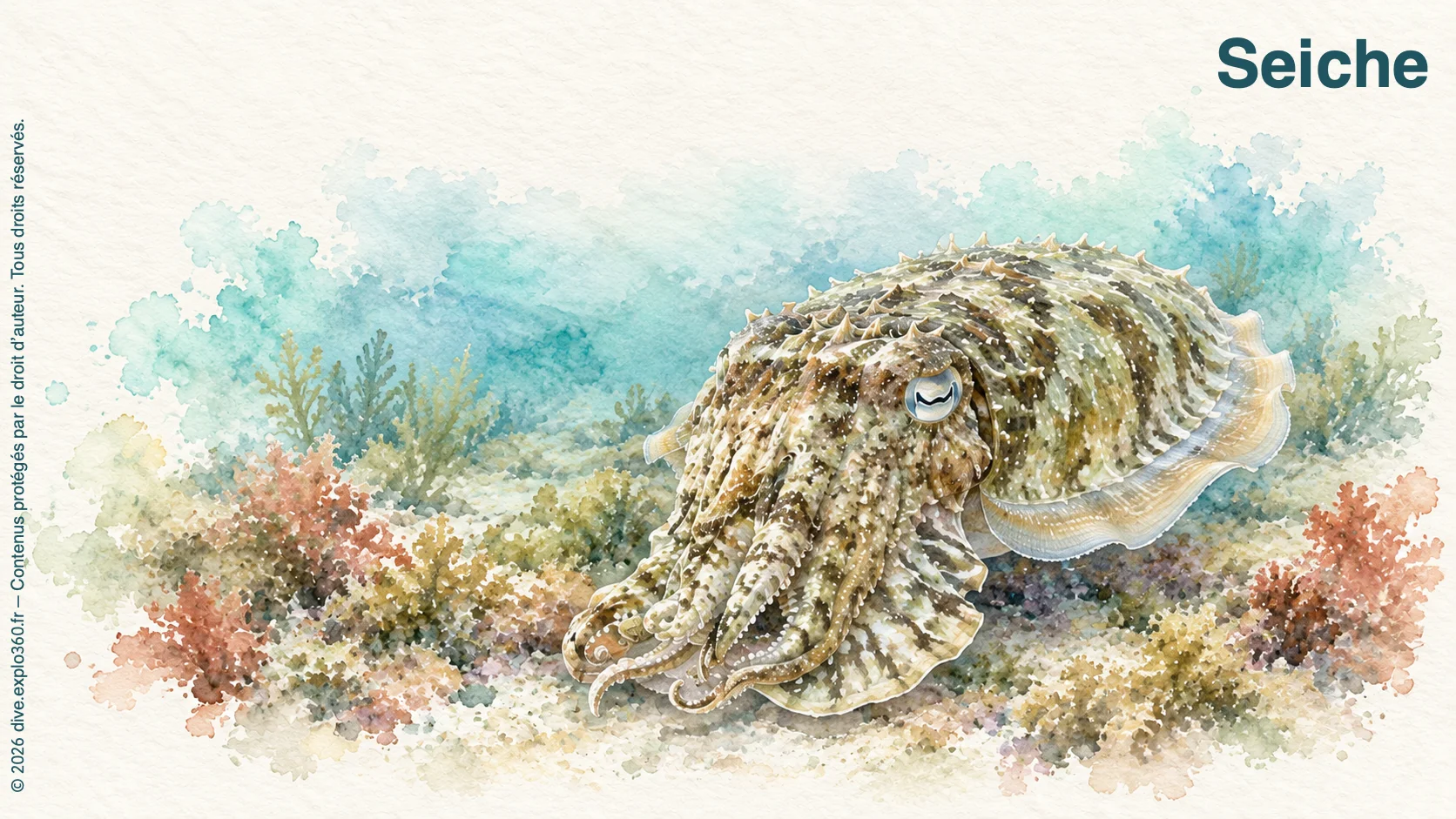
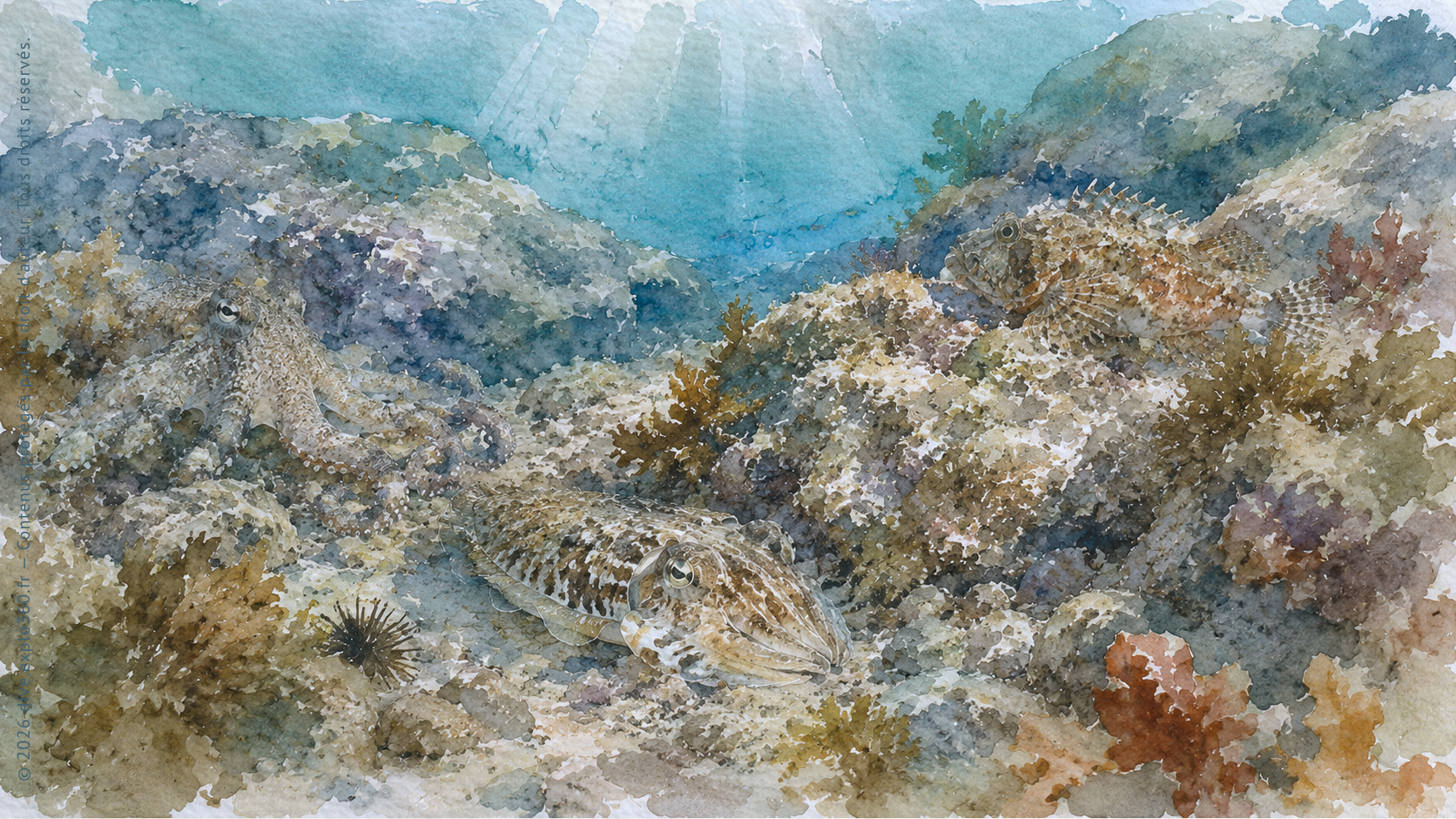
Unlike fish chromatophores, those of cephalopods (cuttlefish, squid and octopuses) are expandable pigment sacs controlled by muscles.
Melanophores
- Pigment dispersion → When melanin granules spread throughout the cell, the skin appears darker.
- Pigment concentration → When the granules gather at the centre of the cell, the skin becomes lighter.
Xanthophores
- Combined with other chromatophores (such as melanophores, which produce black and brown, and iridophores, which reflect light to create iridescent effects), they allow complex shades and patterns to form.
Erythrophores
- Pigment dispersion → The skin appears redder or more orange.
- Pigment concentration → The colour becomes paler or disappears.
Leucophores
- Create complex patterns together with melanophores (pigment dispersion/concentration) and iridophores (which reflect light iridescently).
- Appear white on pale sandy or rocky seabeds, helping conceal the animal.
Iridophores
- Change their appearance dynamically by adjusting the distance between reflective plates, thereby changing the perceived colour.
- Complement the action of melanophores (pigment dispersion/concentration) to produce more complex patterns, improving camouflage or social signalling.
AMIGANSEAU CONTENT
The rest of this article is for subscribers
Log in with your AMIGANSEAU licence to continue reading.
All active AMIGANSEAU licences give access to the full article.Explore the same world