DORIS recommends our site’s innovative, playful and interactive approach for taking your first steps in underwater biology.
DORIS is the reference website for underwater biology. It aims to record, illustrate and describe as many common and rare species as possible that can be seen while diving or along the shore in mainland and overseas French waters.
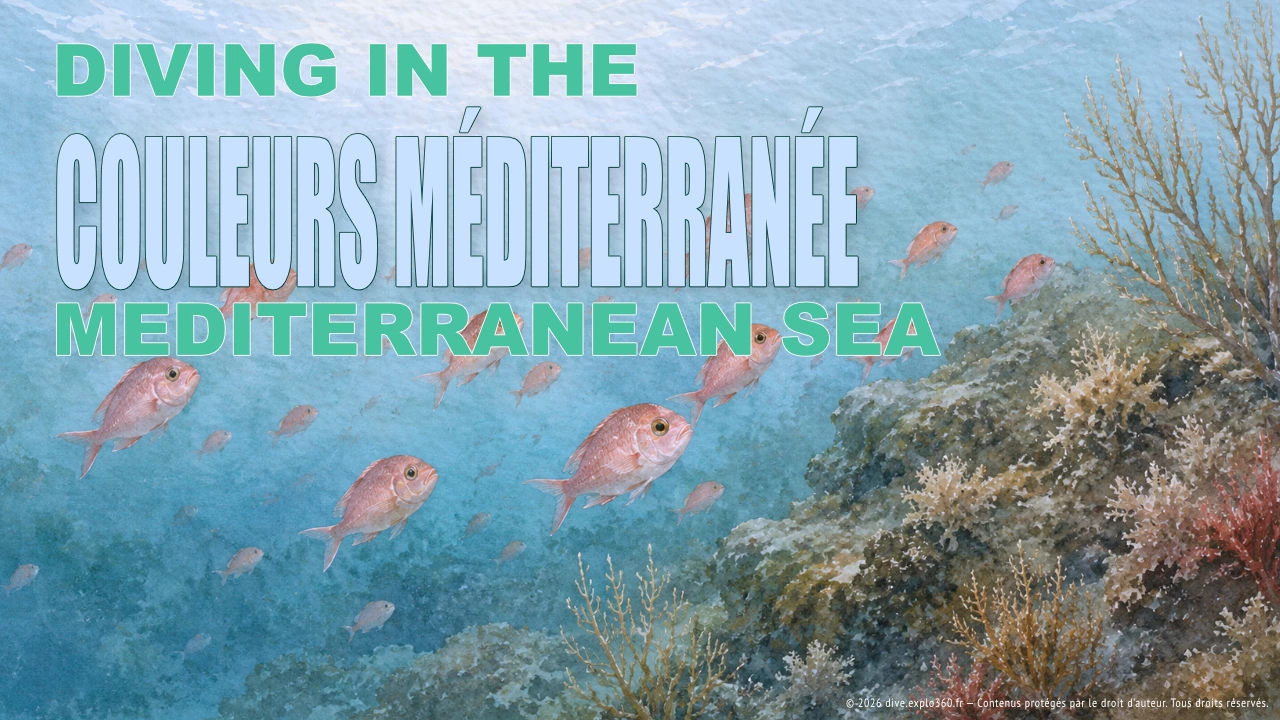
A school of fish is a gathering of individuals of the same species swimming together in a synchronised, coordinated way, forming a dynamic and harmonious unit. This social strategy relies on constant communication between fish, using visual and sensory signals to maintain cohesion.
The formation of fish schools is above all an essential survival strategy for many marine species. These massive gatherings, often impressive in size and coordination, allow fish to increase their chances of survival in an environment full of predators.
By grouping together, fish reduce the individual risk of being caught, because the confusion effect created by the school’s density and movements disorients predators. These gatherings also make food easier to find, allowing better distribution of resources within the group.
Finally, schools play a crucial role in reproduction by increasing the chances of meeting mates to ensure the species’ continuation.
1
Protection
One of the main advantages of fish schools is the protection they offer against predators. Gathering in large numbers can unsettle a predator by making it hard to focus on a single target. The ‘predation dilution’ phenomenon means that, within a large group, each individual is less likely to be caught.
2
Searching for food
By moving as a group, fish increase their chances of finding food. Once one group member discovers a food source, others can quickly benefit. This collective strategy allows efficient use of available resources.
3
Facilitating reproduction
Fish schools also make it easier for individuals to meet for reproduction. Large concentrations of fish increase the chances of finding a mate, and in some cases schools form specifically around reproductive activities such as spawning.
Fish schools are not simply disordered crowds; they adopt specific shapes in response to environmental conditions and external threats. Each shape has a precise purpose, whether defence, movement or searching for food.
One of the most spectacular formations is the vortex, where fish swim in concentric circles. This swirling movement can unsettle predators, making it hard for them to target a specific individual. This behaviour is often seen in herring and sardines, particularly when attacked by predators such as tuna or dolphins.
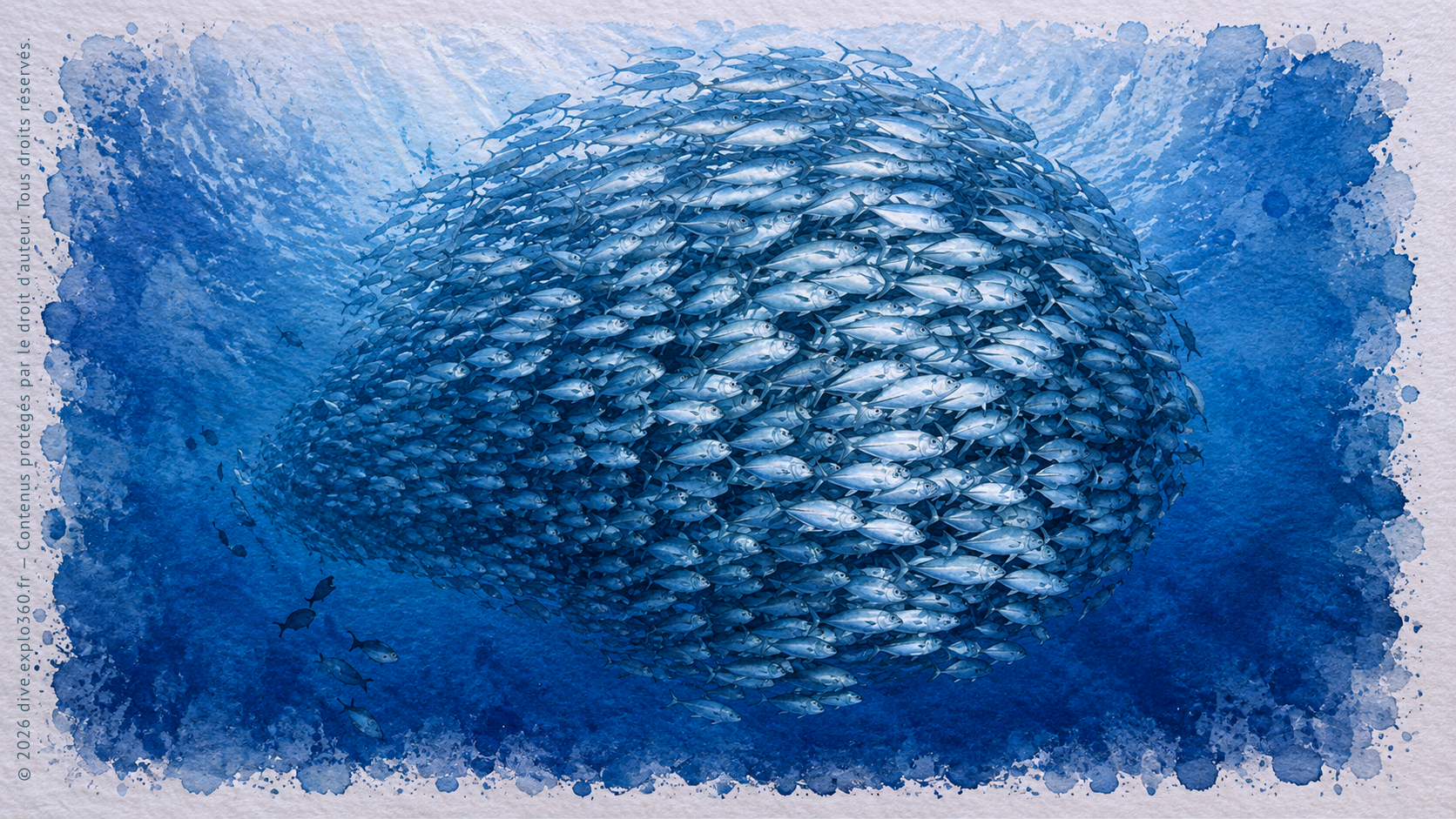
When threatened, some fish schools gather into a compact spherical shape called a ‘ball’. This defensive formation is often used when fish are hunted by predators such as sharks or seabirds. The ball reduces the surface exposed to attack and creates a protective barrier for individuals in the centre.
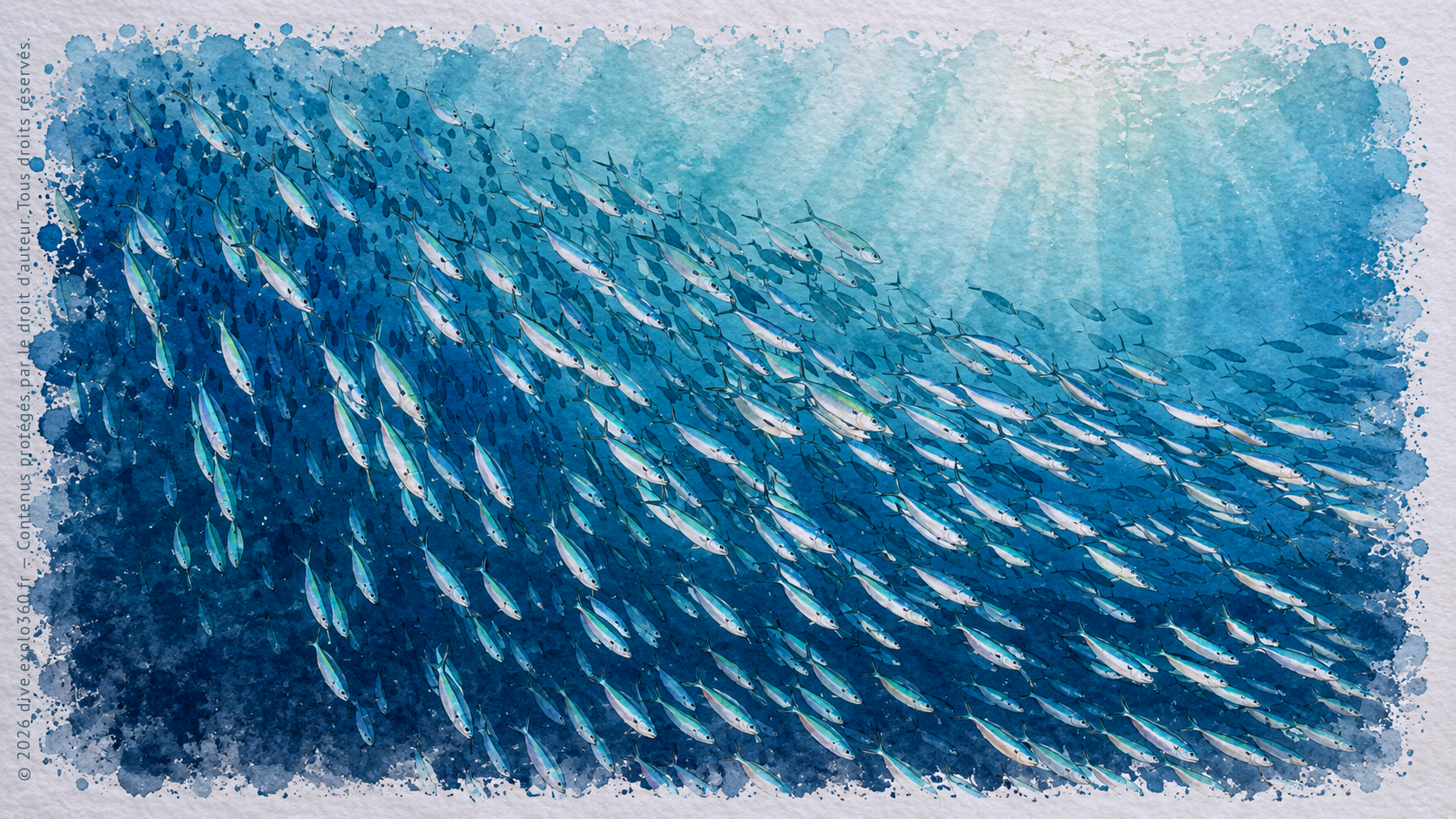
This is the most common and simplest formation, with fish swimming side by side in a line or elongated band. This arrangement allows efficient travel through water while maximising the area covered when searching for food. It is also used for long migratory journeys, where maintaining regular spacing between individuals is essential to minimise swimming effort and conserve energy.
Less familiar but equally fascinating, the fountain formation occurs when schools swim towards the surface before descending again in a continuous movement resembling a fountain jet. This behaviour is often observed when hunting smaller prey such as plankton. The upward movement serves to disorient prey, making it easier to catch.
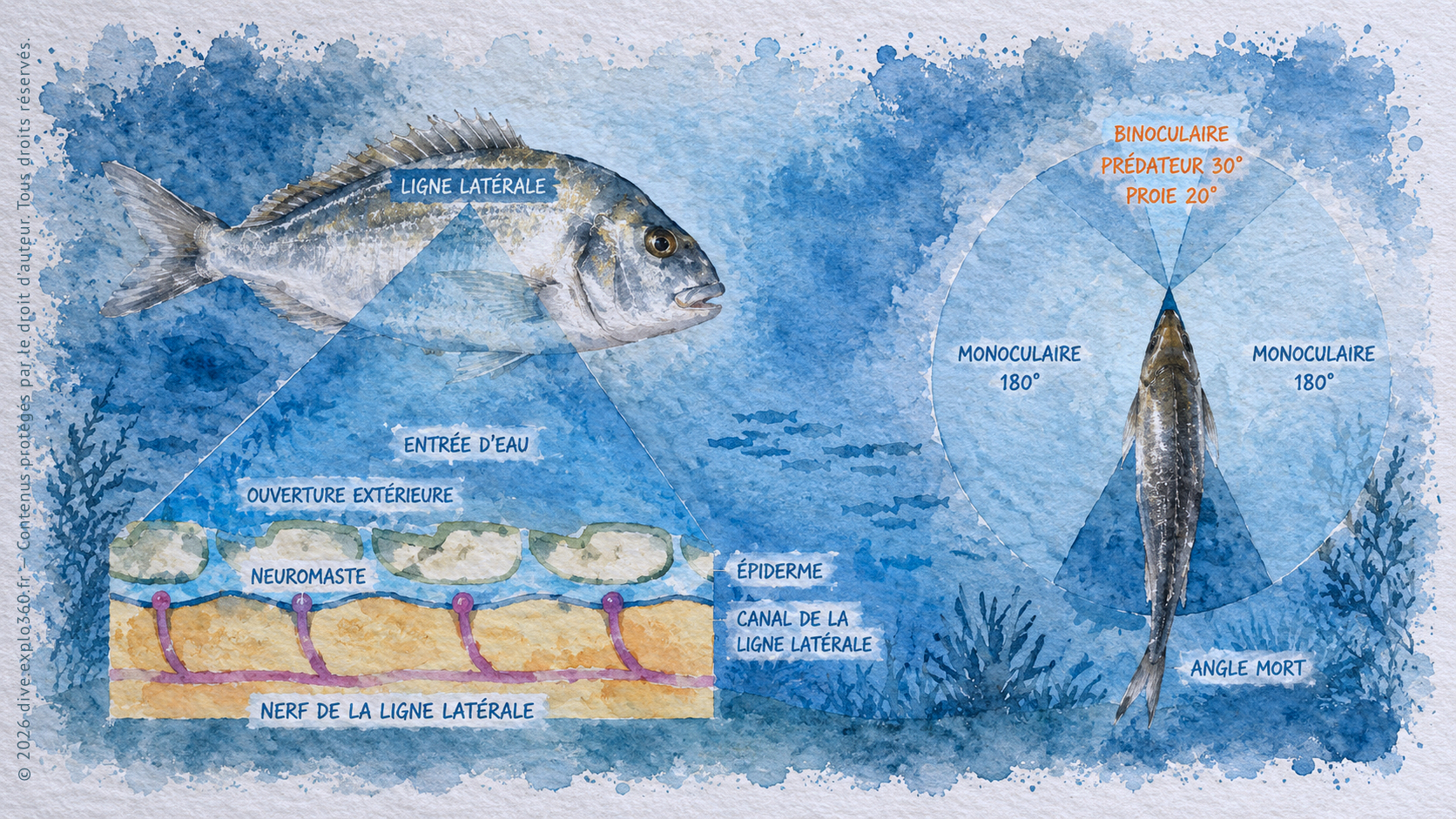
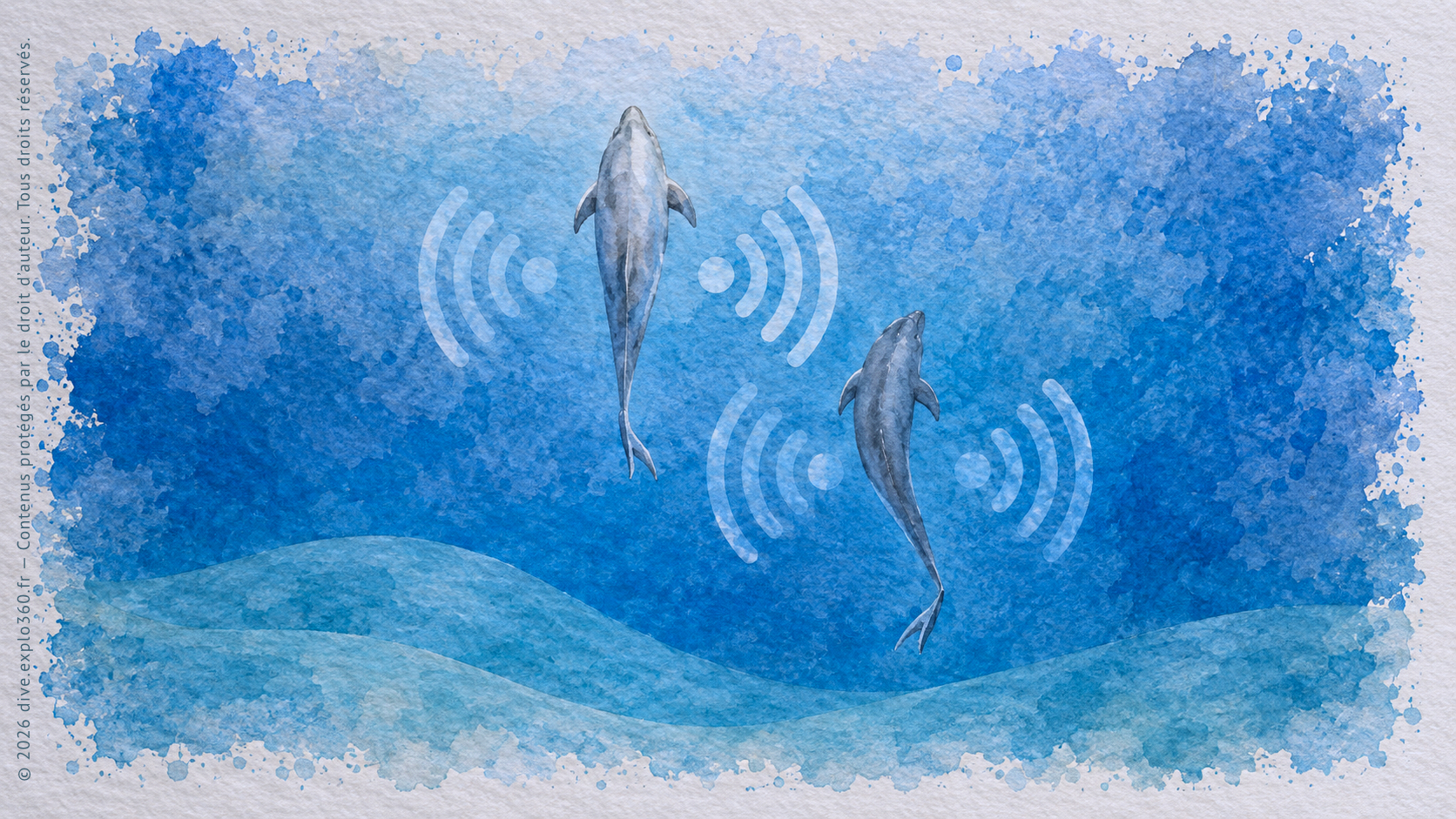
Fish use several senses to perceive their neighbours’ movements:
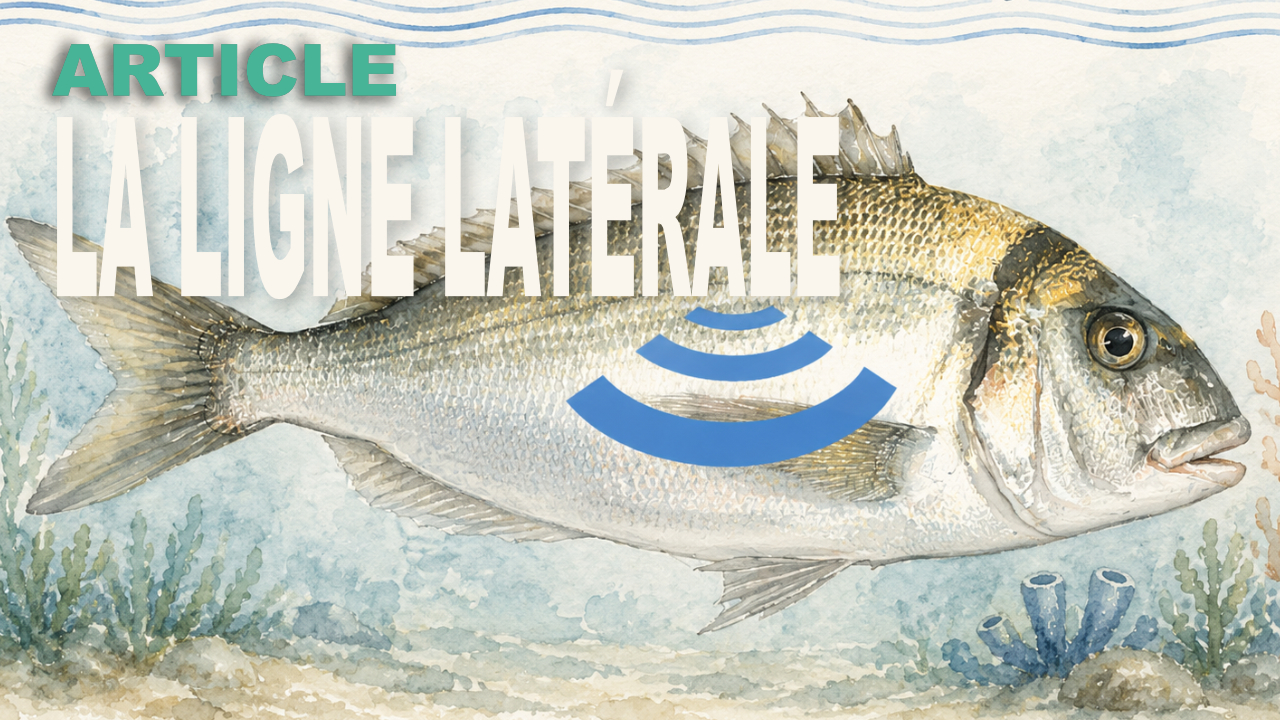
This unique sensory organ detects pressure changes and vibrations in the water, allowing fish to sense others’ movements even in low-visibility environments.
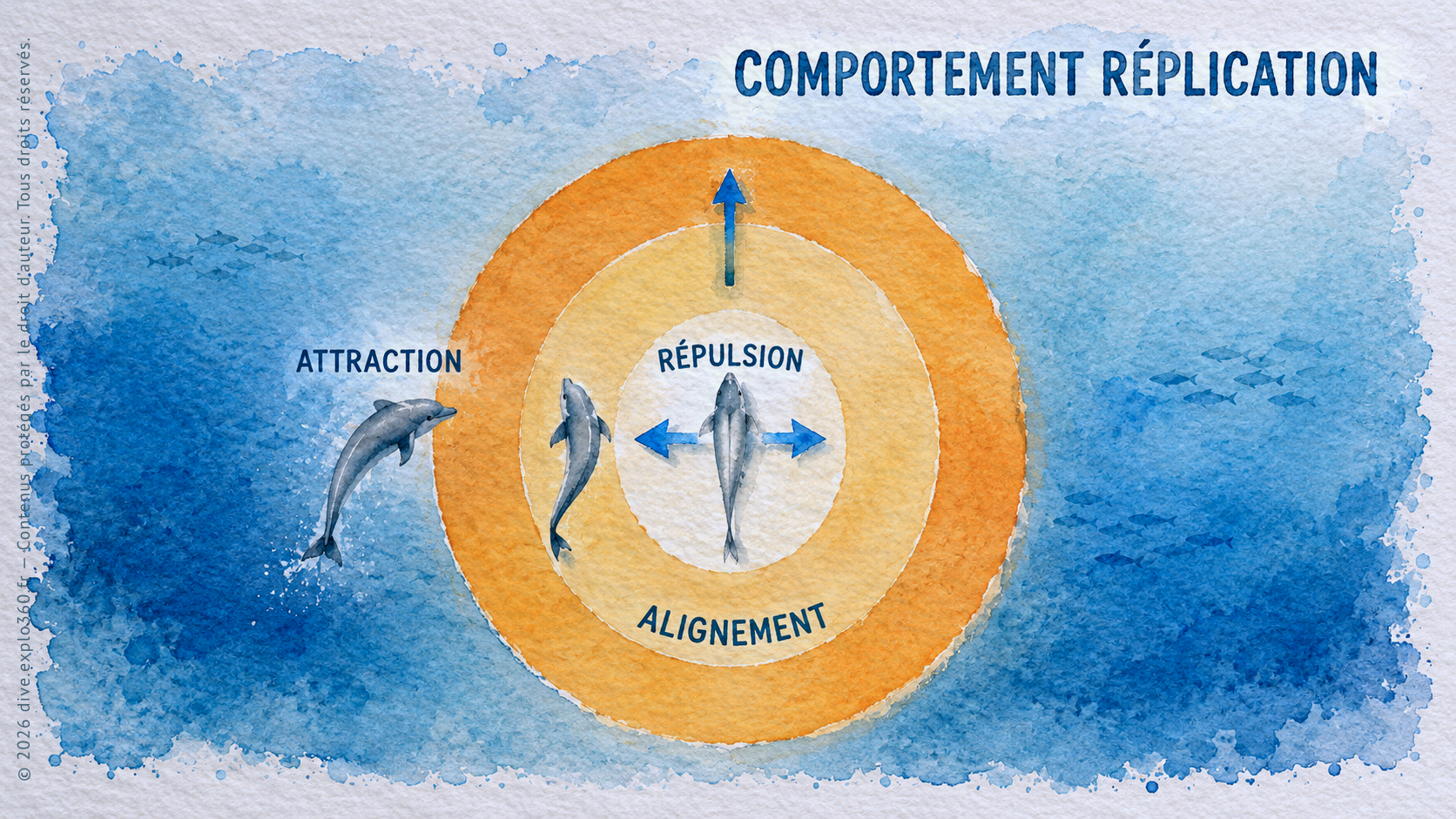
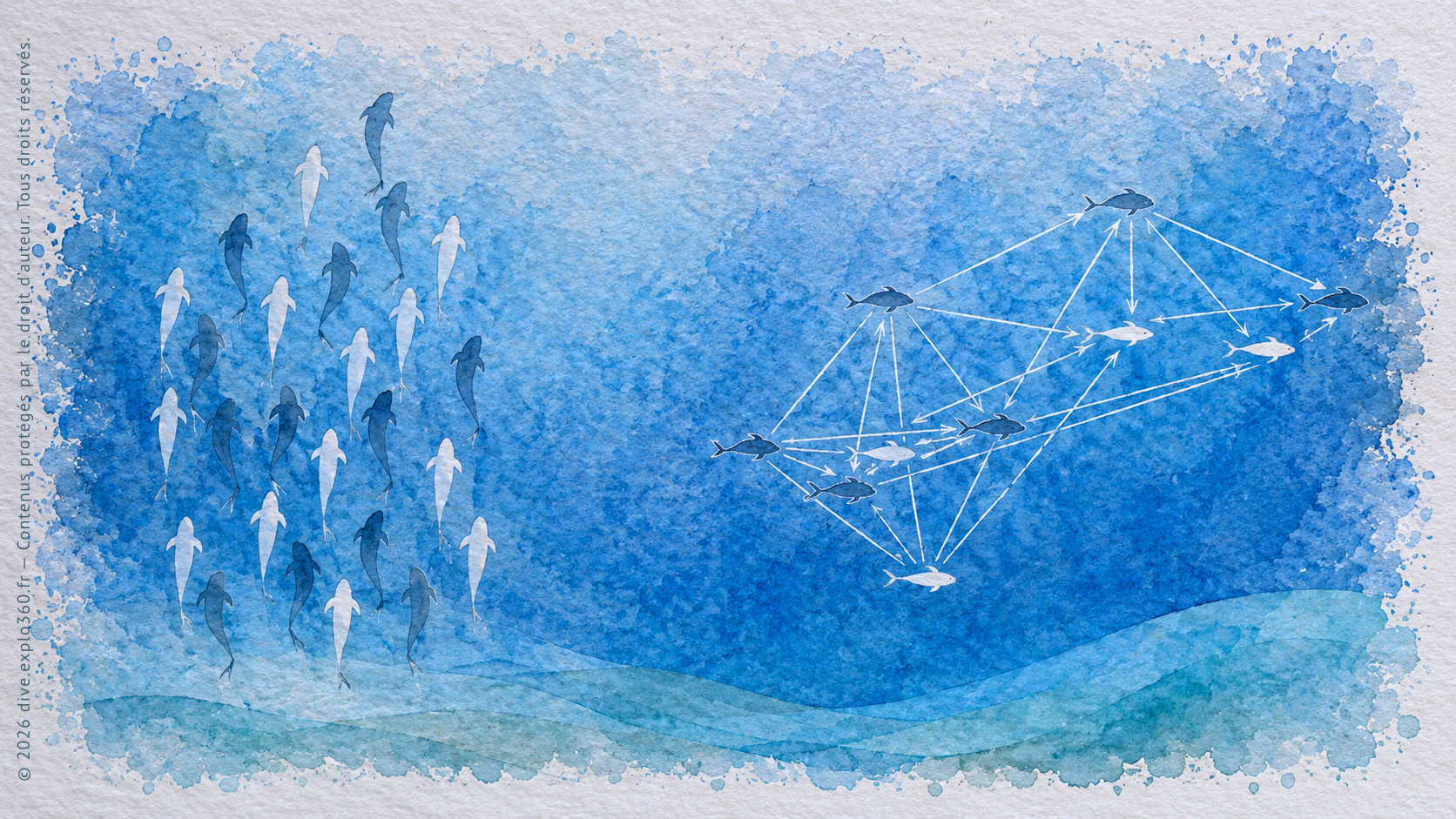
Contrary to what we might think, there is not always a leader in a school of fish. Coordination is often decentralised: each individual adjusts its behaviour according to neighbours in its field of view, creating fluid collective movement. However, in some cases—for example, when danger appears—specific individuals may initiate a movement that the rest of the school follows.
Interactive quiz
Test your knowledge
3 question(s) to test your knowledge.
Interactive quiz
Test your knowledge
Question 1 out of 3Score: 0
115 s
How do fish manage to swim together without colliding?
Each fish watches and senses its neighbours’ movements, notably through vision and the lateral line, then quickly adjusts its direction and speed.
215 s
What advantages can a school offer fish? (More than one answer)
Living in a school can make a predator’s attack harder, make food easier to find and, depending on the species and formation adopted, reduce the effort needed to swim.
315 s
What happens when danger appears?
The reaction of a few fish can be immediately perceived by their neighbours. The change of direction then spreads very quickly through the whole school.
Final result
Quiz completed
correct answers
Conclusion
The organisation of fish schools is a spectacular example of how nature can orchestrate complex collective behaviours to ensure survival. The shapes these schools take, from vortex to ball, illustrate the diversity of strategies fish adopt to protect themselves, feed and reproduce. Understanding these dynamics only adds to our wonder at the beauty and ingenuity of marine life.
Connect the explanations in the articles with the species seen in the videos and species guides. Continue with a learning path to explore a marine environment, then test your knowledge with the games.