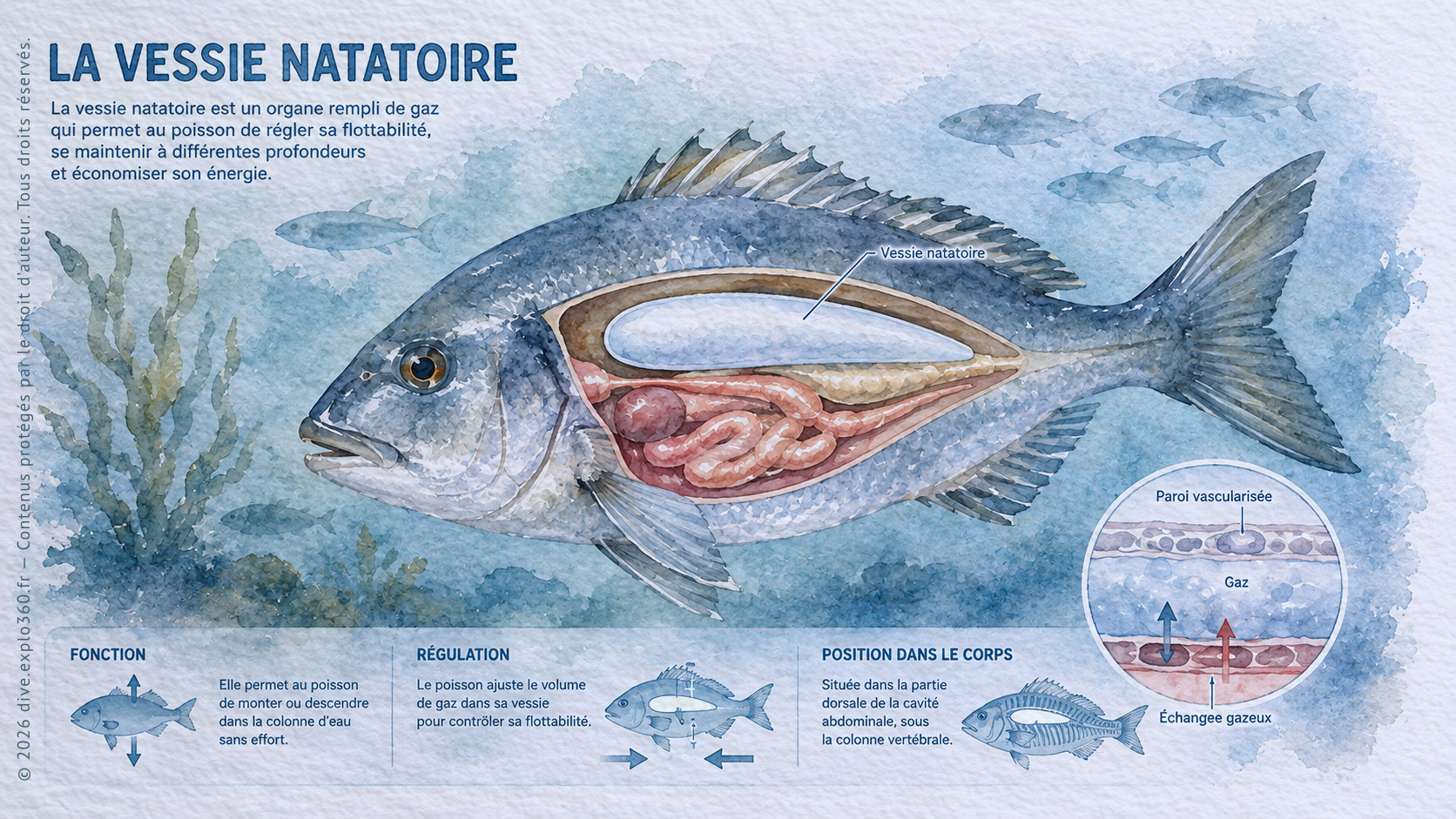
SWIM BLADDER?
Gas takes up space and adds very little mass. It lowers the average density of the fish, its mass divided by its volume. The closer that density is to the density of water, the less effort it takes to stay suspended.
How does it work?
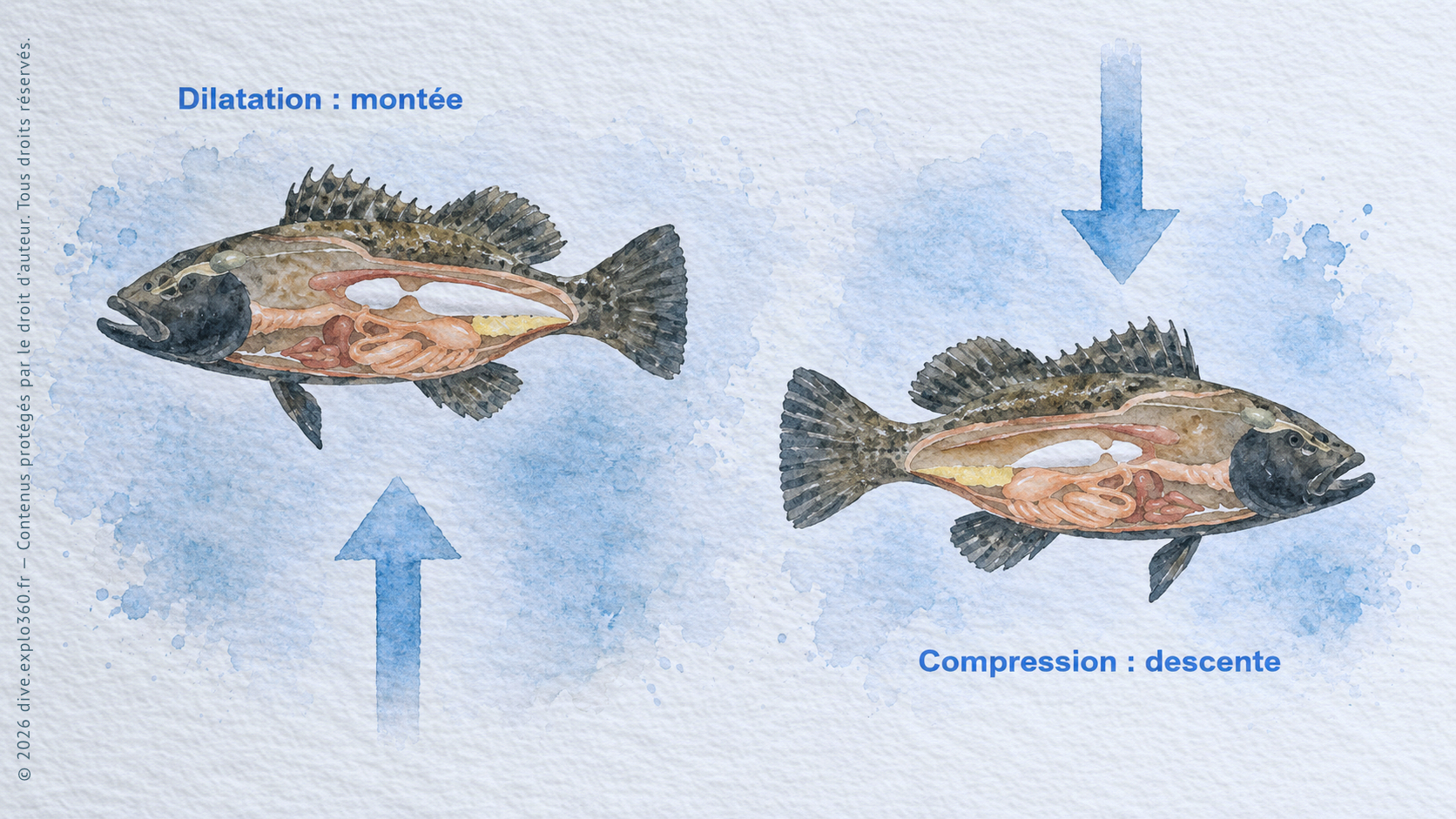
As the swim bladder expands, the fish displaces more water with little change in mass. Its average density falls and the upward force from the water increases.
Water pressure rises as the fish descends, squeezing the gas into a smaller volume. On the way up, the pressure falls and the gas expands. To compensate, the fish can adjust how much gas the bladder contains, but that takes time.
GO FURTHER WITH AMIGANSEAU
Continue reading
Discover full species guides, in-depth content and interactive tools available with your licence.
Dive.Explo360 is an independent, self-funded nonprofit. Every licence helps us create new content, improve our teaching tools and keep some of our resources free and ad-free.
Choose a licence that suits your needs for personal, educational or professional use.
Open-access resources remain available without a subscription.
Sources
A brief introduction presents the main idea of this slide.
Explore the same world