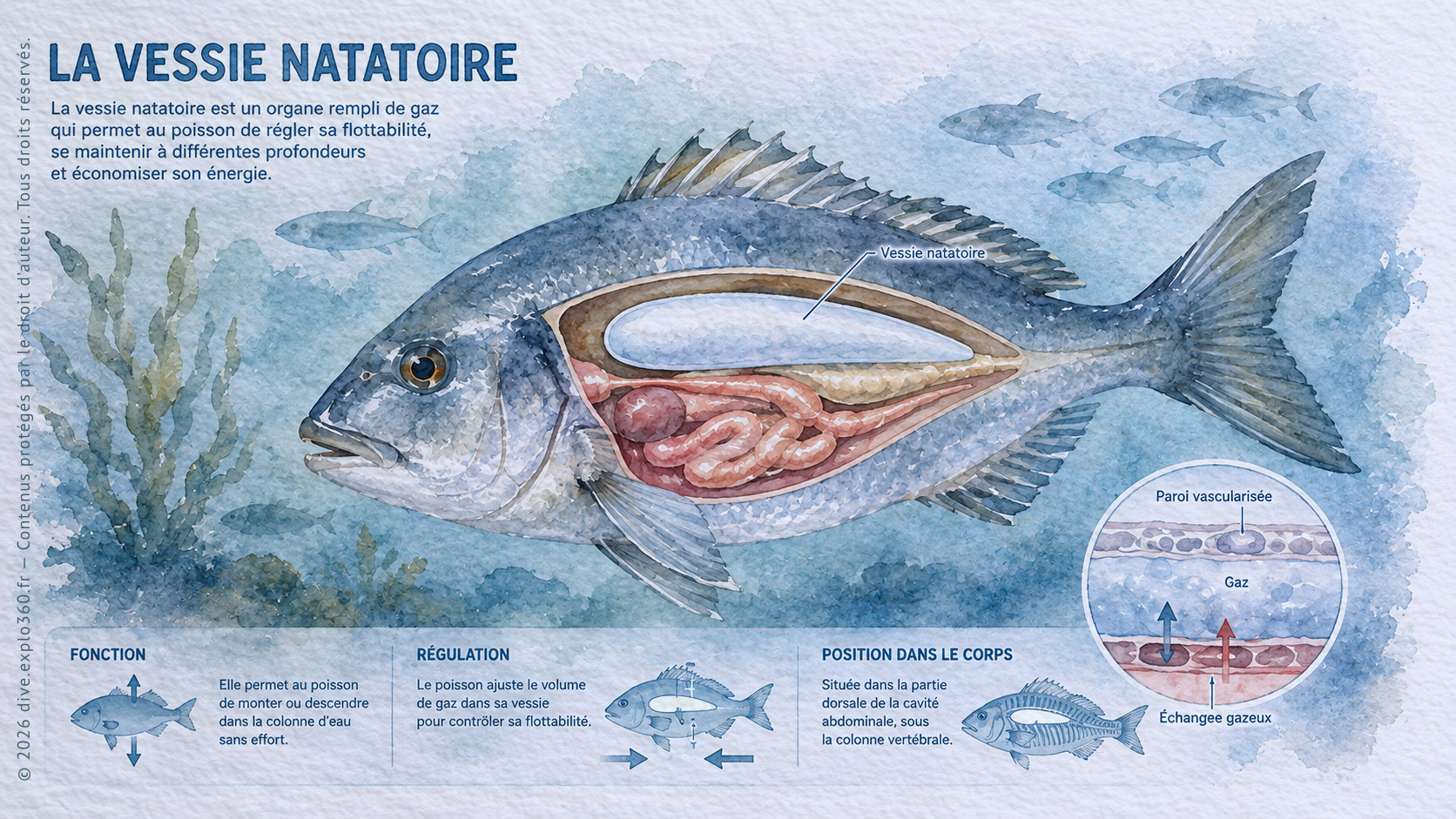
SWIM BLADDER?

Gas takes up space and adds very little mass. It lowers the average density of the fish, its mass divided by its volume. The closer that density is to the density of water, the less effort it takes to stay suspended.

How does it work?

As the swim bladder expands, the fish displaces more water with little change in mass. Its average density falls and the upward force from the water increases.

Water pressure rises as the fish descends, squeezing the gas into a smaller volume. On the way up, the pressure falls and the gas expands. To compensate, the fish can adjust how much gas the bladder contains, but that takes time.
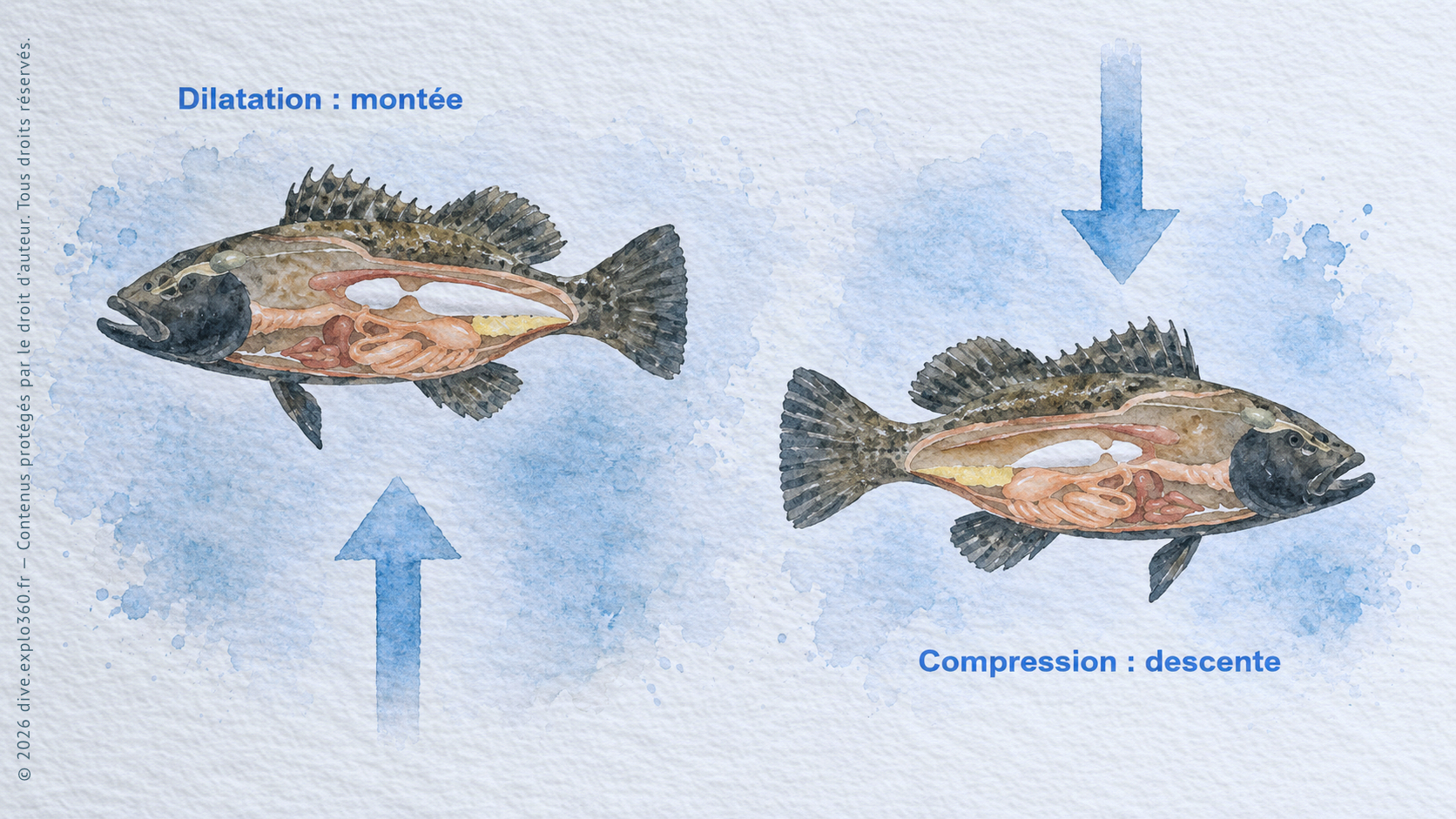
How the swim bladder works
Schematic diagram of buoyancy control in fish. © dive.explo360.fr — All rights reserved. Reproduction requires permission.

Other functions

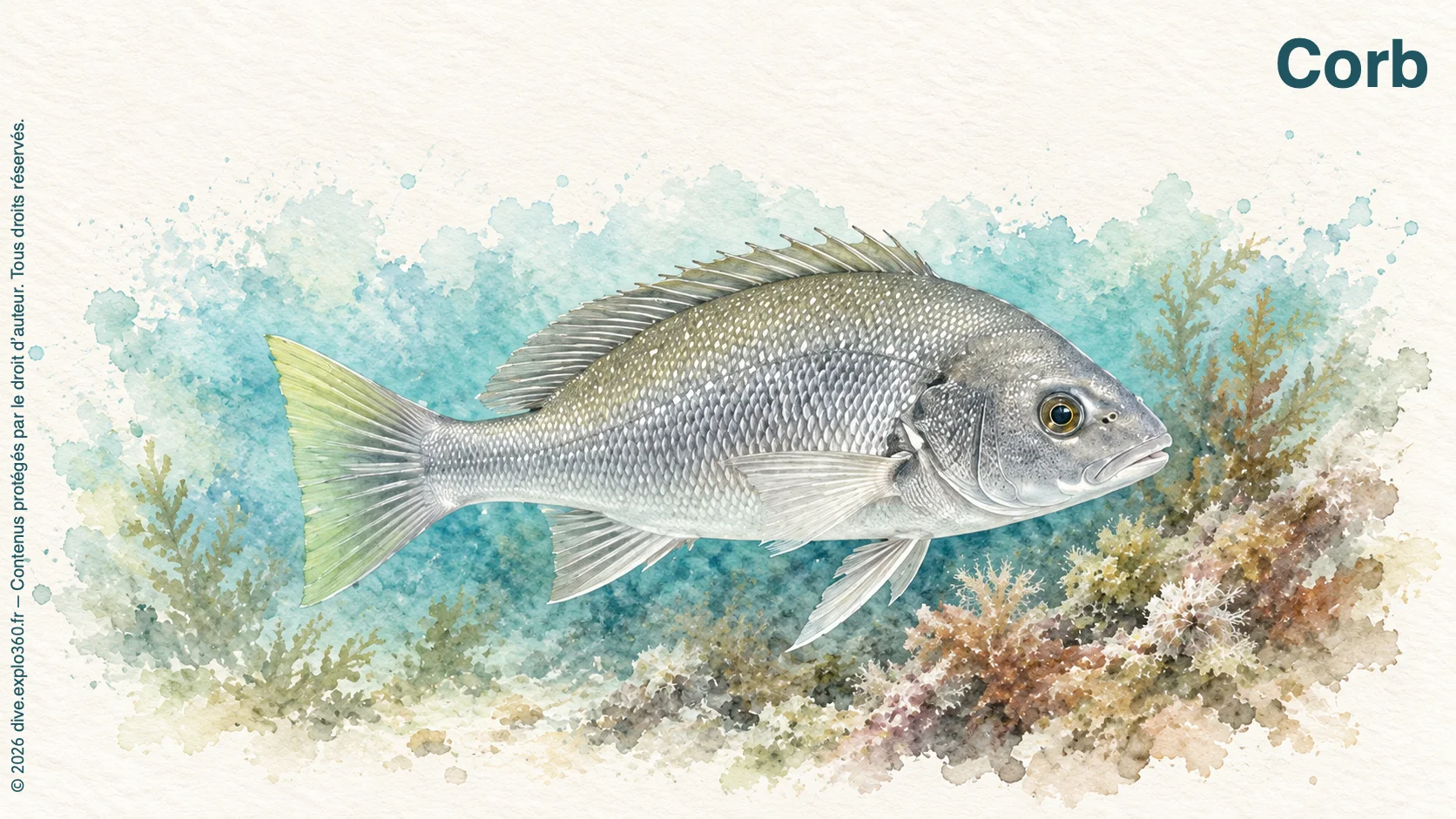
Brown meagre

In some fish, muscles vibrate the swim bladder and produce sound. In others, connections to the inner ear improve hearing. The inner ear also has a separate role in balance, detecting the position and movement of the body.

Continue reading

AMIGANSEAU CONTENT

The rest of this article is for subscribers

Log in with your AMIGANSEAU licence to continue reading.

Subscribing to Dive.Explo360 means supporting a different way to discover marine life.

Our independent platform is entirely self-funded and relies solely on subscriptions. Every licence helps us continue our work, create new content, and share what we know about the marine world with as many people as possible.

Starting at €80 per year, your support makes all the difference.

All active AMIGANSEAU licences give access to the full article.