Seeing how the roles fit together
Primary producers: the source of organic matter
Primary producers therefore introduce material into the food web that other organisms can use. Algae and phytoplankton, microscopic photosynthetic organisms suspended in the water, perform this function too. Some production is grazed; some becomes debris or dissolved substances. In certain deep habitats without light, microbial producers use energy from chemical reactions. Some combine photosynthesis with using organic matter, including by consuming other organisms: this is mixotrophy, or mixed nutrition.
Marine ecosystem engineers
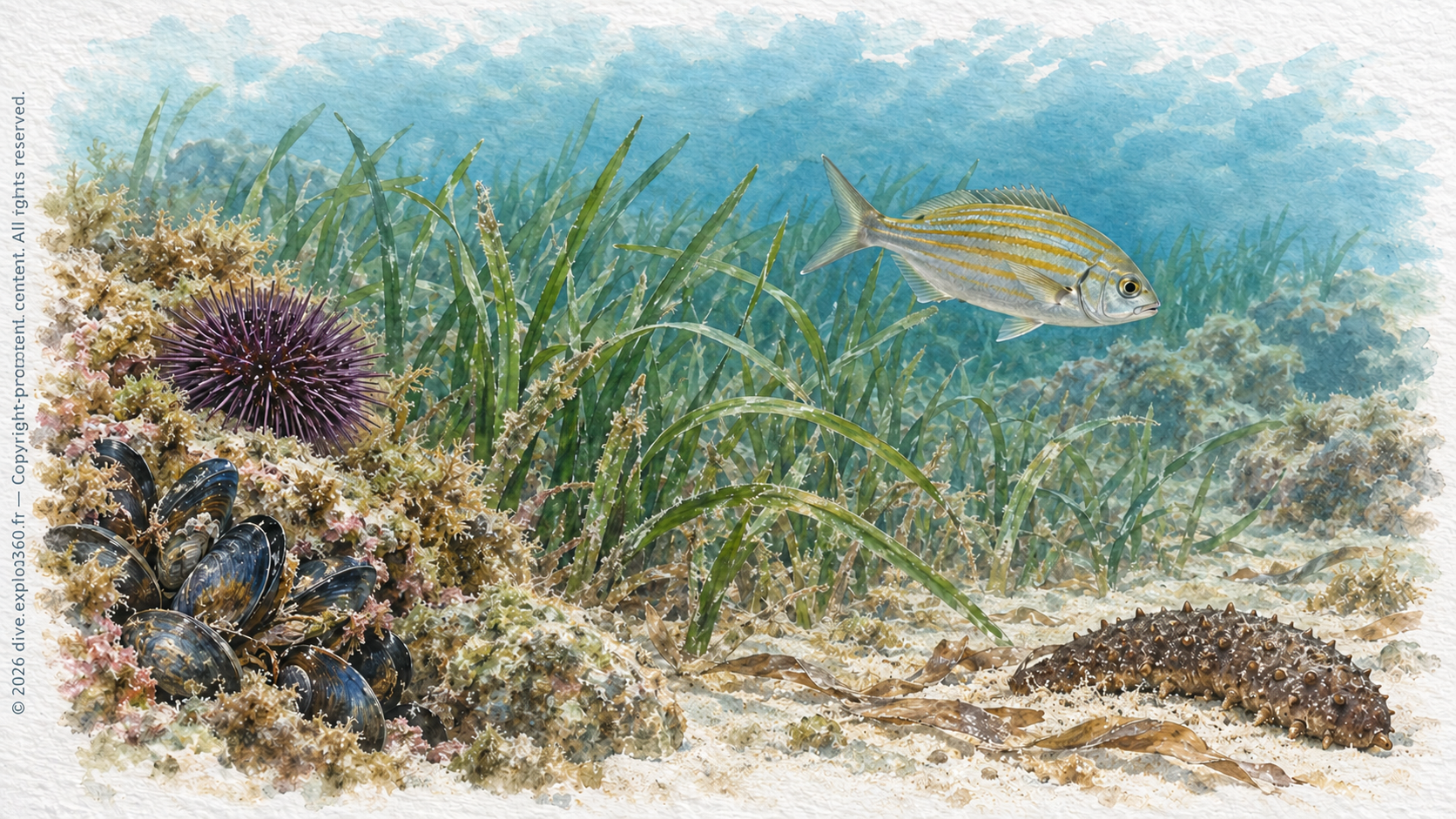
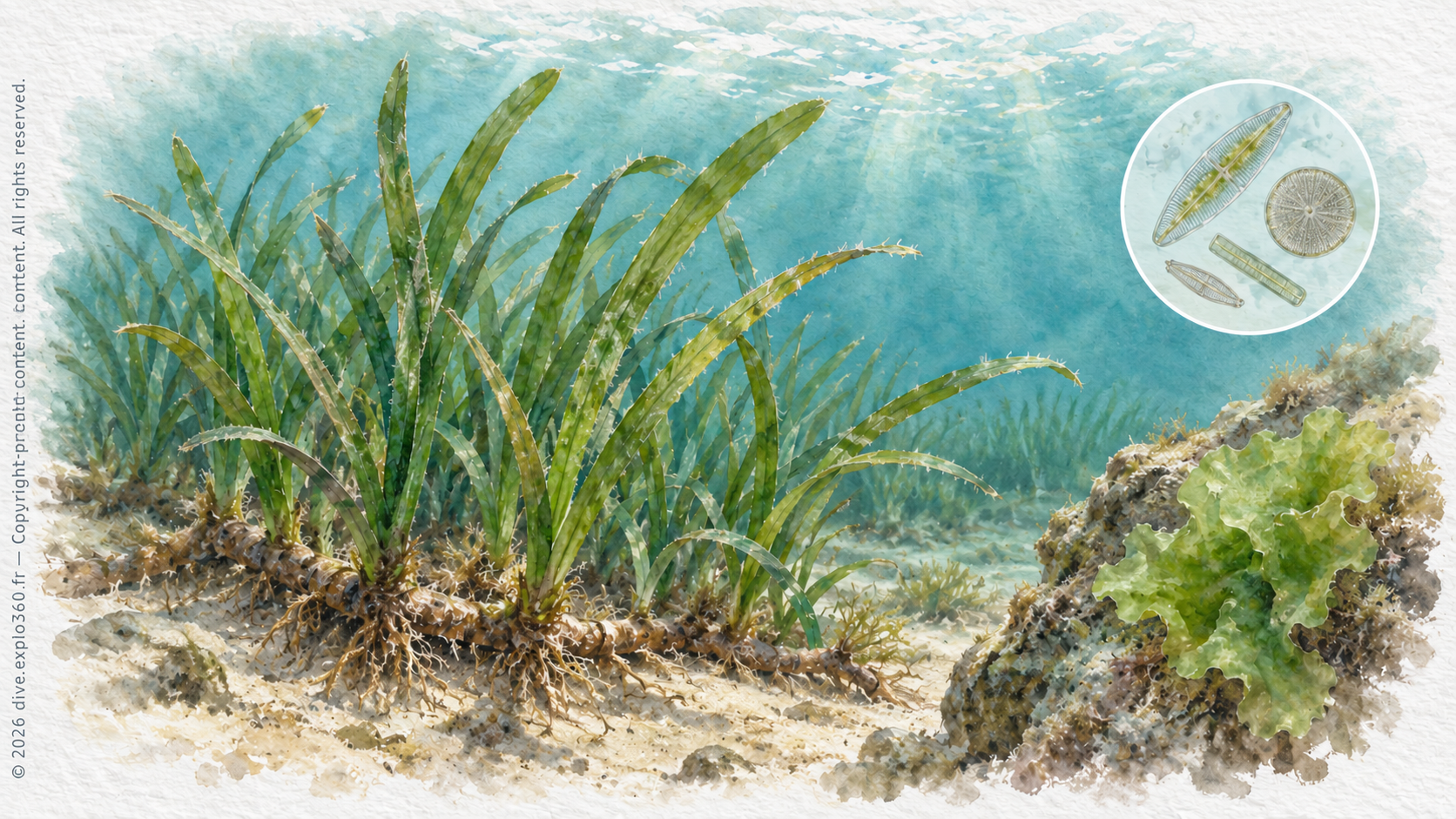
A seagrass meadow changes the habitat’s structure: its leaves provide surfaces and spaces where animals can shelter. Rhizomes, stems extending through the sediment, and roots help hold it in place. Different conditions develop within and around the meadow.
An ecosystem engineer is an organism whose physical changes to its surroundings alter resources or conditions available to others. The function concerns the effects of its presence and growth. Neptune grass (Posidonia oceanica) illustrates combined functions: it produces material and also structures a habitat. Effects vary with the condition and density of the meadow.
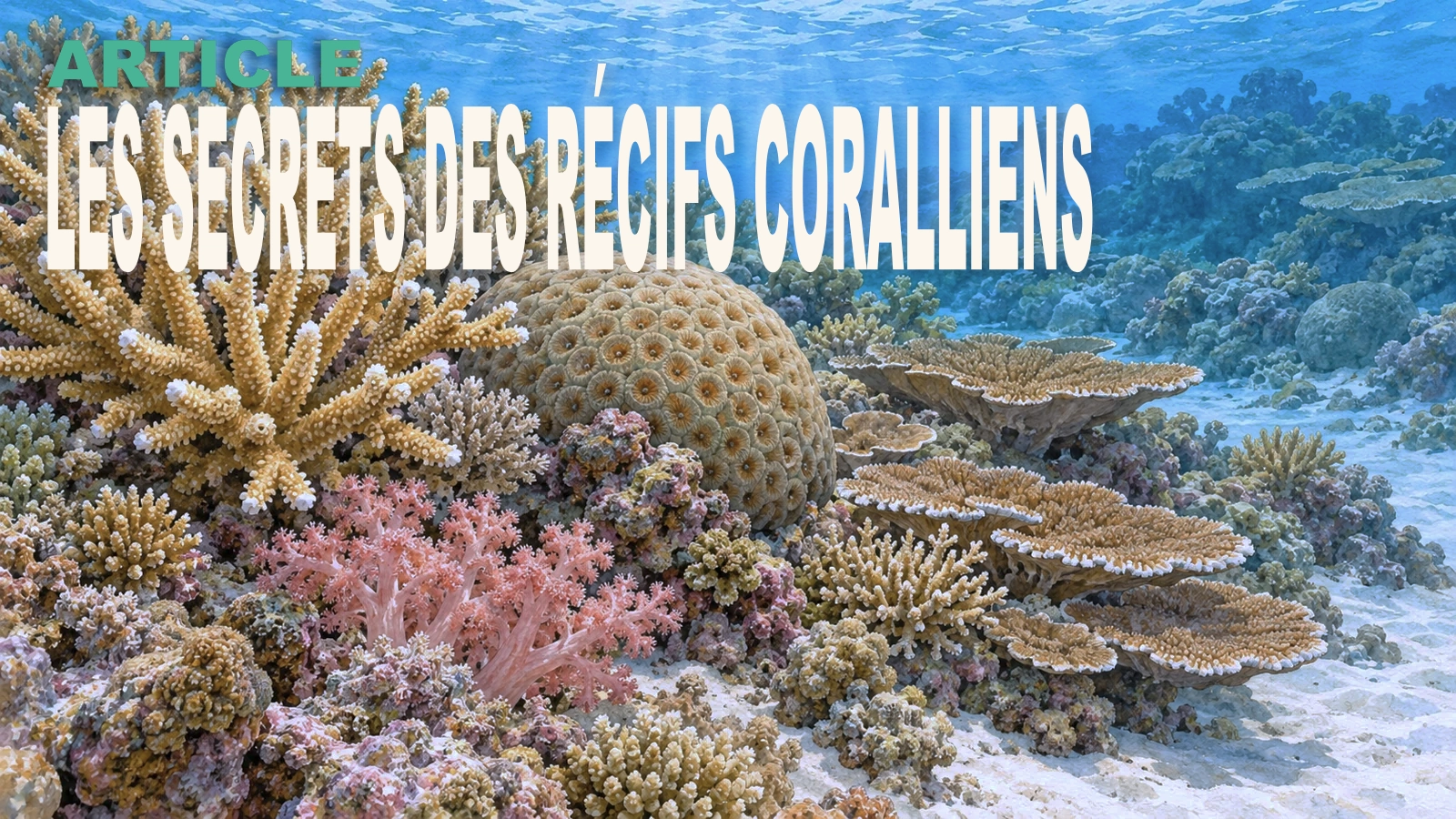
Reefs built by certain corals in tropical seas and forests of large brown seaweeds in some temperate seas illustrate other forms of habitat creation. Their structures provide shelter and surfaces occupied by other organisms. The species involved and the conditions required differ from those of a seagrass meadow.
Marine herbivores and their influence on vegetation
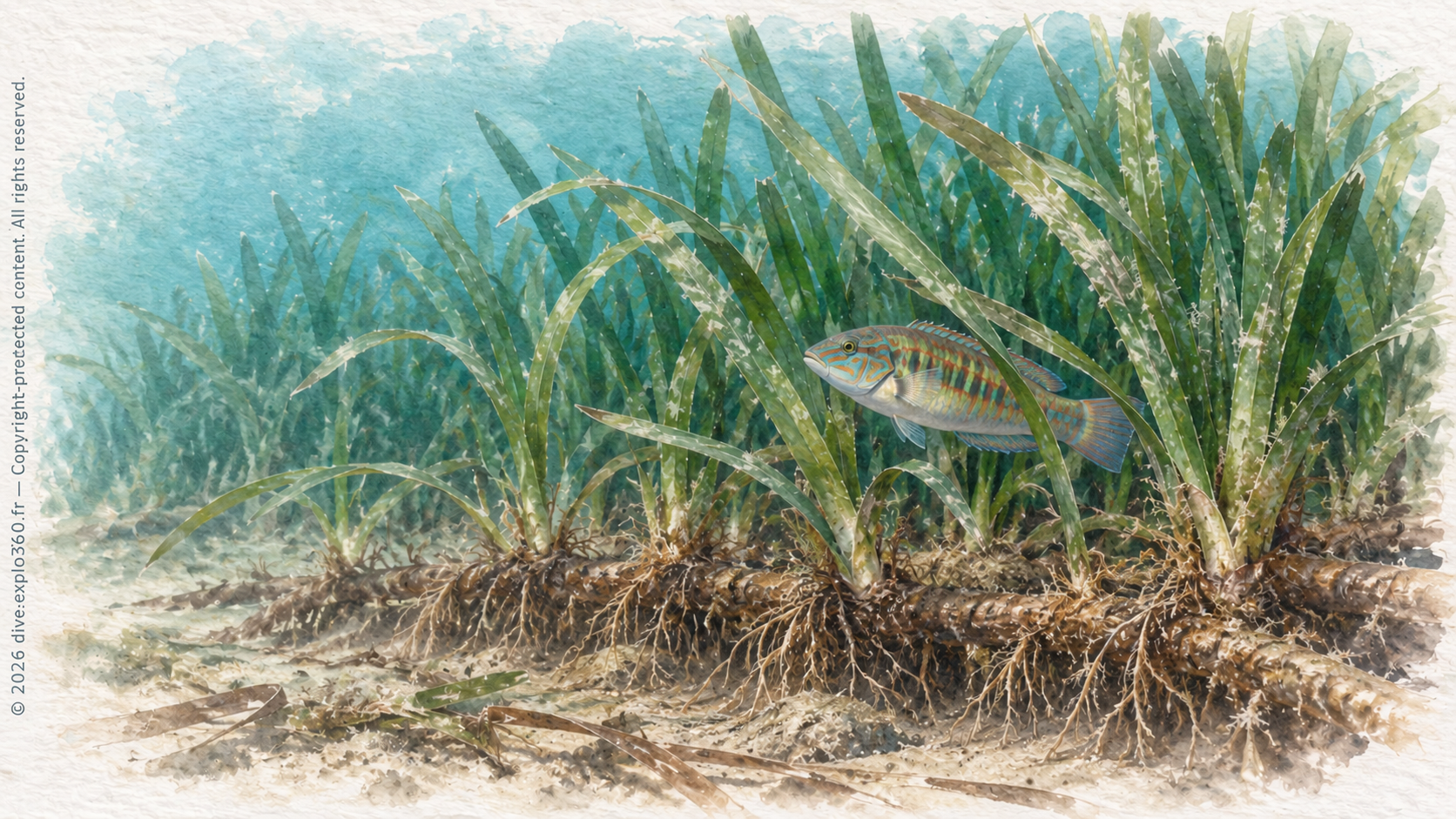
Grazing also changes biomass, the amount of living material present, and may alter the space available for regrowth or other organisms. Its outcome depends on the consumers present and on plant production, among other factors. It can limit some algae; strong grazing pressure may also greatly reduce their cover. The word “regulation” should therefore not suggest that a balance is automatically maintained.
Filter-feeding organisms
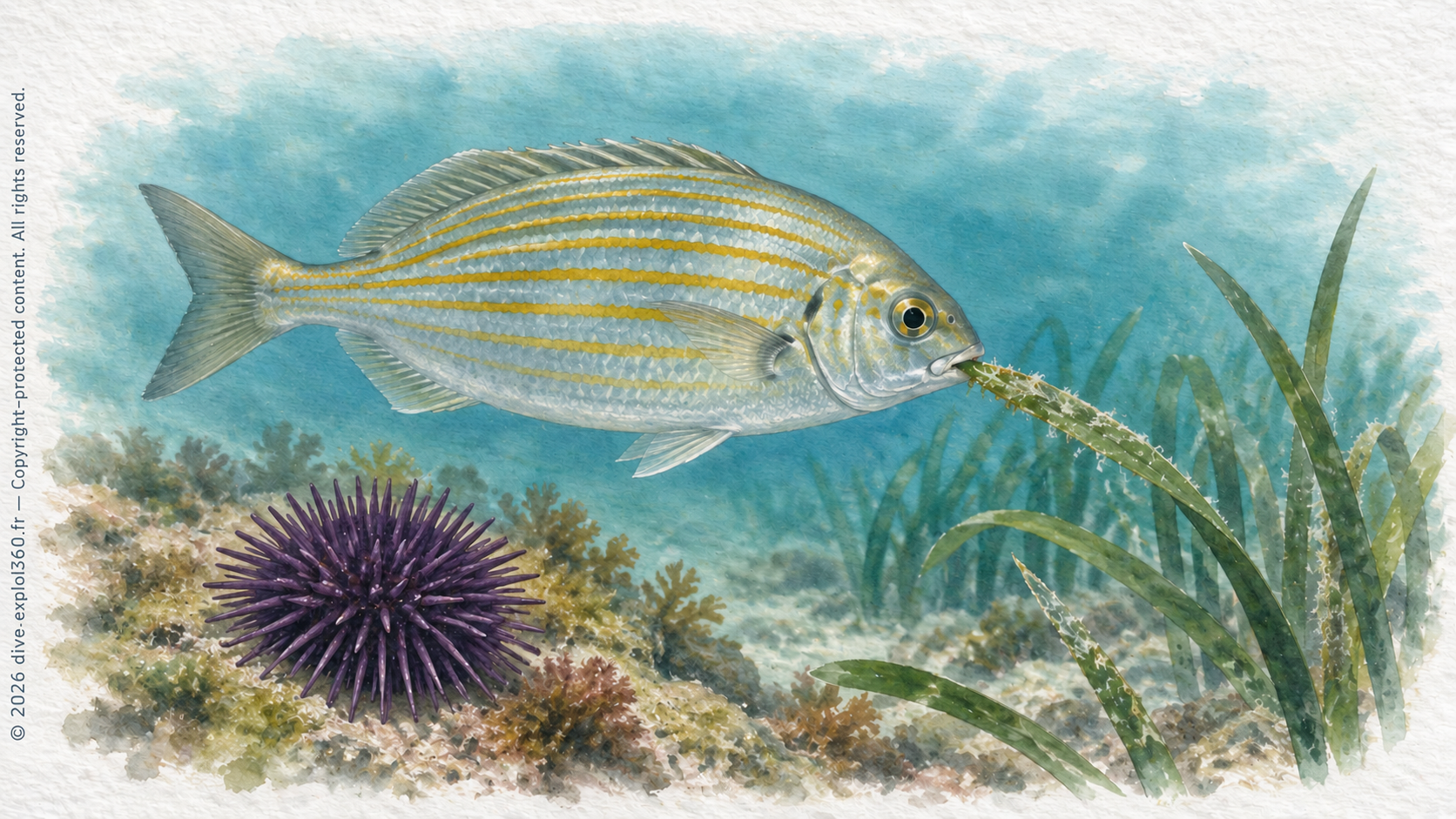
Filter feeding connects suspended material, floating in the water, with animals attached to the seabed. Some is assimilated, meaning incorporated and used by the animal; other material may be rejected and reach the sediment. Predators may then eat the mussels. Filtration therefore participates in several pathways of matter, whose intensity depends on species and conditions.
Predators and their prey
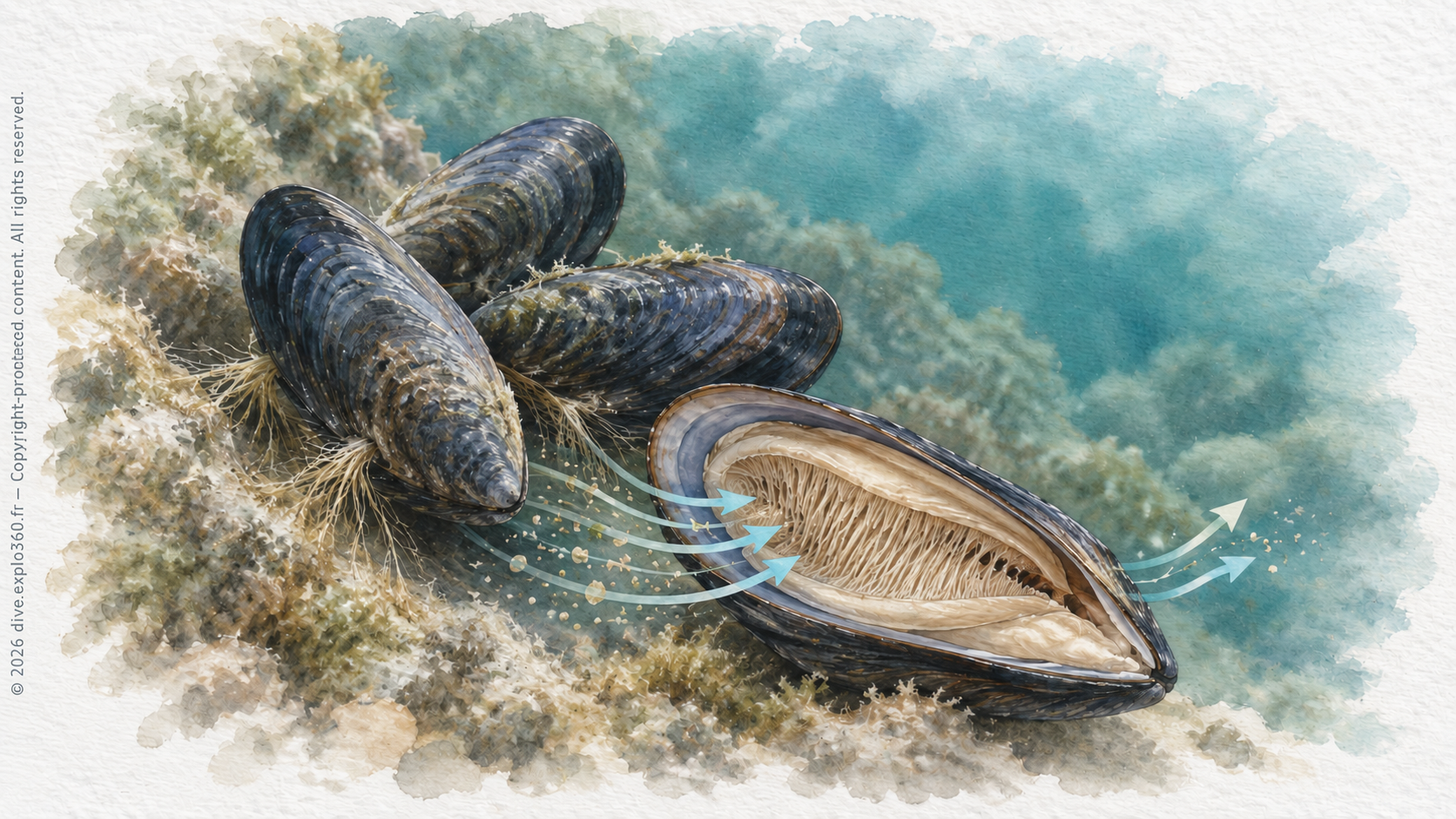
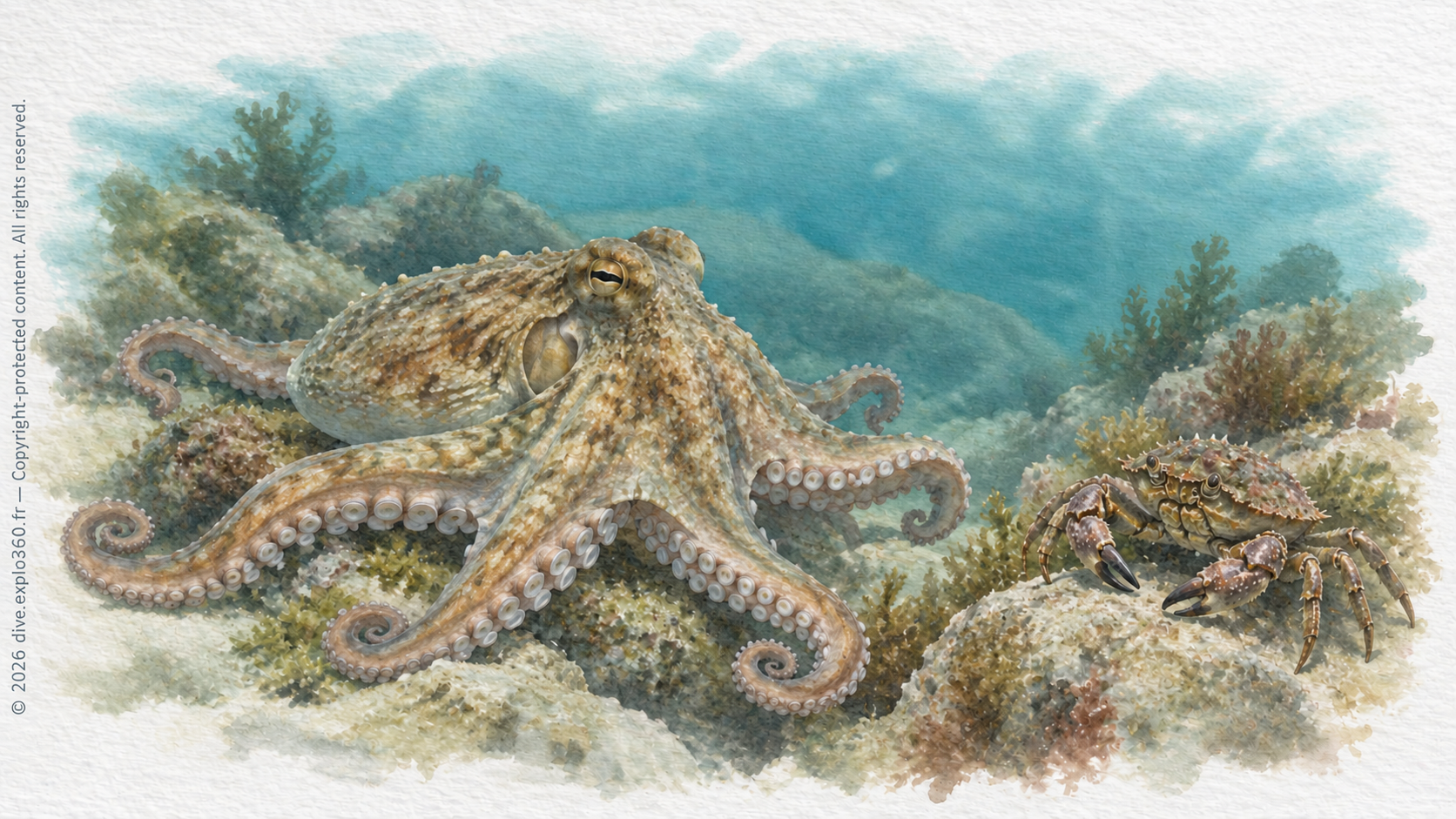
Effects across a population depend on capture frequency and other processes changing its numbers. Observing a meal cannot show that the predator alone controls the population. Species often have several prey species and several predators.
Top predators and trophic levels
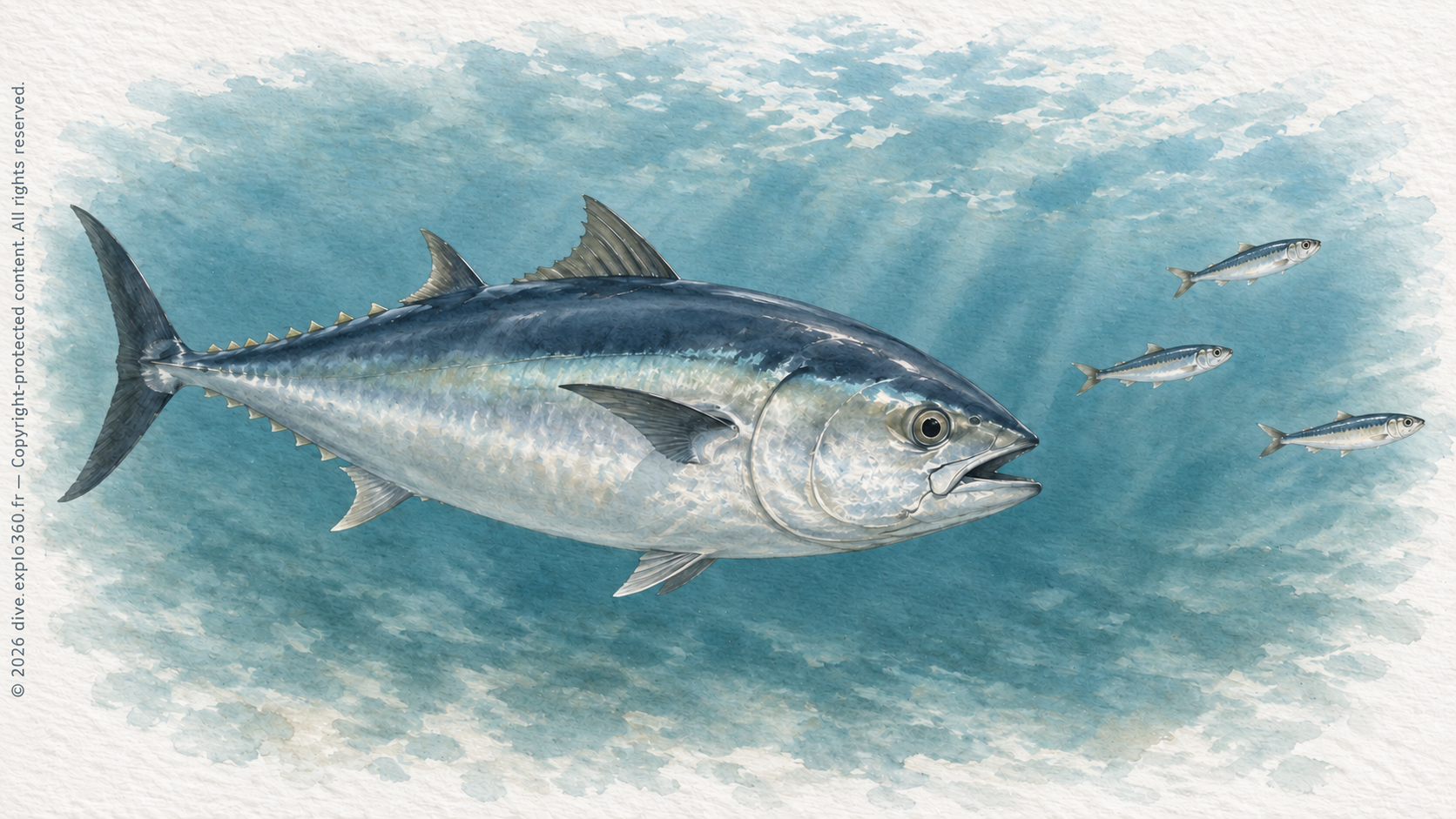
Diet and predation risks change with body size and life stage. Calling a species a large predator does not mean all its individuals occupy a fixed position. Indirect effects are possible: a change in predator numbers may affect prey and then the resources those prey consume. The size and direction of such effects must be studied in the habitat concerned.
Detritivores and decomposers
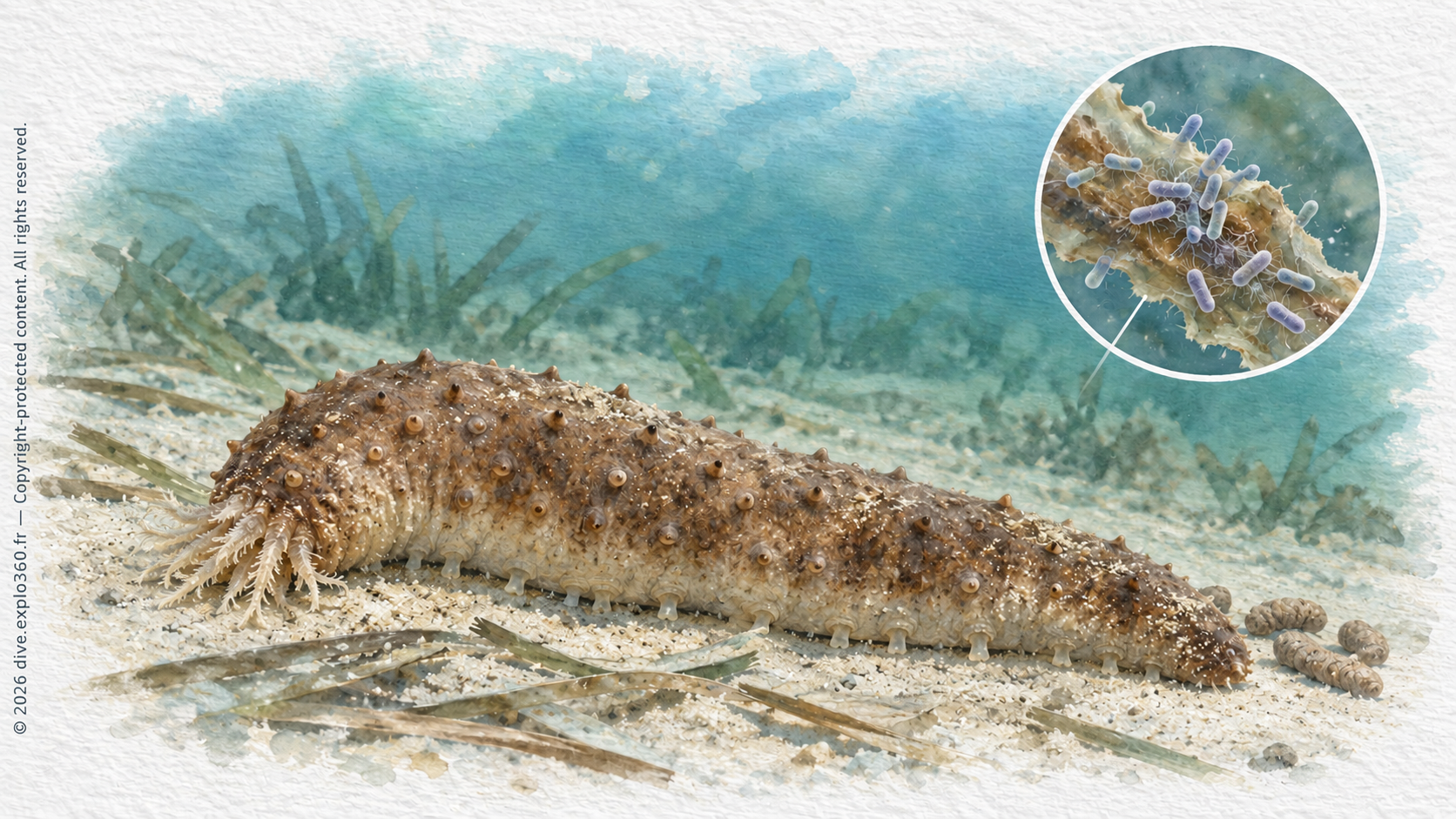
Decomposers include bacteria that chemically break down substances from organisms. Some elements may be released as dissolved mineral forms that producers can use. This conversion into mineral forms is called mineralisation; it does not describe all degradation. Microorganisms also use substances for their own growth; material is not simply followed by the immediate release of all its elements.
How are ecological roles connected?
Matter may change form and be used again. Energy moves with food substances, but some is dissipated as heat as organisms function. It is not recycled like chemical elements. This distinction explains why feeding relationships depend on continuing energy inputs.
Interactive quiz
Connect the roles
Five questions about functions and their connections. Choose one answer per question.
Interactive quiz
Connect the roles
Question 1 out of 5Score: 0
What does an ecological role describe?
Which effect of grazing can be stated without knowing the conditions?
What connection exists between filter feeders and predators?
Why distinguish detritivores from decomposers?
Does a change in predator numbers always have the same indirect effect?
Final result
Quiz completed
correct answers
Understanding the relationships we observe
Sources
Natural history accounts and references used to check the mechanisms and examples.