Seeing how the roles fit together
Seaweed grows using sunlight. An animal eats it and may then be eaten itself. Remains still feed other living things. Meanwhile, seagrass meadows and reefs provide shelter. These activities are ecological roles. We will see how they connect. One species can have several roles.
Producers make food
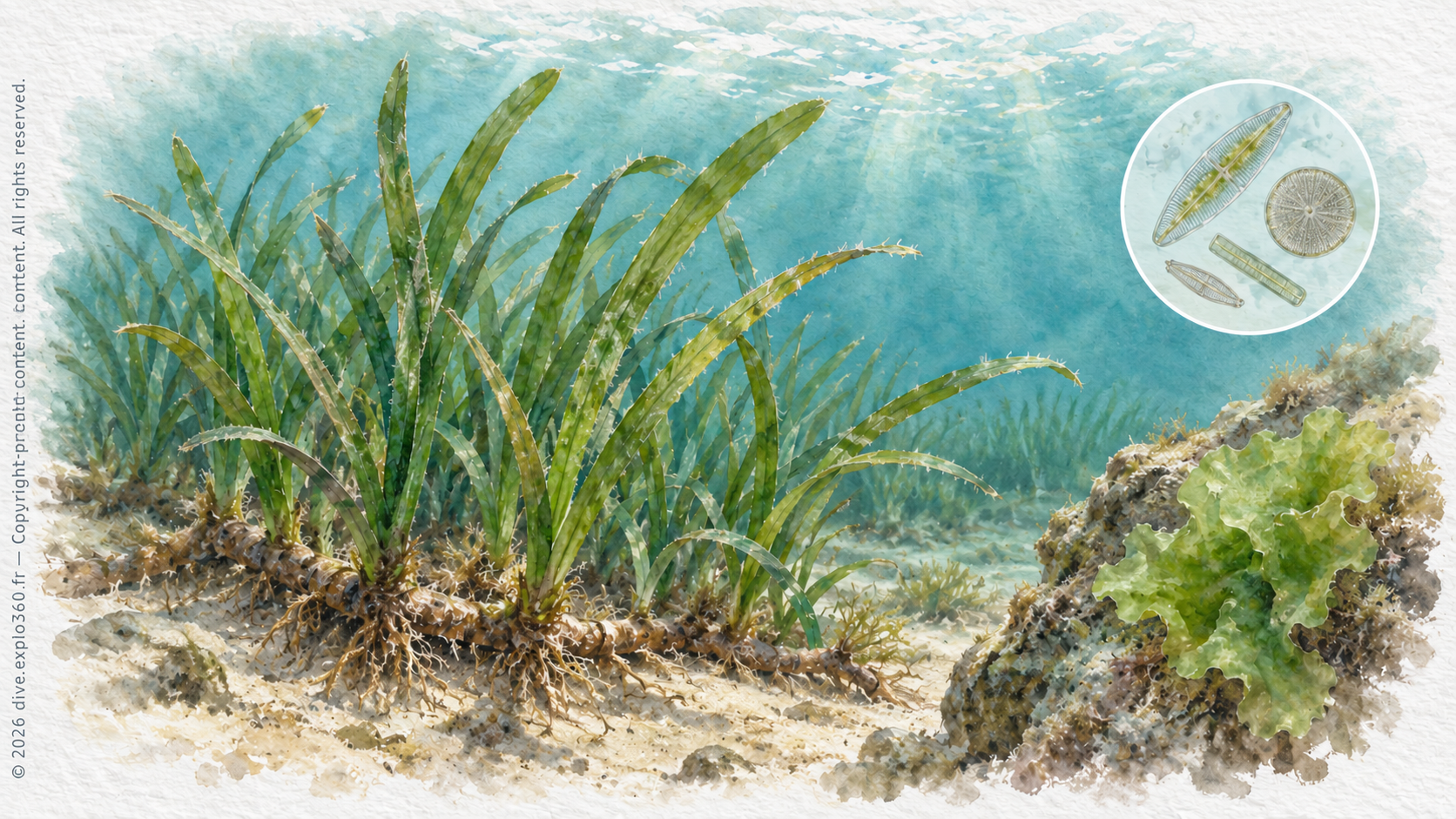
Neptune grass uses light to make sugars from water and carbon dioxide, a gas found in the water. This process is called photosynthesis. The plant also uses nutrients, substances it needs from its surroundings.
Some of what it makes can feed other living things when they eat its leaves or their remains.
Some of what it makes can feed other living things when they eat its leaves or their remains.
Organisms that create habitats
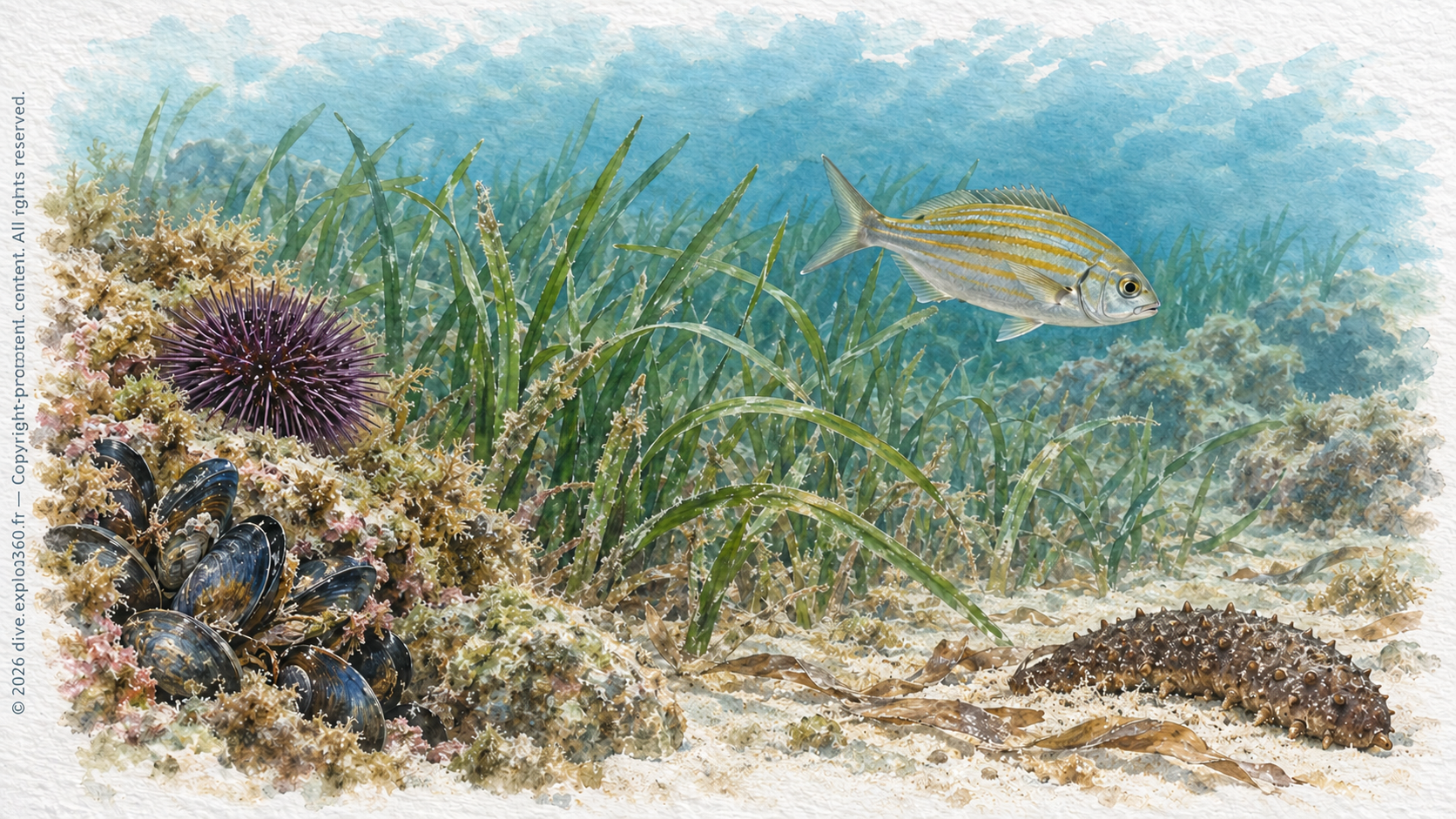
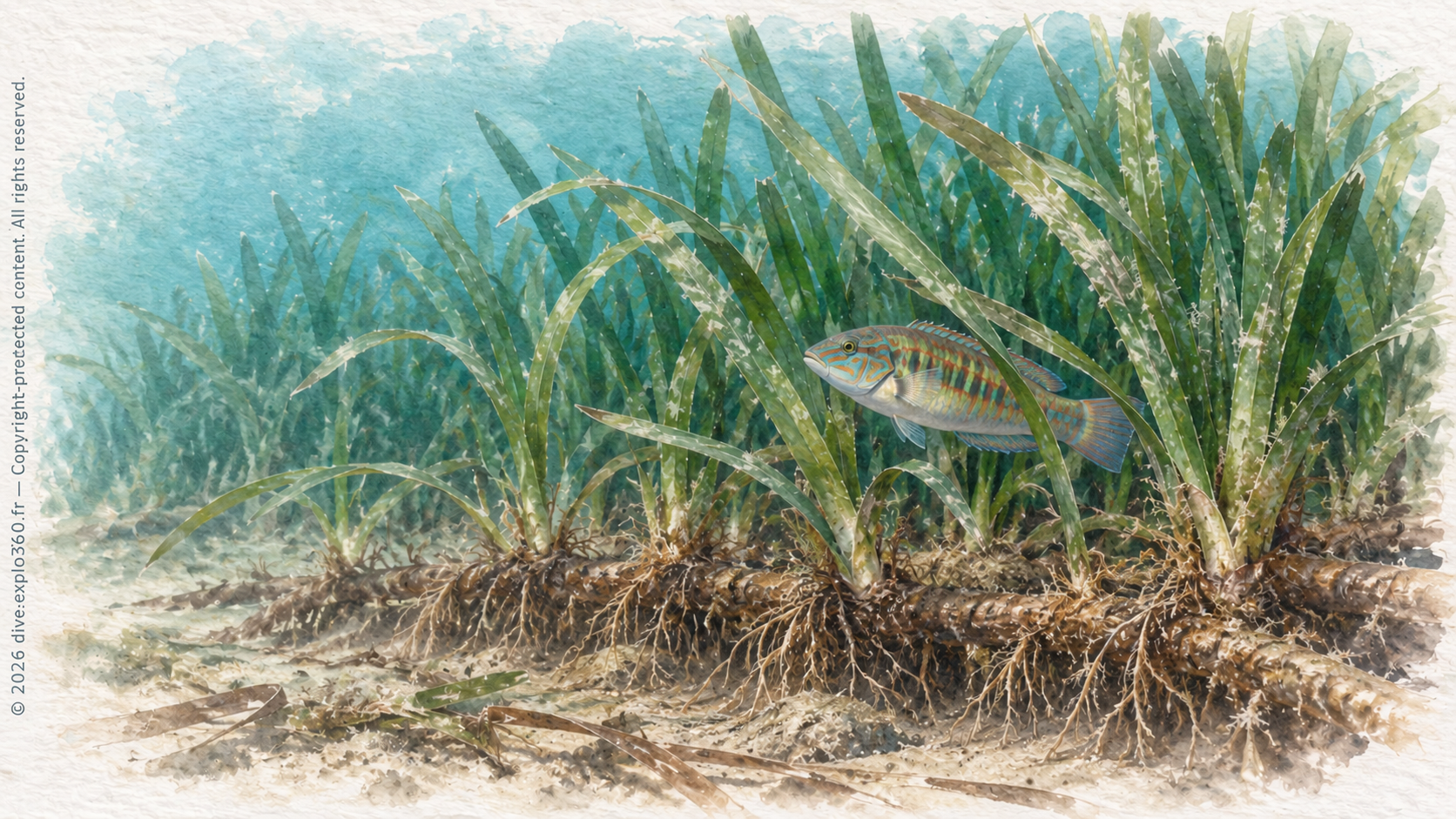
In a Neptune grass meadow, leaves make spaces where small animals can shelter. Roots and stems in the seabed help hold sediment, the sand and other particles on the bottom.
The same plant therefore produces food and forms a habitat: a place where other species live.
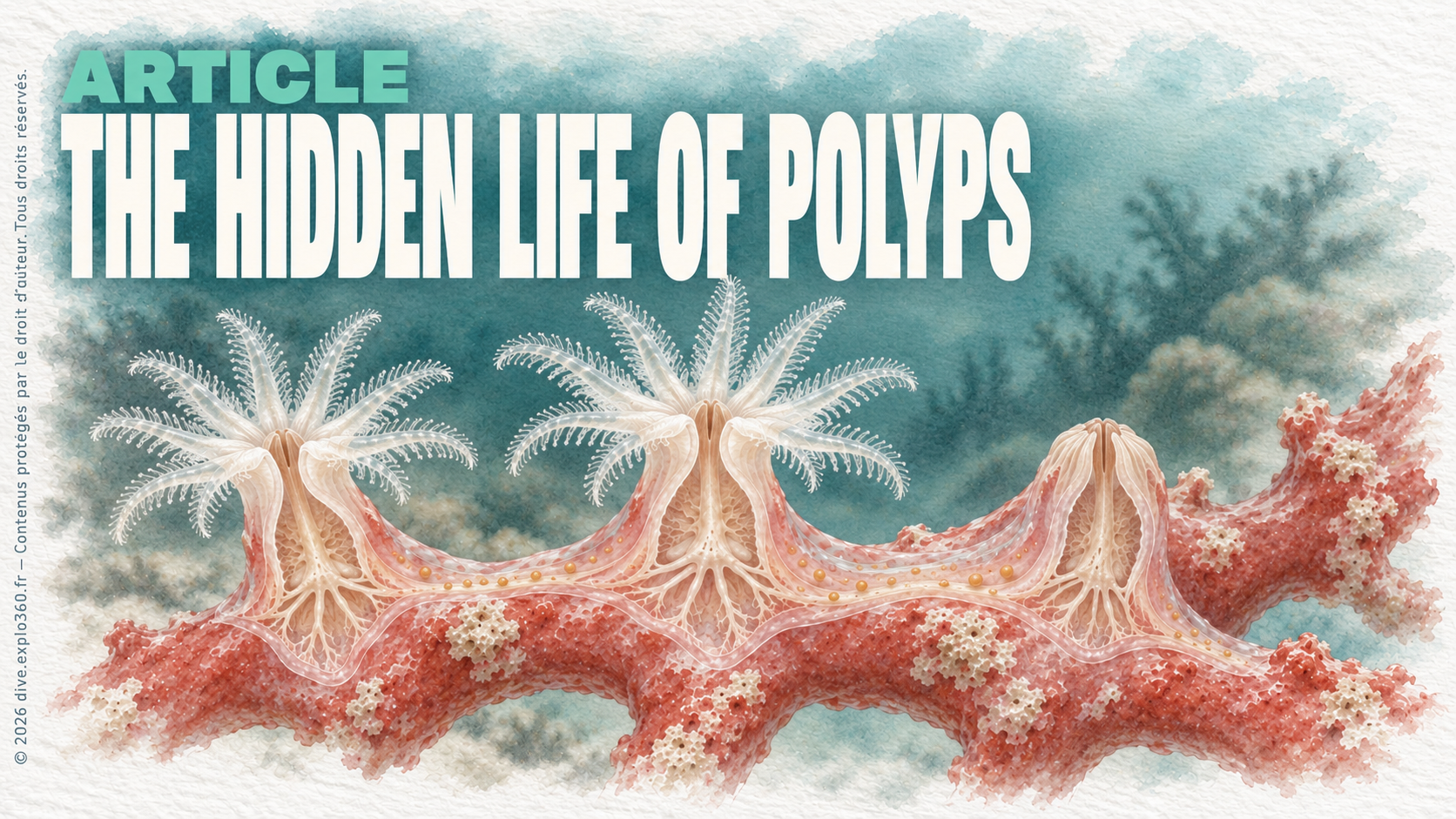
In tropical seas, reefs built by corals also provide shelter. In some cooler seas, large seaweeds form underwater forests. Different living things can therefore create different habitats.
Herbivores eat plants and algae
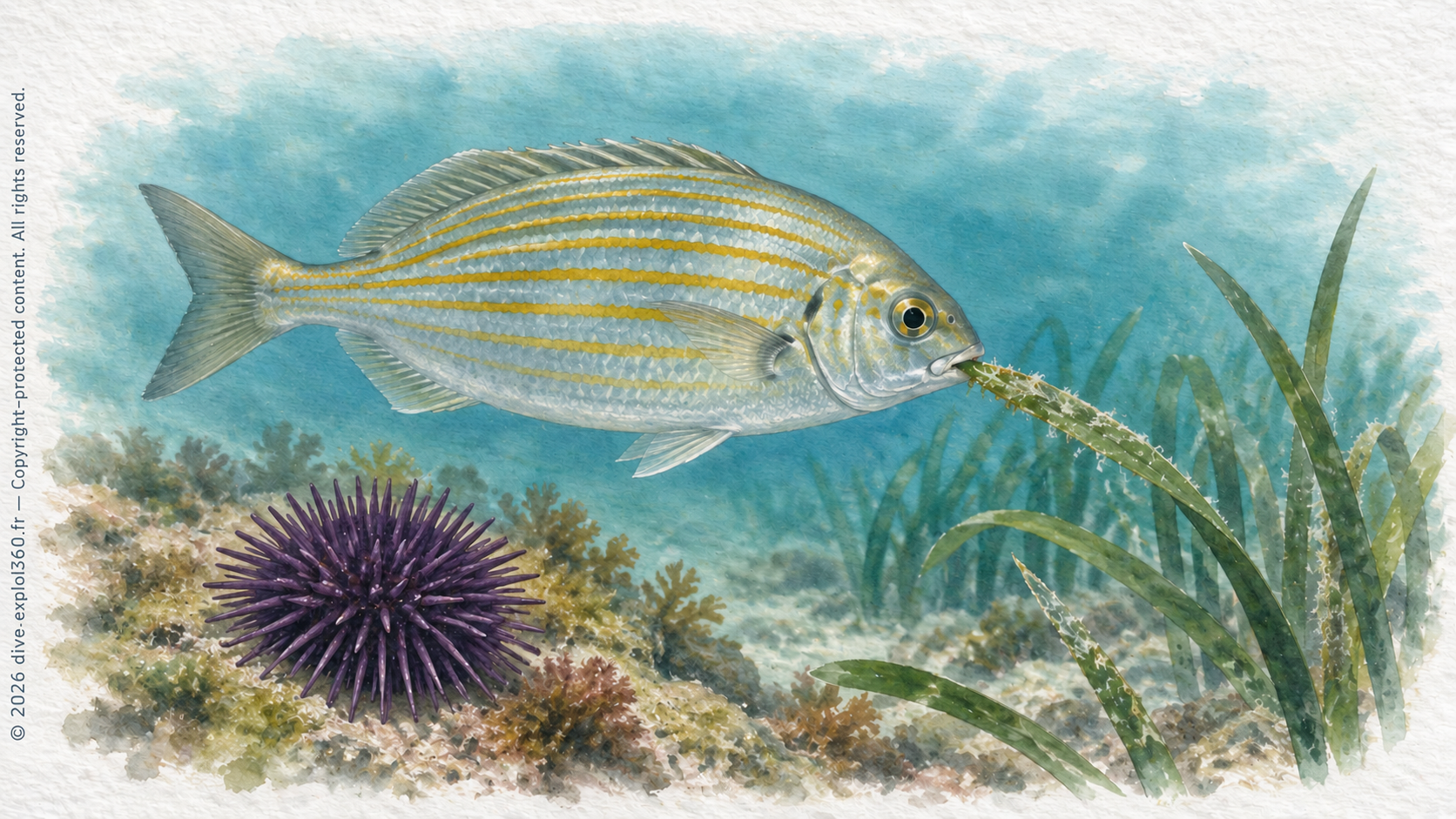
An adult salema can eat algae and Neptune grass leaves. The purple sea urchin also grazes on plants and algae. These animals are herbivores: they feed on plants or algae, among other food.
By feeding, they remove some vegetation. The effect depends on how many grazers there are and what grows there.
By feeding, they remove some vegetation. The effect depends on how many grazers there are and what grows there.
Animals that filter water
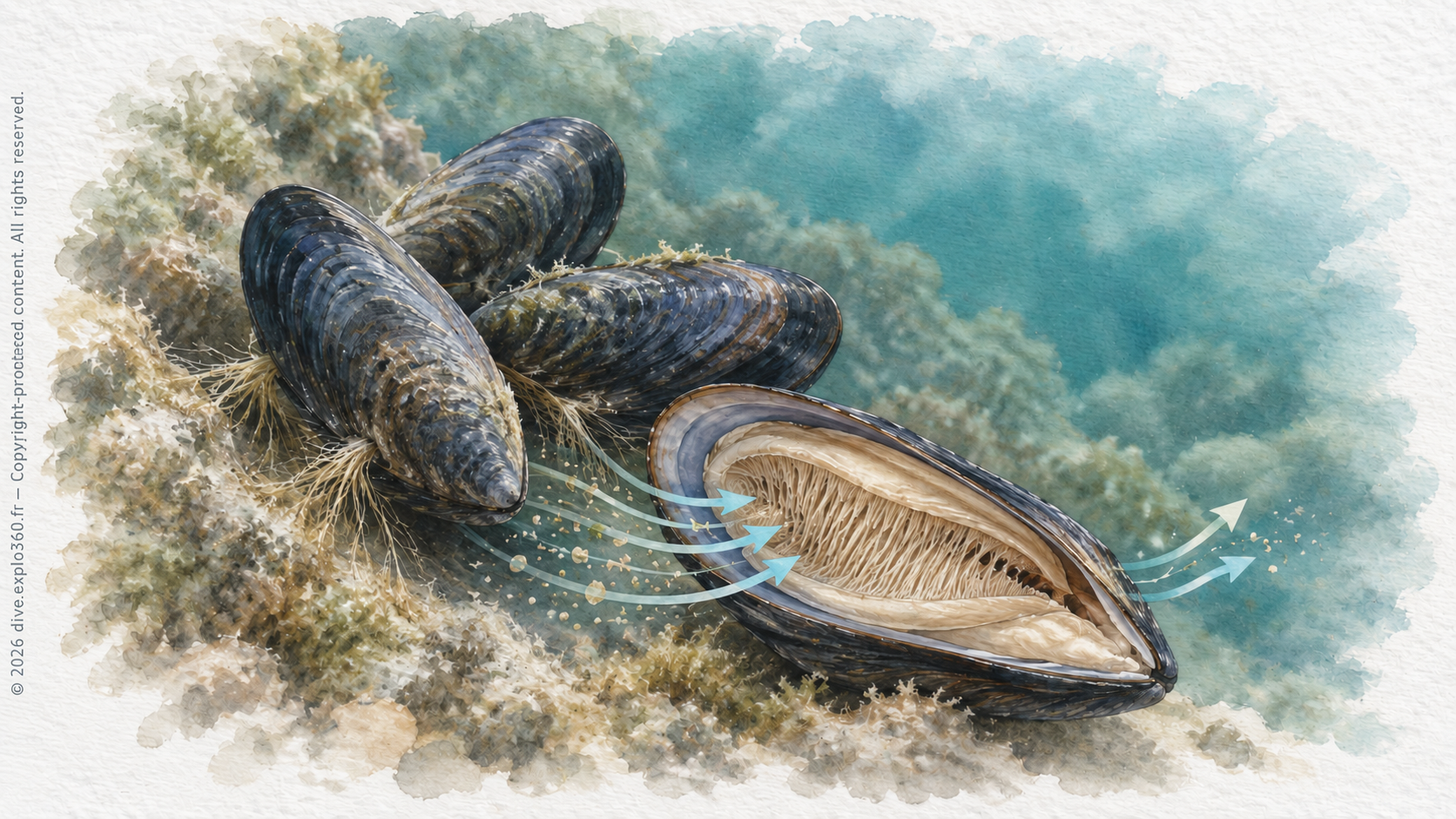
The Mediterranean mussel moves water through its body. It catches tiny particles that it can feed on. This way of eating is called filter feeding.
Food that was floating in the water can therefore feed an animal attached to the seabed.
Food that was floating in the water can therefore feed an animal attached to the seabed.
Predators and their prey
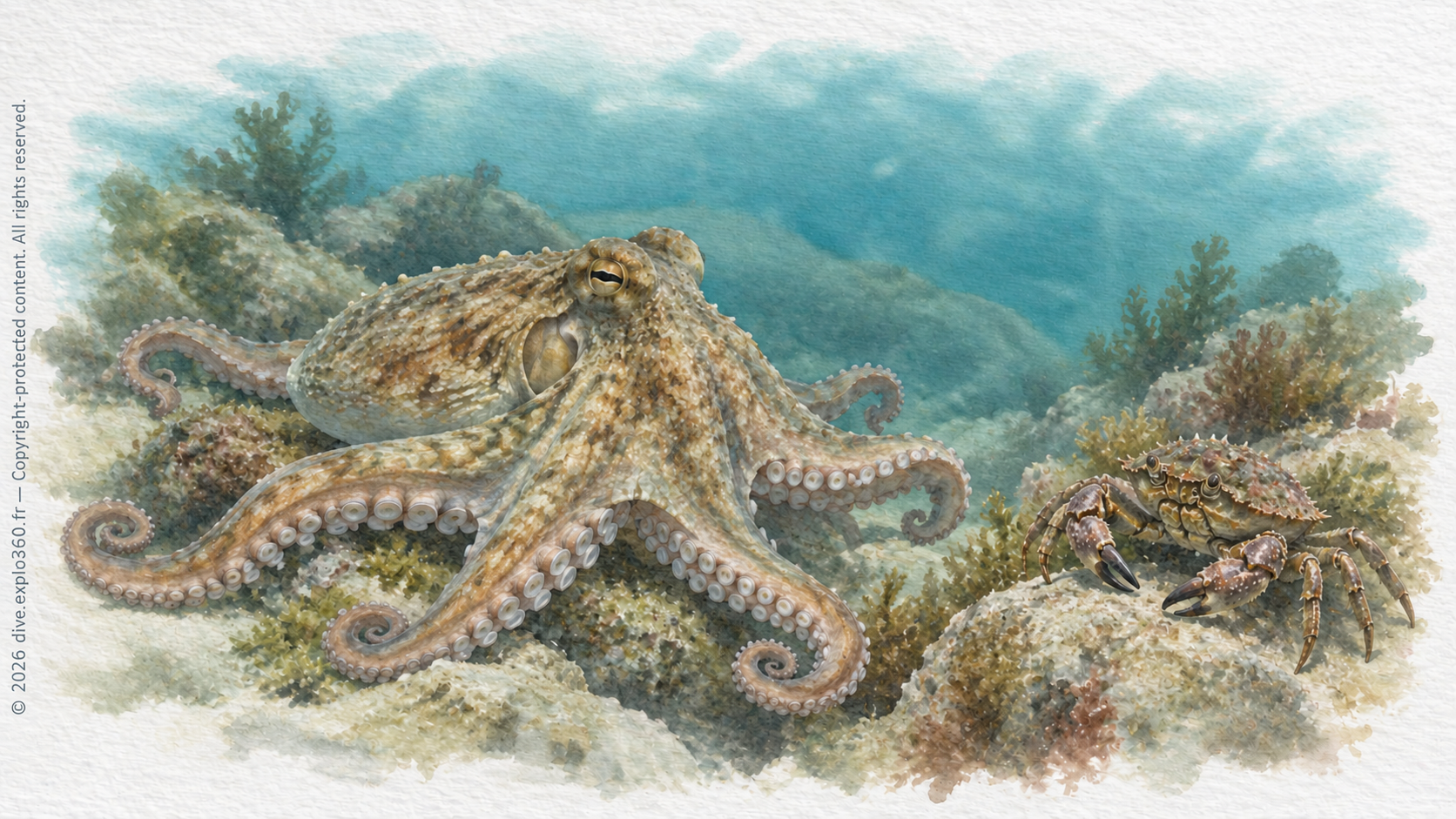
A common octopus may catch a crab. The octopus is then a predator: an animal that catches another animal to eat it. The crab is its prey.
Other animals may eat the octopus in turn. These relationships make several different feeding pathways.
Other animals may eat the octopus in turn. These relationships make several different feeding pathways.
Predators at the top of the food web
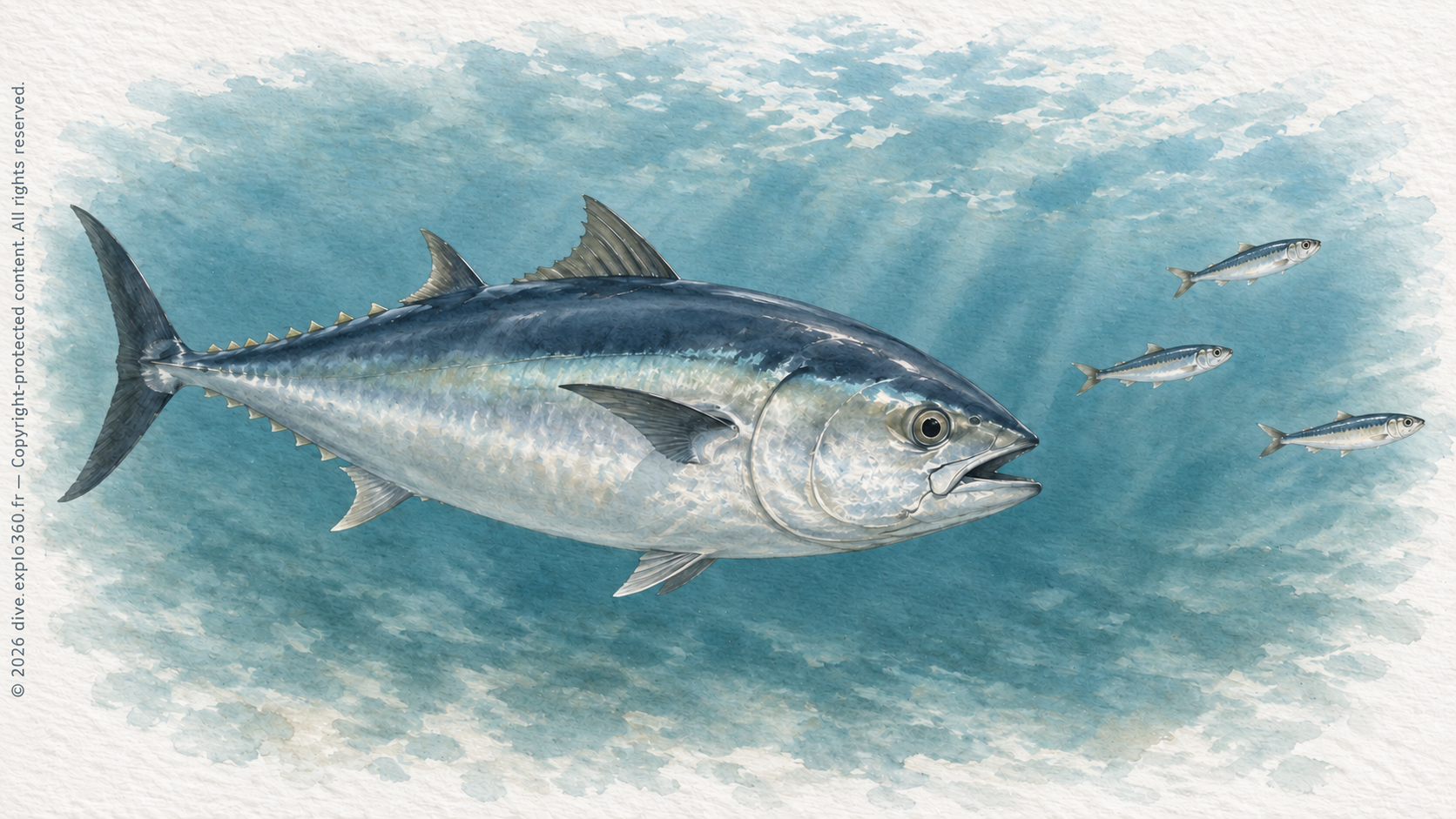
An Atlantic bluefin tuna eats fish, among other prey. Its food has itself eaten other living things.
Large predators are often several feeding steps away from plants and algae. Small tuna do not have the same prey or enemies as large tuna.
Large predators are often several feeding steps away from plants and algae. Small tuna do not have the same prey or enemies as large tuna.
Animals that eat debris and decomposers
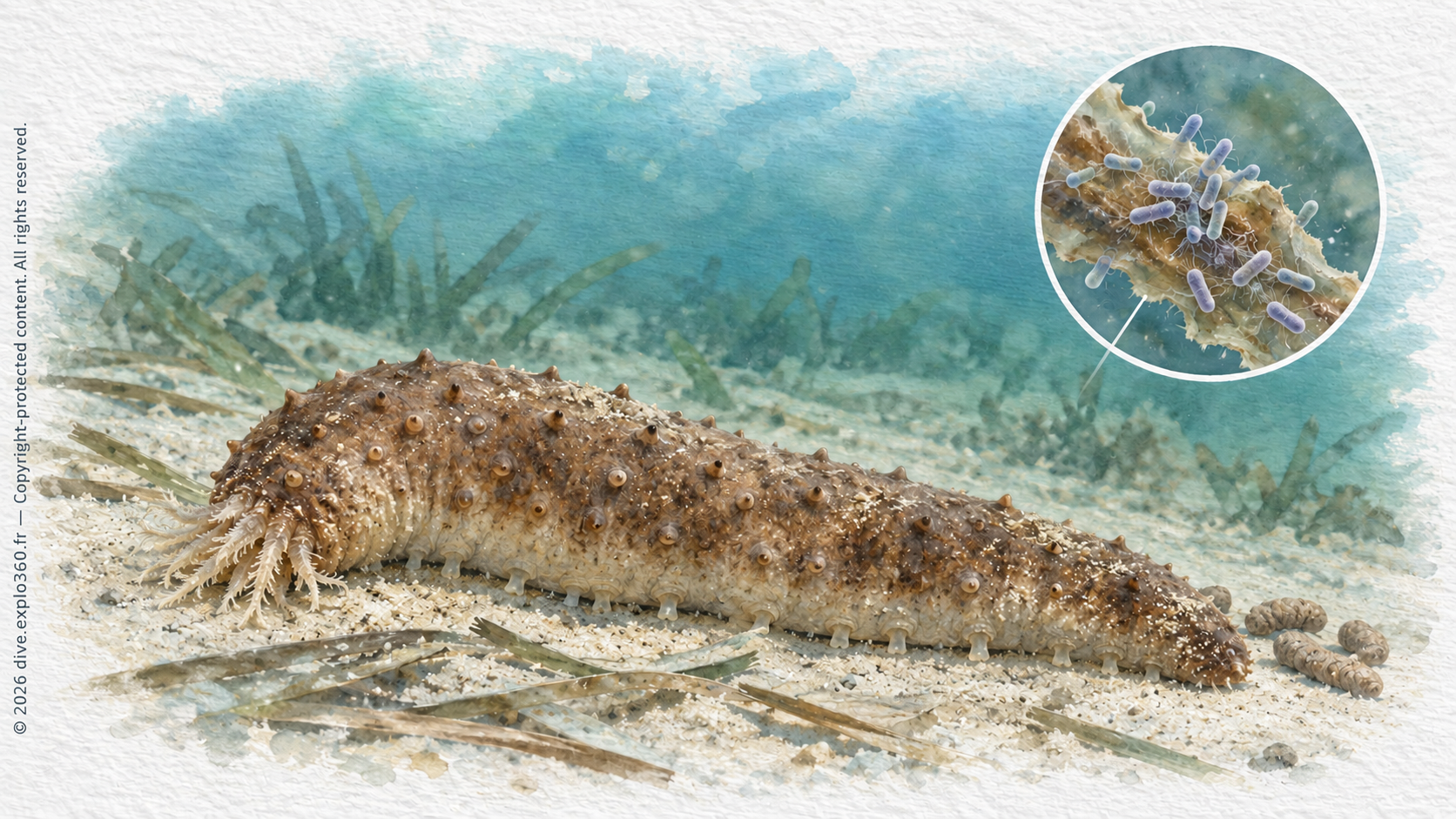
Dead leaves and animal remains reach the seabed. The tubular sea cucumber swallows sediment and finds food particles in it.
Some bacteria, microscopic living things, gradually break down the material in remains. Some becomes mineral substances that producers can use: this is mineralisation. It does not all change at once.
Some bacteria, microscopic living things, gradually break down the material in remains. Some becomes mineral substances that producers can use: this is mineralisation. It does not all change at once.
How do the roles connect?
Neptune grass feeds some animals and provides shelter. A grazing fish may be eaten by another animal. Remains feed still other organisms.
A food web is the collection of these feeding relationships. Matter can be used again. Energy allows organisms to live, but some spreads into the surroundings as heat: it does not all return to the plants.
A food web is the collection of these feeding relationships. Matter can be used again. Energy allows organisms to live, but some spreads into the surroundings as heat: it does not all return to the plants.
Interactive quiz
Connect the roles
Five questions about functions and their connections. Choose one answer per question.
Interactive quiz
Connect the roles
Question 1 out of 5Score: 0
1
What does photosynthesis, making material using light, allow?
Neptune grass uses light to make sugars.
2
Does a seagrass meadow provide only food?
The leaves make spaces used by other living things.
3
Why does a mussel filter water?
It catches small particles that it can feed on.
4
Can a predator be eaten in turn?
An animal that catches prey may itself be prey for another.
5
Can one species have several roles?
A species’ functions can complement one another and involve several relationships.
Final result
Quiz completed
correct answers
Understanding the relationships we observe
Observing an ecological role means looking at what an organism does and how this affects its surroundings. The same species may produce food, create shelter or be prey. Roles help us follow these connections; they do not place each species in just one box.
Sources
Natural history accounts and references used to check the mechanisms and examples.
NOAA Fisherieswww.fisheries.noaa.gov↗Carlson et al. (2007). Microbes and the Dissipation of Energy and Respiration: From Cells to Ecosystems. Oceanography.doi.org↗Knapp et al. (2026). Stoichiometric, Isotopic, and Modeling Tracers of Marine Autotrophic Dissolved Organic Nutrient Production and Consumption. Annual Review of Marine Science.doi.org↗NOAA · Coral reef habitatscoralreef.noaa.gov↗NOAA · Kelp forest habitatsoceanservice.noaa.gov↗