


An interface between two environments
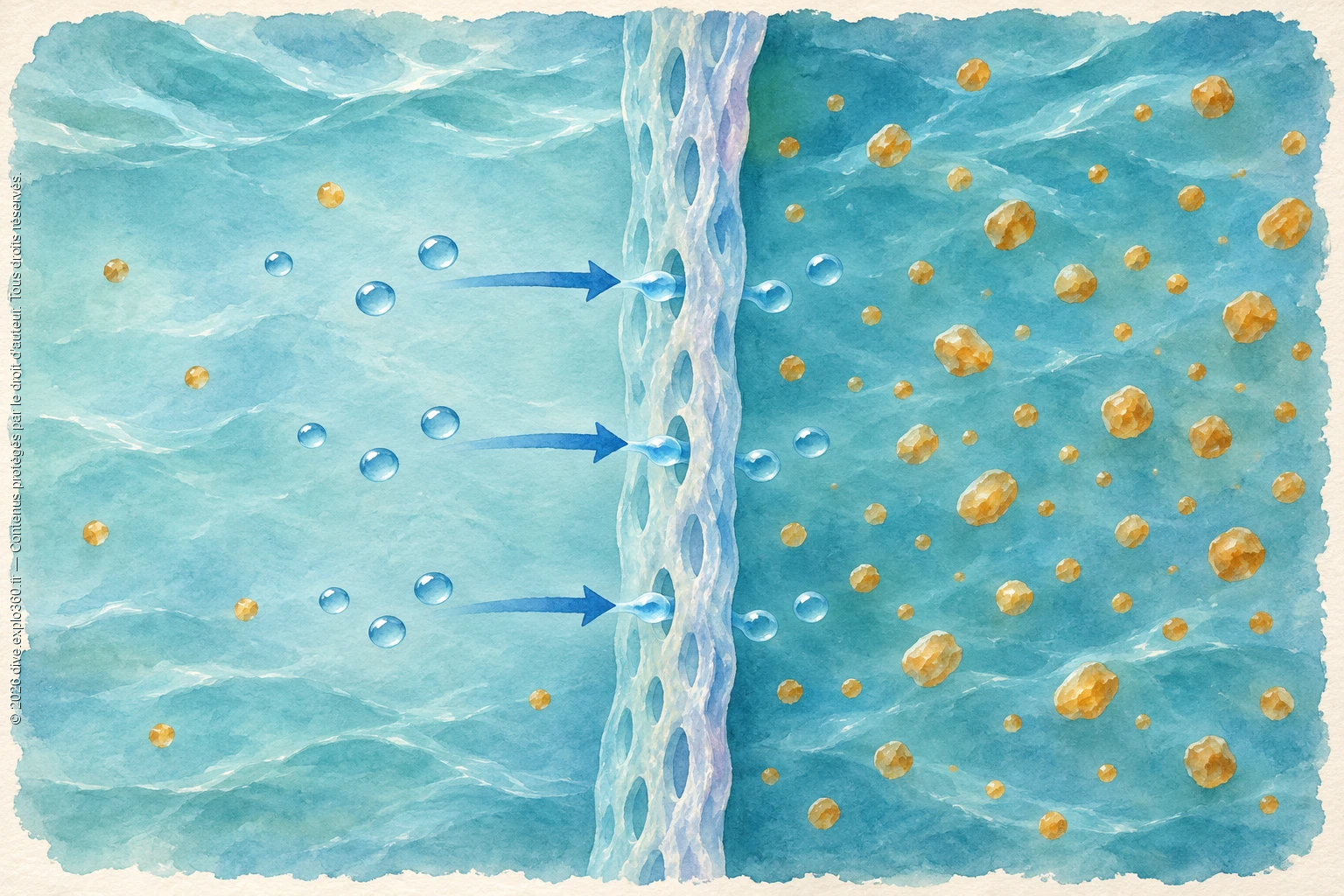
Water and dissolved salts support nerve signals, muscle contractions and other cell processes. Their concentrations must stay within suitable limits. Across a membrane that lets water pass, water tends to move towards the higher concentration of solutes that cannot cross freely. This is osmosis. The thin, extensive gill surfaces that make gas exchange possible also allow water and ions to move between fish and environment. Osmoregulation keeps those exchanges in balance.
Drinking and removing salts
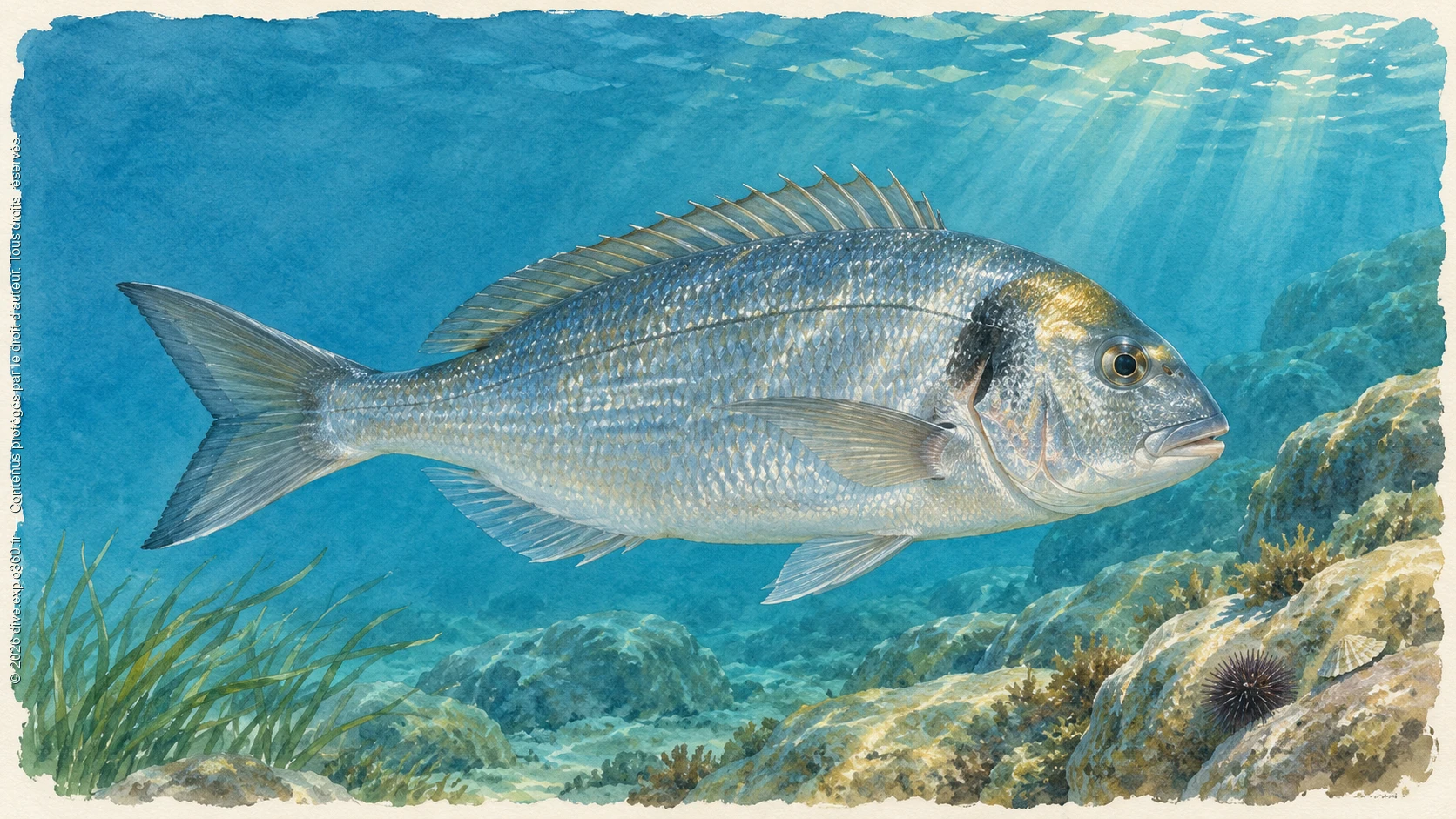
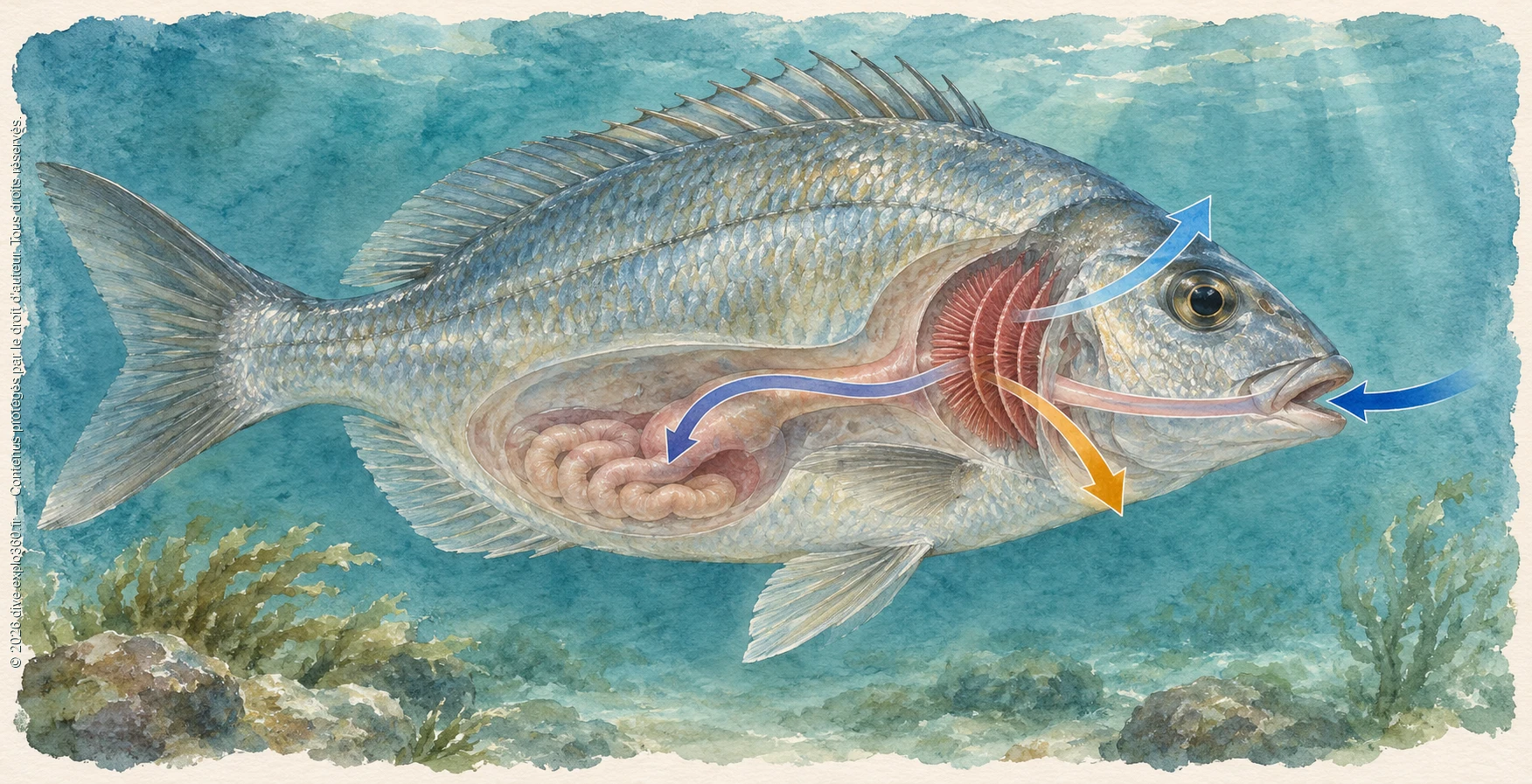
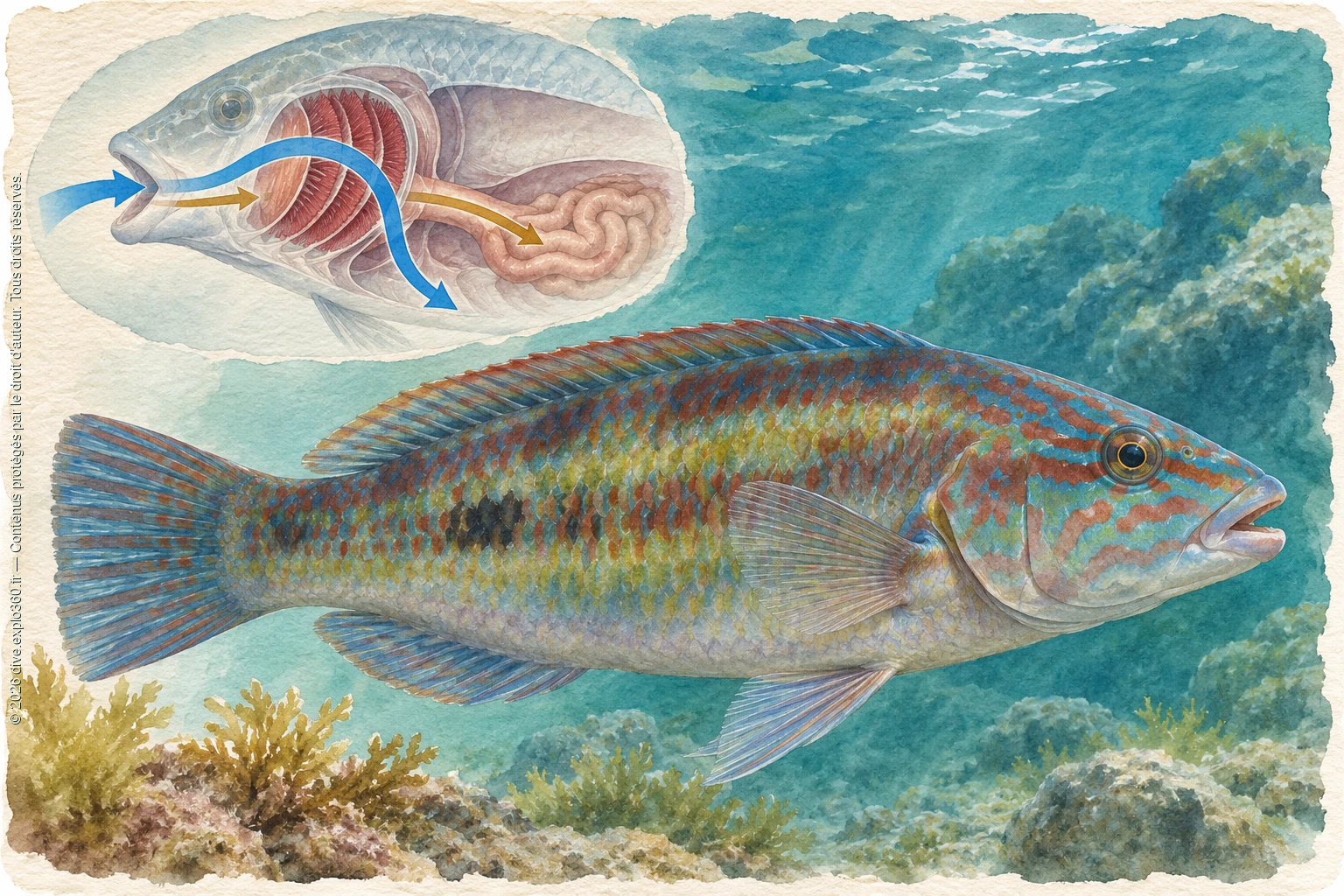
Grouper, seabream and wrasse have body fluids less concentrated than seawater. Mediterranean seawater generally contains around 38 grams of salts per kilogram. Osmotic water loss, mainly across the gills, is offset by drinking. Ion transport in the digestive tract promotes water absorption. The absorbed salt must then be removed: gill ionocytes contribute to active sodium and chloride excretion, while the kidneys remove other ions, notably magnesium and sulphate. Relatively low urine production reduces water loss.
Conserving salts in fresh water
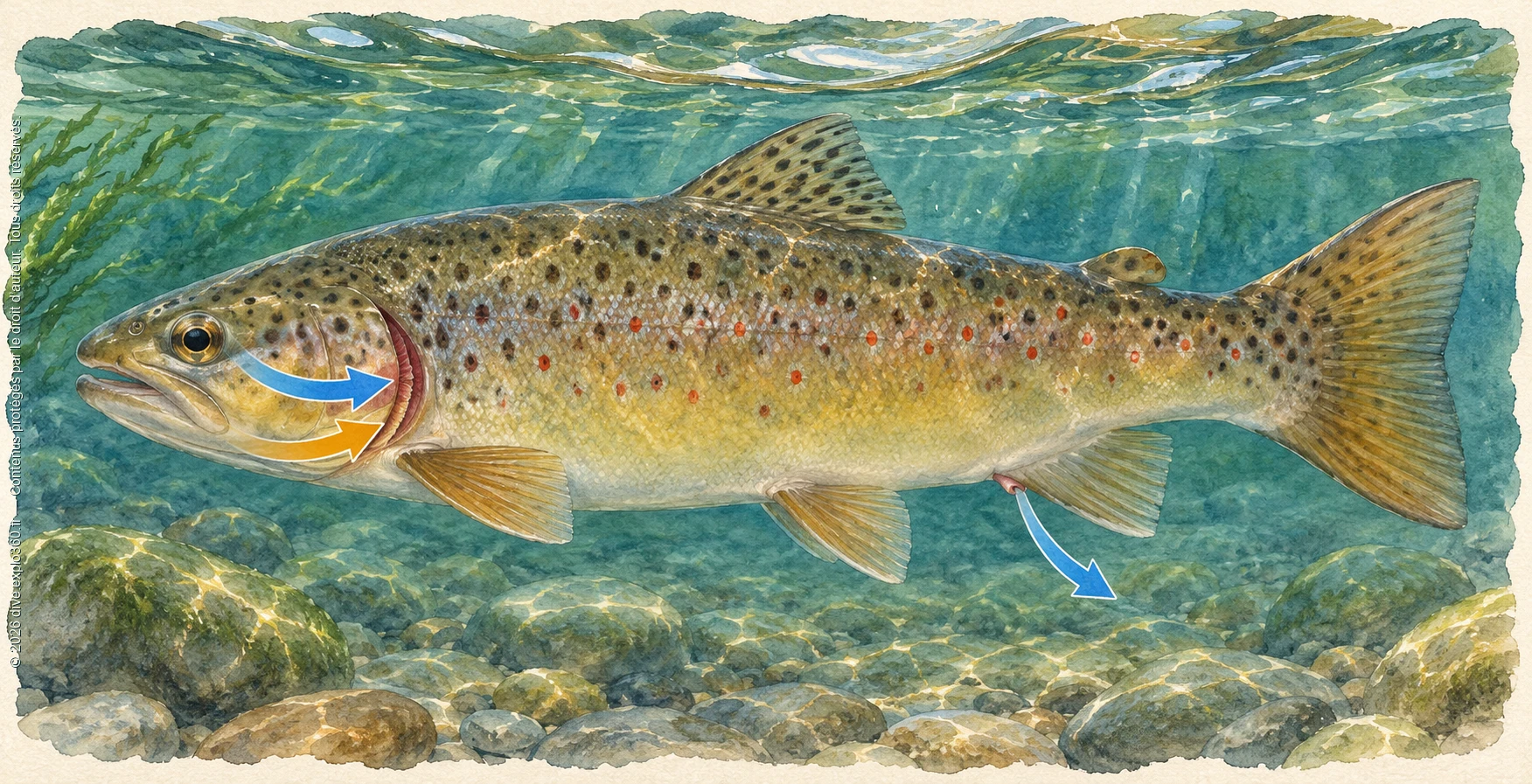
A trout or pike gains water by osmosis because its body fluids are more concentrated than the surrounding fresh water. Some ions escape in the other direction. It drinks very little, removes excess water in large amounts of dilute urine and limits salt loss. Gill cells actively take up ions even when their concentration in the water is low. Food supplies further minerals.
Variable rates, hidden from view
Measurements in different marine bony fish generally range from 2 to 5 millilitres per kilogram per hour. A one-kilogram fish could therefore swallow 48 to 120 millilitres a day. These are indicative ranges, affected by species, temperature, size and metabolism. Mouth opening mainly reflects gill ventilation.
GO FURTHER WITH AMIGANSEAU
Continue reading
Discover full species guides, in-depth content and interactive tools available with your licence.
Dive.Explo360 is an independent, self-funded nonprofit. Every licence helps us create new content, improve our teaching tools and keep some of our resources free and ad-free.
Choose a licence that suits your needs for personal, educational or professional use.
Open-access resources remain available without a subscription.