An invisible boundary
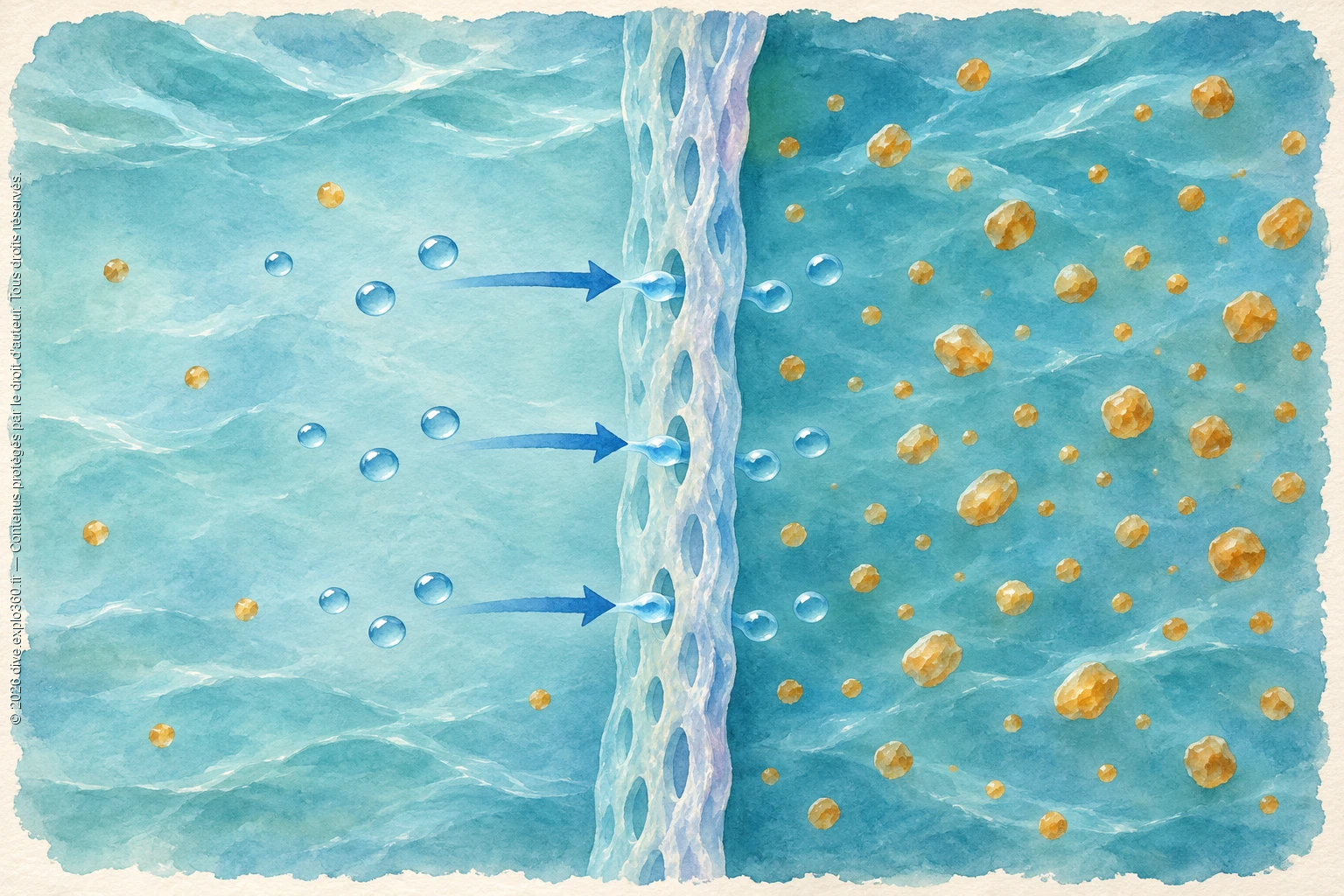
A fish needs water and dissolved salts to keep its muscles, nerves and cells working. Water can cross some thin barriers in its body. When the two sides contain different amounts of substances that cannot cross freely, water tends to move towards the more concentrated side. That movement is called osmosis. It happens across the gills as well as elsewhere. Keeping the water and salts balanced is called osmoregulation.
Drinking to replace lost water
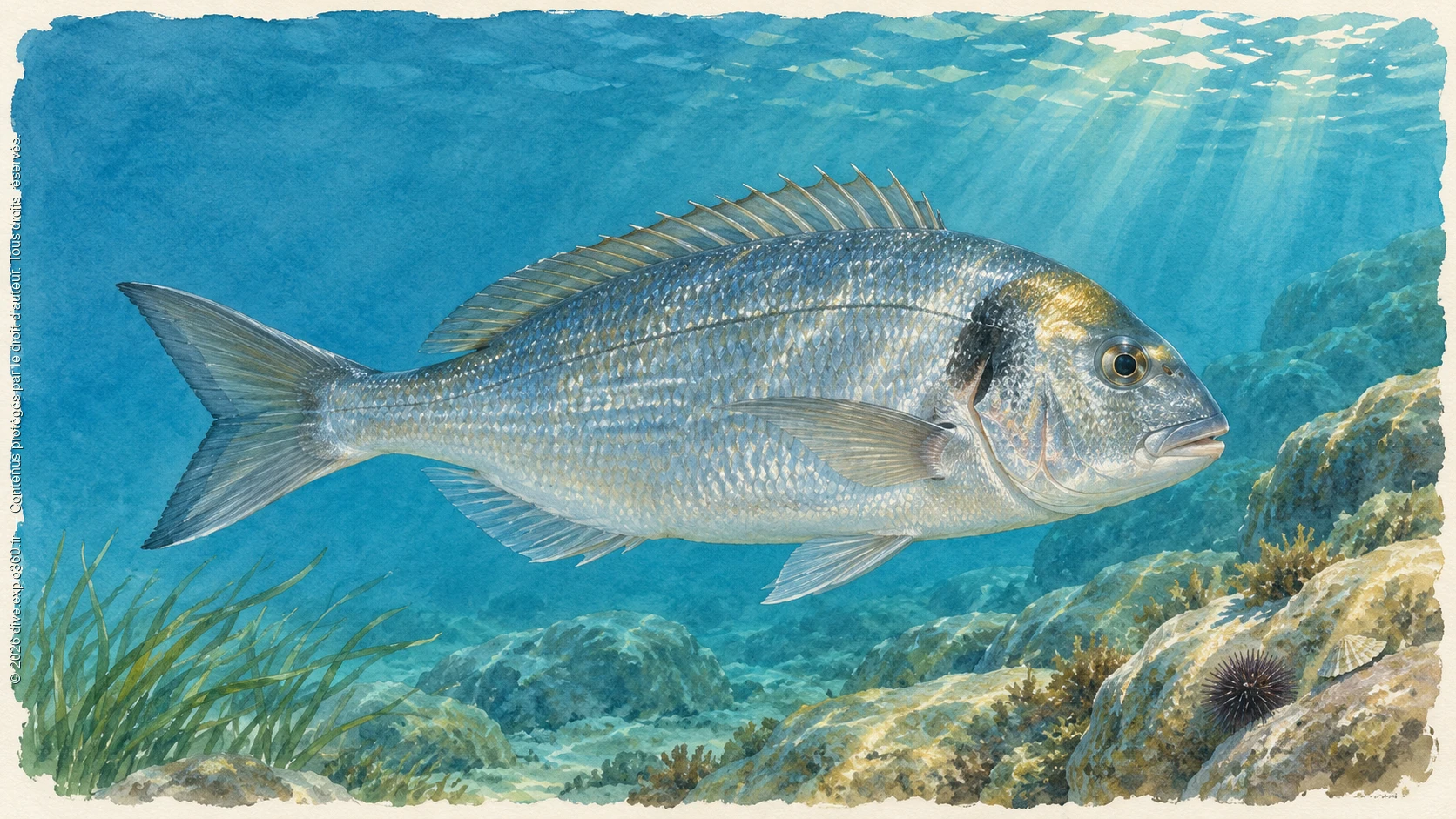
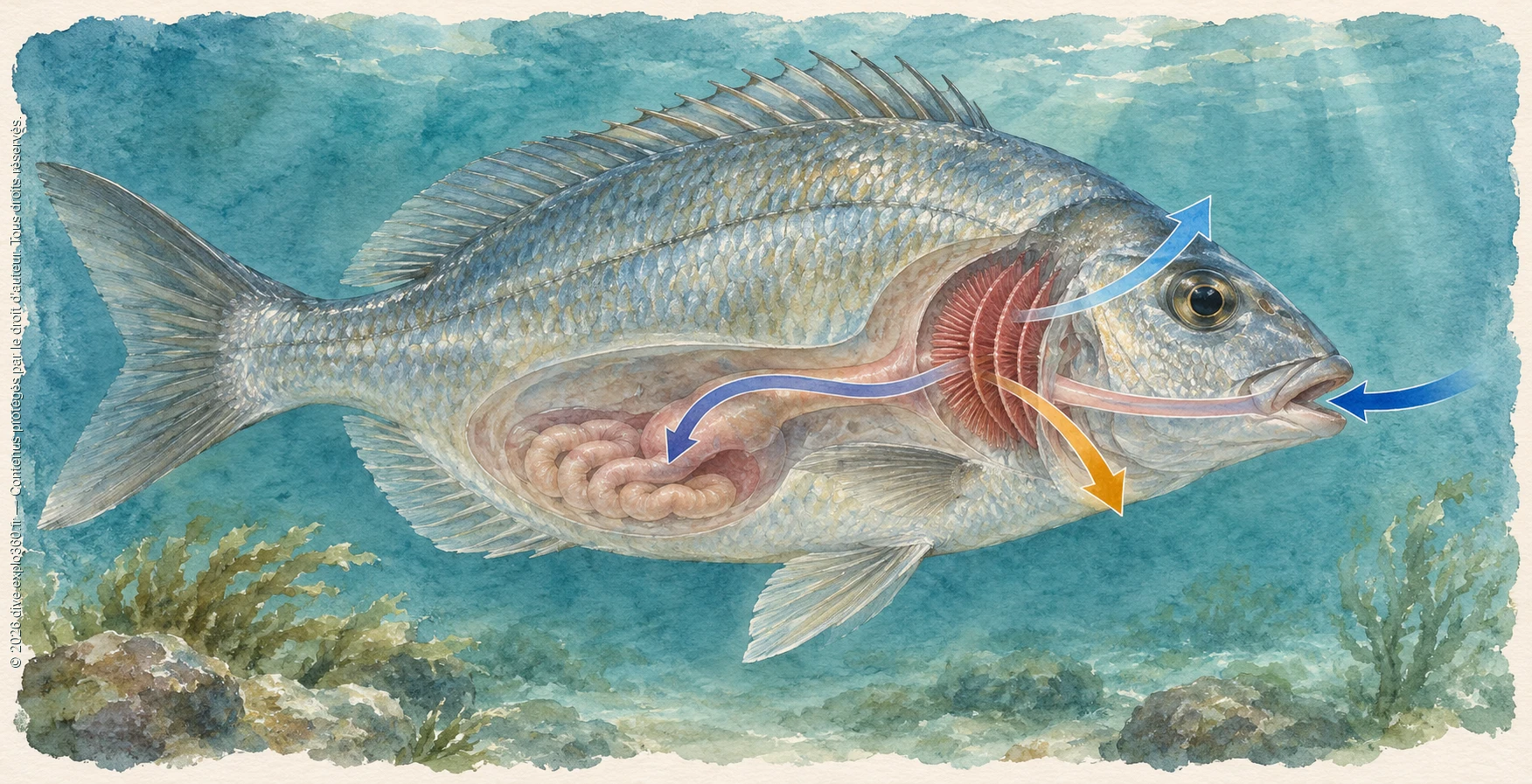
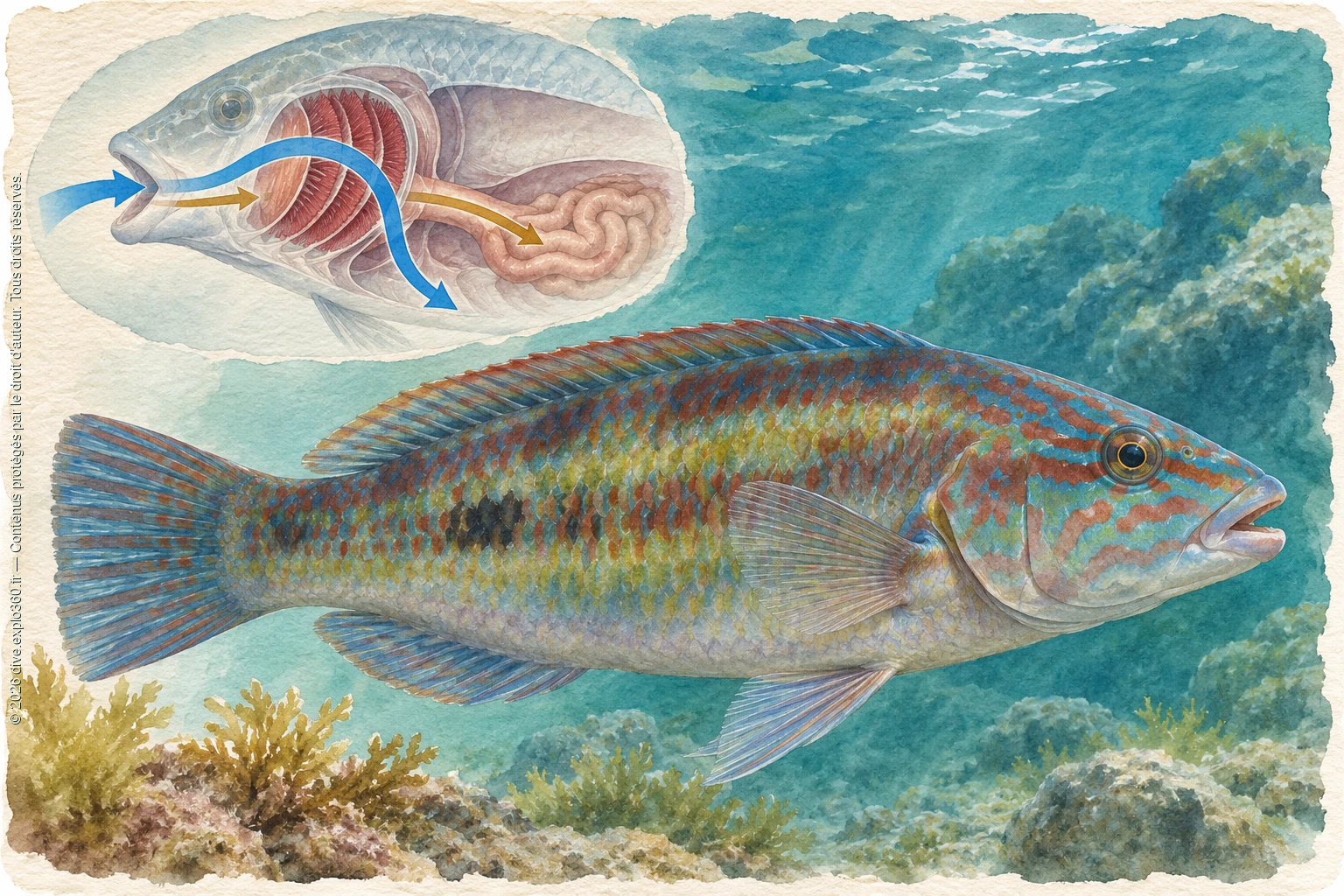
Seawater is much saltier than the fluids inside a sea bream or grouper. In the Mediterranean it often contains about 38 grams of salts per kilogram. Water escapes from the fish, mainly across its gills. The fish replaces it by drinking. Its gut absorbs water, and special cells in the gills, called ionocytes, help remove extra sodium and chloride. The kidneys remove other ions, including magnesium and sulphate. Making little urine helps the fish hang on to water.
Fresh water reverses the problem
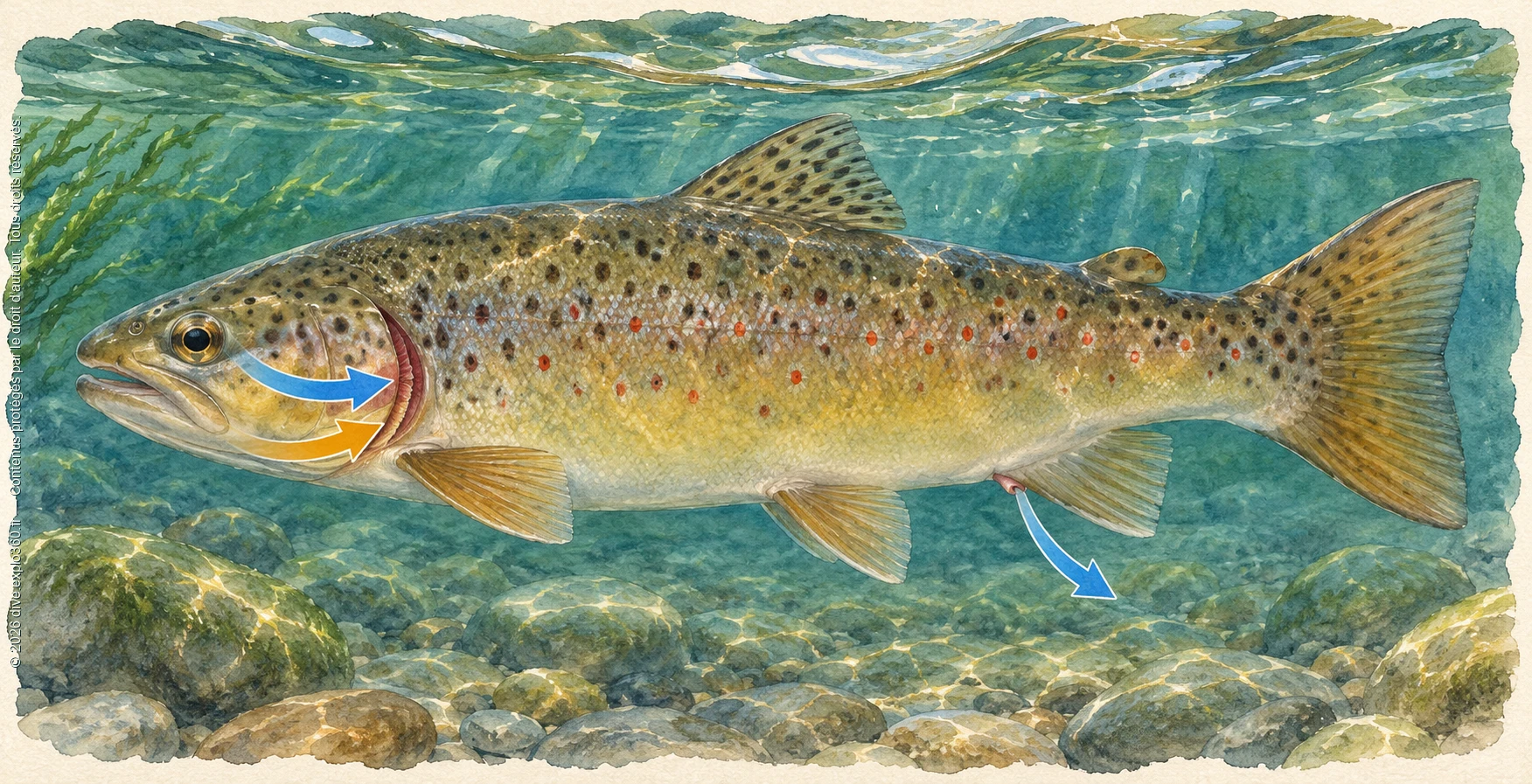
A trout in a river has the opposite problem. Its body fluids are more concentrated than the water around it, so water keeps entering by osmosis and some salts escape. A trout usually drinks very little. Its kidneys make plenty of dilute urine to get rid of the extra water while keeping useful salts. Its gills take up ions from the river, and food supplies minerals too.
Drinking without being noticed
Measurements in several species of marine bony fish fall around 2 to 5 millilitres per kilogram of fish per hour. For a one-kilogram fish, that adds up to 48 to 120 millilitres a day. The amount varies with species, temperature, size and metabolism. You cannot work it out by counting mouth openings: much of that water passes over the gills for breathing.
GO FURTHER WITH AMIGANSEAU
Continue reading
Discover full species guides, in-depth content and interactive tools available with your licence.
Dive.Explo360 is an independent, self-funded nonprofit. Every licence helps us create new content, improve our teaching tools and keep some of our resources free and ad-free.
Choose a licence that suits your needs for personal, educational or professional use.
Open-access resources remain available without a subscription.