An invisible boundary
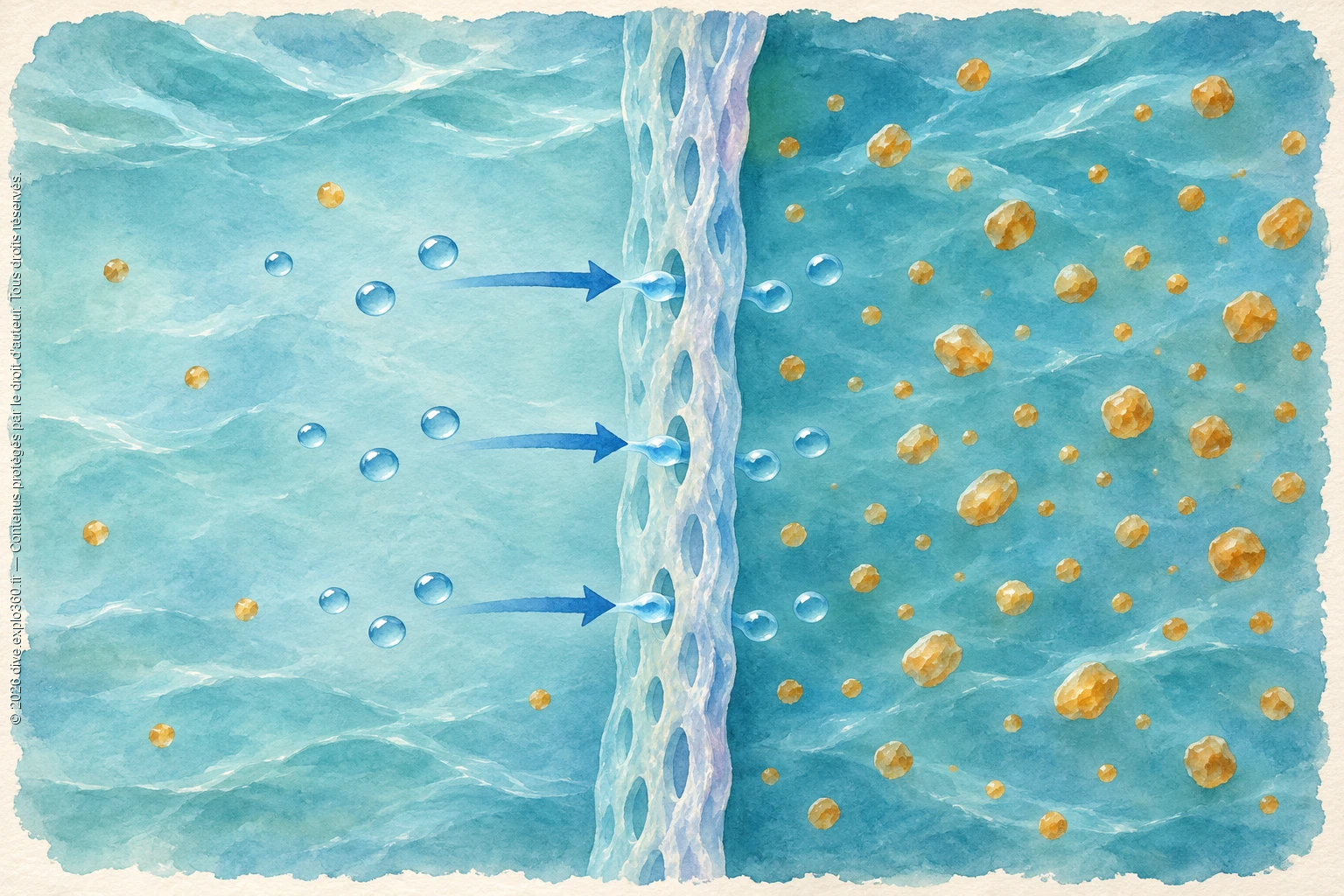
Inside a fish are water and salts that help its muscles and nerves work. Water can move through some very thin parts of its body. It tends to move towards the side with more dissolved substances that cannot pass through so easily. Scientists call this osmosis. A fish has to keep the right balance of water and salts, a job called osmoregulation.
Drinking in the sea
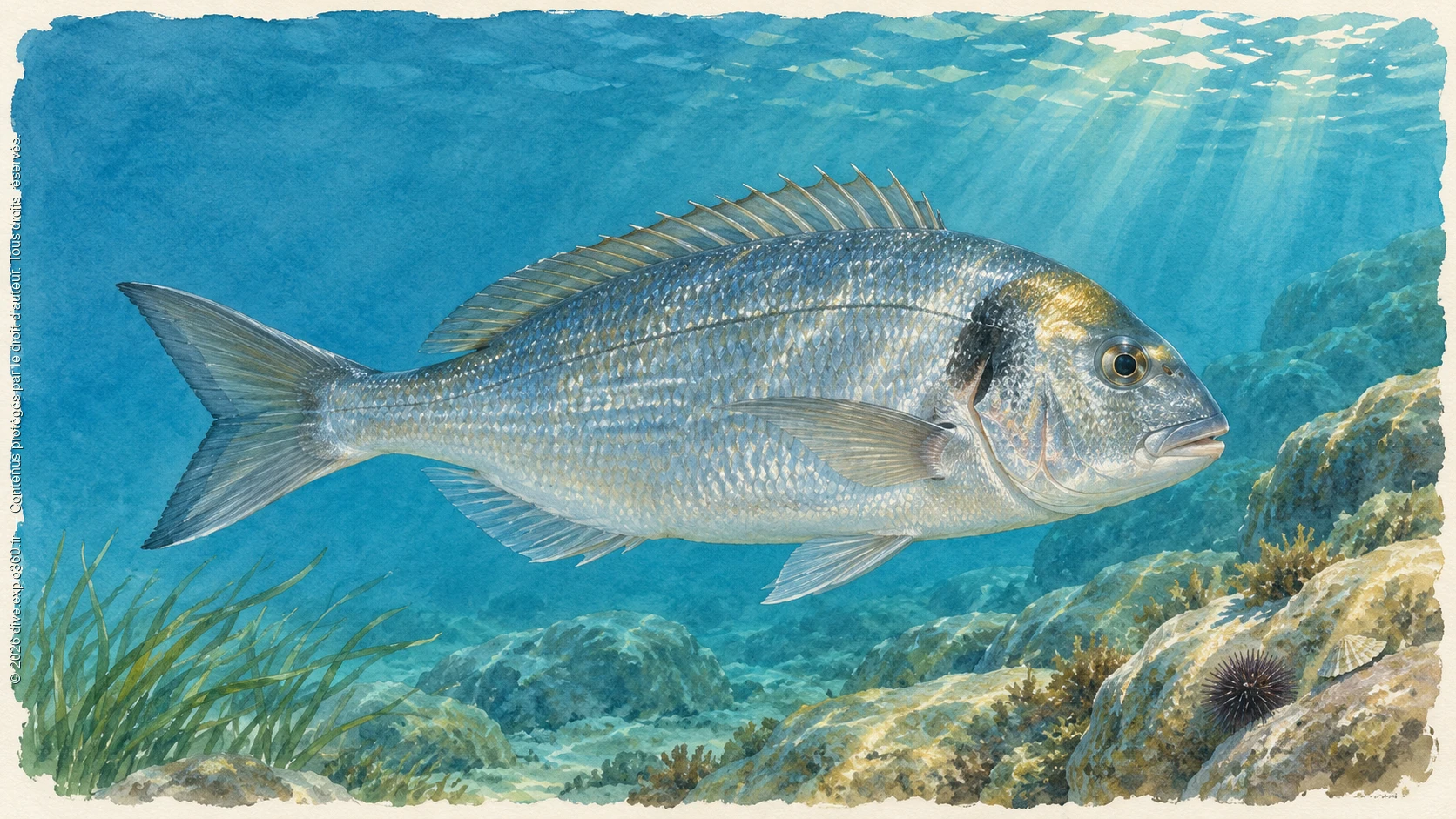
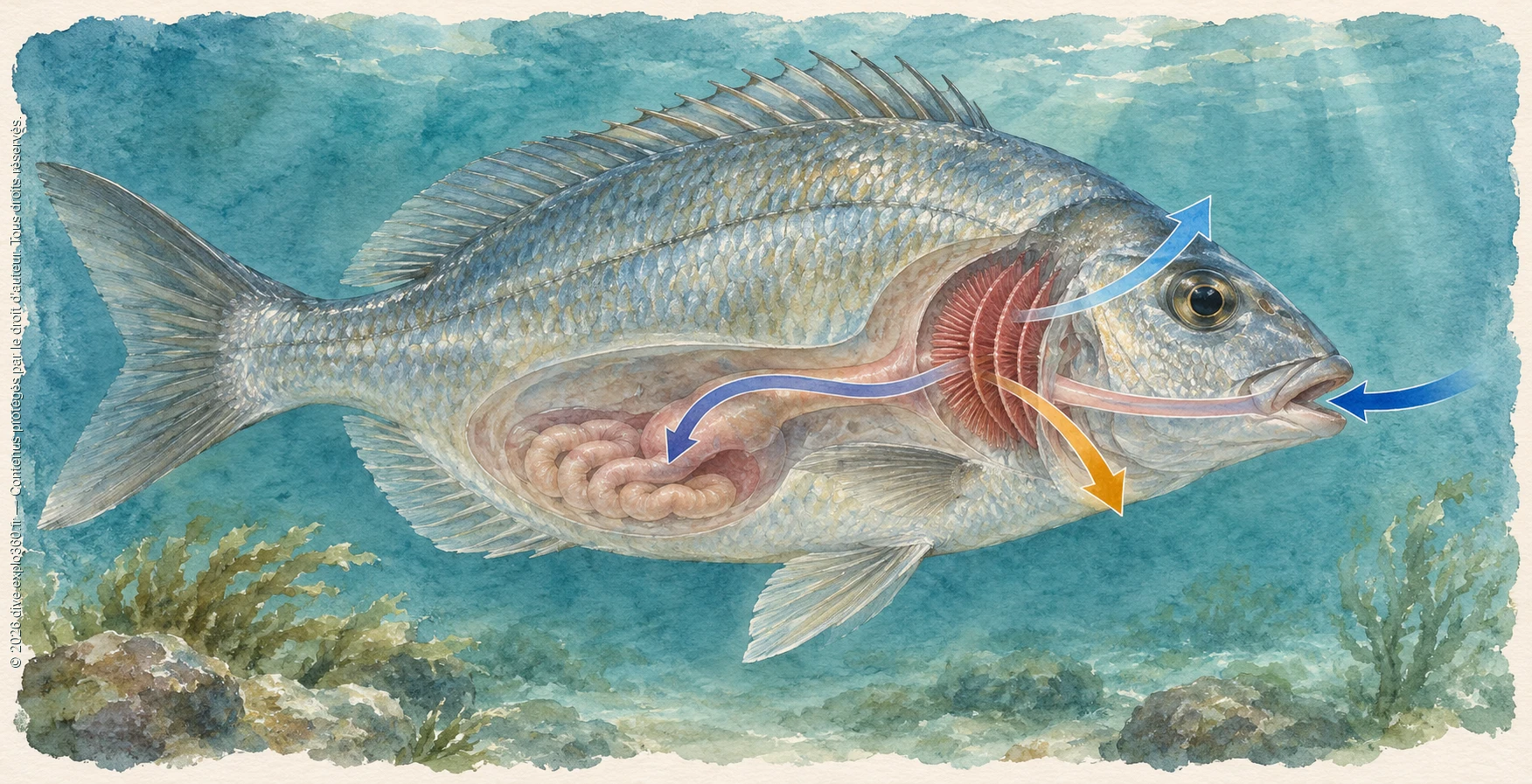
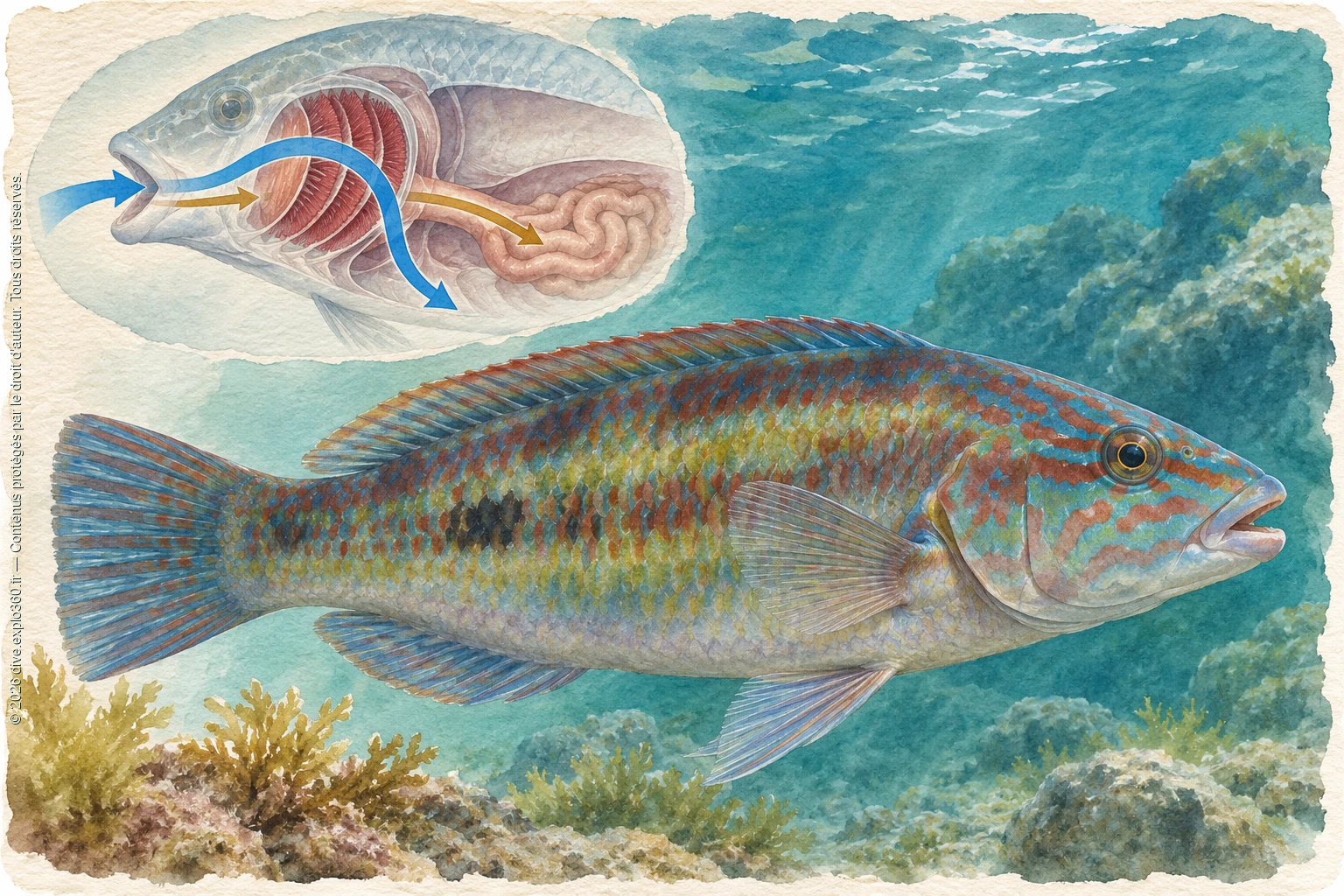
The sea is saltier than the fluids inside a sea bream. Mediterranean seawater contains about 38 grams of salts in each kilogram. Water keeps leaving the fish, mostly through its gills. To replace it, the fish drinks seawater. Its gut takes in water, its gills get rid of extra salt and its kidneys help remove other salts. It makes only a little wee, saving water.
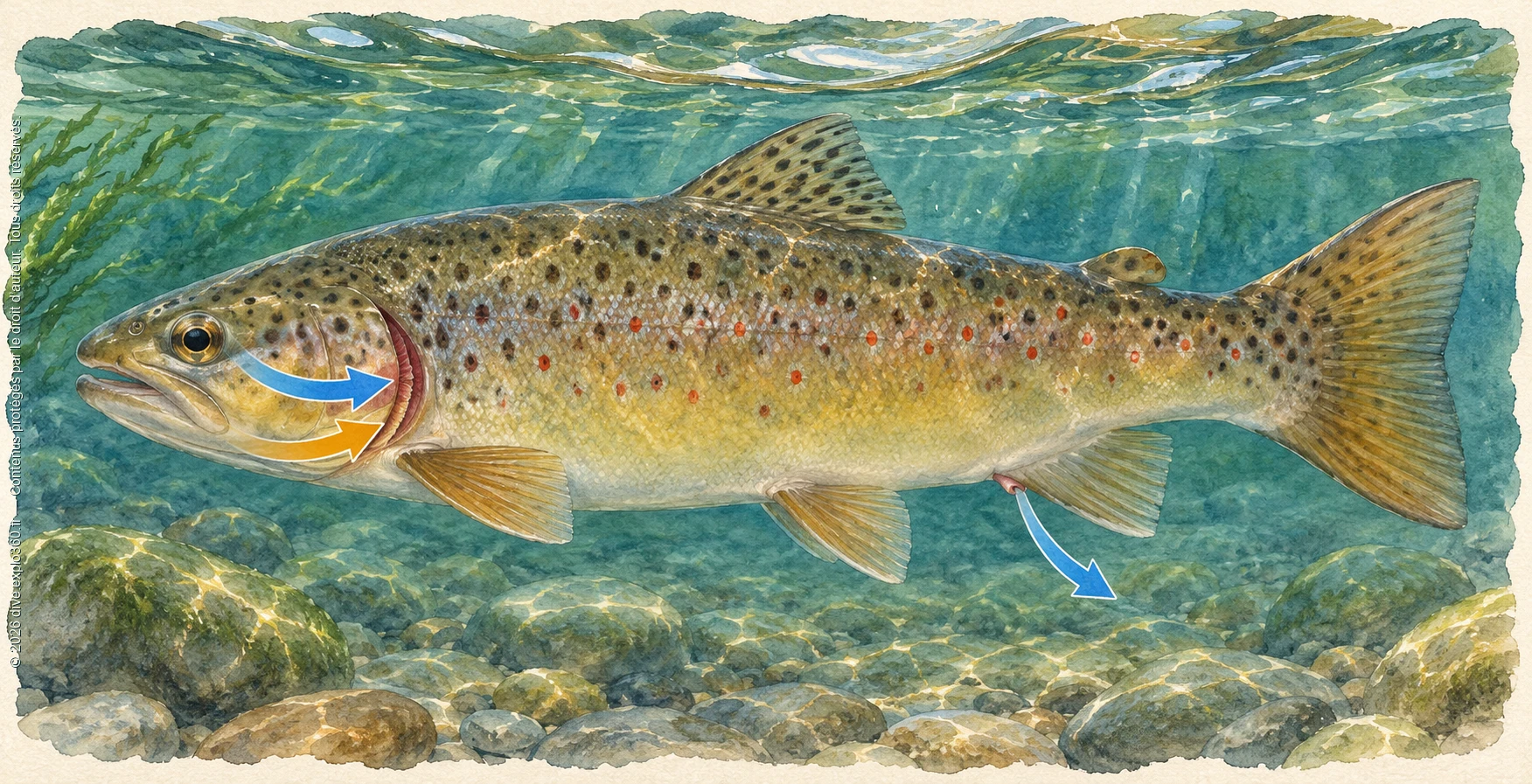
The opposite problem in a river
A trout in a river has more salts inside its body than the water around it. Water moves into the trout naturally. The trout needs very little to drink. Its kidneys make lots of watery wee to get rid of extra water and keep useful salts. Its gills collect some salts from the river, and its food provides minerals too.
How much water?
How much does a fish drink? In several kinds of bony sea fish, scientists measured about 2 to 5 millilitres for each kilogram of fish every hour. A fish weighing one kilogram could drink 48 to 120 millilitres in a day. The amount depends on the kind of fish, its size and how warm the water is. Watching its mouth will not tell you: water goes in for breathing too.
GO FURTHER WITH AMIGANSEAU
Continue reading
Discover full species guides, in-depth content and interactive tools available with your licence.
Dive.Explo360 is an independent, self-funded nonprofit. Every licence helps us create new content, improve our teaching tools and keep some of our resources free and ad-free.
Choose a licence that suits your needs for personal, educational or professional use.
Open-access resources remain available without a subscription.