


When a diver becomes an ordinary sight
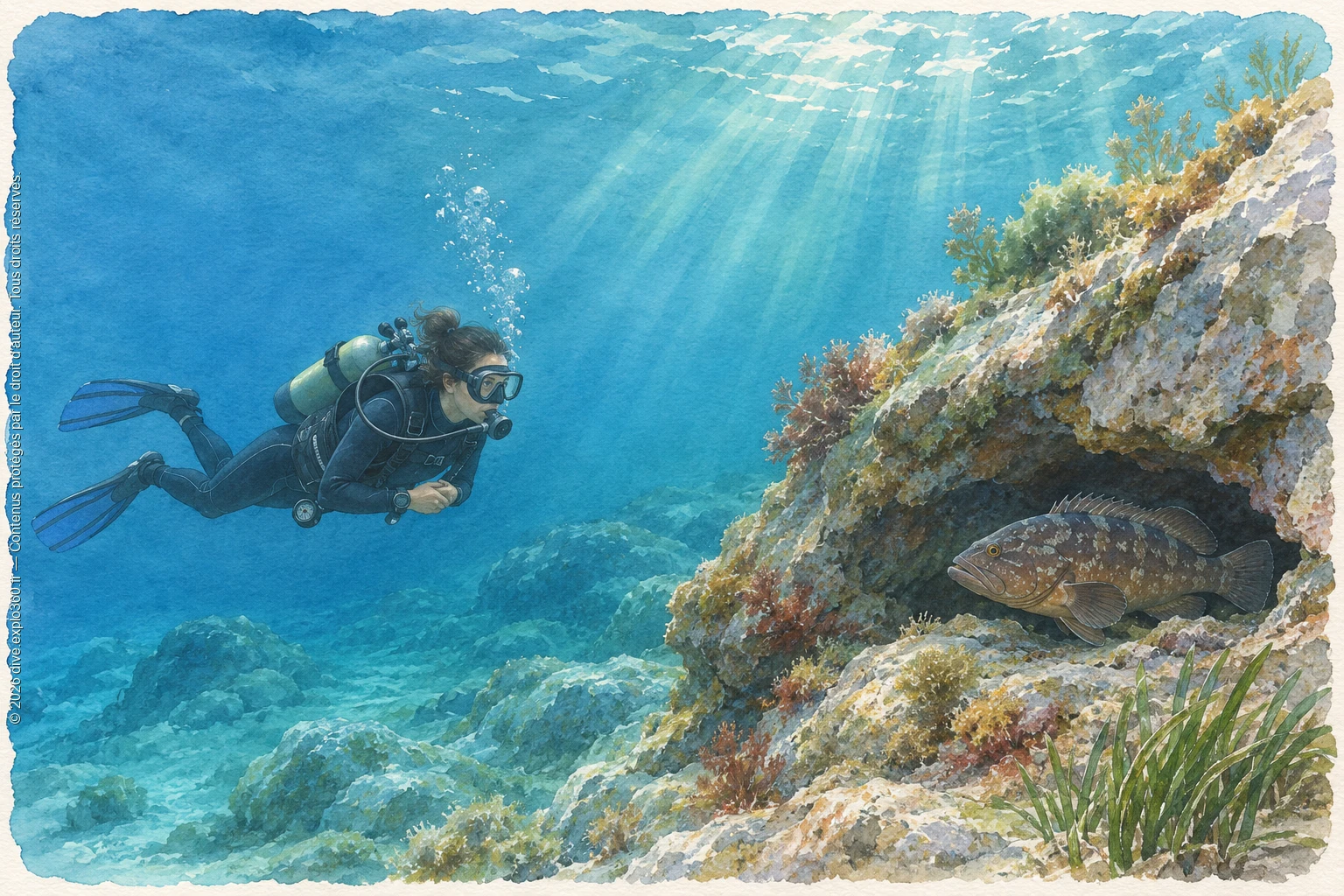
To a fish, an approaching diver brings a whole bundle of unfamiliar signals: a large outline, noisy breathing, moving fins and rising bubbles.
One fish bolts for cover; another hangs back. But when the same sort of encounter happens again and again without harm, the reaction may fade.
This is habituation, a form of learning in which an animal responds less to a repeated event that has no particular consequences.
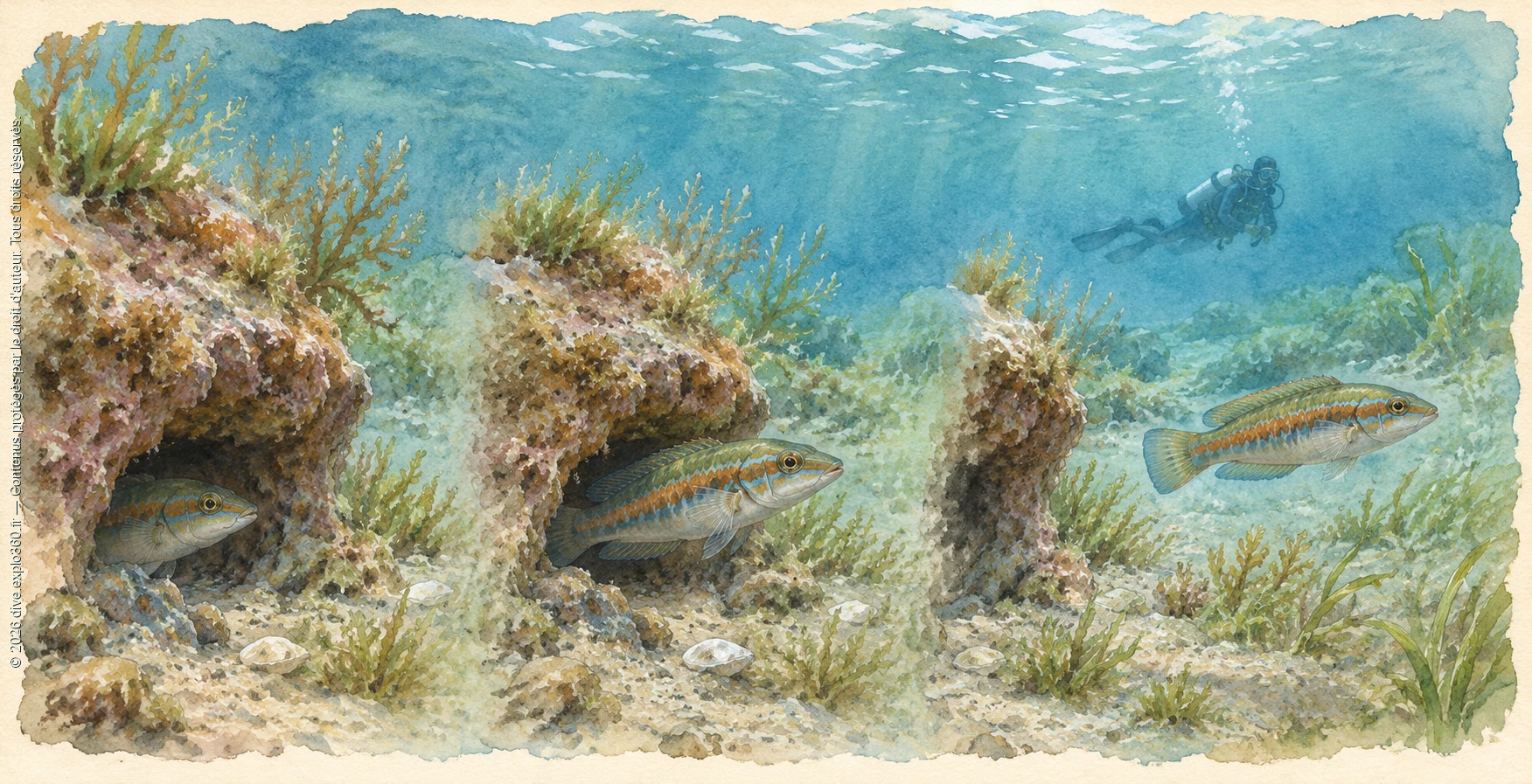
At a busy dive site, fish may let people approach much closer than they would somewhere rarely visited.
That tolerance need not involve telling people apart. The fish may have learnt that a large shape trailing bubbles usually poses no threat.
Fish that can distinguish human faces
In 2016, researchers put an archerfish’s aim to an unusual test: could it pick out a human face?
Archerfish, found in tropical waters including brackish habitats, hunt insects perched above the surface. A well-aimed jet of water knocks their prey within reach.
For the experiment, the targets were photographs on a screen. Hitting a particular face earned the fish a food reward.
With training, the fish learnt to pick that face out from several dozen others. They could still do so when colour and the outline of the head no longer offered useful clues.
Fish lack the mammalian neocortex, a brain structure involved in complex visual processing. Clearly, they do not need one to solve this task.
An archerfish could learn to tell human faces apart.
That is a remarkable visual feat, but it does not tell us whether a wild grouper recognises a face behind a mask. The experiment tested a learnt choice under controlled conditions, revealing just how much detail a fish brain can handle.
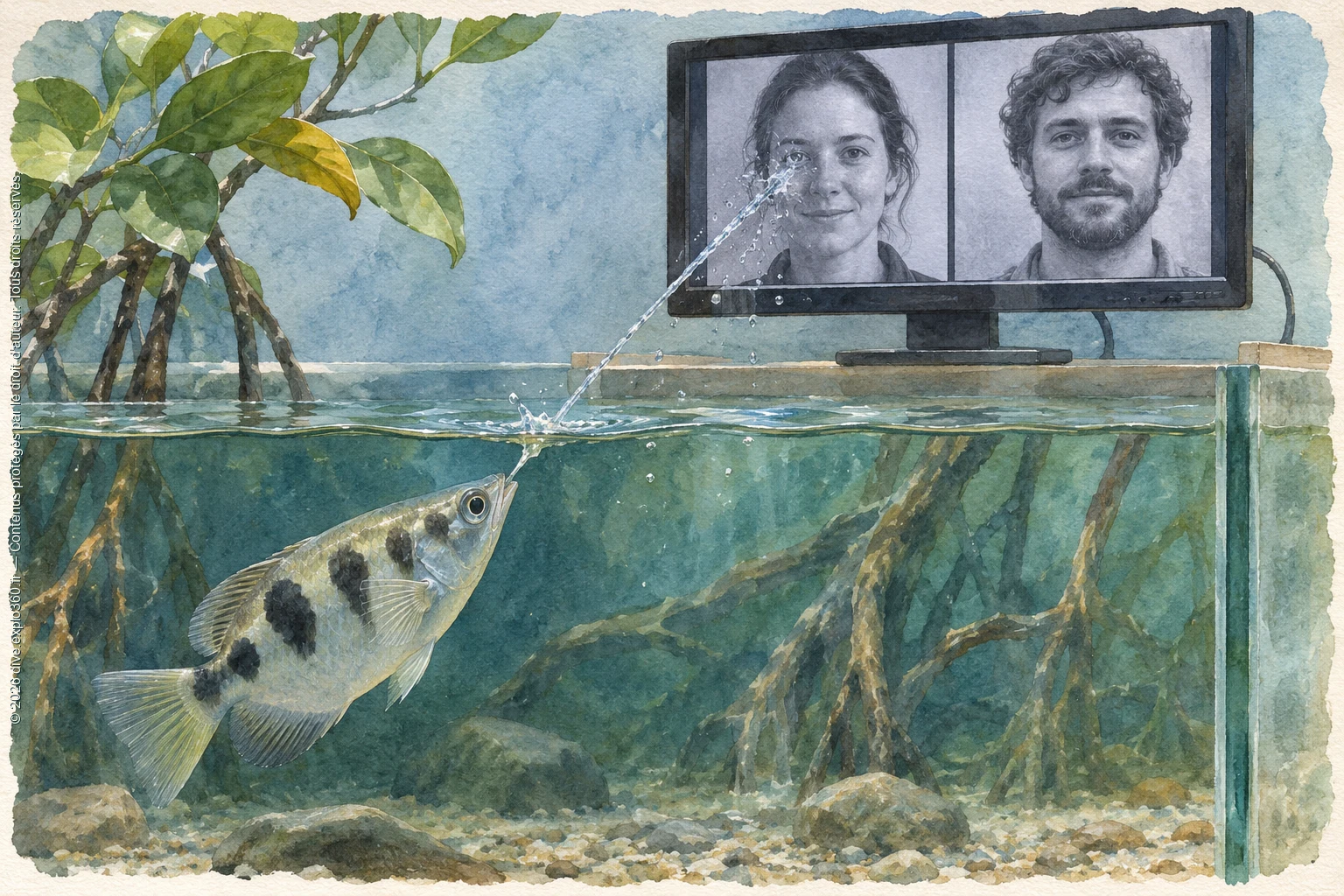
Researchers’ video — Max Planck Institute of Animal Behavior, study by Tomasek, Soller and Jordan (2025). Food rewards form part of a controlled field protocol.
Wild fish put to the test in Corsica
In 2025, a study brought the question out of the laboratory and into the Mediterranean.
At STARESO, the underwater and oceanographic research station near Calvi in Corsica, researchers worked with saddled seabream, Oblada melanura, and black seabream, Spondyliosoma cantharus.
These were wild fish, free to come and go among the other animals at the site.
Over twelve days, a diver trained them to follow her for roughly fifty metres, rewarding them with small pieces of prawn. Then a second diver joined her.
The two swam off in different directions, and only the first gave food to fish that followed. Over successive trials, the fish learnt to choose the diver who rewarded them.
But what exactly were they using to tell the two people apart?
A matter of wetsuits and fins
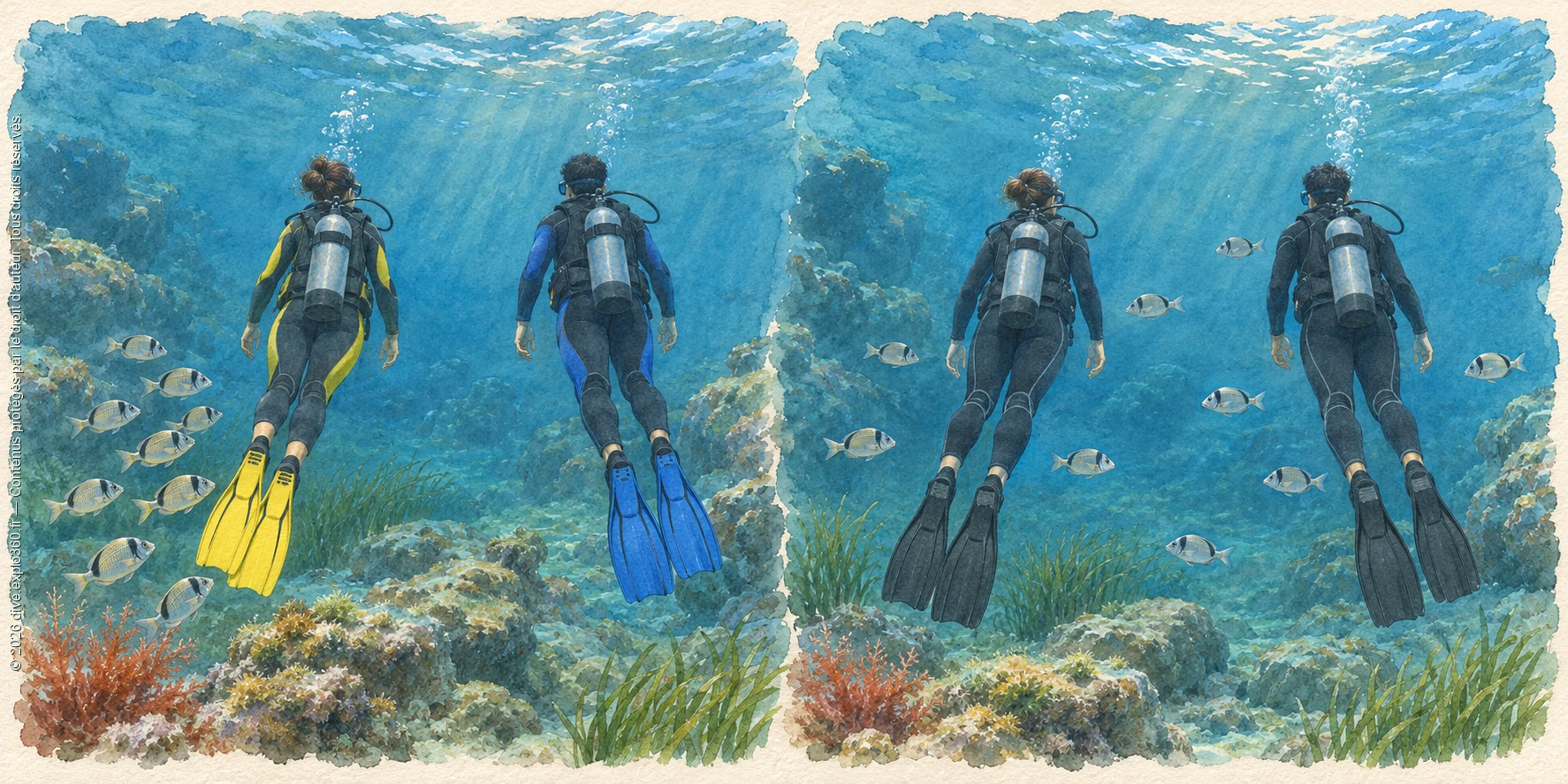
To find out, the researchers changed what the divers wore.
Until then, the two had used different wetsuits, fins, masks and buoyancy compensators. There were plenty of visible differences for a fish to learn.
When the divers wore matching kit, the fish became much less successful at choosing between them.
Their equipment had supplied the main clues. The fish could learn to distinguish the divers, but the study did not show that they knew the people independently of those clues.
GO FURTHER WITH AMIGANSEAU
Continue reading
Discover full species guides, in-depth content and interactive tools available with your licence.
Dive.Explo360 is an independent, self-funded nonprofit. Every licence helps us create new content, improve our teaching tools and keep some of our resources free and ad-free.
Choose a licence that suits your needs for personal, educational or professional use.
Open-access resources remain available without a subscription.