


Getting used to a visitor
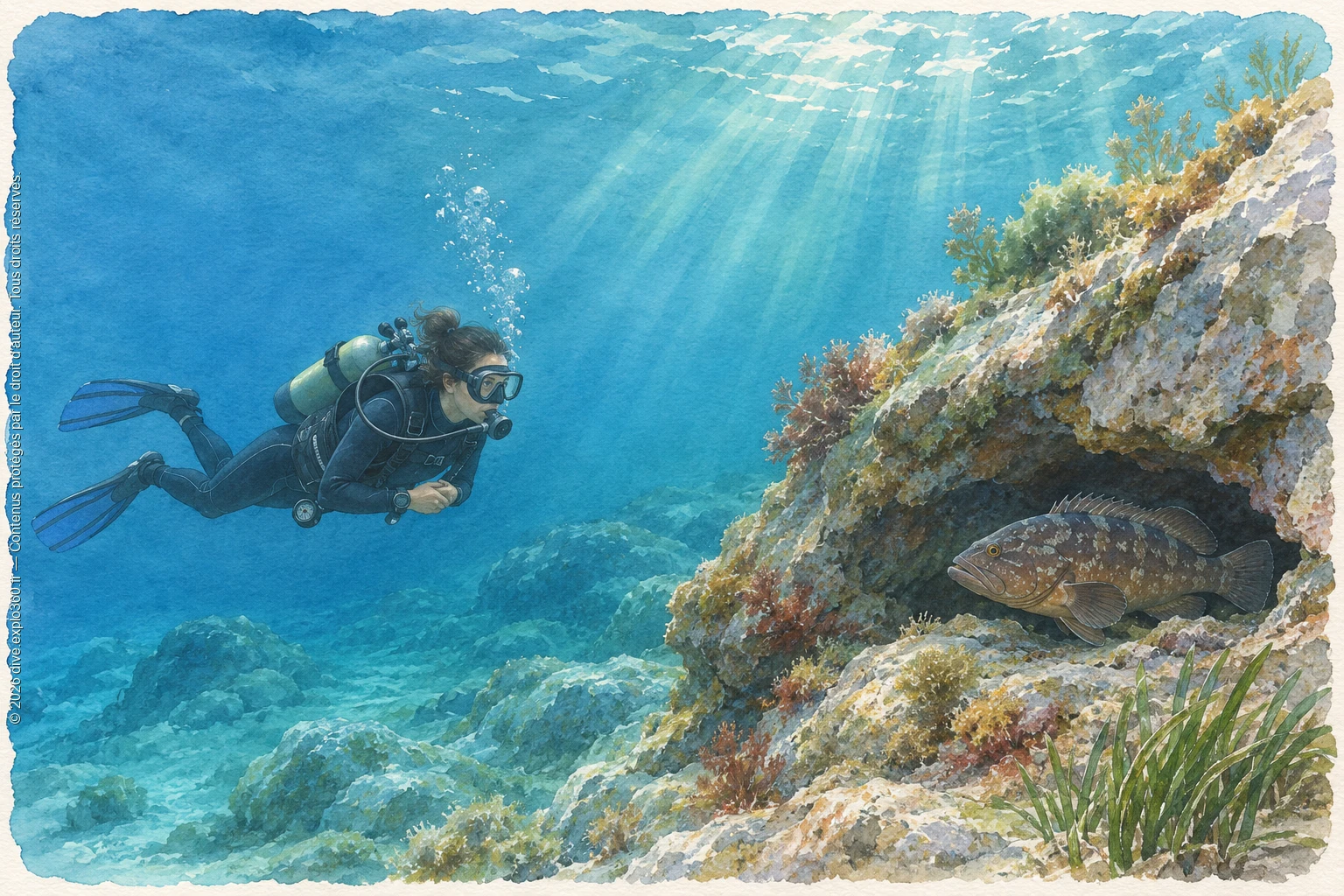
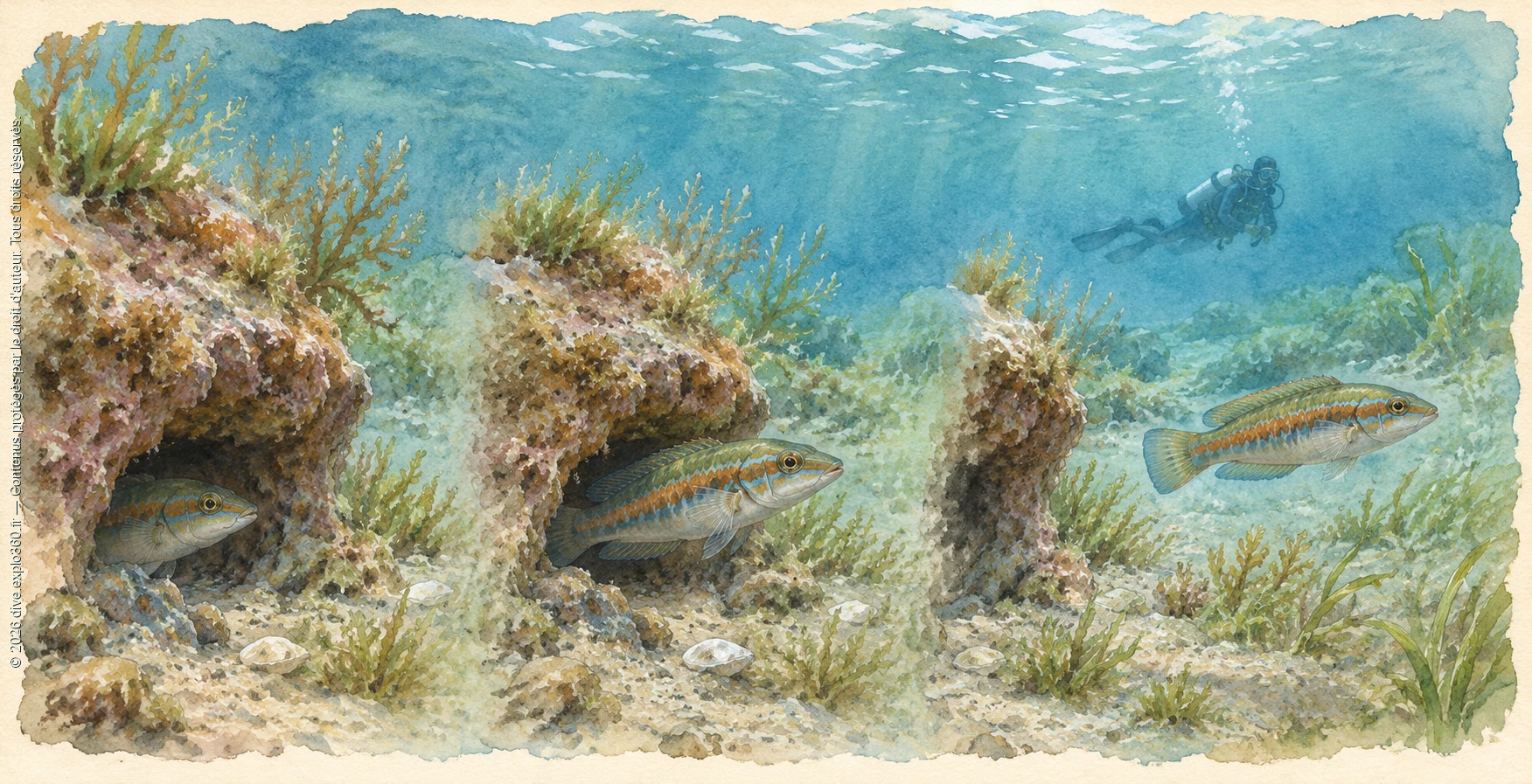
To a fish, a diver is a big shape with moving fins and noisy bubbles. It may hurry away at first. If divers keep passing without harming it, the fish may stop being so frightened. Getting used to something in this way is called habituation. It does not mean the fish knows which person is visiting. Where people catch fish with spears, some fish keep further away.
A jet of water at a face
An archerfish hunts with a squirt! It shoots water at an insect above the surface, knocking it down to eat. In 2016, scientists showed archerfish pictures of human faces. A squirt at the right face earned a treat. With practice, the fish could find it among dozens of others, even without clues from the colour or the shape of the head. Fish do not have the same brain parts as mammals, but they could still learn this tricky task. It does not tell us whether a wild fish knows your face behind a diving mask.
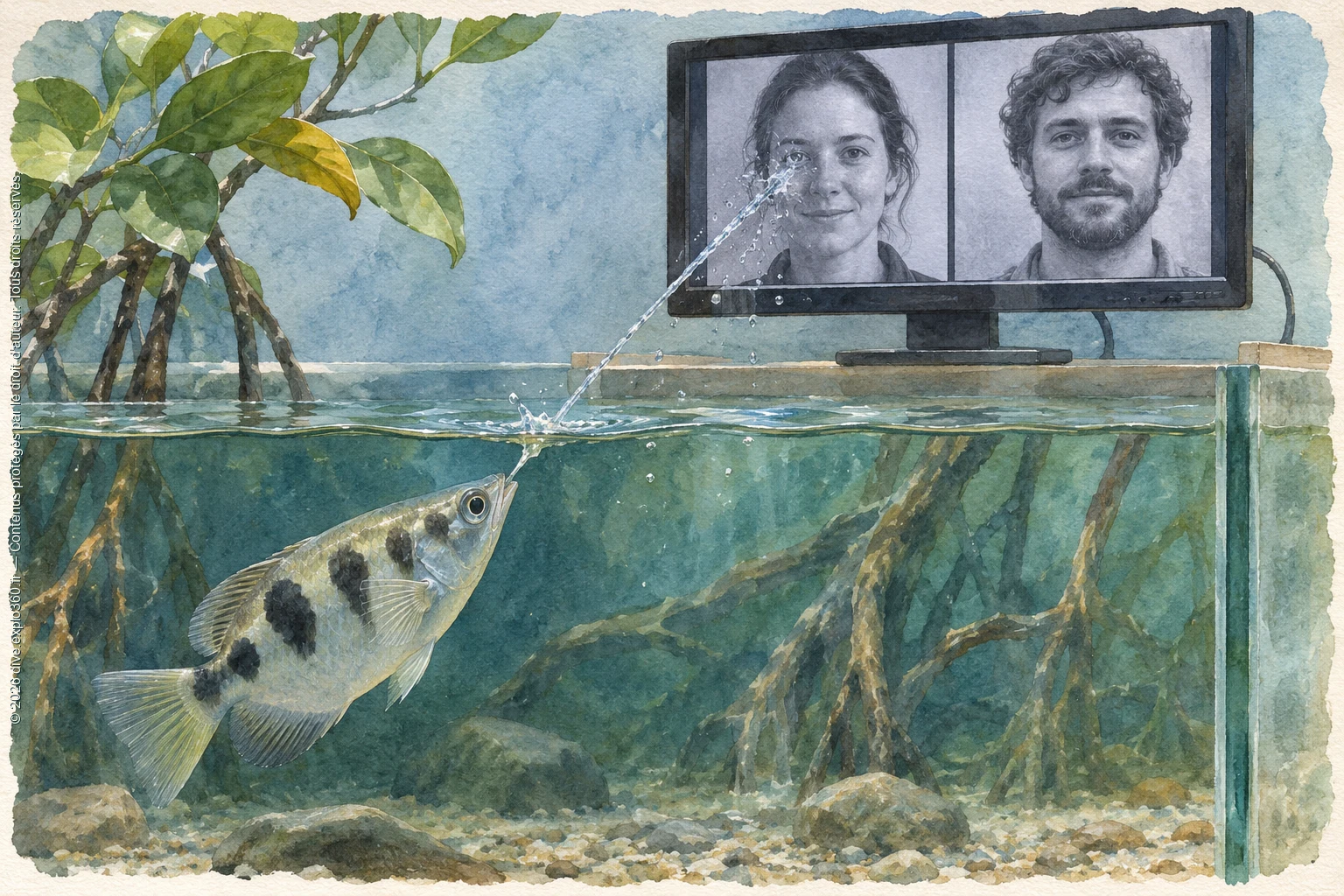
Research video — Max Planck Institute of Animal Behavior. Scientists observe free-swimming fish; food rewards are part of the experiment.
An experiment in Corsica
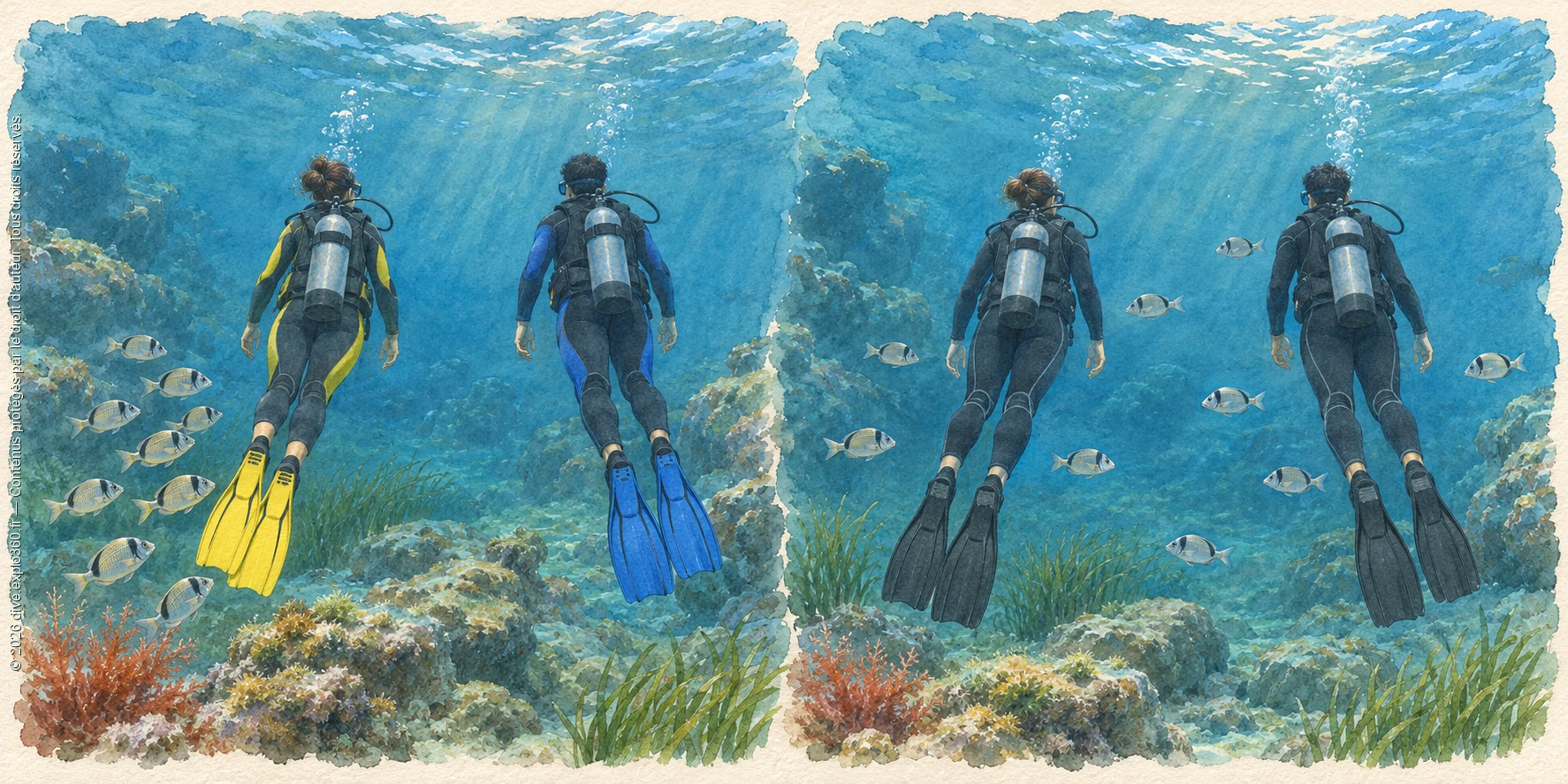
In 2025, scientists worked with wild saddled seabream and black seabream near Calvi in Corsica. The fish could swim away whenever they liked. For twelve days, a diver gave them little pieces of prawn as they followed her for about fifty metres. Then two divers swam in different directions. Only the first gave out food. The fish learnt which one to follow.
Fins as clues
Was the fish looking at the person or the diving kit? At first, the two divers wore different wetsuits, fins, masks and other equipment. When they wore matching kit, the fish found it much harder to choose. The equipment had given them important clues. The test did not show that they knew the person underneath it all.
GO FURTHER WITH AMIGANSEAU
Continue reading
Discover full species guides, in-depth content and interactive tools available with your licence.
Dive.Explo360 is an independent, self-funded nonprofit. Every licence helps us create new content, improve our teaching tools and keep some of our resources free and ad-free.
Choose a licence that suits your needs for personal, educational or professional use.
Open-access resources remain available without a subscription.