


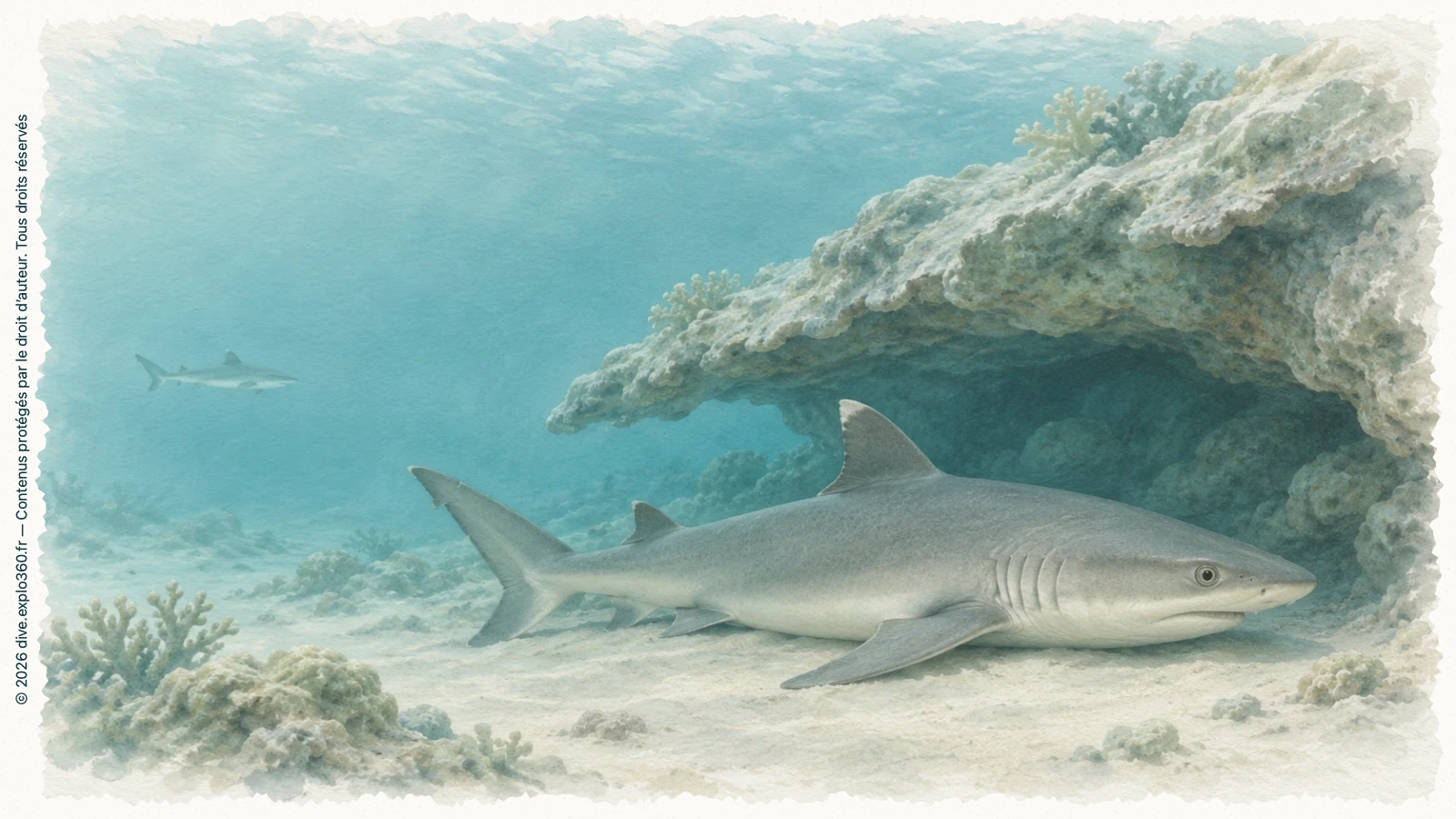
A shark can rest in a cave
A whitetip reef shark can settle on the seabed and keep water flowing over its gills without swimming.
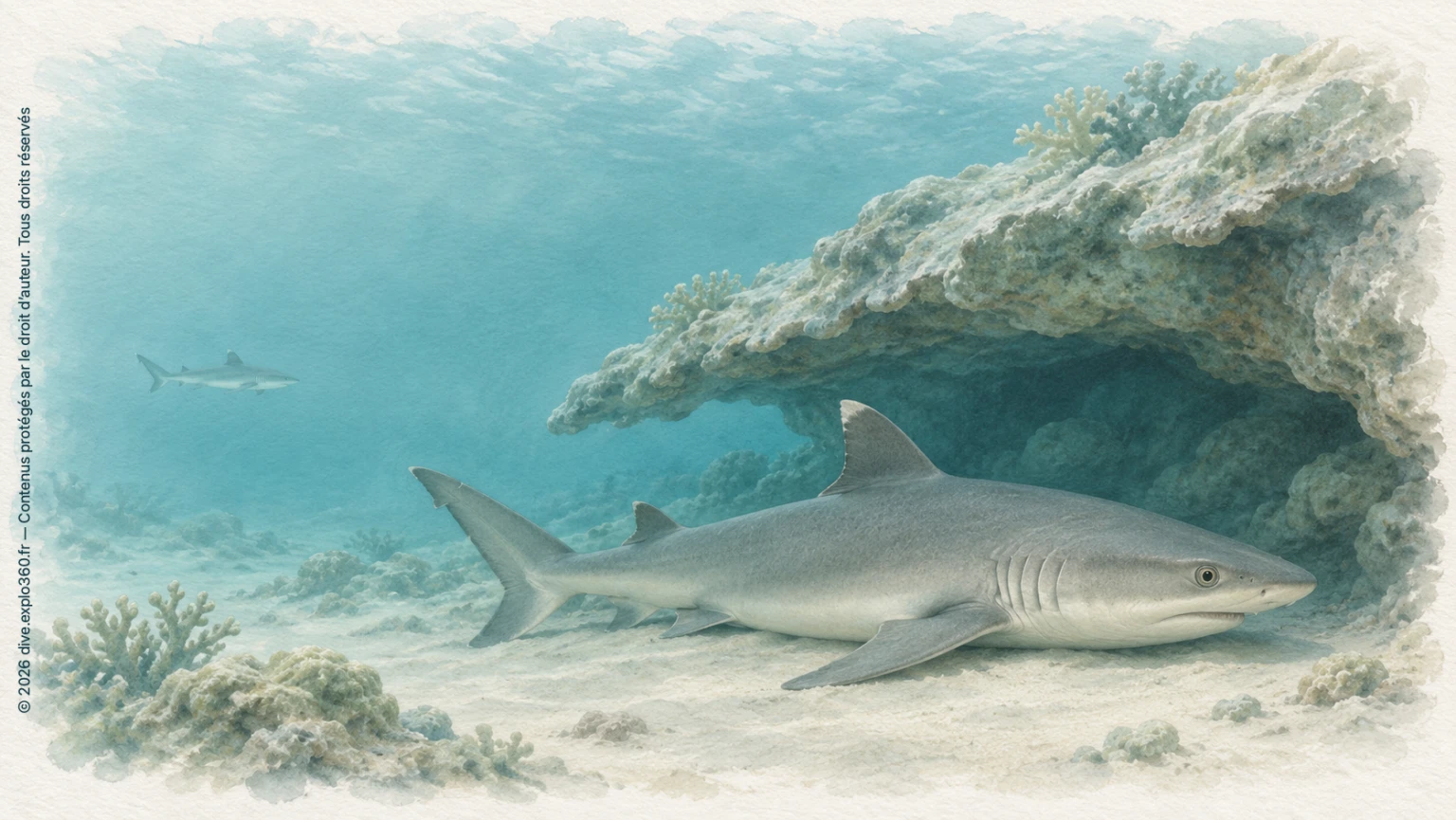
How hard is it to rouse a shark?
Researchers compare how readily a shark responds when it is active and when it has been still for a while. If it takes a stronger stimulus to get a reaction, the shark may be asleep.
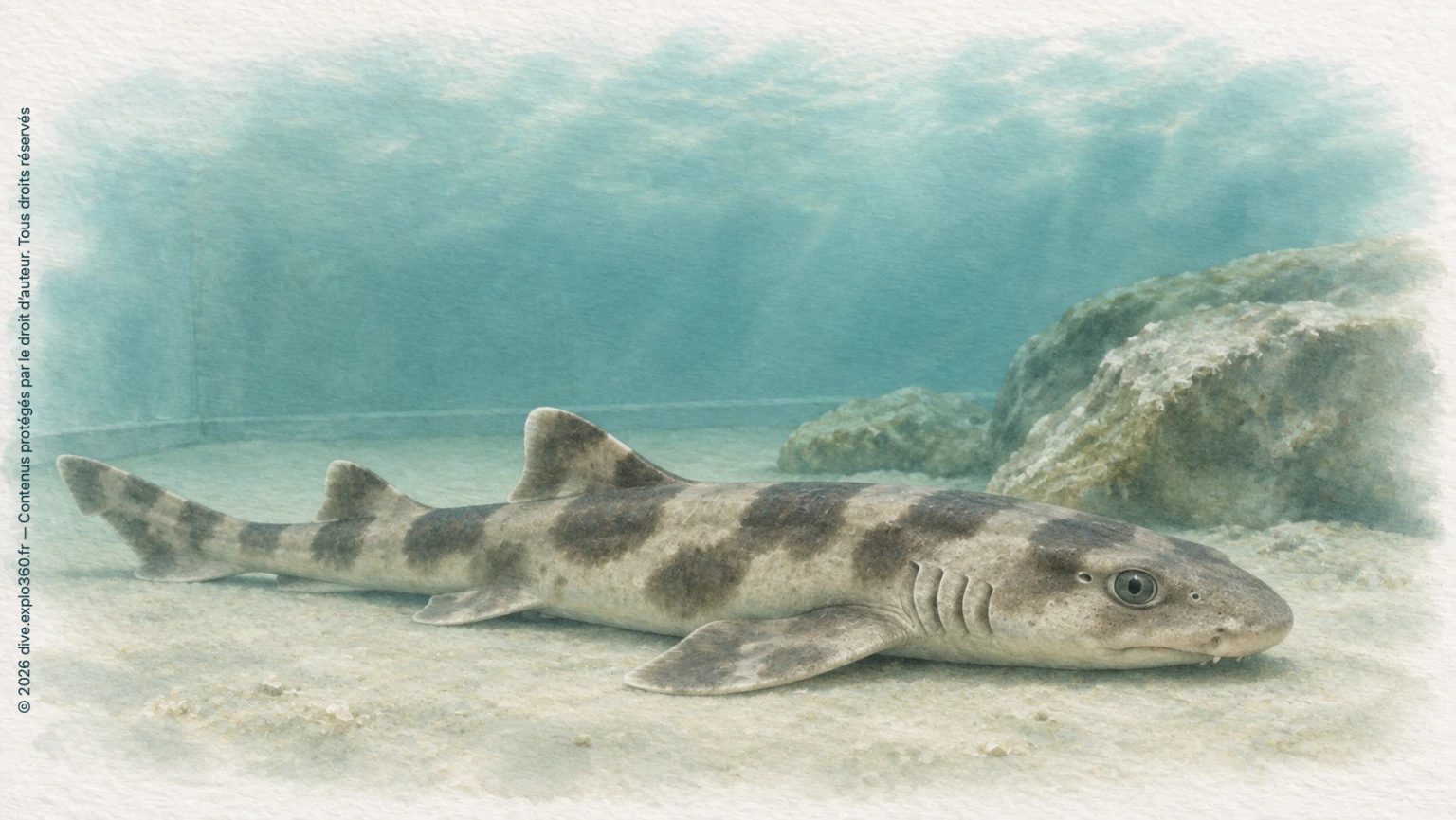
Gills need moving water
Some sharks use muscles in the mouth and throat to pump water over their gills, so they can breathe without swimming. Others get most of that flow by swimming forwards.
GO FURTHER WITH AMIGANSEAU
Continue reading
Discover full species guides, in-depth content and interactive tools available with your licence.
Dive.Explo360 is an independent, self-funded nonprofit. Every licence helps us create new content, improve our teaching tools and keep some of our resources free and ad-free.
Choose a licence that suits your needs for personal, educational or professional use.
Open-access resources remain available without a subscription.