


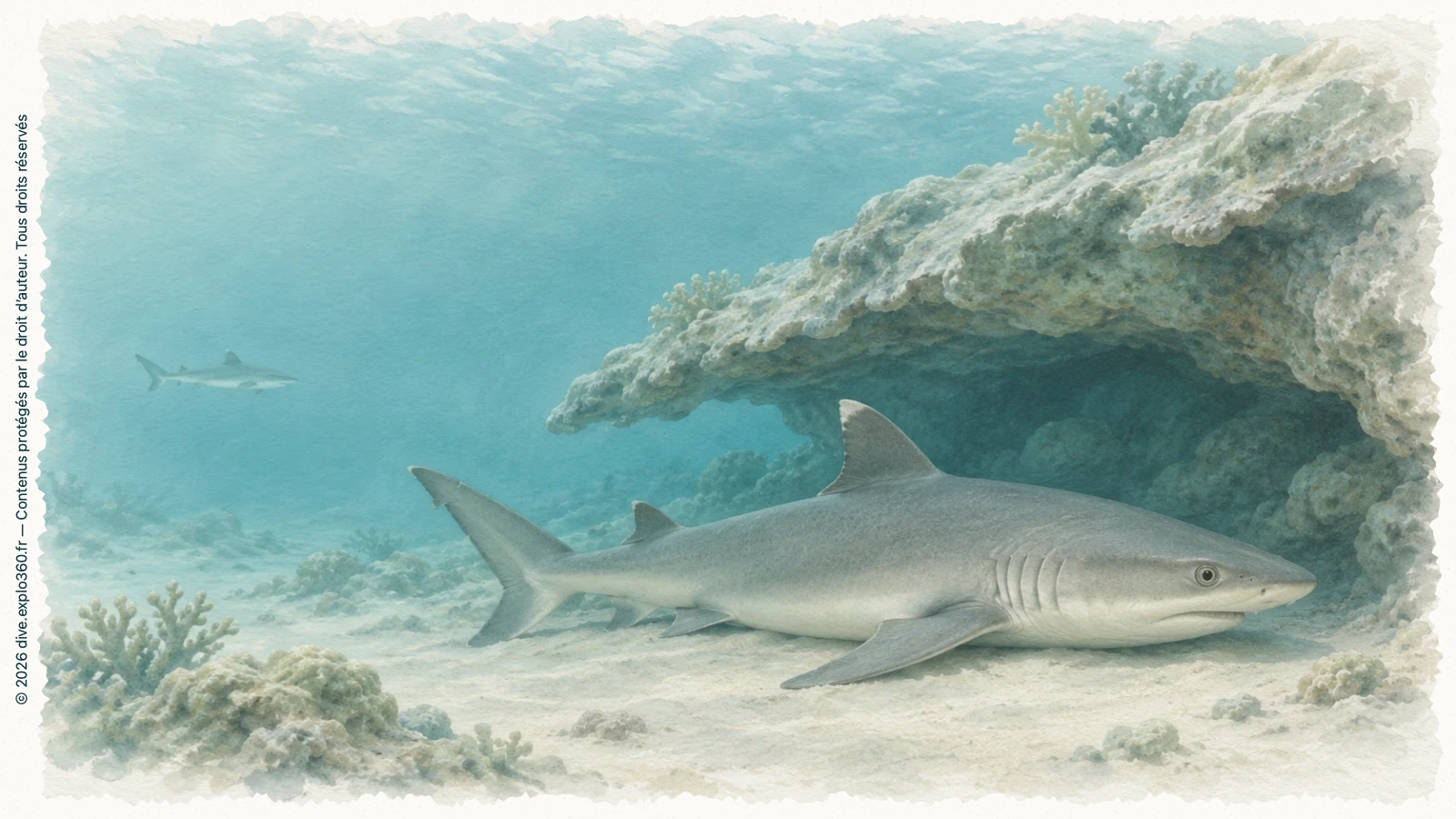
A shark can rest in a cave

A whitetip reef shark can settle on the seabed and keep water flowing over its gills without swimming.
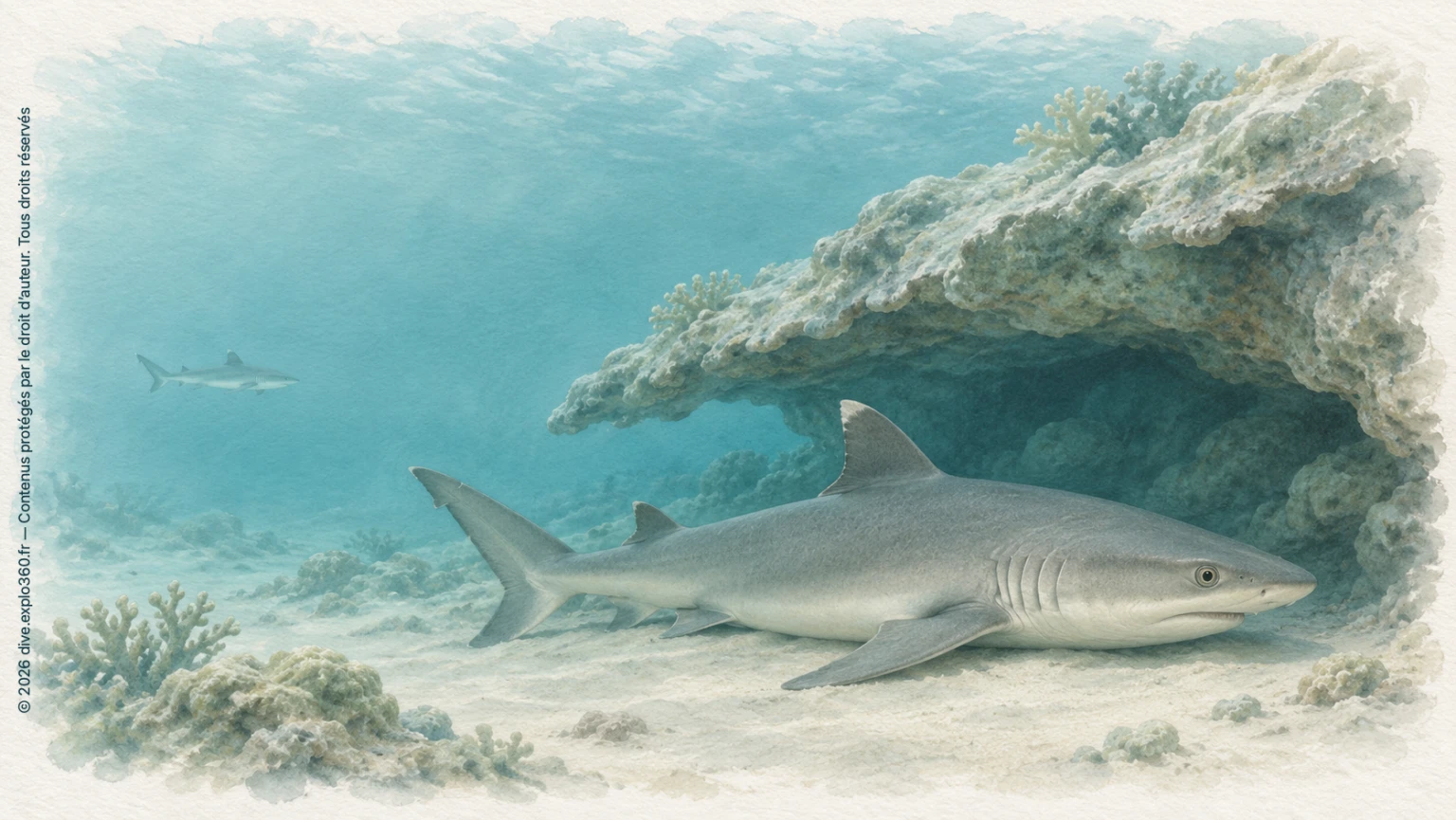
A motionless shark. A shark’s posture alone cannot tell us whether it is asleep.
A shark’s posture alone cannot tell us whether it is asleep. © dive.explo360.fr — All rights reserved. Reproduction requires permission.

How hard is it to rouse a shark?

Researchers compare how readily a shark responds when it is active and when it has been still for a while. If it takes a stronger stimulus to get a reaction, the shark may be asleep.
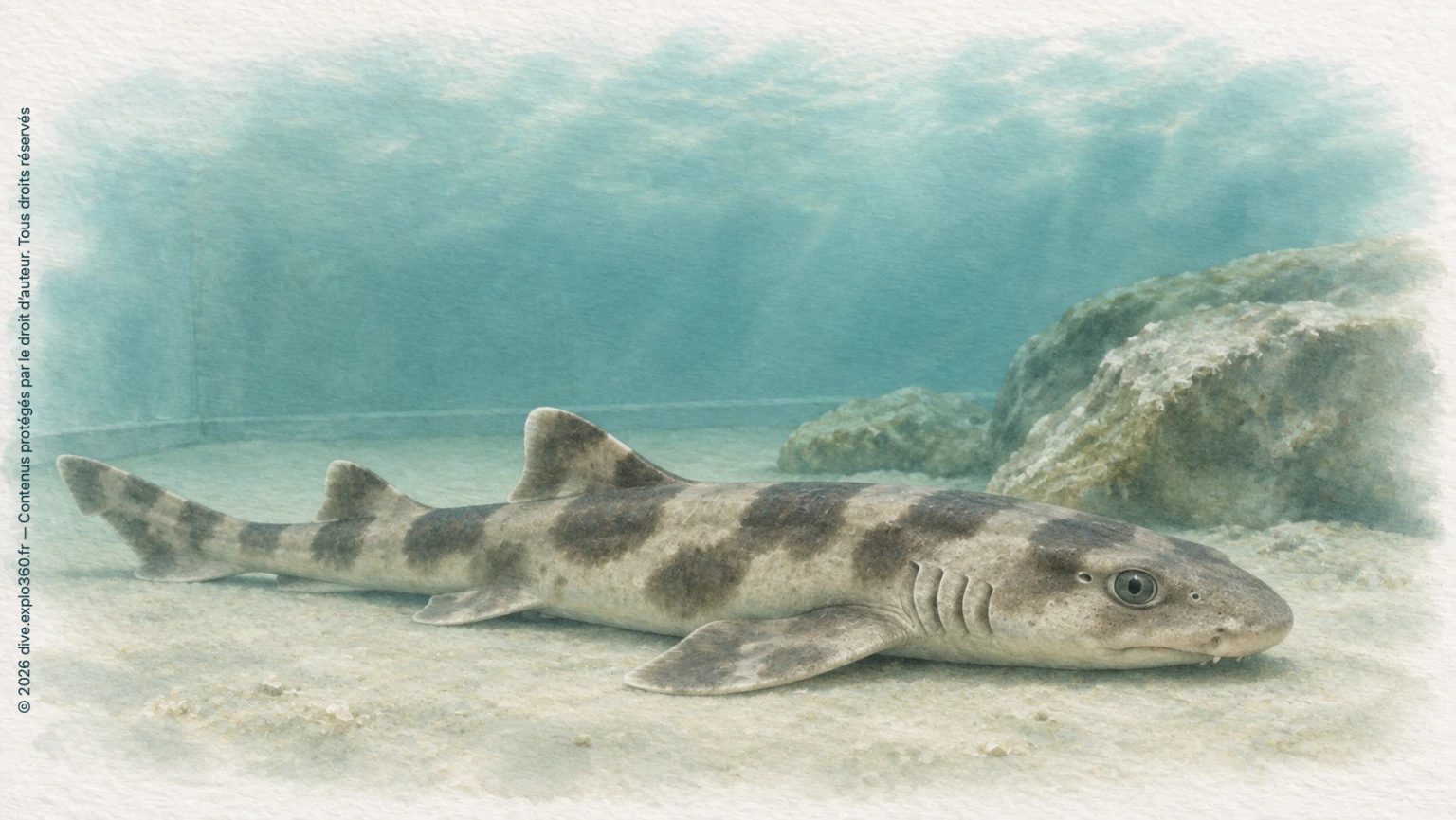
How can we recognise sleep? Researchers compare responsiveness, posture and oxygen uptake.
Researchers look at the shark’s posture and how it reacts. In the draughtsboard shark, responsiveness, posture and oxygen use help distinguish states of rest. © dive.explo360.fr — All rights reserved. Reproduction requires permission.

Gills need moving water

Some sharks use muscles in the mouth and throat to pump water over their gills, so they can breathe without swimming. Others get most of that flow by swimming forwards.
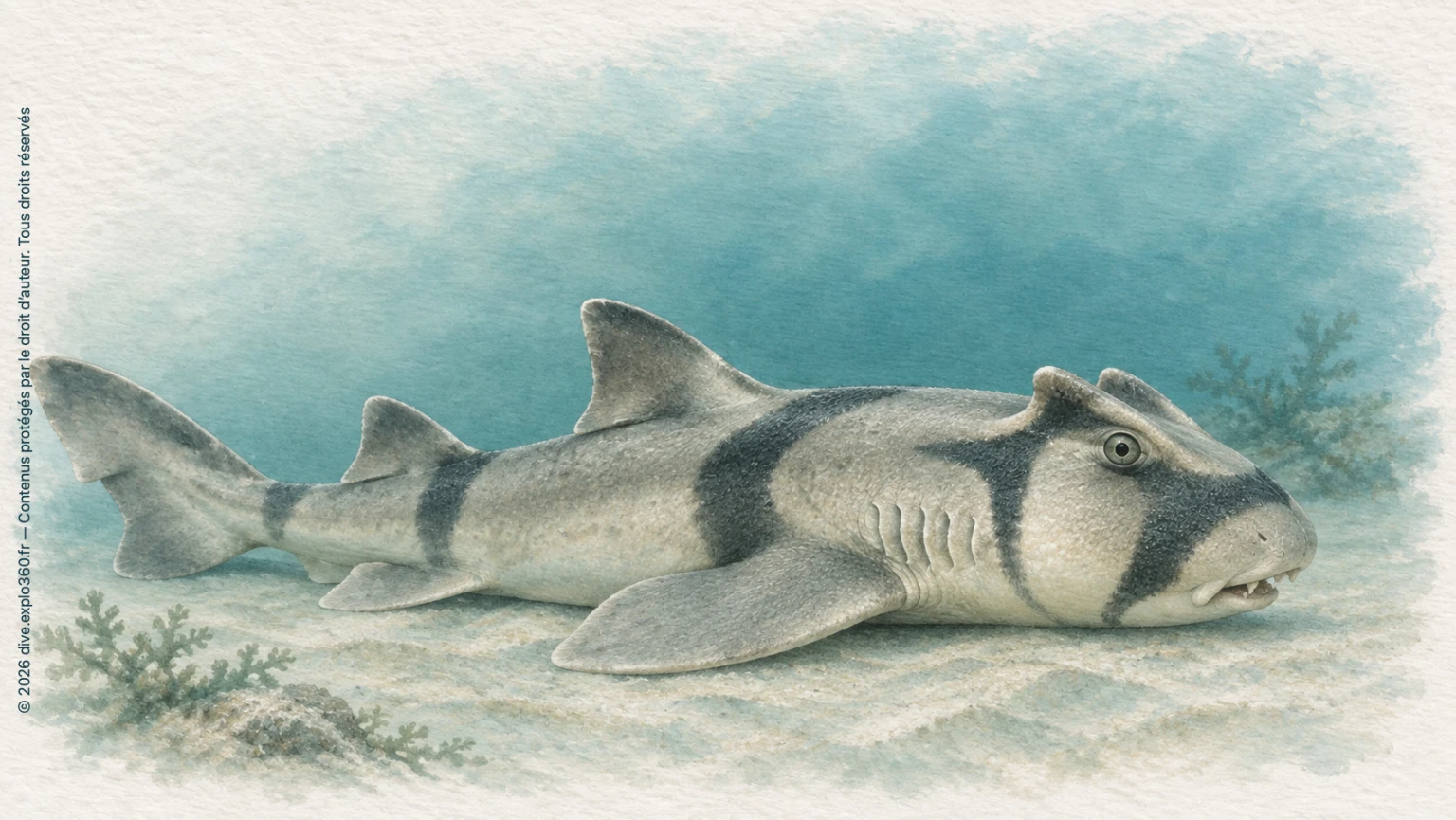
Breathing while still. Some sharks pump water using movements of the mouth and throat.
Some sharks move water over their gills even when they are not swimming. Mouth and pharynx movements allow active ventilation in some species. © dive.explo360.fr — All rights reserved. Reproduction requires permission.

GO FURTHER WITH AMIGANSEAU

Continue reading

Discover full species guides, in-depth content and interactive tools available with your licence.

Your subscription helps preserve our independence.

Dive.Explo360 is an independent, self-funded nonprofit. Every licence helps us create new content, improve our teaching tools and keep some of our resources free and ad-free.

Licences from €80 per year

Choose a licence that suits your needs for personal, educational or professional use.

Open-access resources remain available without a subscription.

Sources

Research on shark sleep, rest and ventilation.

Kelly, M. L., Collin, S. P., Hemmi, J. M. & Lesku, J. A. (2020). Evidence for Sleep in Sharks and Rays: Behavioural, Physiological, and Evolutionary Considerations. Brain, Behavior and Evolution, 94(1–4), 37–50. Synthèse sur le sommeil des requins et des raies, les modes de ventilation et les incertitudes concernant les espèces qui nagent continuellement.doi.orgKelly, M. L. et al. (2020). Behavioural sleep in two species of buccal pumping sharks (Heterodontus portusjacksoni and Cephaloscyllium isabellum). Journal of Sleep Research. Démonstration d'une diminution de la réactivité pendant les périodes prolongées d'inactivité.pubmed.ncbi.nlm.nih.govKelly, M. L. et al. (2022). Energy conservation characterizes sleep in sharks. Biology Letters, 18(3), 20210259. Mesures de consommation d'oxygène, de posture et d'état des yeux chez le requin damier.doi.orgLesku, J. A. et al. (2024). An electrophysiological correlate of sleep in a shark. Journal of Experimental Zoology Part A, 341(10), 1121–1129. Mesures du tonus musculaire et difficultés d'interprétation des enregistrements cérébraux pendant le sommeil.doi.orgJust keep swimming? Observations of resting behavior in gray reef sharks Carcharhinus amblyrhynchos (Bleeker, 1856) (2023). Journal of Fish Biology. Observations de requins gris de récif immobiles sous des surplombs aux Seychelles.doi.orgDiverse Activity Rhythms in Sharks (Elasmobranchii) (2020). Journal of Biological Rhythms. Comparaison des rythmes d'activité et des modes ventilatoires de plusieurs espèces, dont certaines nagent continuellement.doi.org