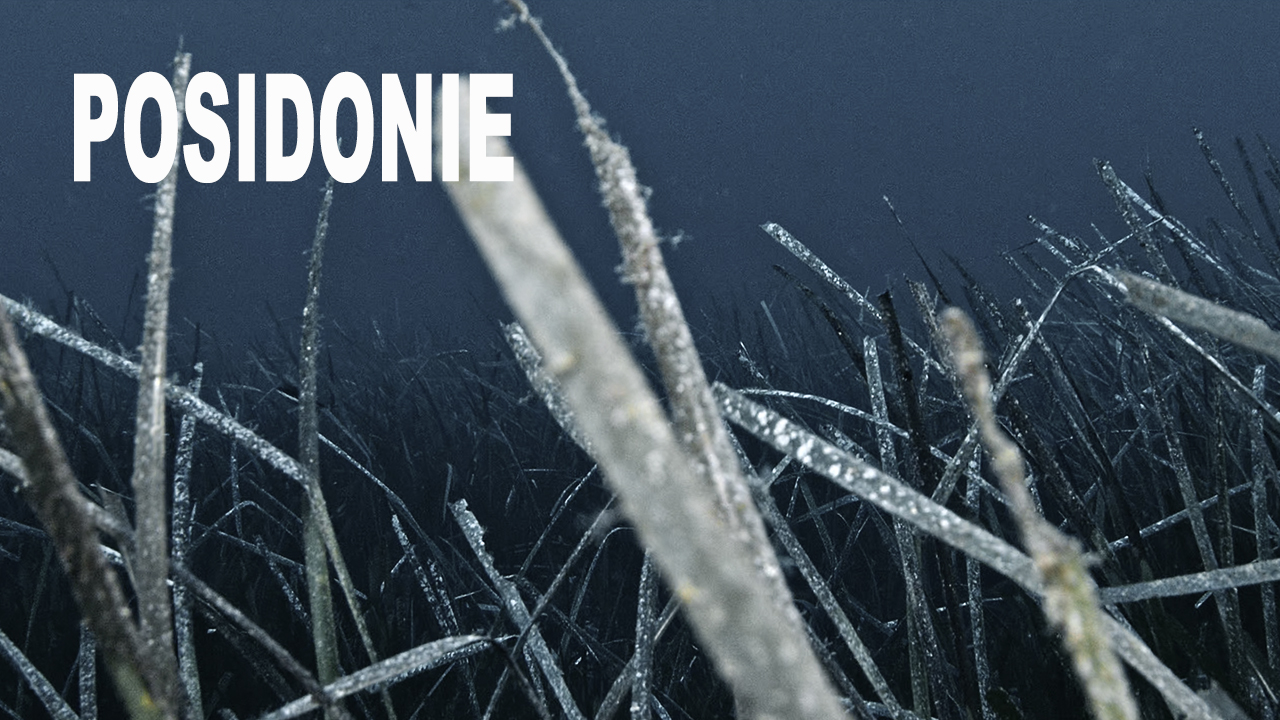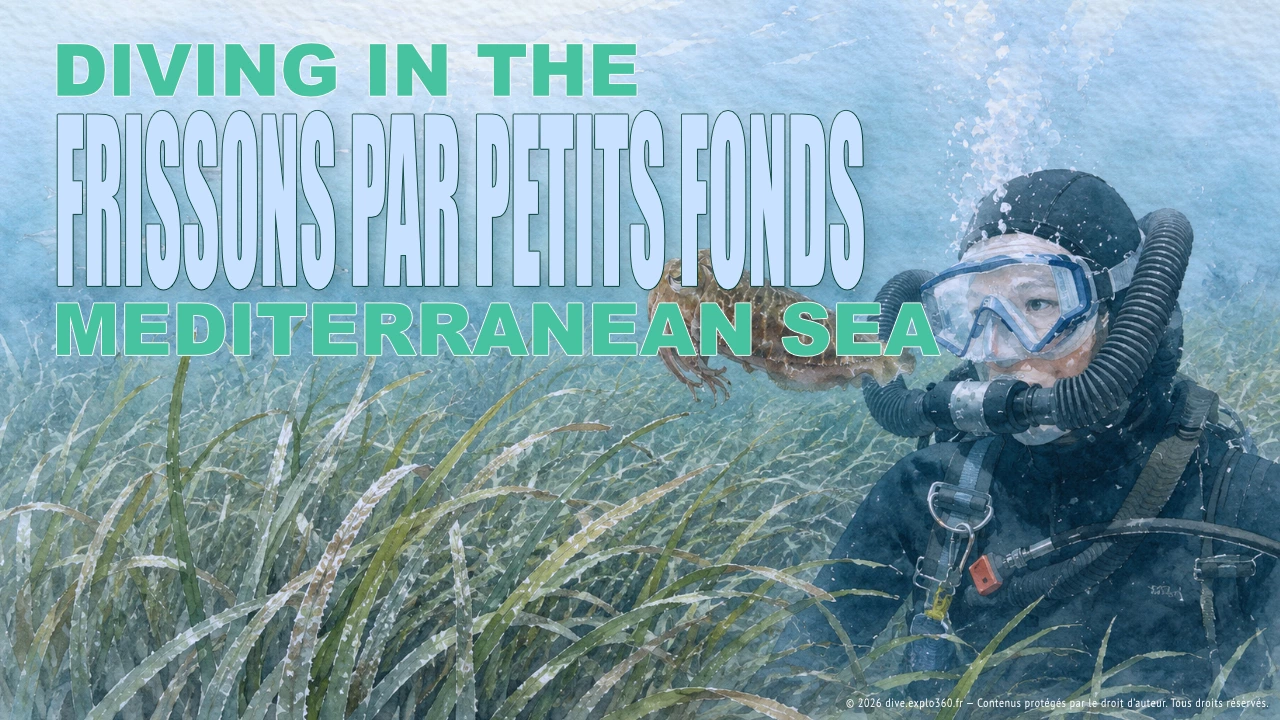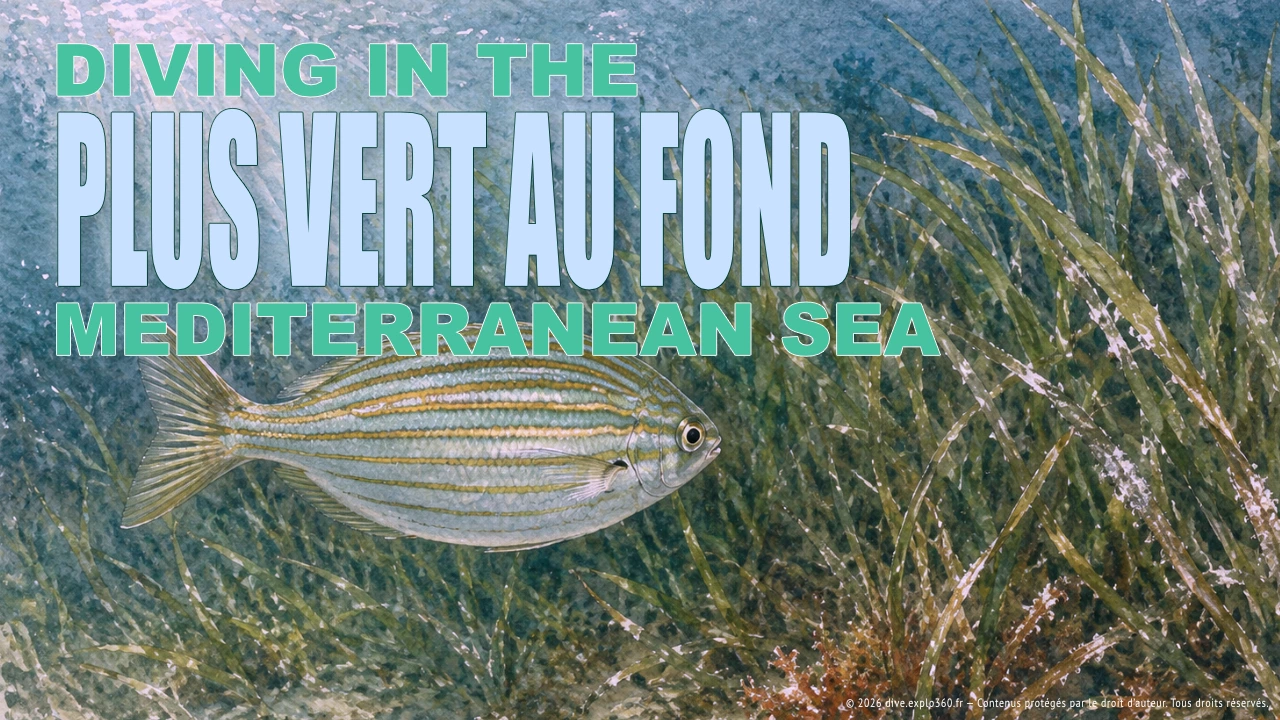

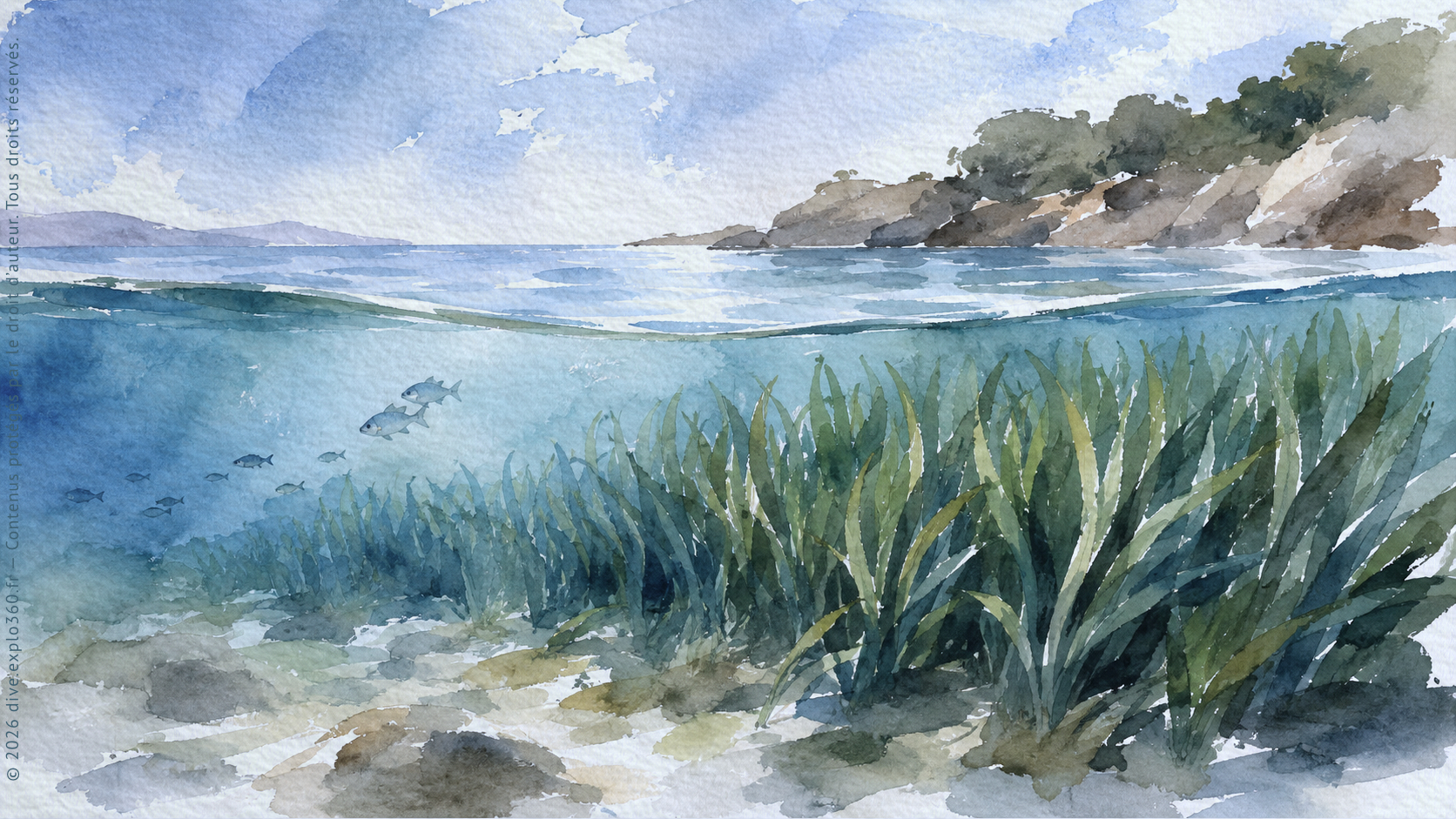
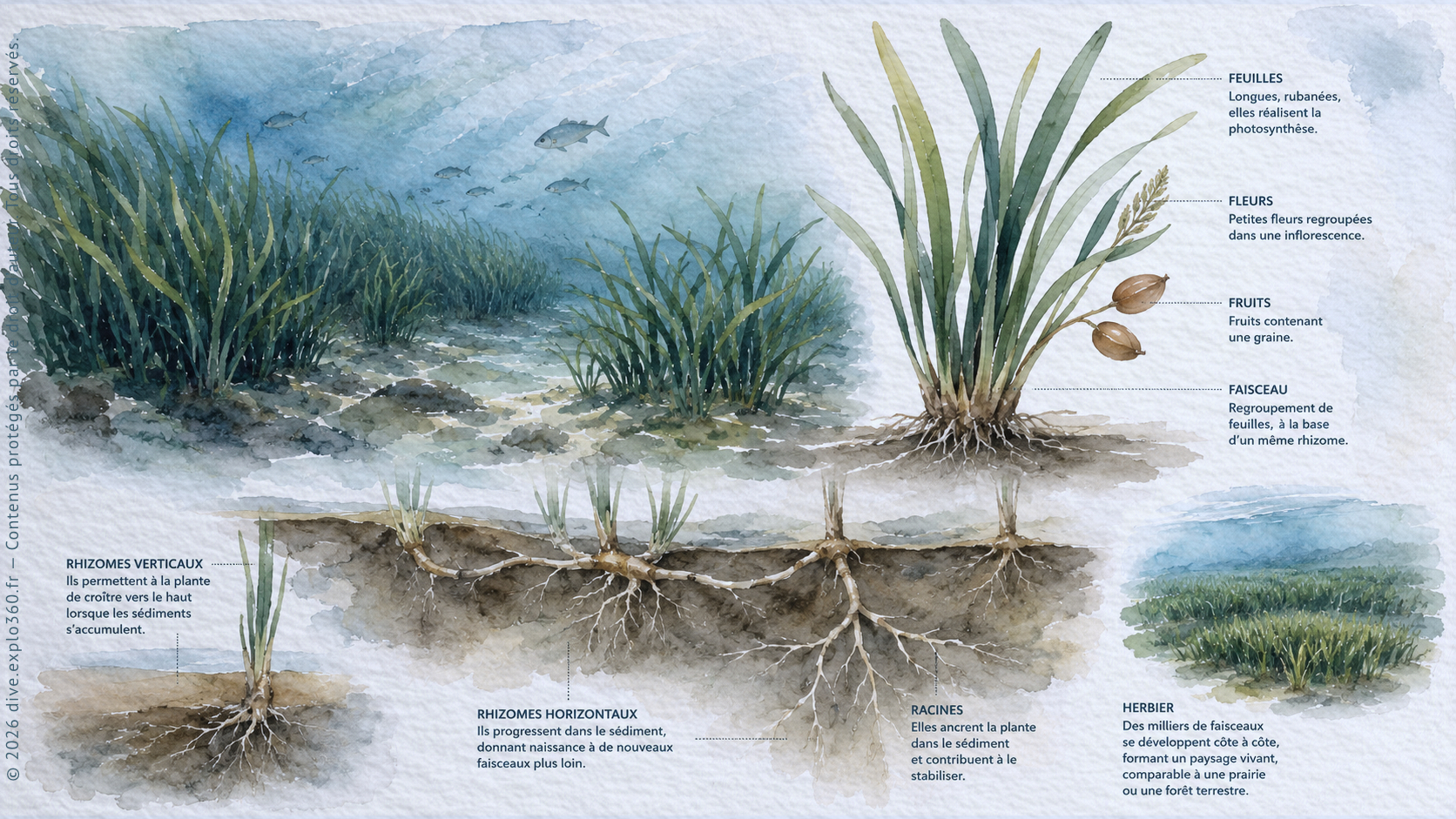
Posidonia (Posidonia oceanica) is a marine plant endemic to the Mediterranean. Unlike algae, it has true roots, rhizomes, leaves, flowers and fruits.
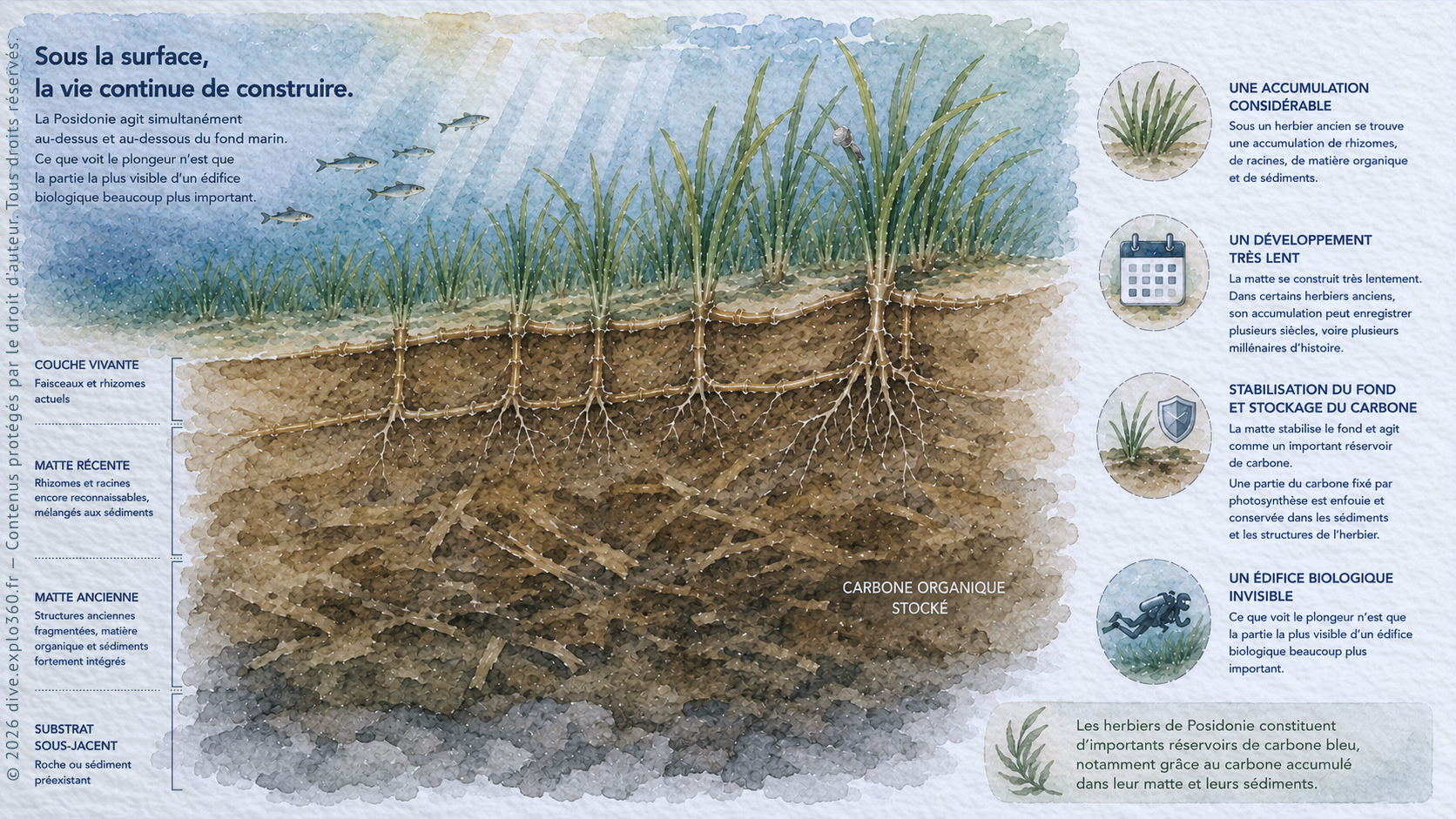
Its long leaves are grouped into shoots. Beneath the sediment, rhizomes grow horizontally or vertically, allowing the plant to gradually occupy the seabed.
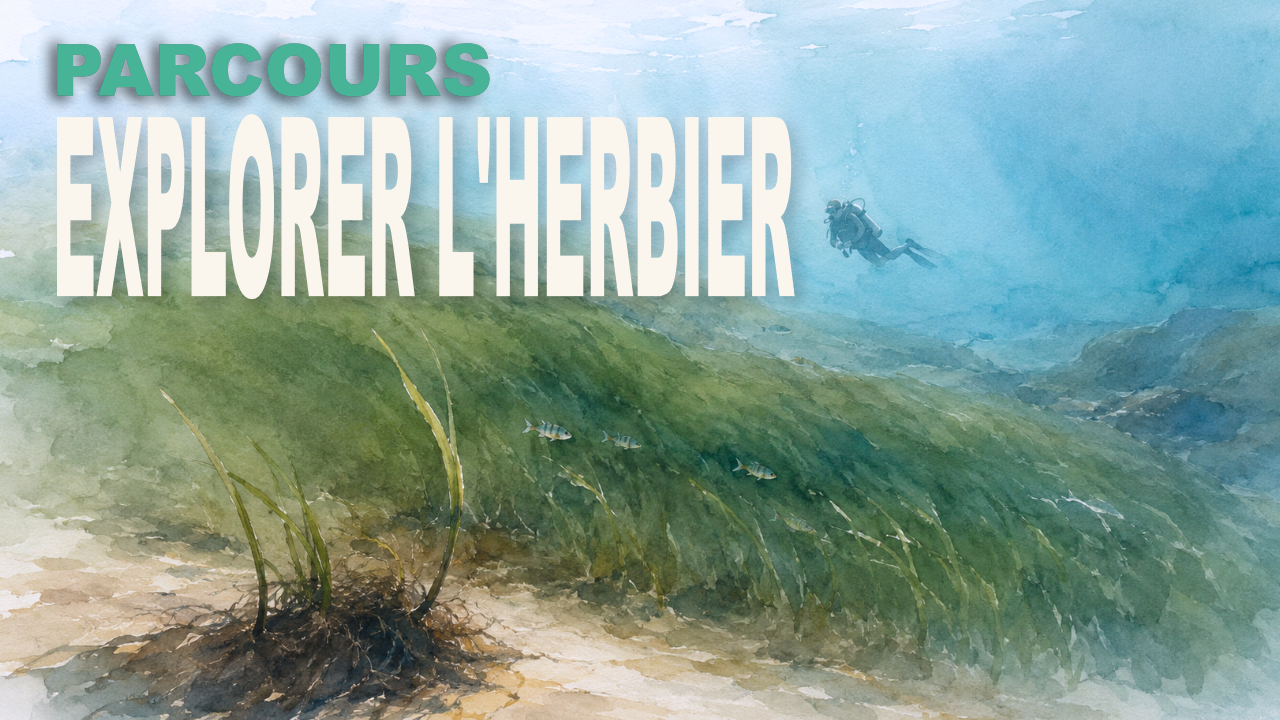
When thousands of shoots develop side by side, they form a meadow, comparable in some of its functions to a grassland or forest on land.
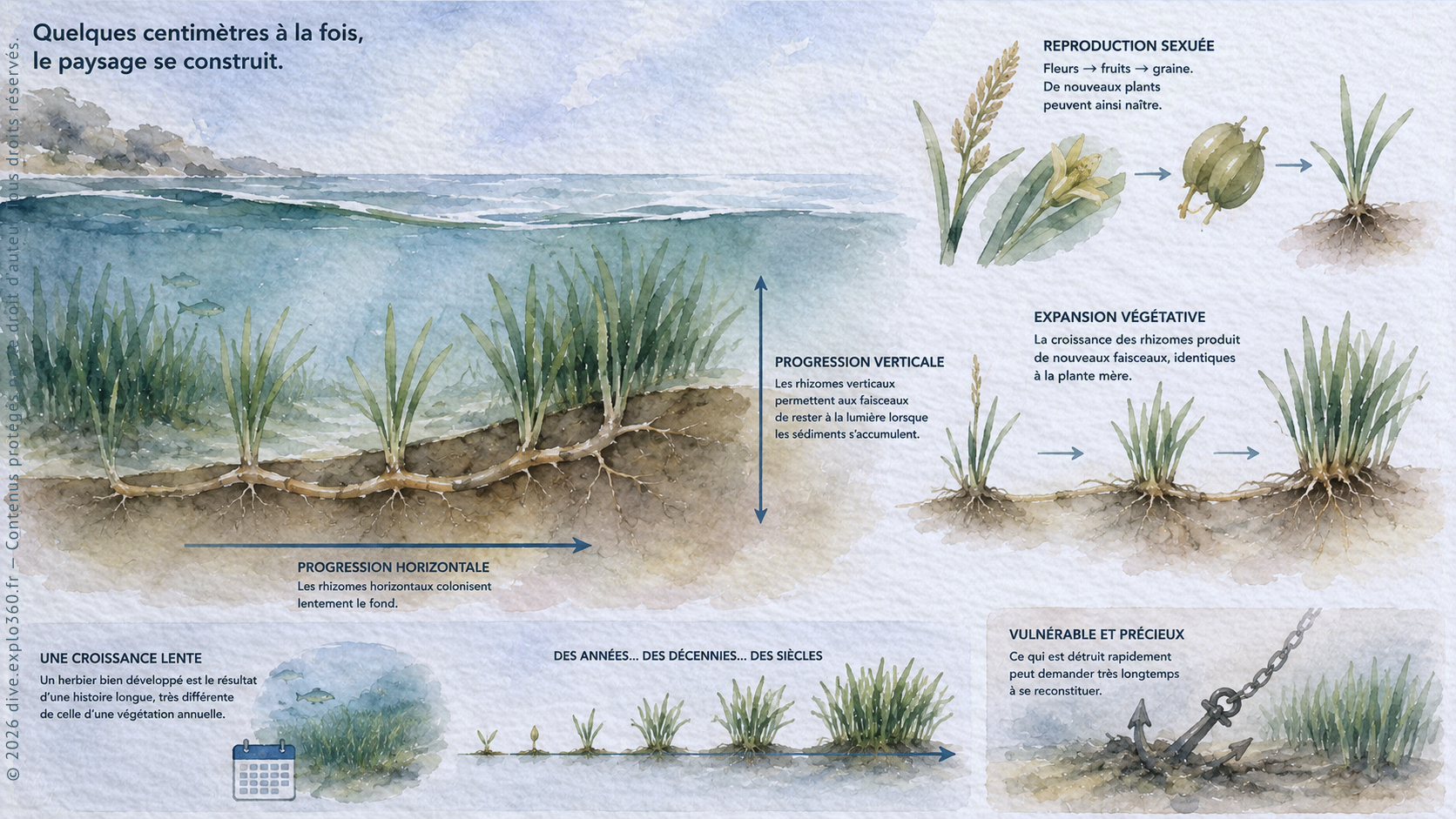
Horizontal rhizomes allow the plant to gradually colonise the seabed. Vertical rhizomes allow shoots to keep growing as sediment accumulates.
This progress is slow. A well-developed meadow therefore results from a history spanning decades or centuries.
This slow growth also explains its vulnerability: an area damaged quickly may take a very long time to recover.
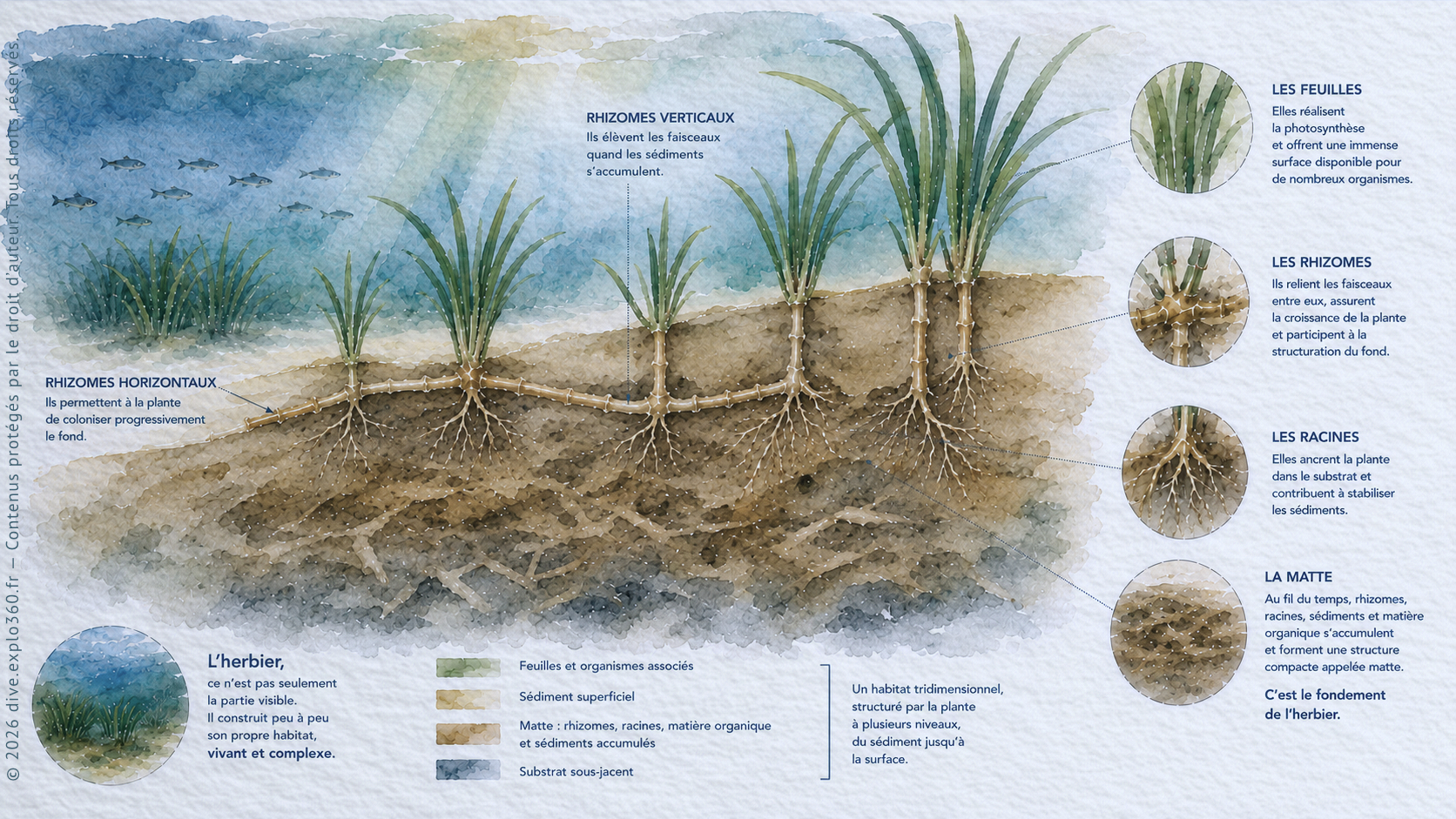
The leaves carry out photosynthesis and offer a large surface area for many organisms.
The rhizomes connect shoots, enable the plant's growth and help structure the seabed.
The roots anchor the plant and help stabilise sediment.
The matte results from the gradual accumulation of rhizomes, roots, sediment and organic matter.
The meadow therefore gradually builds its own habitat.
This structure develops over long periods. It helps stabilise the seabed and also forms an important carbon reservoir.
Some of the carbon fixed through photosynthesis can be buried and preserved within this structure and the associated sediment.
The visible part of the meadow therefore represents only part of a much larger biological structure.
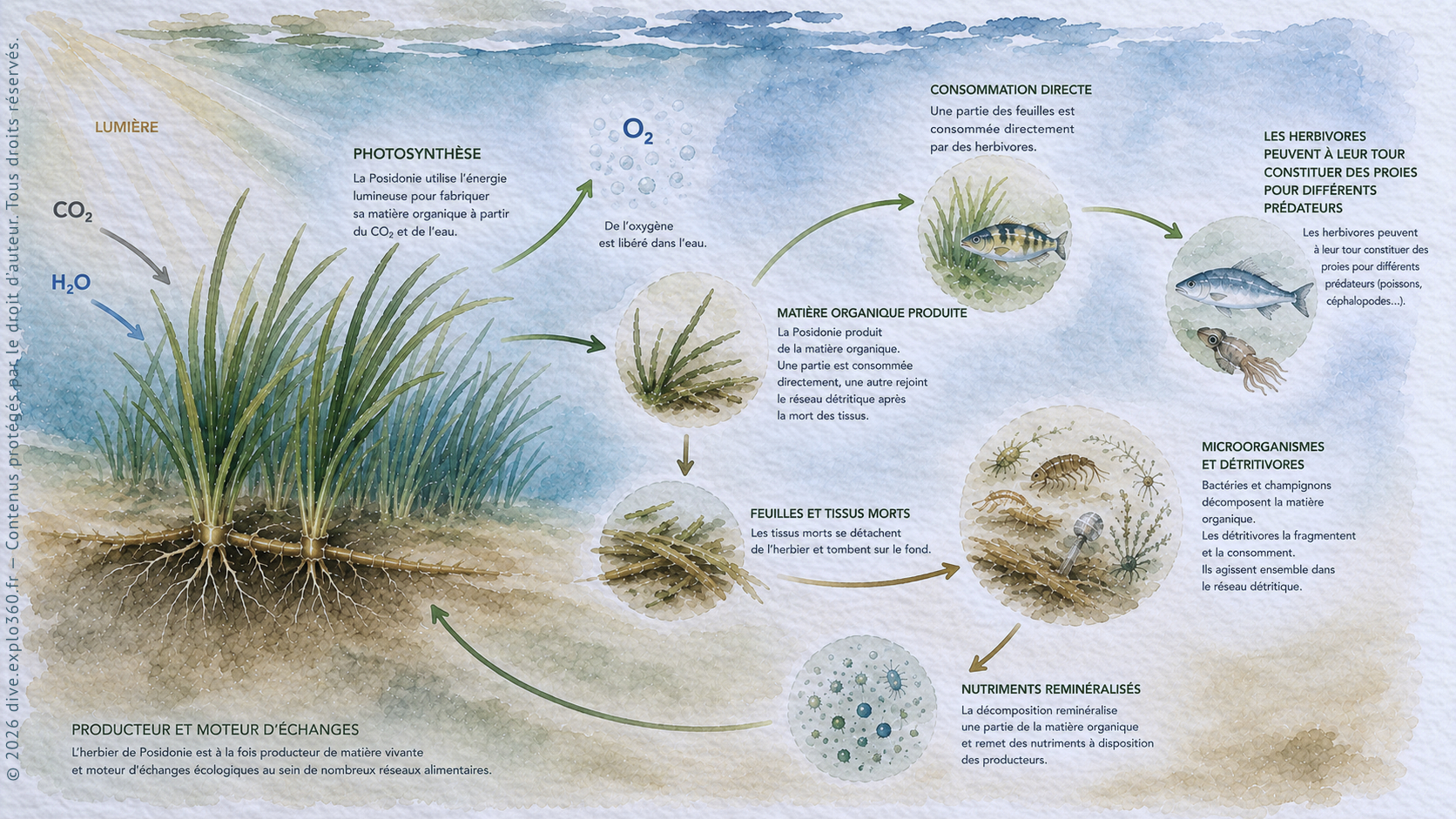
The matter produced then enters various food webs, either directly or after decomposition.
Dead leaves notably feed a detrital food web involving microorganisms and detritus-feeding animals.
The meadow is therefore both a producer of organic matter and a driver of many ecological exchanges.
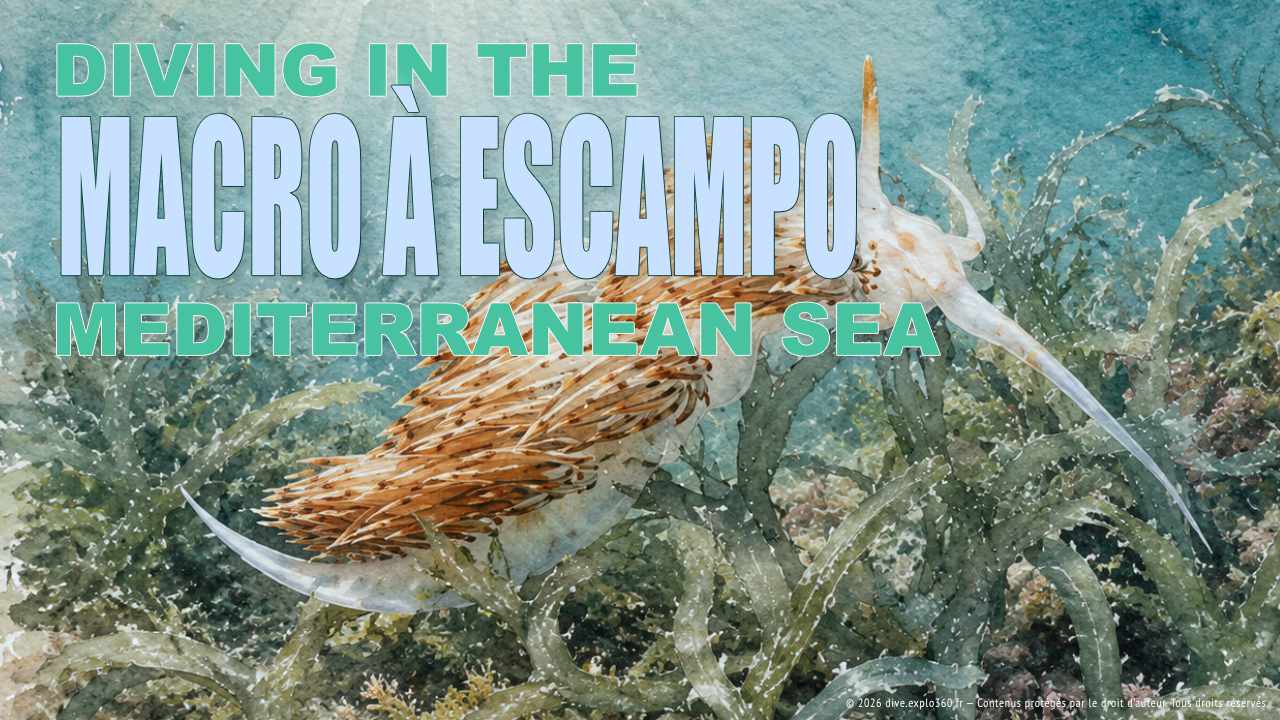
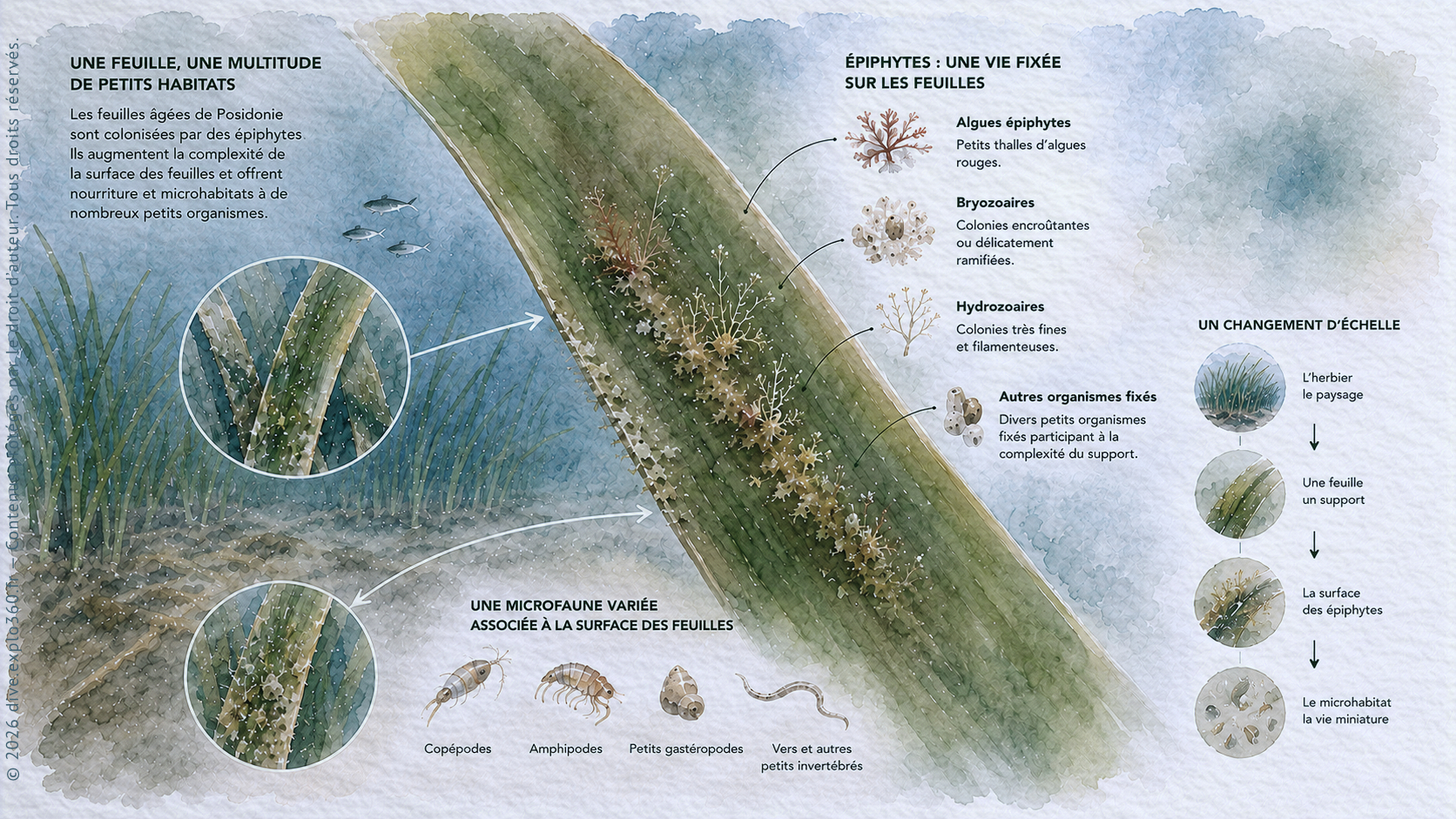
These organisms in turn attract a varied microfauna.
A single leaf thus becomes a living substrate.
At different scales, the meadow consists of a multitude of small, overlapping habitats.
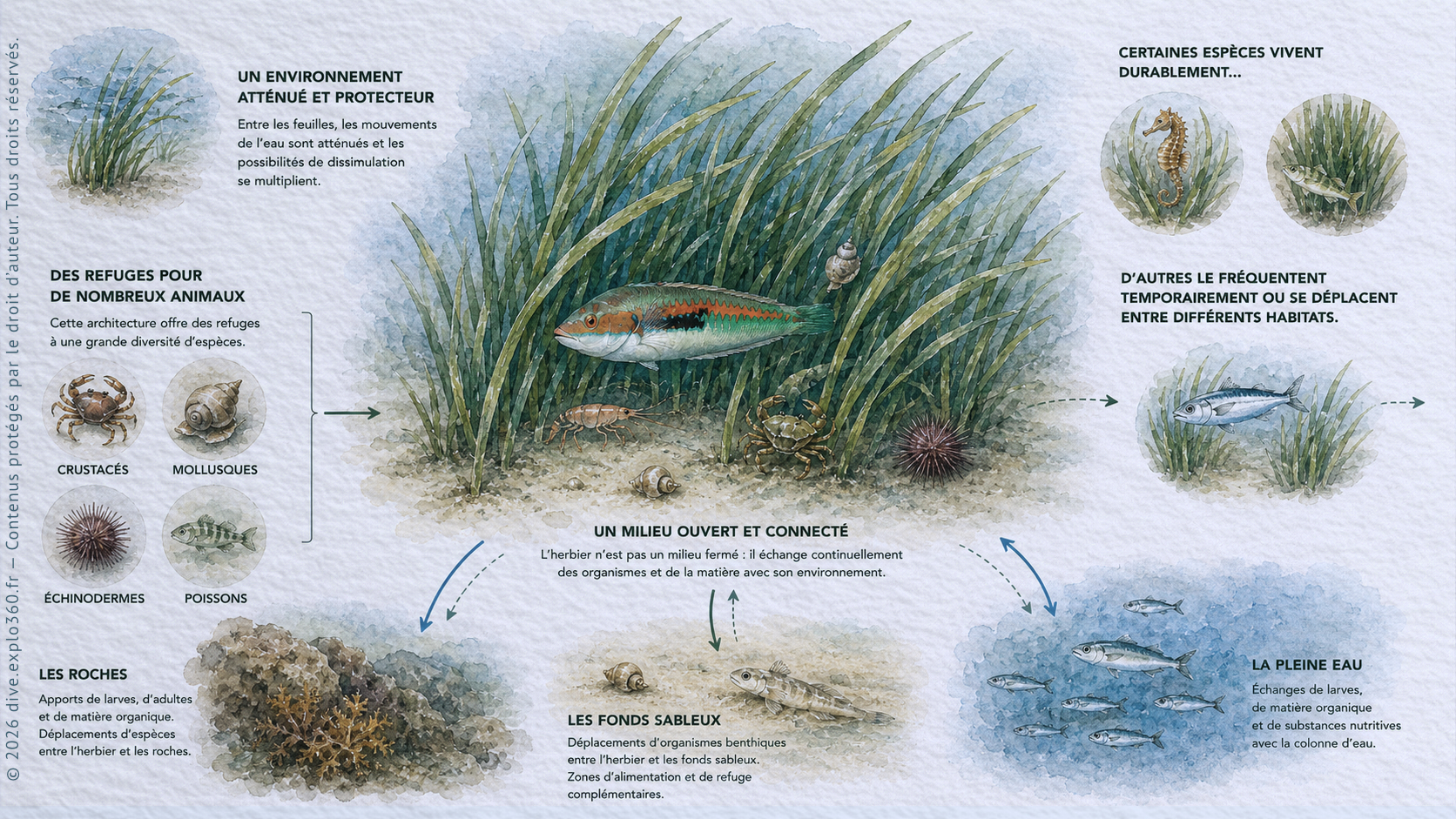
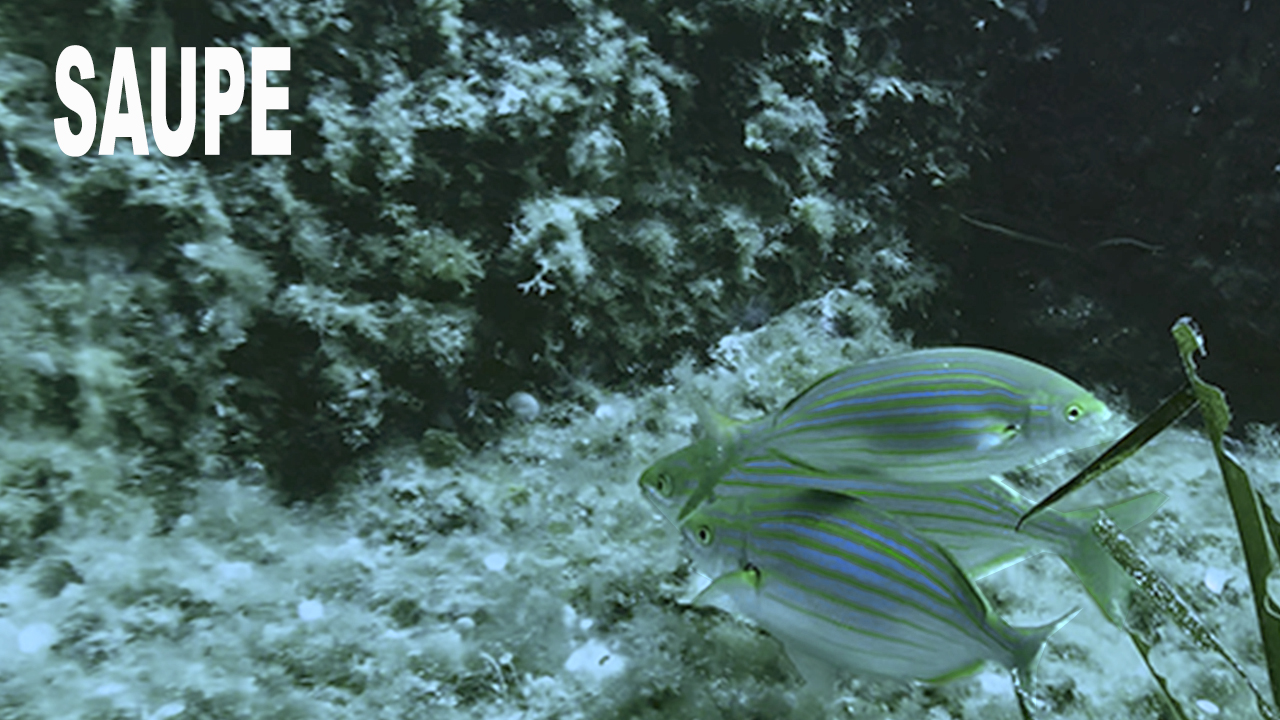
Crustaceans, molluscs, echinoderms and fish use this environment to shelter, feed or hunt.
Some species live there long term; others merely pass through.
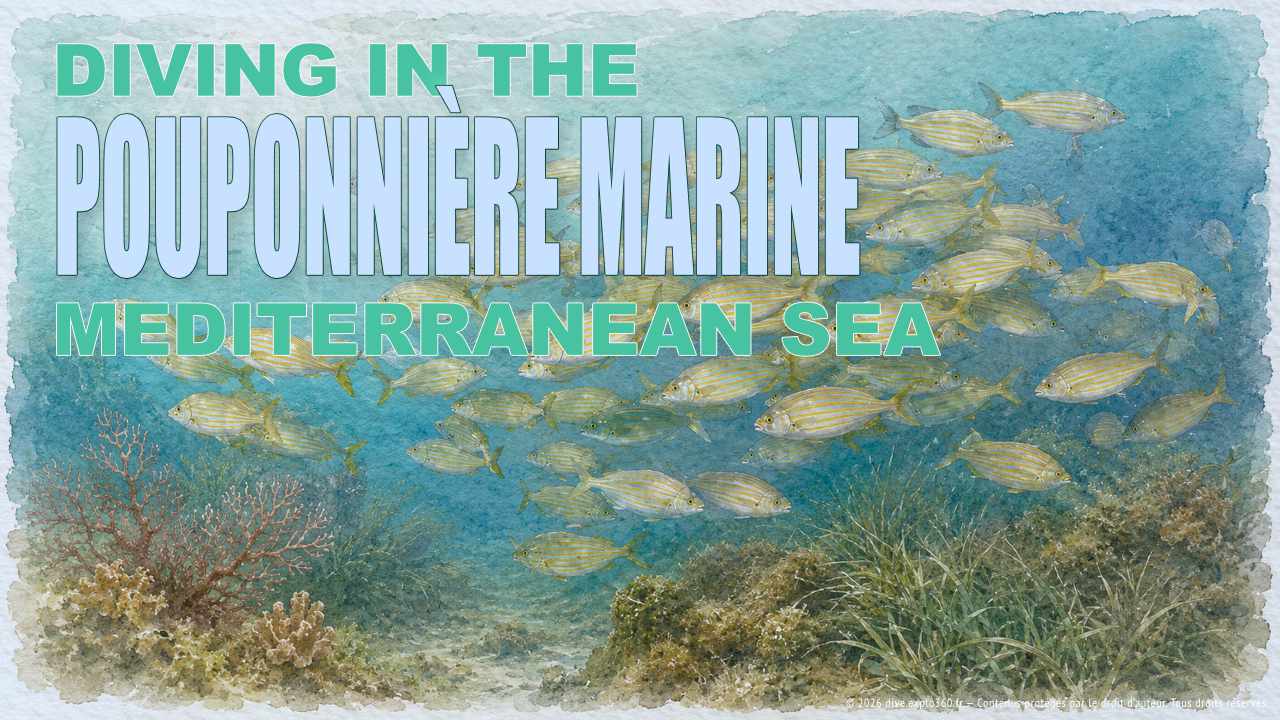
The meadow therefore remains an open habitat, connected to rocky seabeds, sandy areas and open water.
AMIGANSEAU CONTENT
The rest of this article is for subscribers
Log in with your AMIGANSEAU licence to continue reading.
All active AMIGANSEAU licences give access to the full article.Explore the same world