MAERL
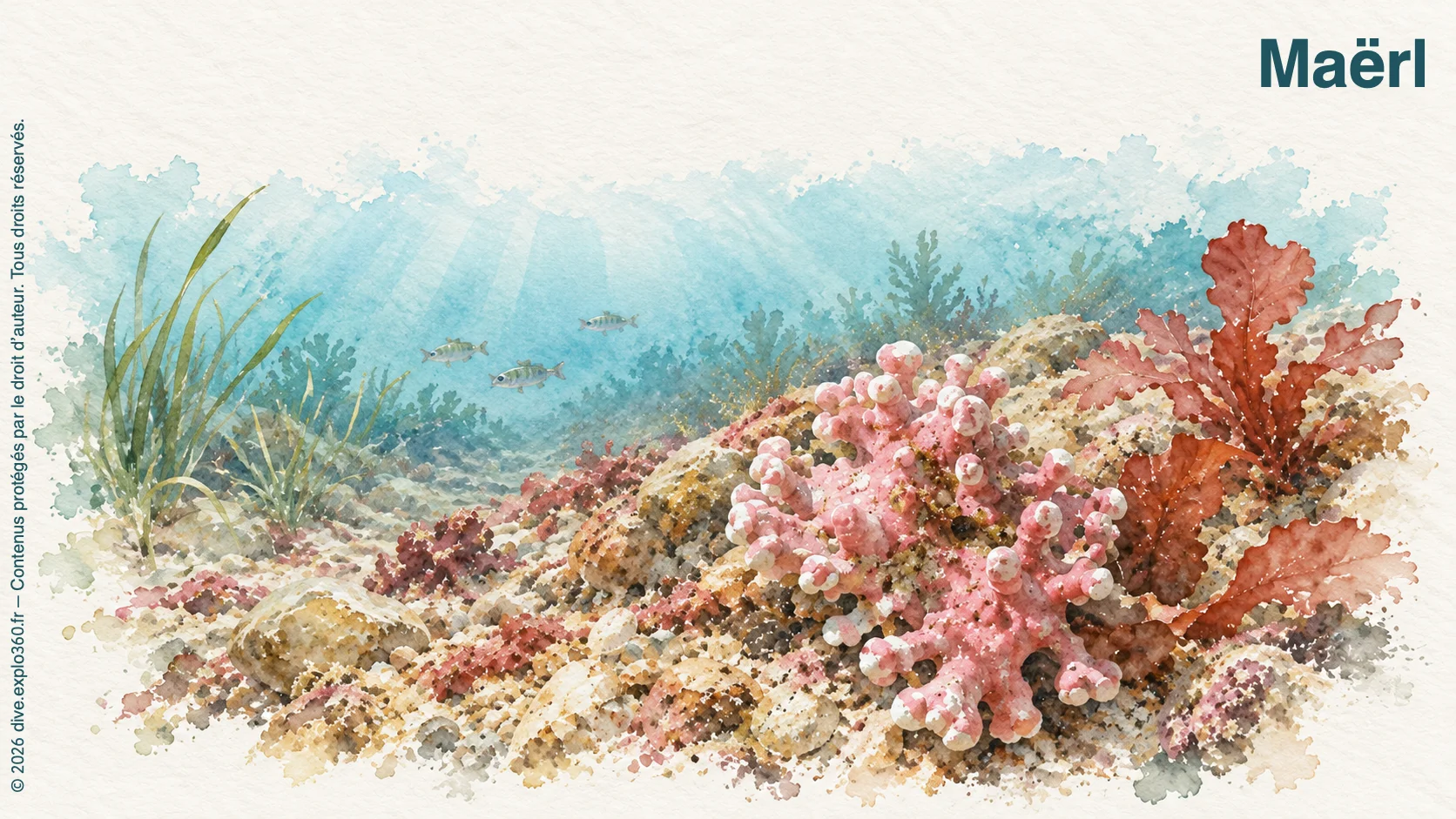
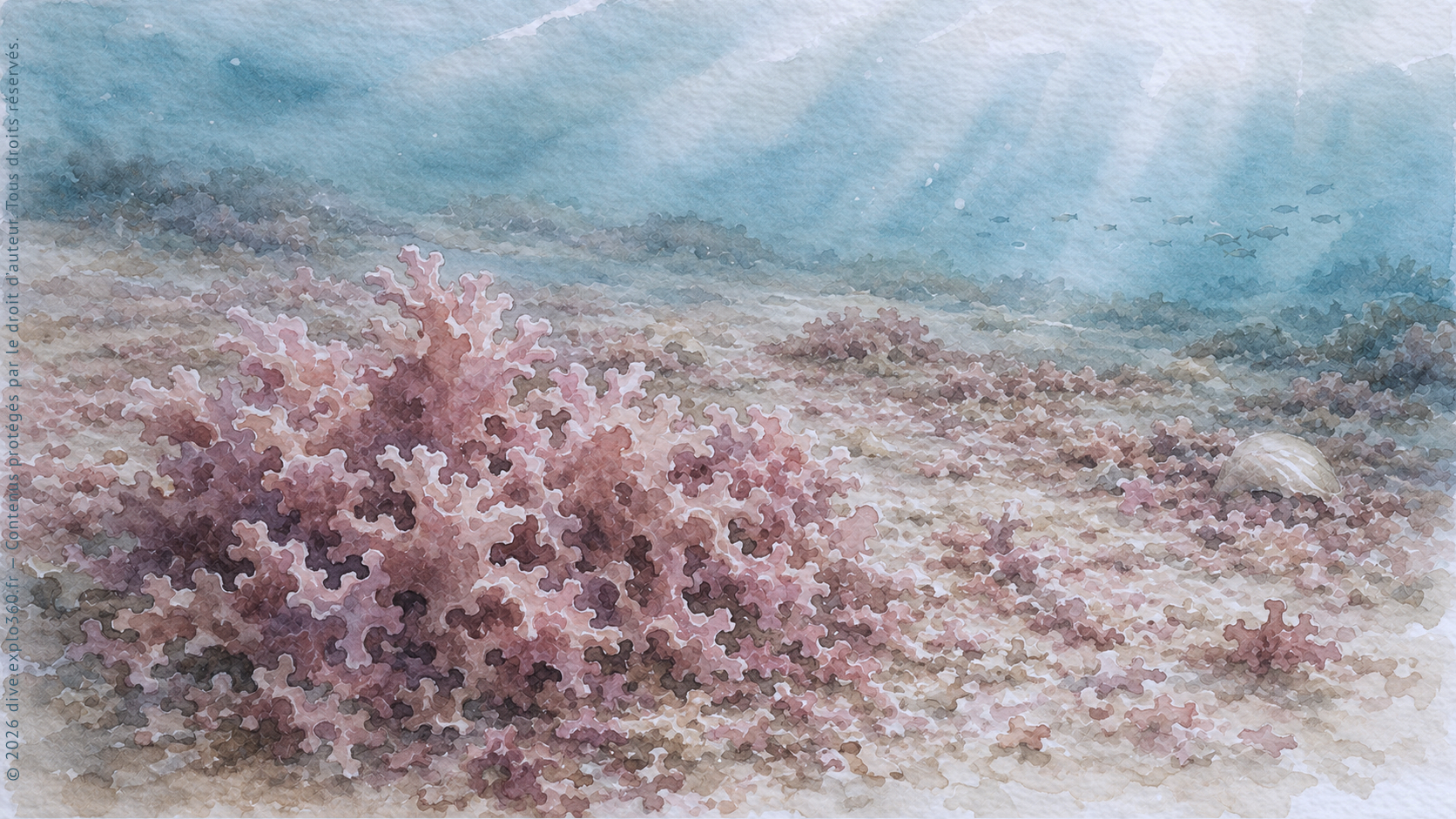
A maerl bed is a marine habitat built by algae.
It is formed by calcareous red algae that live freely on the seabed. They are not attached to rocks.
As they grow, they form small branches that pile up.
Many little spaces appear between these branches, where animals can hide.
As the living algae grow, they make a home for other animals.
A CARPET OF CALCAREOUS ALGAE
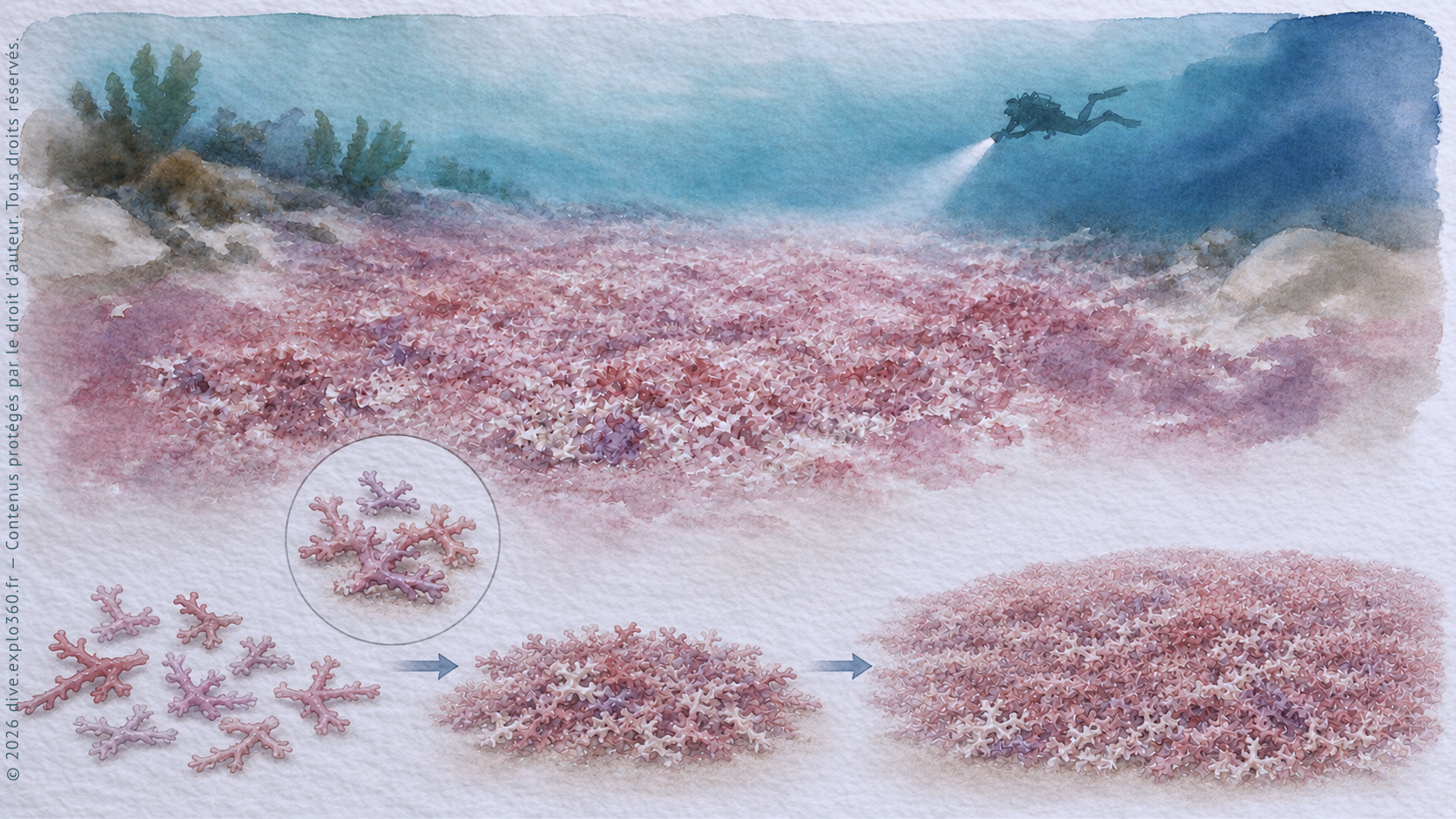
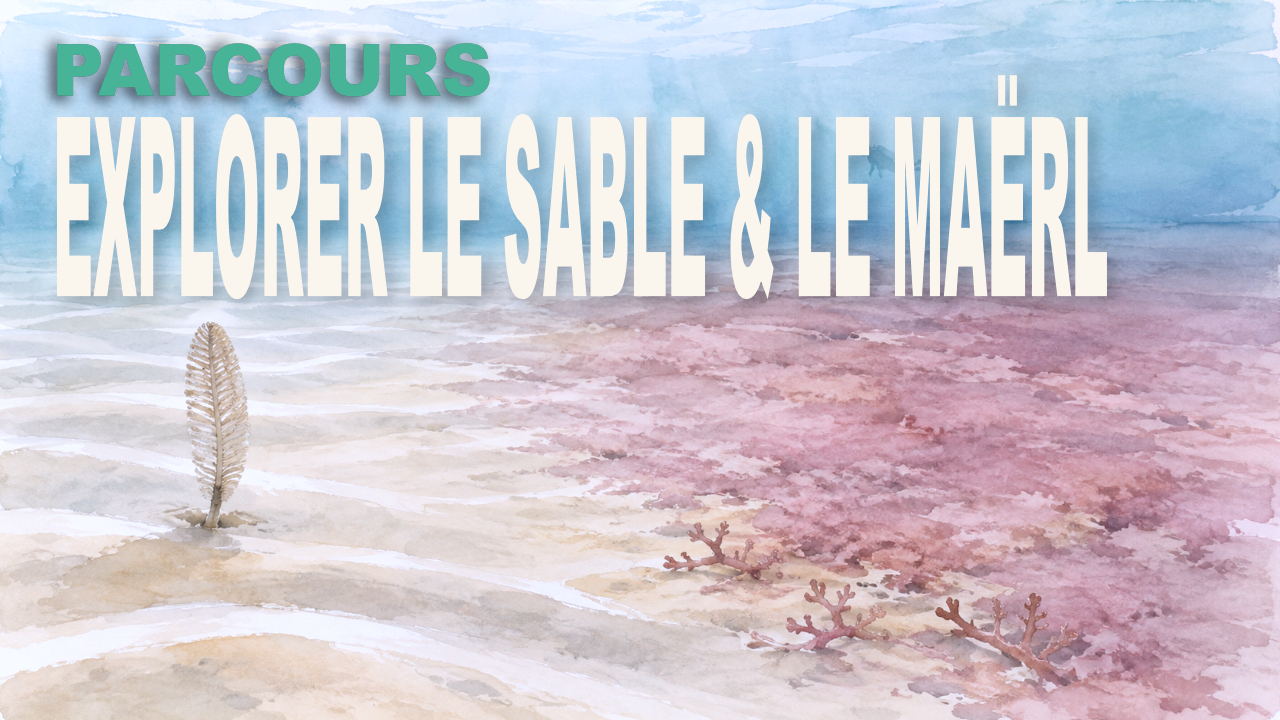
Underwater, maerl can form a surprising pink, red, purple or whitish carpet.
At first glance, you might think it is made of small pebbles.
Yet some of these pieces are calcareous red algae.
They live freely on the seabed and are not attached to a rock.
As they grow and accumulate, they can cover large areas.
AN ALGA THAT LOOKS LIKE A STONE
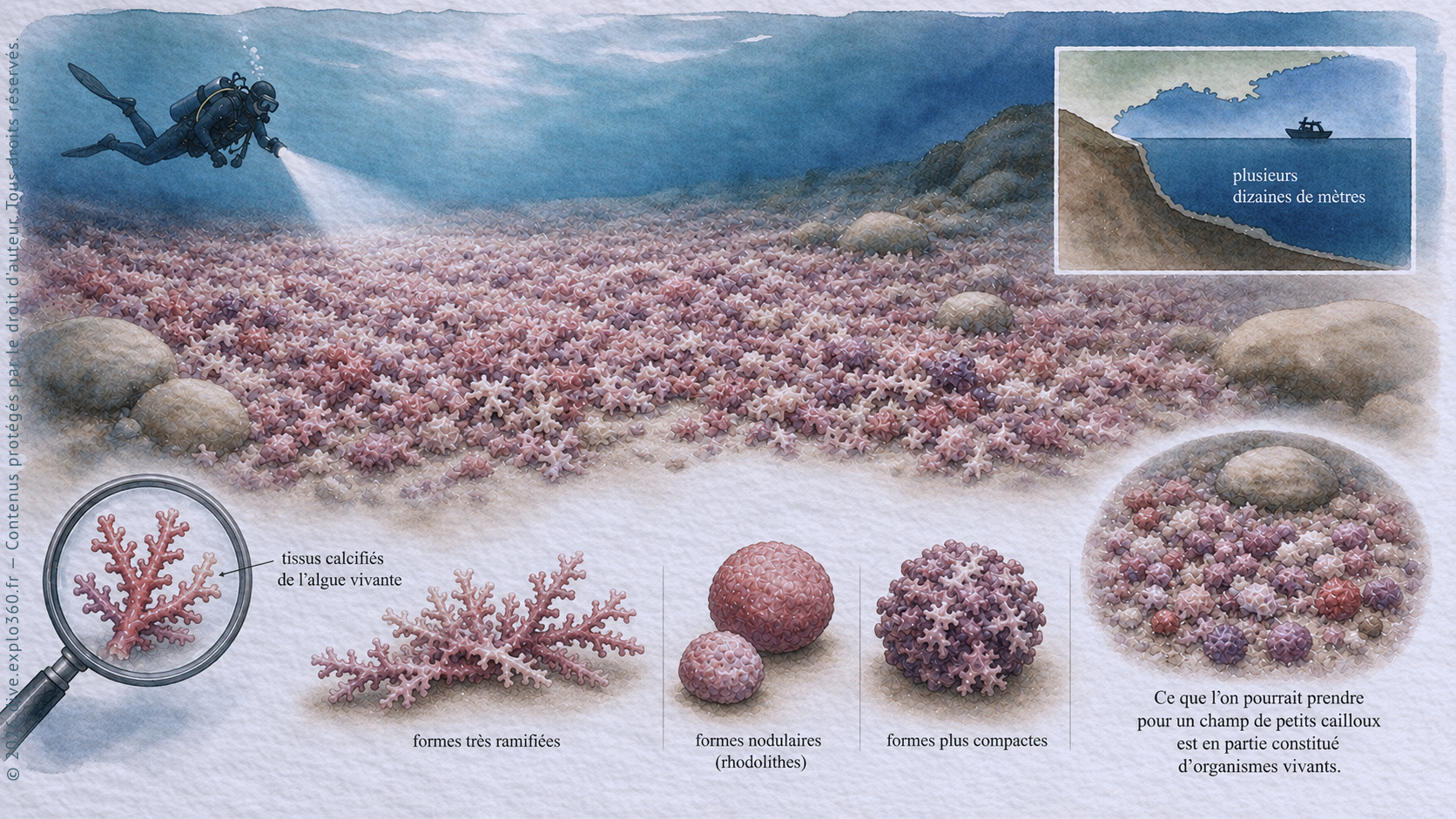
Maerl algae can be as hard as little pieces of stone.
They produce and deposit a chalky material called calcium carbonate in their tissues.
They can then form small branches or rounder shapes.
These rounded shapes are called rhodoliths.
Some have many branches and others are more compact.
Under the sea, what looks like a little pebble can sometimes be an alga!
GO FURTHER WITH AMIGANSEAU
Continue reading
Discover full species guides, in-depth content and interactive tools available with your licence.
Dive.Explo360 is an independent, self-funded nonprofit. Every licence helps us create new content, improve our teaching tools and keep some of our resources free and ad-free.
Choose a licence that suits your needs for personal, educational or professional use.
Open-access resources remain available without a subscription.
Explore the same world