
SAND
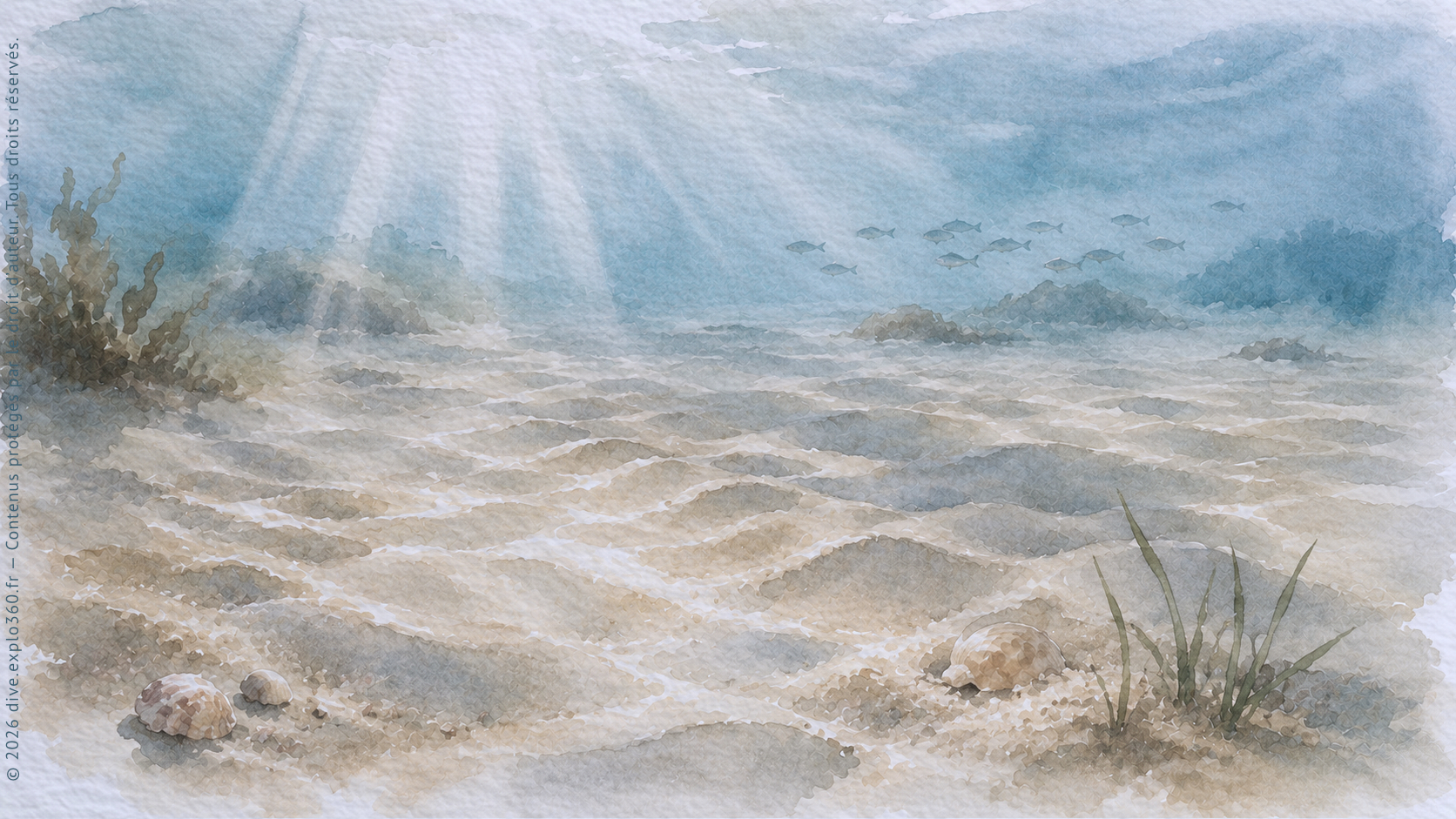
Some move across its surface. Others bury themselves completely or remain hidden just beneath the first few centimetres.
Sand is therefore a landscape, a hiding place and a genuine habitat all at once.
To discover its inhabitants, we need to learn to observe the little clues they leave behind.
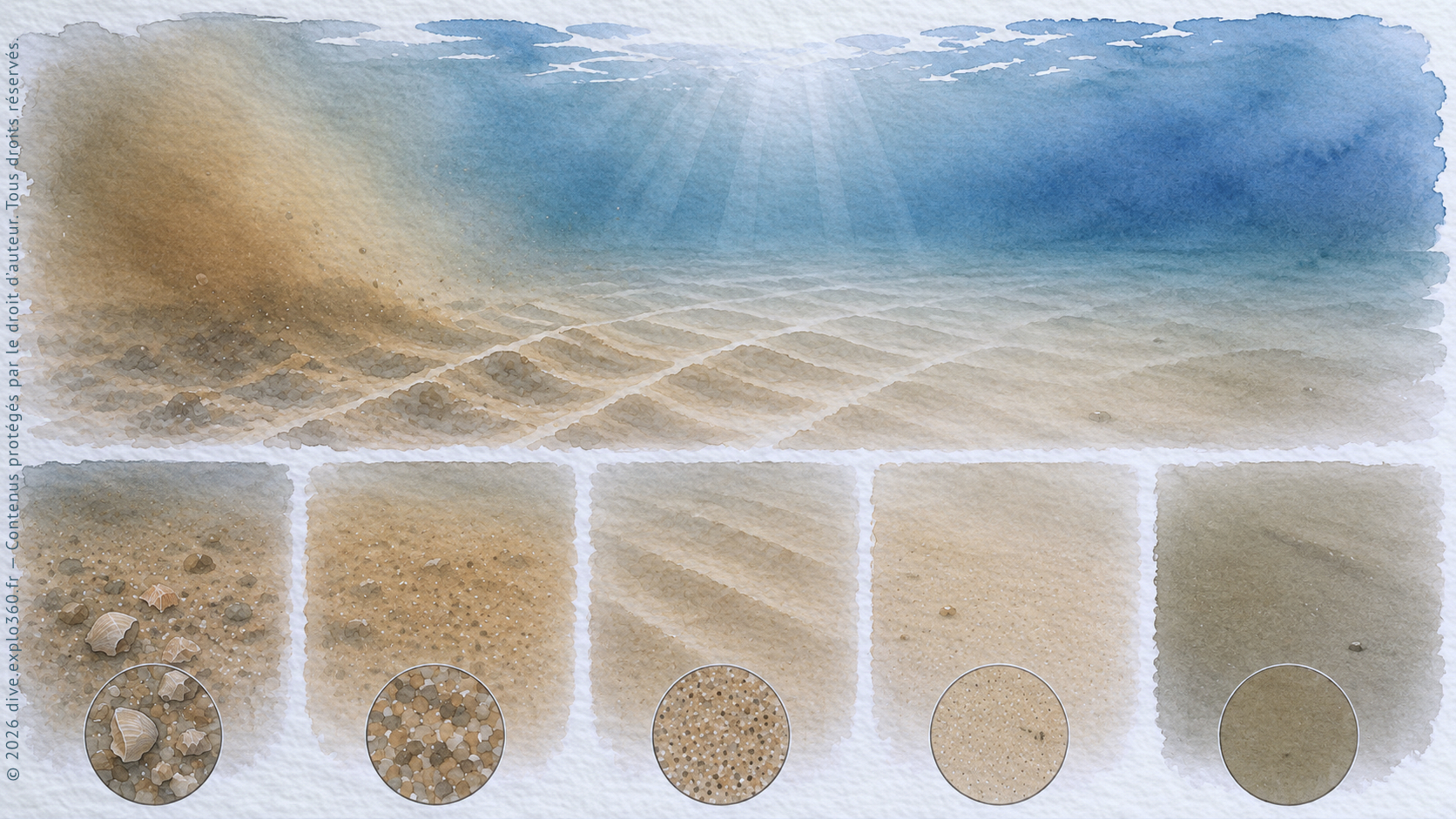
When the sea is rough, the landscape can change quickly.
Not all sandy seabeds are identical. Some have fine grains, others larger grains. Sand may also contain mud.
Depth and the strength of currents also play a role. These differences influence which species can live in each type of sand.
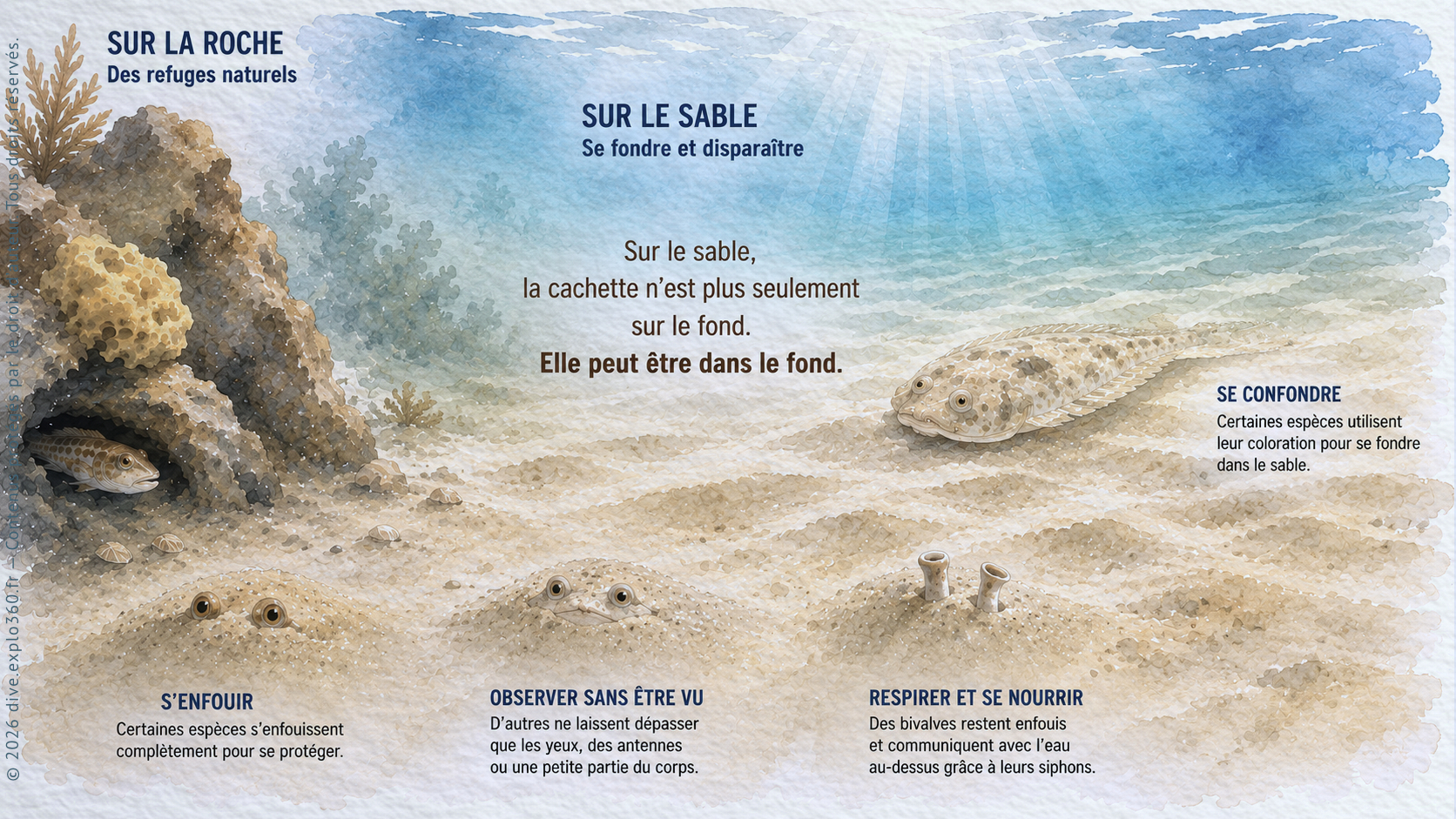
Some animals therefore use the sand itself for protection. They may bury themselves entirely or leave only their eyes, antennae or a siphon sticking out.
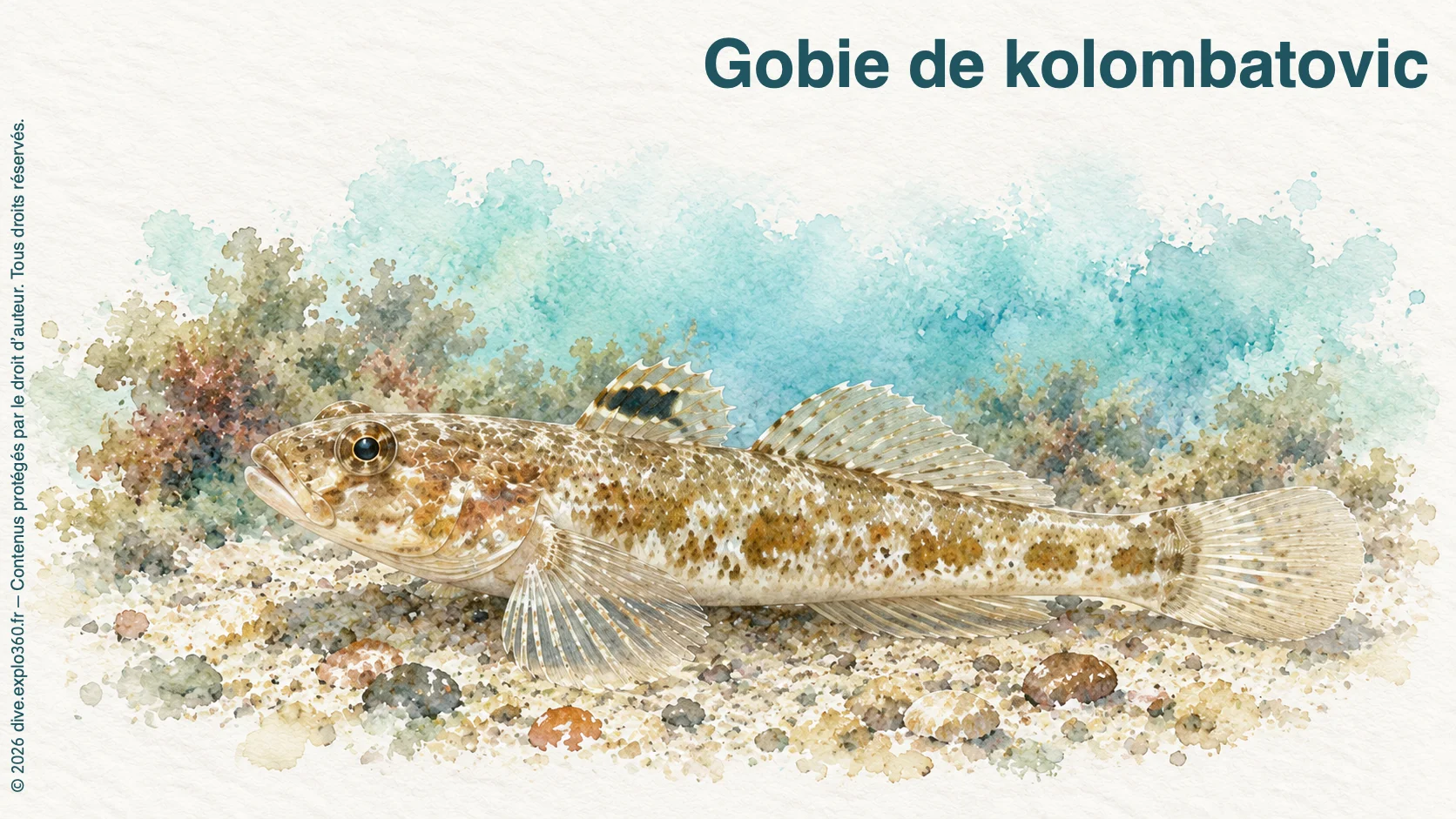
Others have colours similar to those of the seabed and become difficult to distinguish.
For these animals, the sand itself is a hiding place.
AT THE SURFACE: EPIFAUNA
They can move, look for food or rest directly on the seabed.
They are the easiest to observe, although some are very good at camouflage.
AT THE BOUNDARY: LIVING HALF HIDDEN
Bivalve shellfish, for example, may stay beneath the sand and use siphons to make water circulate.
They thus benefit from the protection of the sand while remaining in contact with the outside environment.
BENEATH THE SURFACE: INFAUNA
Some dig tunnels. Others move through the sediment.
They are difficult to see, but represent an important part of life on sandy seabeds.
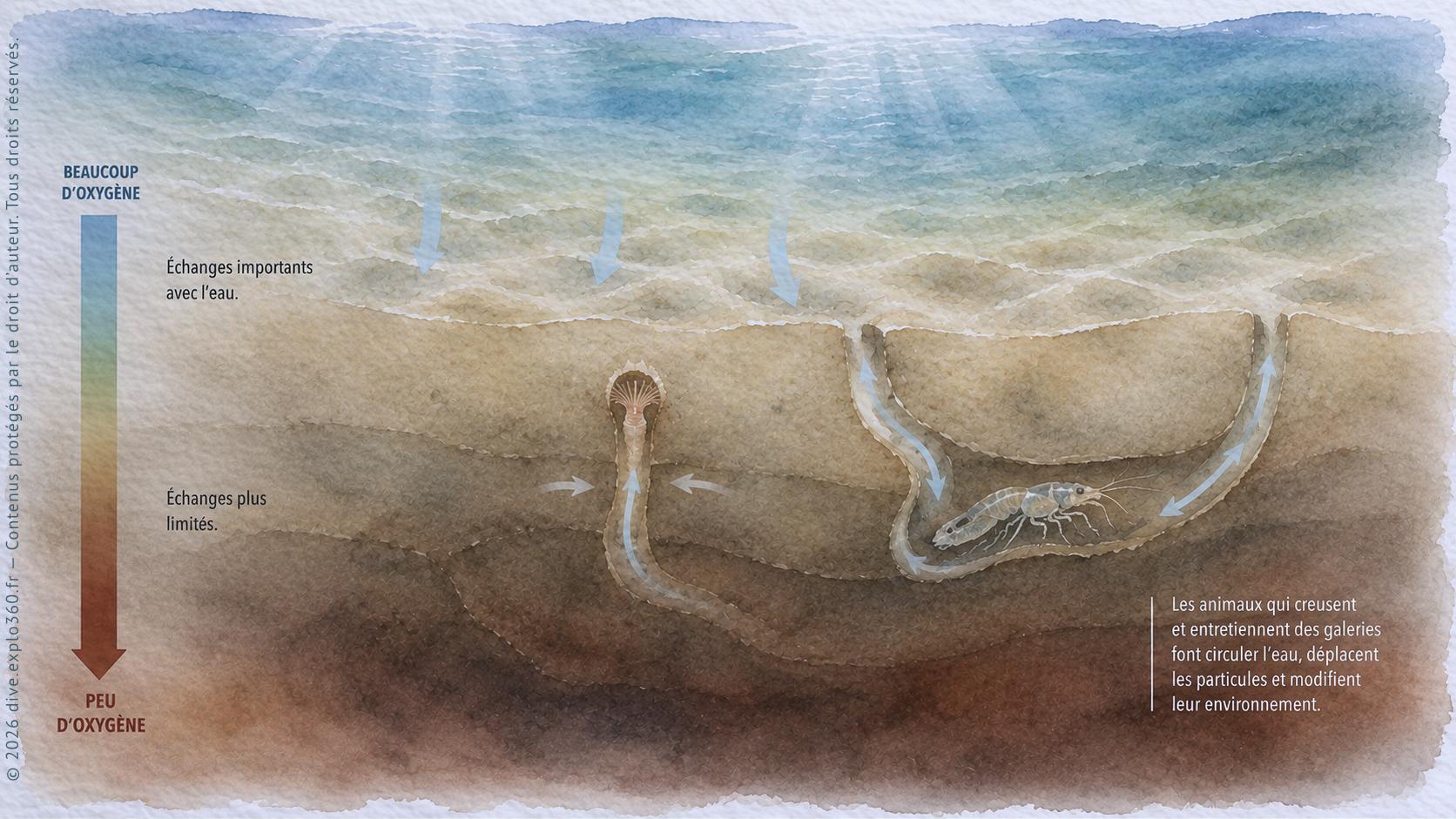
The deeper we go into the sand, the harder exchanges with seawater become and the less oxygen is available.
Burrowing animals also move grains and can make water circulate through their tunnels.
Sand is therefore moved by waves and currents, but also by its inhabitants.
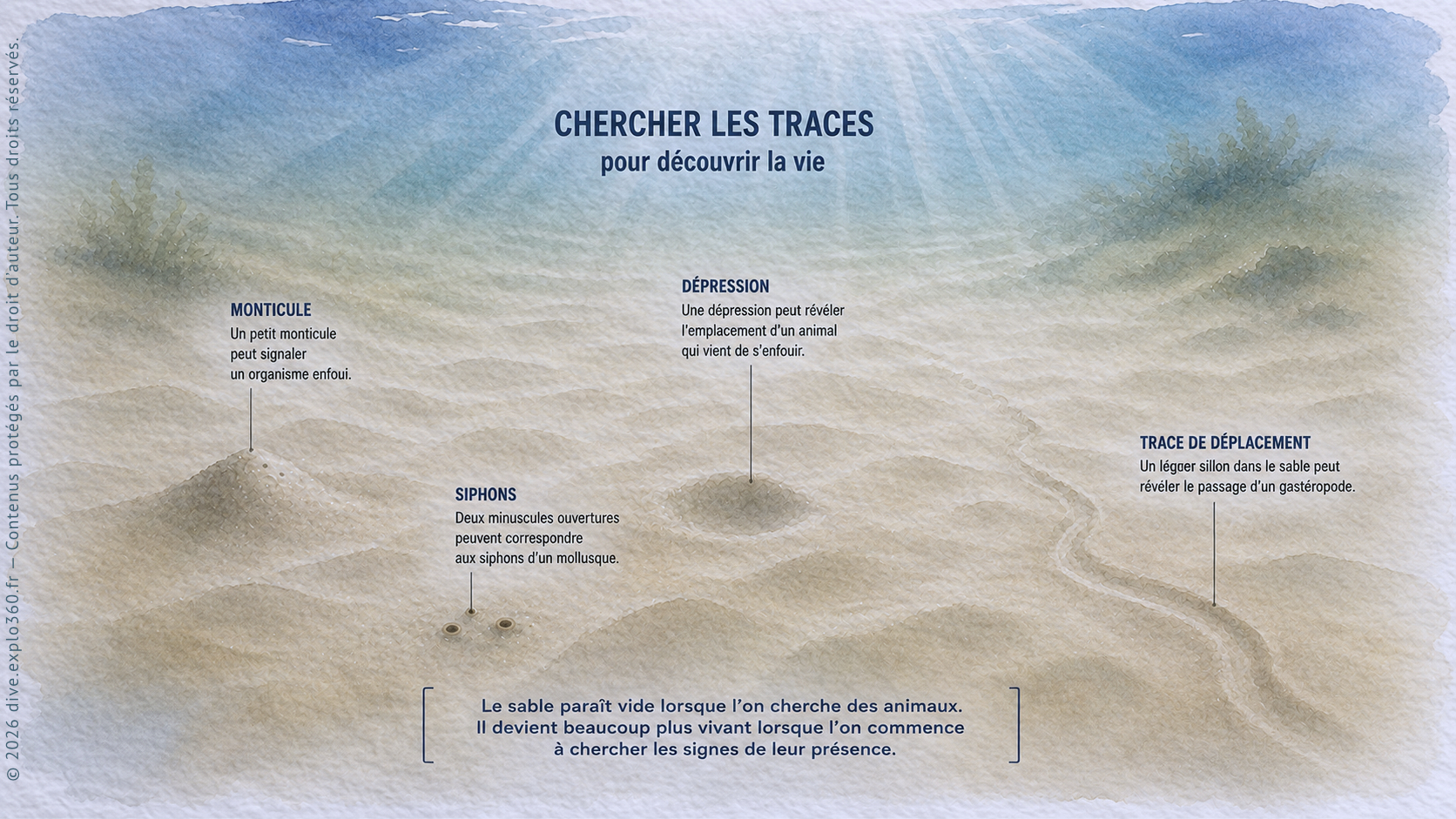
We need to look for its tracks.
A small pile of sand may reveal a buried animal. A hole may be a burrow entrance. A small opening may correspond to a siphon. Tracks or furrows sometimes show that an animal has moved.
These clues allow us to discover life that we cannot see directly.
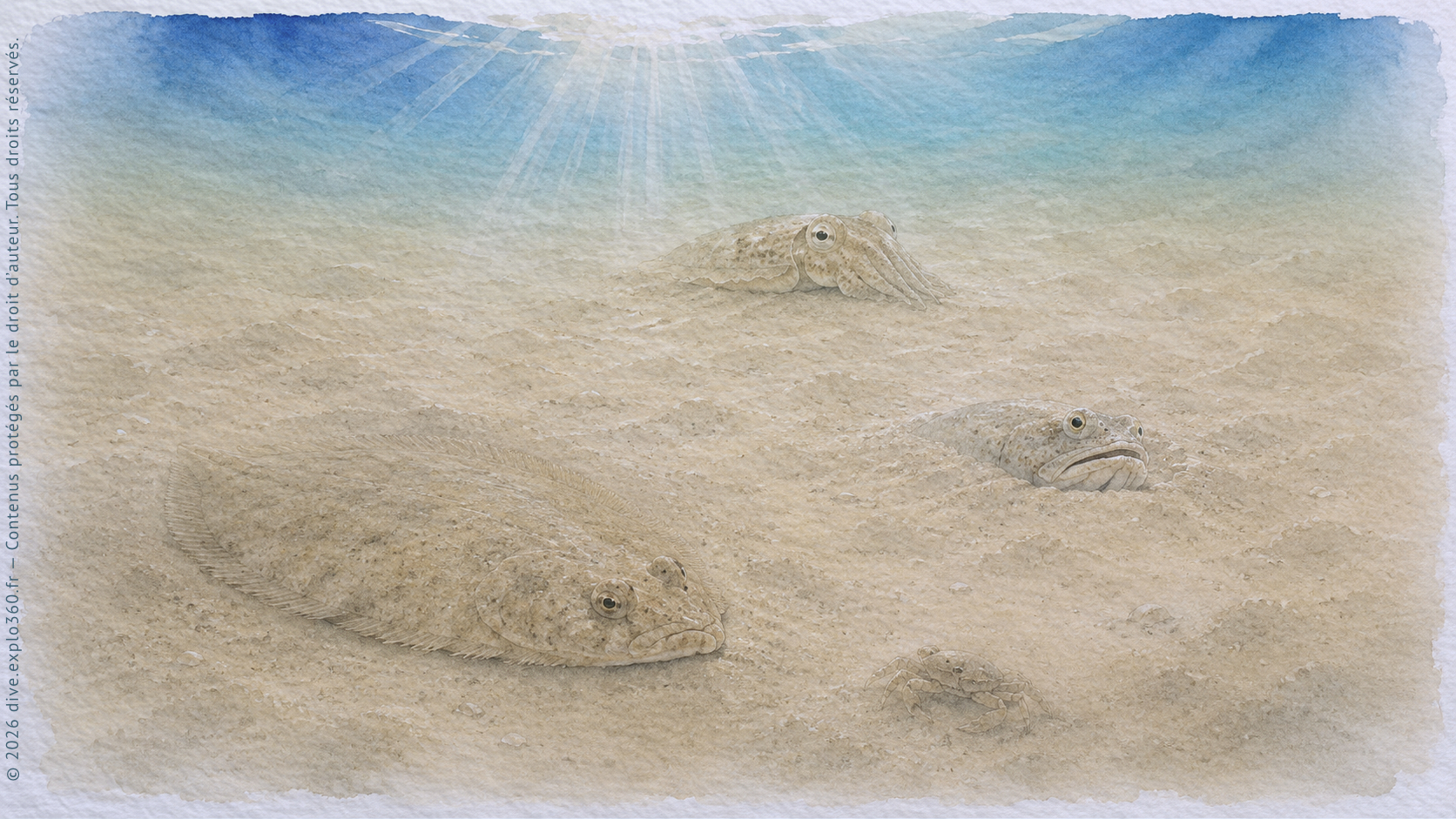
Sole have a flattened body and colours that make them difficult to distinguish from the seabed.
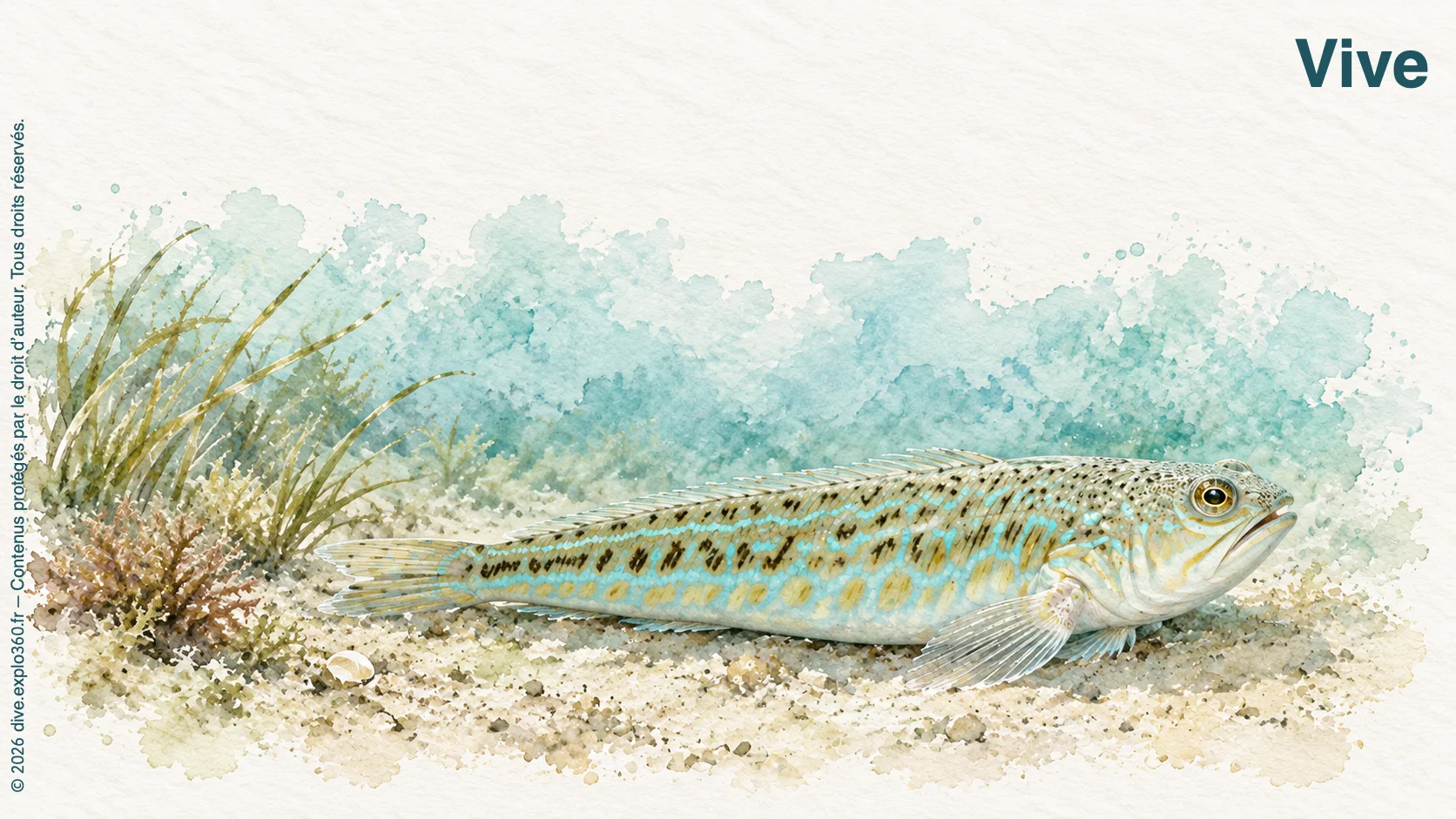
Weever fish can bury themselves almost entirely in the sand and wait for prey.
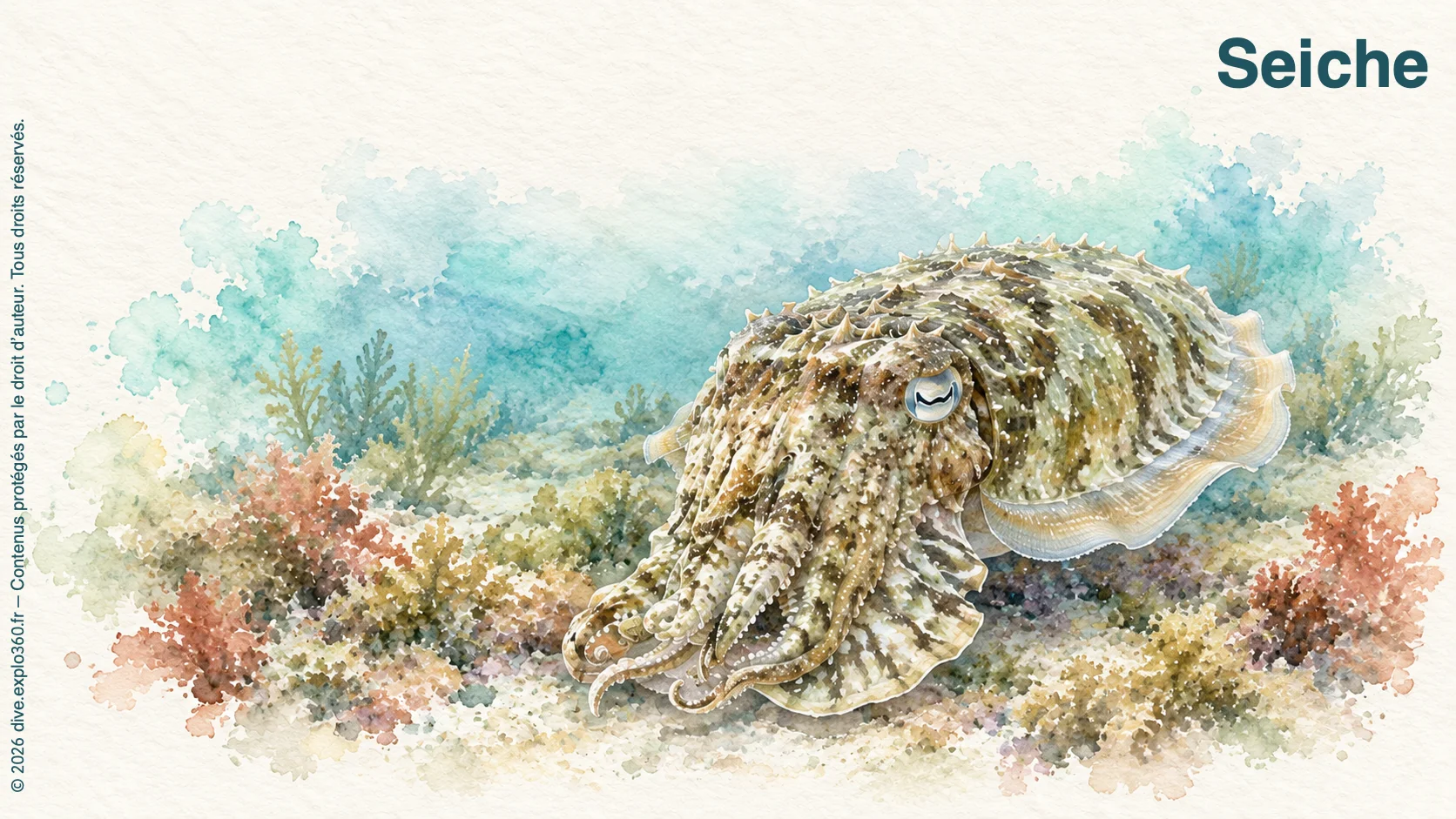
Cuttlefish and some crustaceans can also use their colouring, stay still or bury themselves.
Hiding in sand thus helps animals avoid predators or surprise prey.
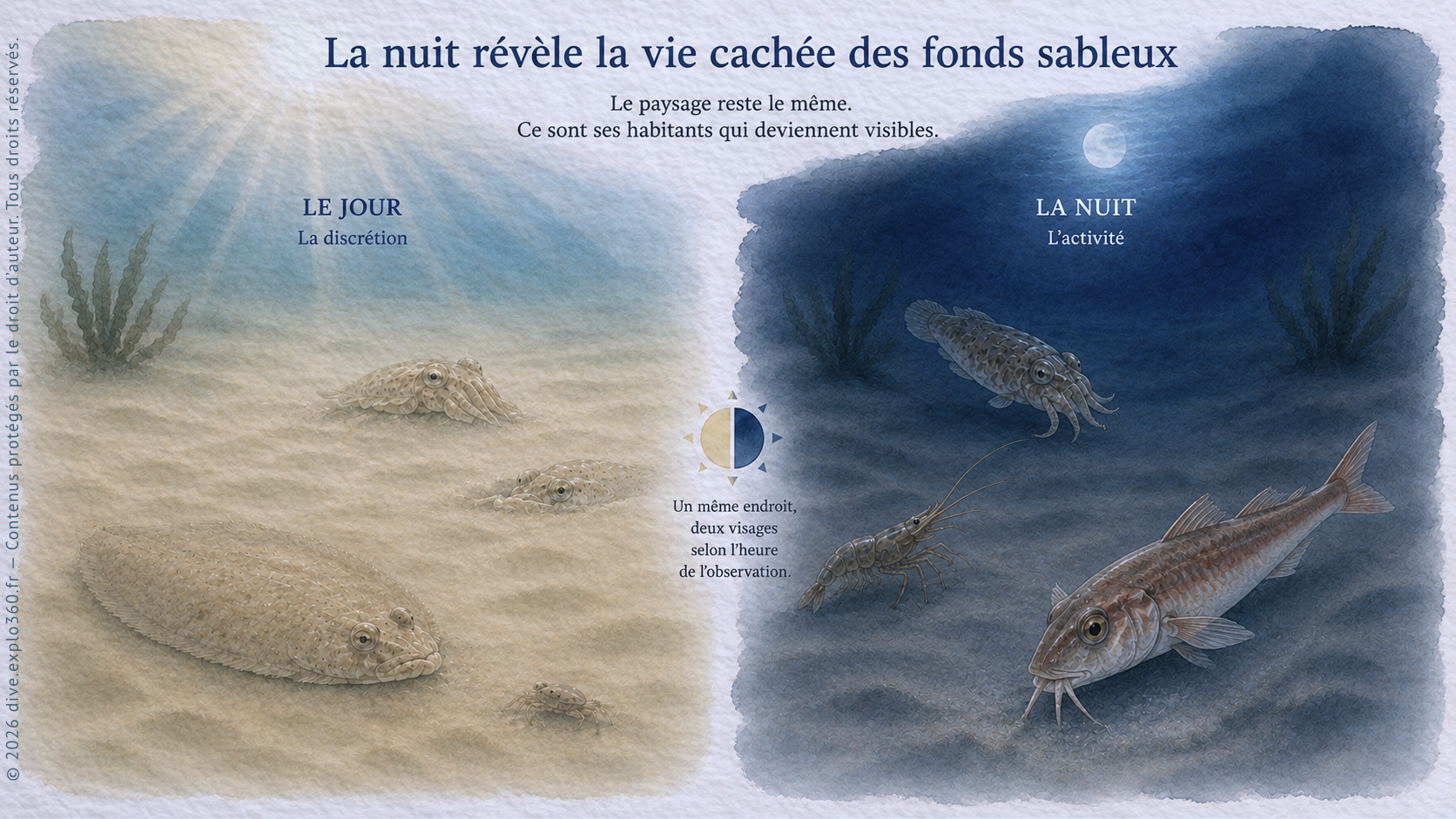
Crustaceans become more active and predators roam the seabed in search of food.
The landscape seems identical, but the animals we can observe are not necessarily the same.
A sandy seabed can therefore offer very different sights by day and by night.
Interactive quiz
Test your knowledge
3 question(s) to test your knowledge.
Interactive quiz
Test your knowledge
Question 1 out of 3Score: 0
Why do some animals bury themselves in sand?
How do some buried animals remain in contact with the water?
Why are some fish difficult to see on sand?
Final result
Quiz completed
correct answers
Conclusion
Many animals live on its surface or directly inside it. Some remain hidden and reveal their presence only through holes, tracks or small raised features.
Learning to observe these clues reveals a whole part of underwater life that easily goes unnoticed.
Sources
Explore the same world