


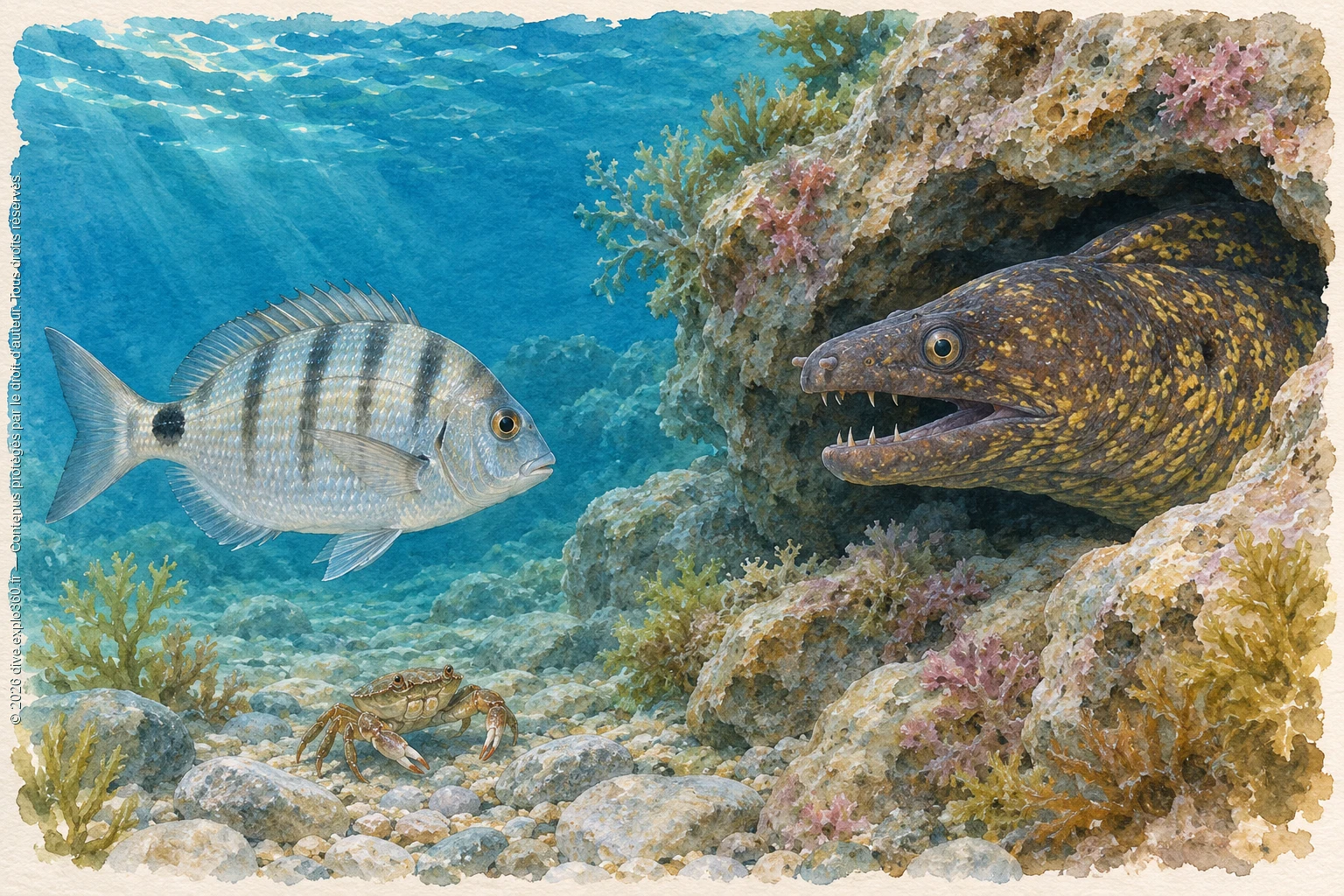

The moray: preventing escape
The Mediterranean moray, Muraena helena, has slender teeth, some curving backwards, that pierce tissues and hold mobile prey. Its diet includes slippery fish, flexible cephalopods and crustaceans. Some meals are swallowed whole; larger prey may be torn into pieces. Morays do not chew as humans do. Their elongated bodies and crevice hunting also go with less effective suction than in many fish, which use water flow to capture and move food.
Mobile pharyngeal jaws
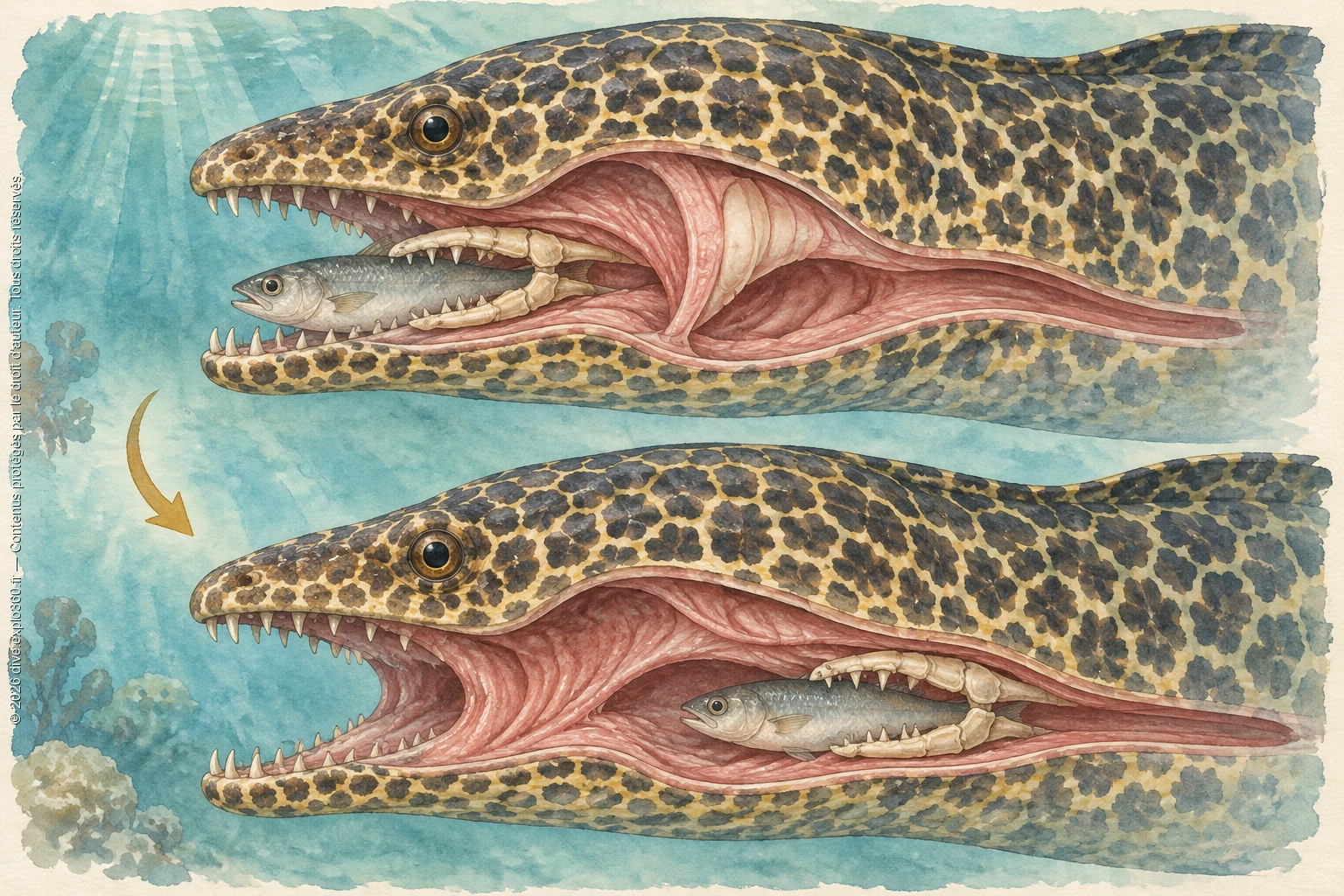
A 2007 study of the reticulated moray, Muraena retifera, described exceptionally mobile pharyngeal jaws. These toothed jaws in the throat reach into the mouth, grasp captured prey and retract towards the oesophagus. The mouth jaws capture; the throat jaws transport. This works even in a confined crevice. Throat teeth occur in many fish, but such extensive jaw movement is distinctive. Within the moray family, teeth also serve different diets: the shorter, rounded teeth of the snowflake moray, Echidna nebulosa, help crush crustacean armour.
The seabream: versatile dentition
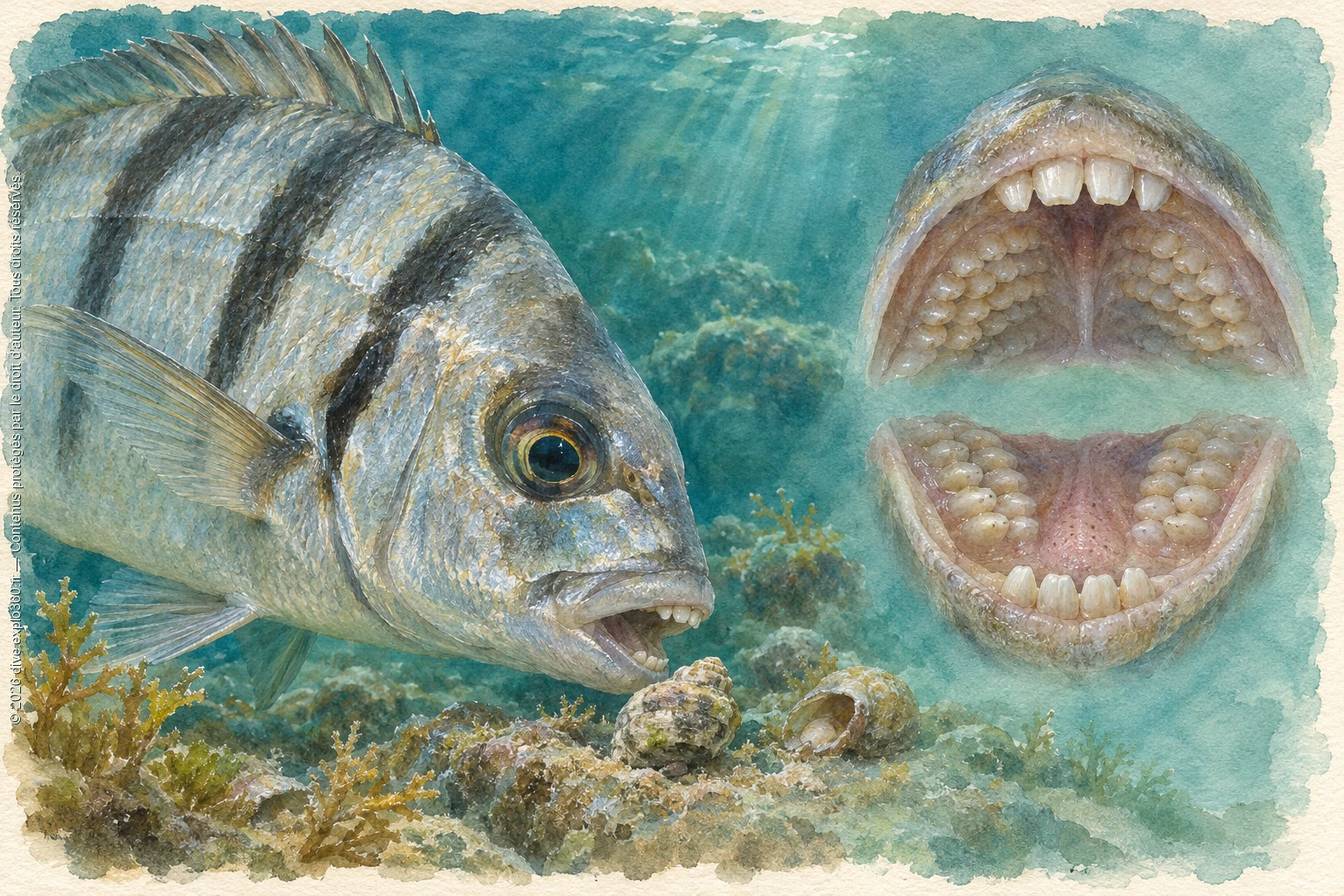
The white seabream, Diplodus sargus, combines front incisors with rows of molar-like teeth further back. The incisors grip, pull food free or cut it; the rounded teeth crush. A crab can be shifted towards the back of the mouth to break its armour. A sea snail’s shell may be cracked, fragments rejected and soft tissue swallowed. Strong muscles provide the force, so tooth shape explains only part of the performance. Eating hard-covered prey is called durophagy. Worms, small fish and algae also feature in the seabream’s diet, making it much more than a shellfish specialist.
The parrotfish: cropping and grinding
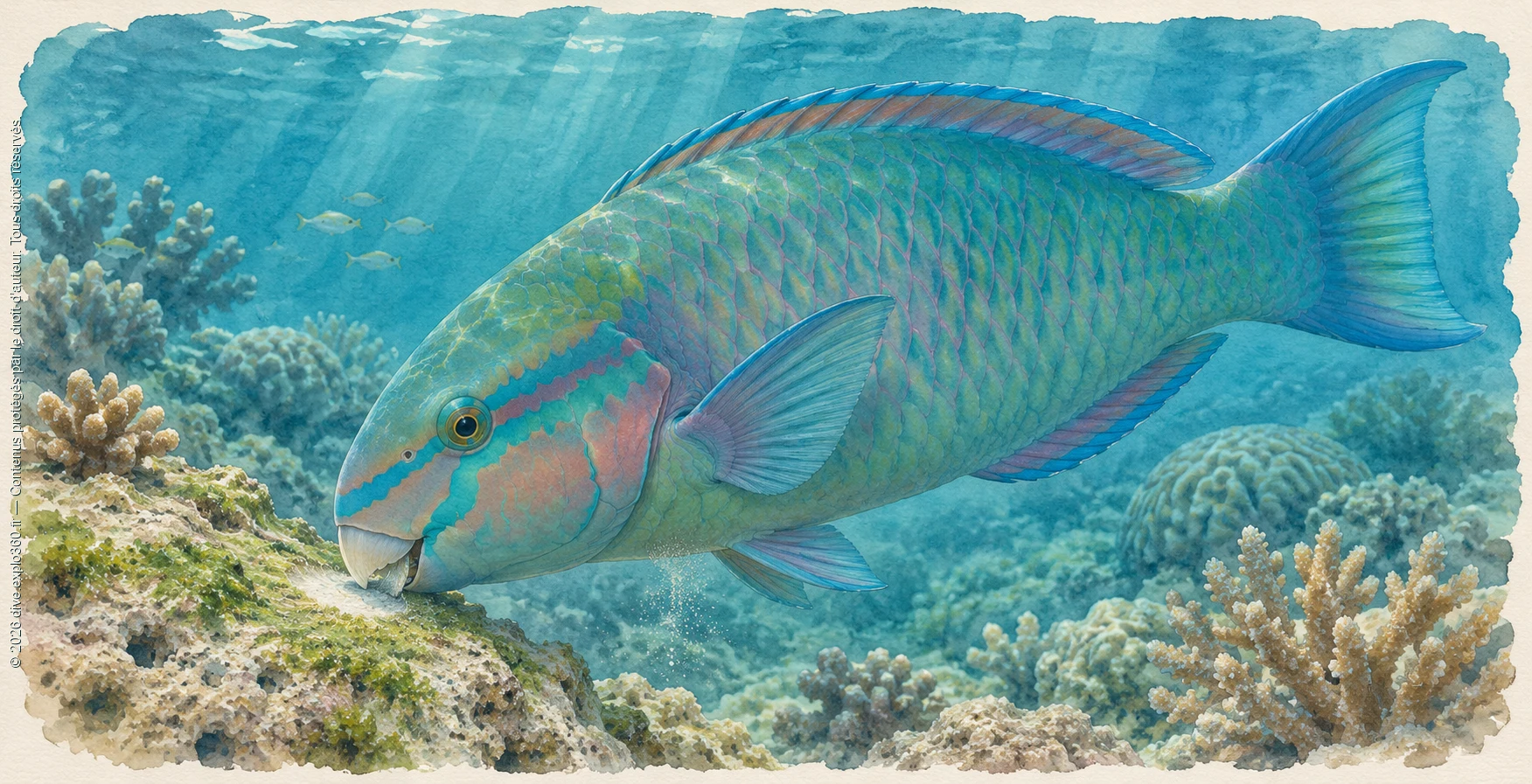
Many reef parrotfish have tightly packed teeth cemented into two plates. This beak concentrates pressure: scrapers remove surface material, while excavators bite deeper. Their food includes microscopic algae, cyanobacteria and other microbes on or within the outer limestone layers. Mineral material comes with each bite. The pharyngeal jaws grind the fragments, a different task from transporting food in morays. Accessible organic matter is digested, while much of the carbonate passes out as sediment. On some reefs, this is an important source of carbonate sand. Removing reef material through feeding also causes bioerosion, changing the reef’s shape.
GO FURTHER WITH AMIGANSEAU
Continue reading
Discover full species guides, in-depth content and interactive tools available with your licence.
Dive.Explo360 is an independent, self-funded nonprofit. Every licence helps us create new content, improve our teaching tools and keep some of our resources free and ad-free.
Choose a licence that suits your needs for personal, educational or professional use.
Open-access resources remain available without a subscription.