
The moray: a firm grip
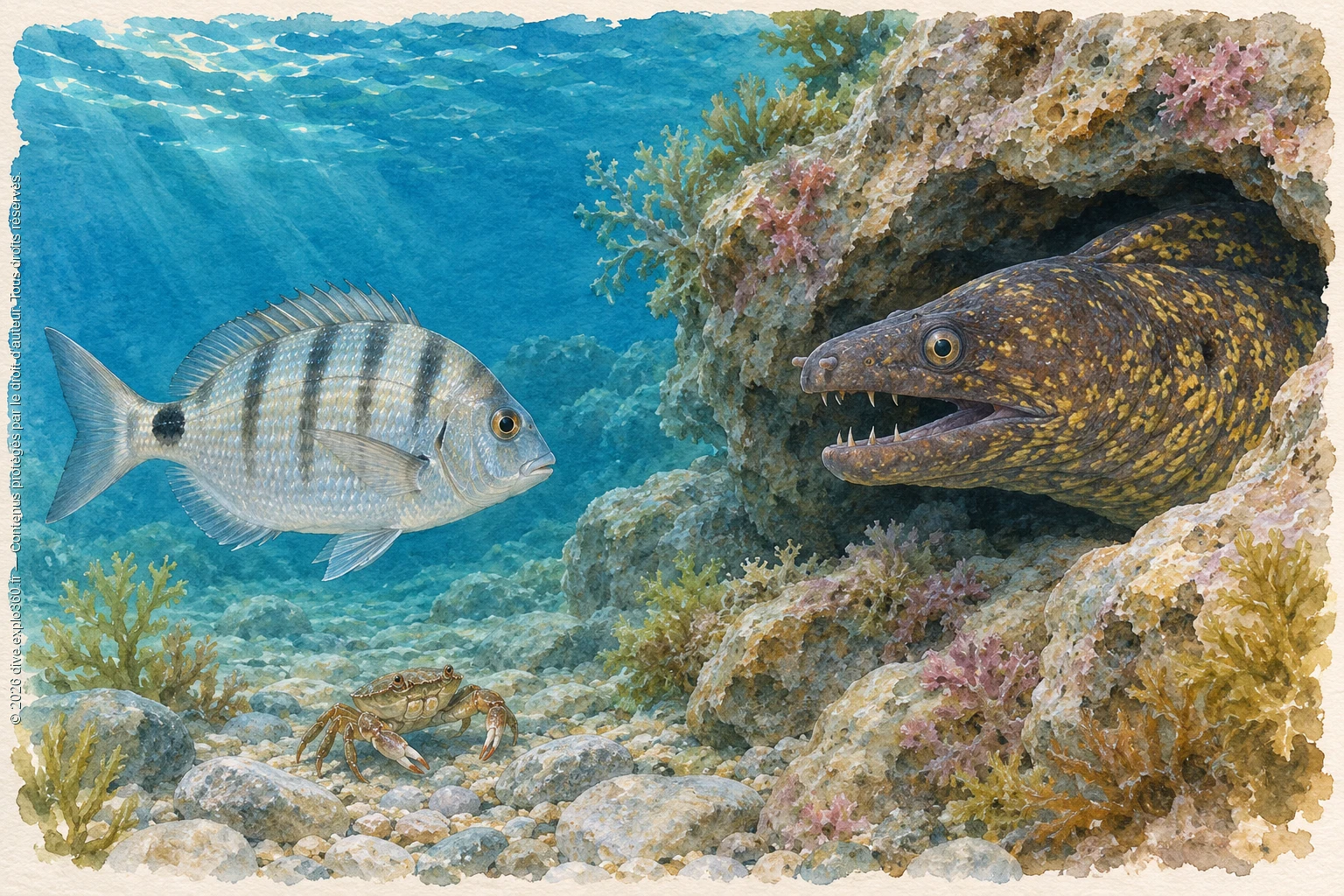
A Mediterranean moray, Muraena helena, opens its mouth at the entrance to a crevice. Some of its slender teeth curve backwards, helping it hold fish, cephalopods such as octopuses, and crustaceans. Slippery, struggling prey cannot escape so easily. Morays swallow some meals whole or tear off pieces. They do not chew as we do.
A second pair of jaws
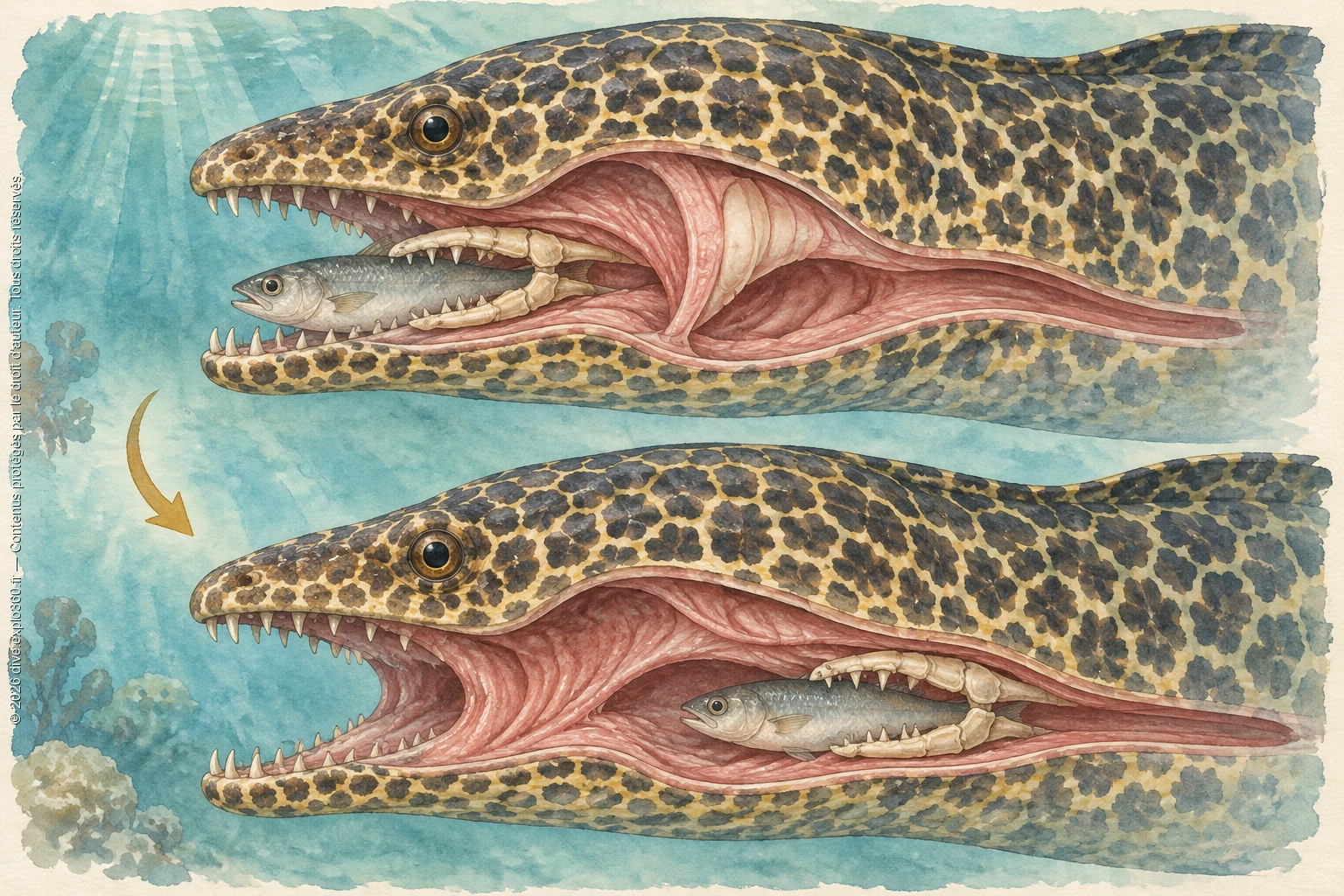
In 2007, scientists described a remarkable mechanism in the reticulated moray, Muraena retifera. A second pair of jaws sits in its throat. These pharyngeal jaws reach forwards into the mouth, grip food and pull it towards the oesophagus, the passage leading to the stomach. One pair catches; the other carries. This works even inside a narrow crevice. Many fish have throat teeth, but not this much jaw movement. Moray teeth vary too: the snowflake moray, Echidna nebulosa, has shorter, rounded teeth suited to crushing crustacean armour.
The seabream: grip, then crush
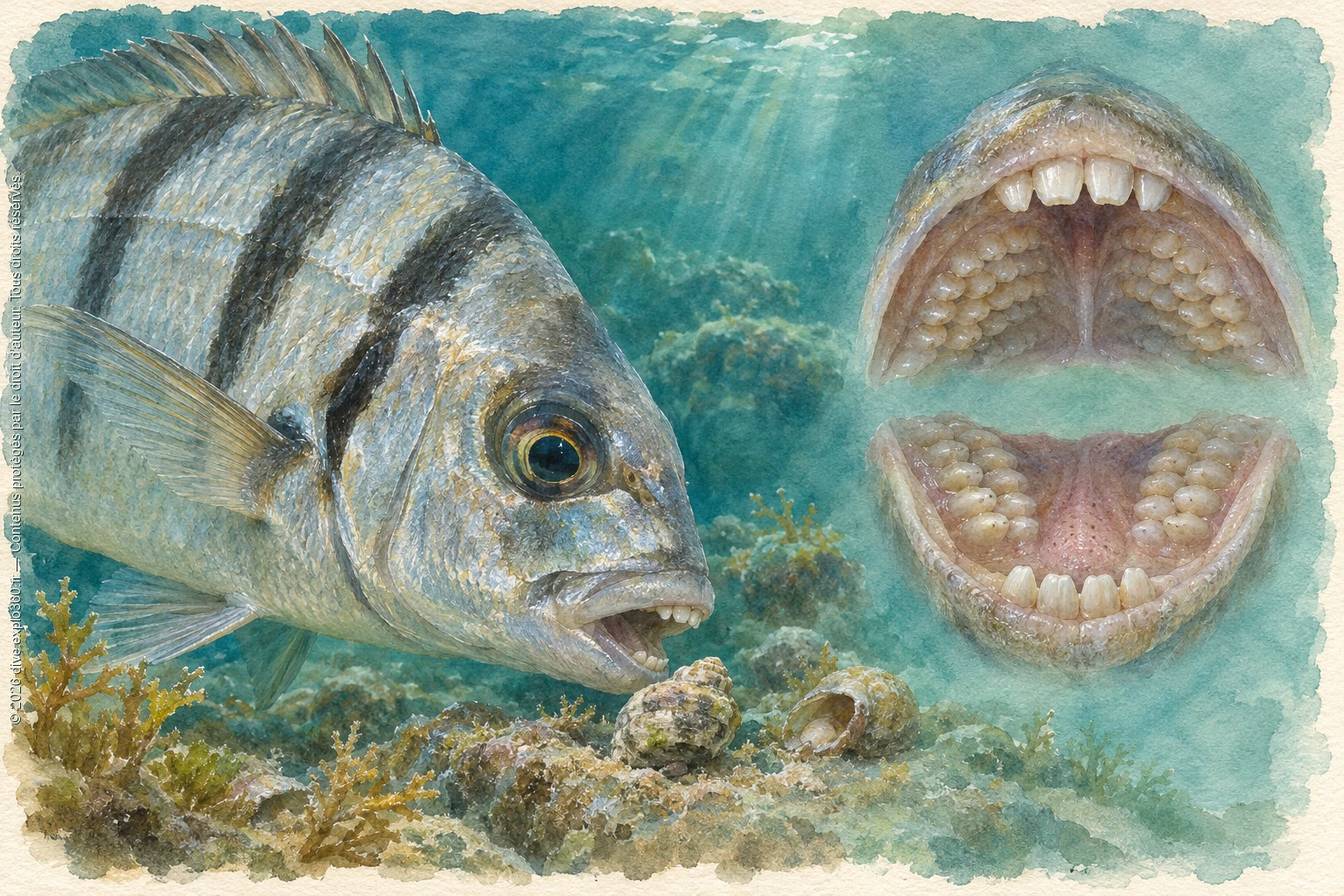
The white seabream, Diplodus sargus, has front teeth rather like our incisors, with rows of rounded crushing teeth behind. The front set grips, pulls or cuts; the back set cracks hard coverings. A crab can be moved backwards in the mouth to be crushed. A sea snail’s shell may be broken, some fragments spat out and the soft parts swallowed. Strong jaw muscles supply the force. Eating hard-covered prey is called durophagy. But white seabream also eat worms, small fish and algae: their teeth suit a varied menu.
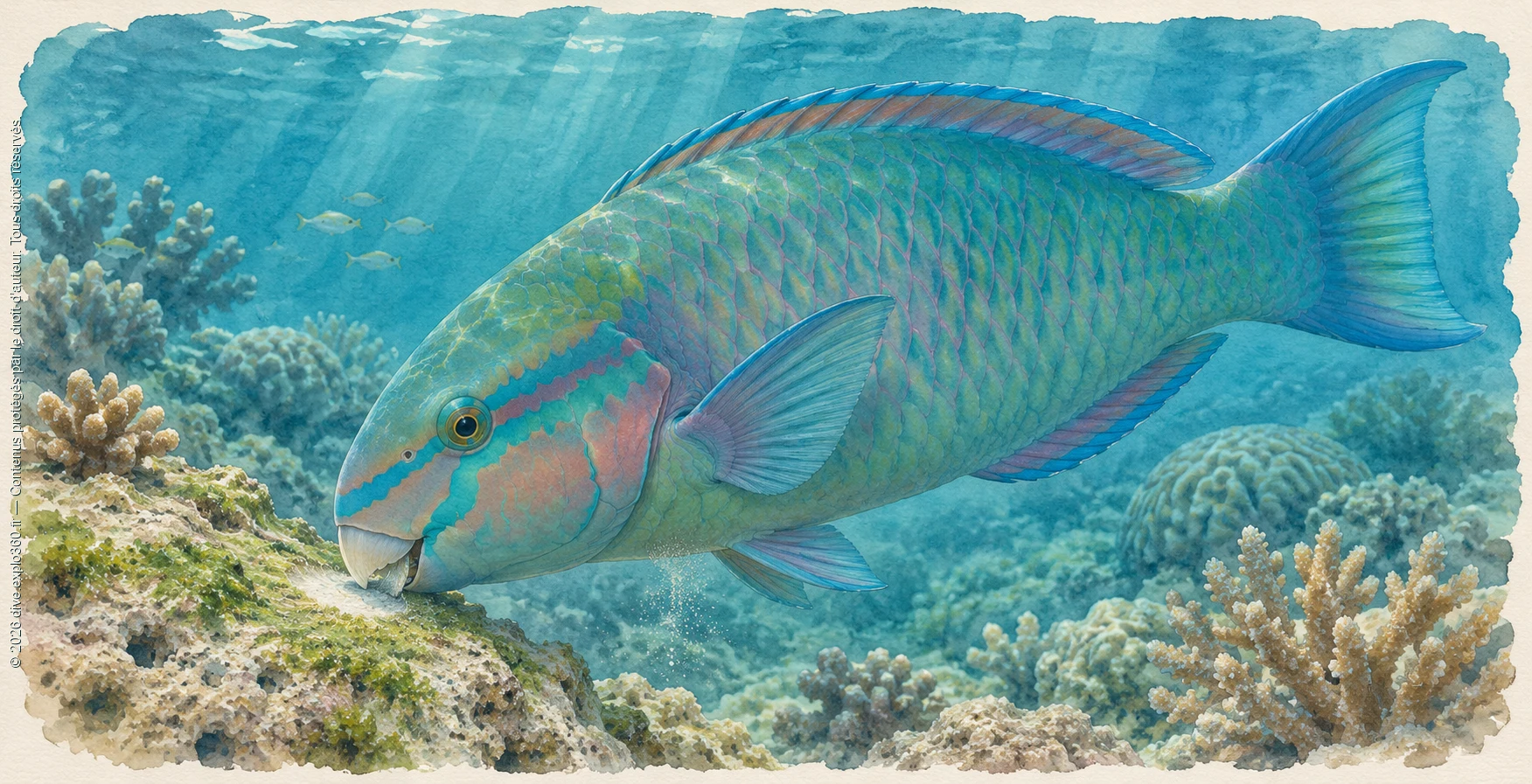
A beak that bites into the reef
Hear a scraping sound on a tropical reef? A parrotfish may be feeding nearby. In many reef species, tightly packed teeth are cemented into two plates like a beak. They concentrate force to scrape the surface or bite deeper. Microscopic algae, cyanobacteria and other microbes live on and just inside the limestone. Taking a bite brings these foods within reach, along with mineral material. Teeth on the throat jaws grind the mouthful. Organic matter is digested; much of the limestone passes out as sediment. On some reefs, this supplies plenty of carbonate sand. Removing reef material in this way is called bioerosion.
GO FURTHER WITH AMIGANSEAU
Continue reading
Discover full species guides, in-depth content and interactive tools available with your licence.
Dive.Explo360 is an independent, self-funded nonprofit. Every licence helps us create new content, improve our teaching tools and keep some of our resources free and ad-free.
Choose a licence that suits your needs for personal, educational or professional use.
Open-access resources remain available without a subscription.