
The moray holds on
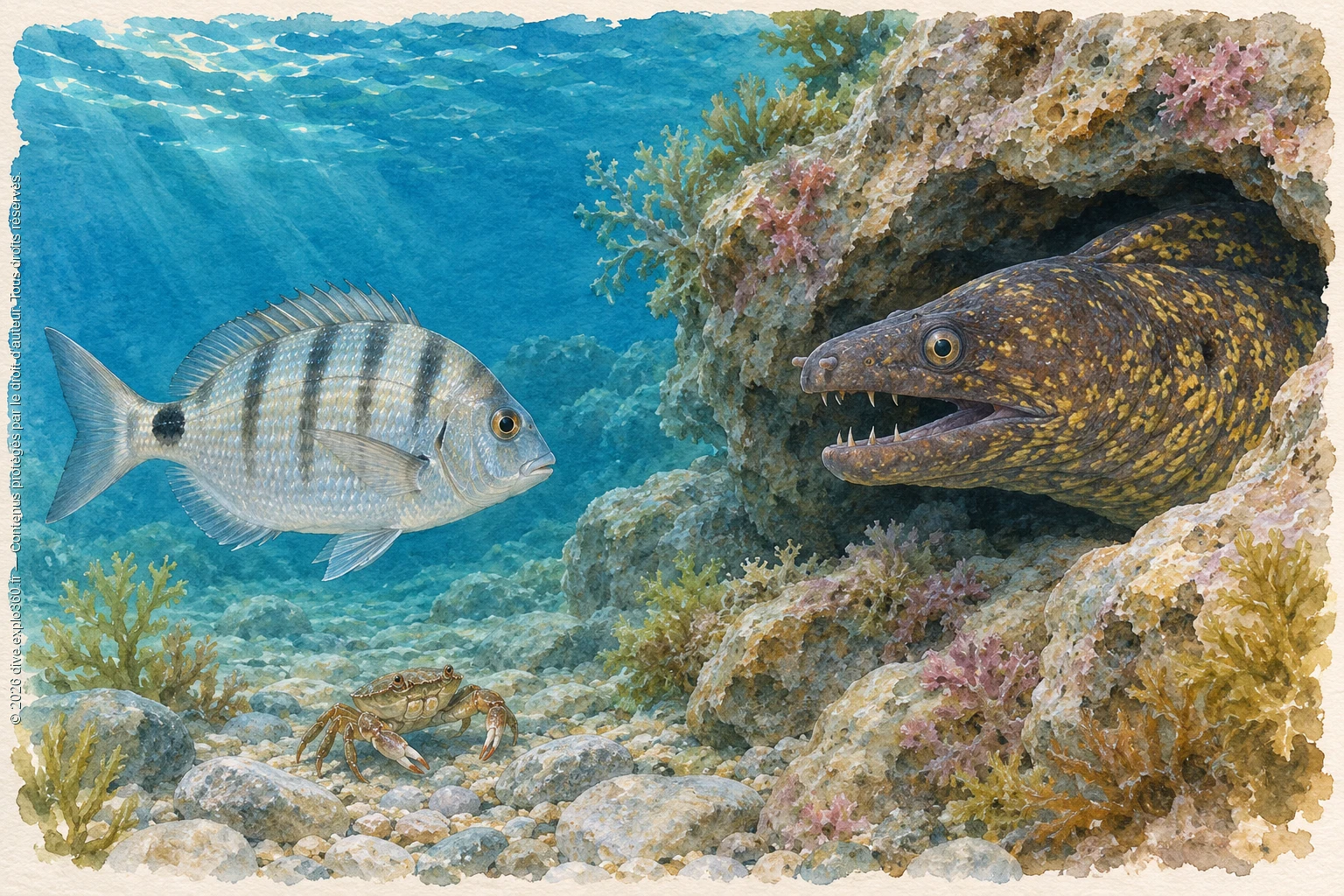
A Mediterranean moray opens its mouth at the entrance to a rocky shelter. Its thin, pointed teeth grip fish, octopuses and crustaceans. Some teeth curve backwards, making escape harder. Morays swallow some meals whole and tear pieces off bigger ones. They do not chew like us. Many fish suck food in with water, but morays are less good at this, especially when feeding in tight spaces.
Jaws hidden in the throat
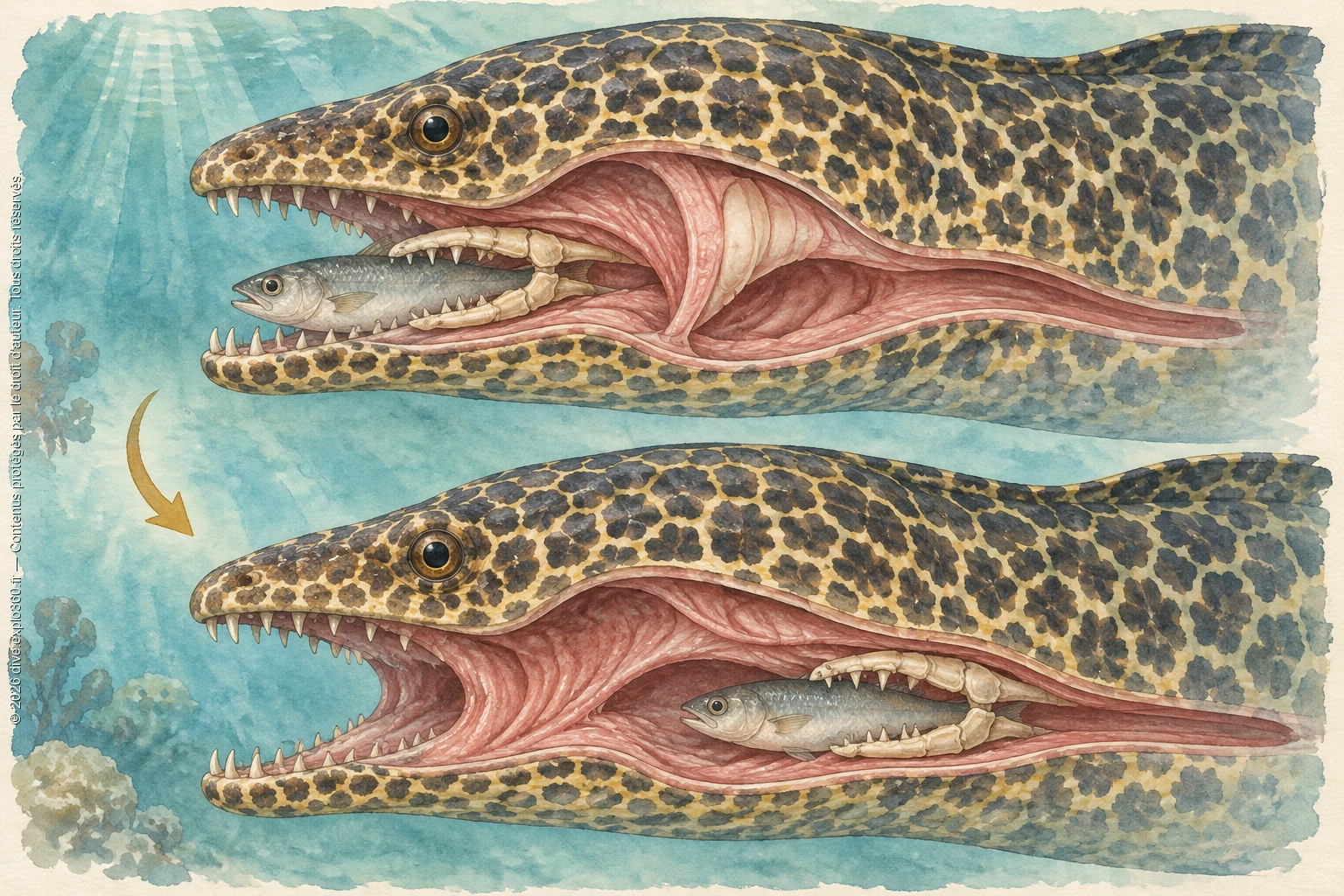
In 2007, scientists described a clever system in the reticulated moray. Another pair of jaws sits inside its throat. These are called pharyngeal jaws. They reach forwards into the mouth, grab the food and pull it towards the oesophagus, the passage to the stomach. Many fish have throat teeth, but moray jaws can move much further. Morays have different teeth too. The snowflake moray has shorter, rounder ones that help crush the hard coverings of crustaceans.
The seabream’s two tools
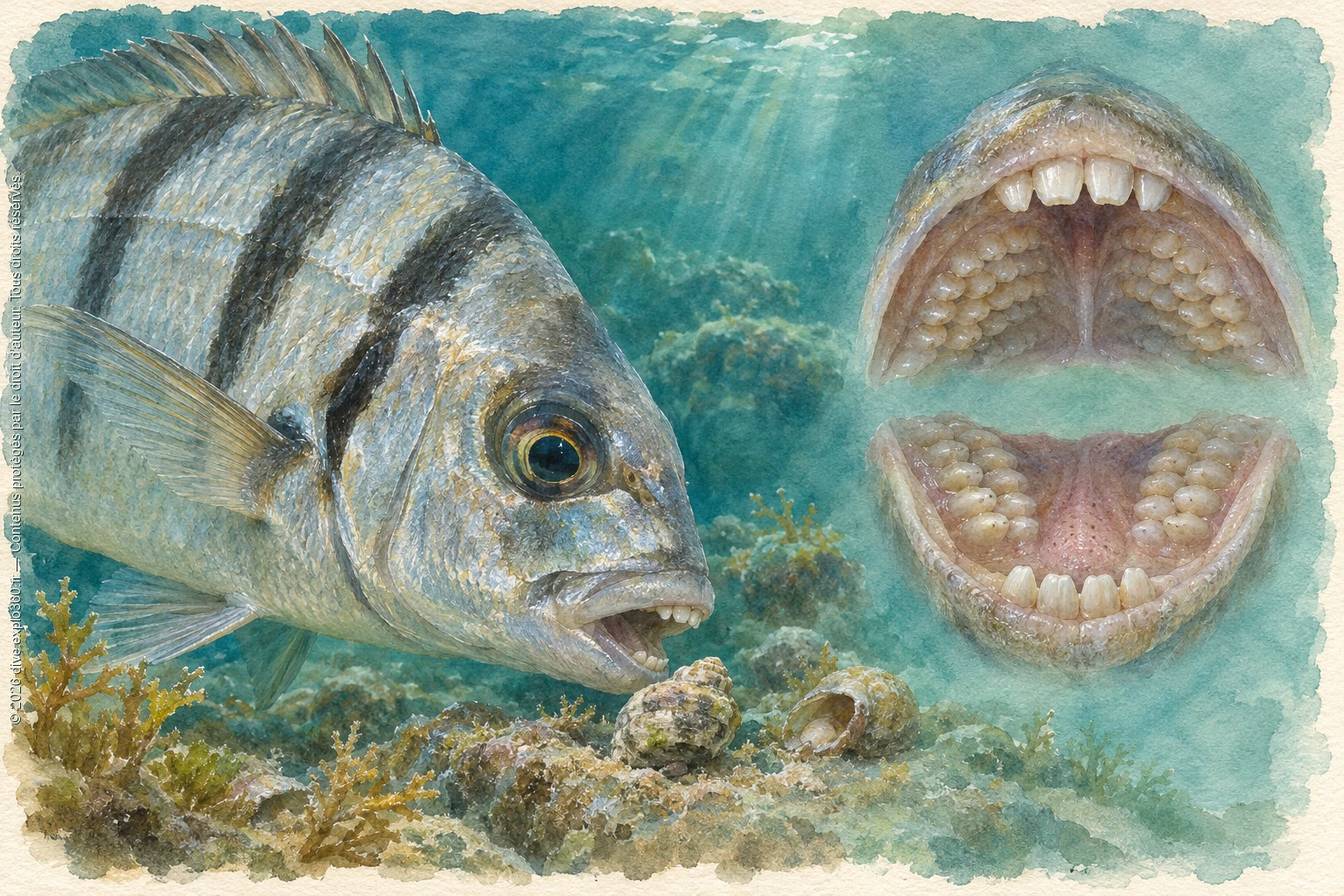
A white seabream has front teeth a little like yours. They help it grip food, pull it free or cut it. Rounded teeth further back can crack shells and crab armour. The fish can move a crab towards these crushing teeth. Strong jaw muscles do the squeezing. Eating animals with hard coverings has a special name: durophagy. But seabream eat other things too, including worms, small fish and algae.
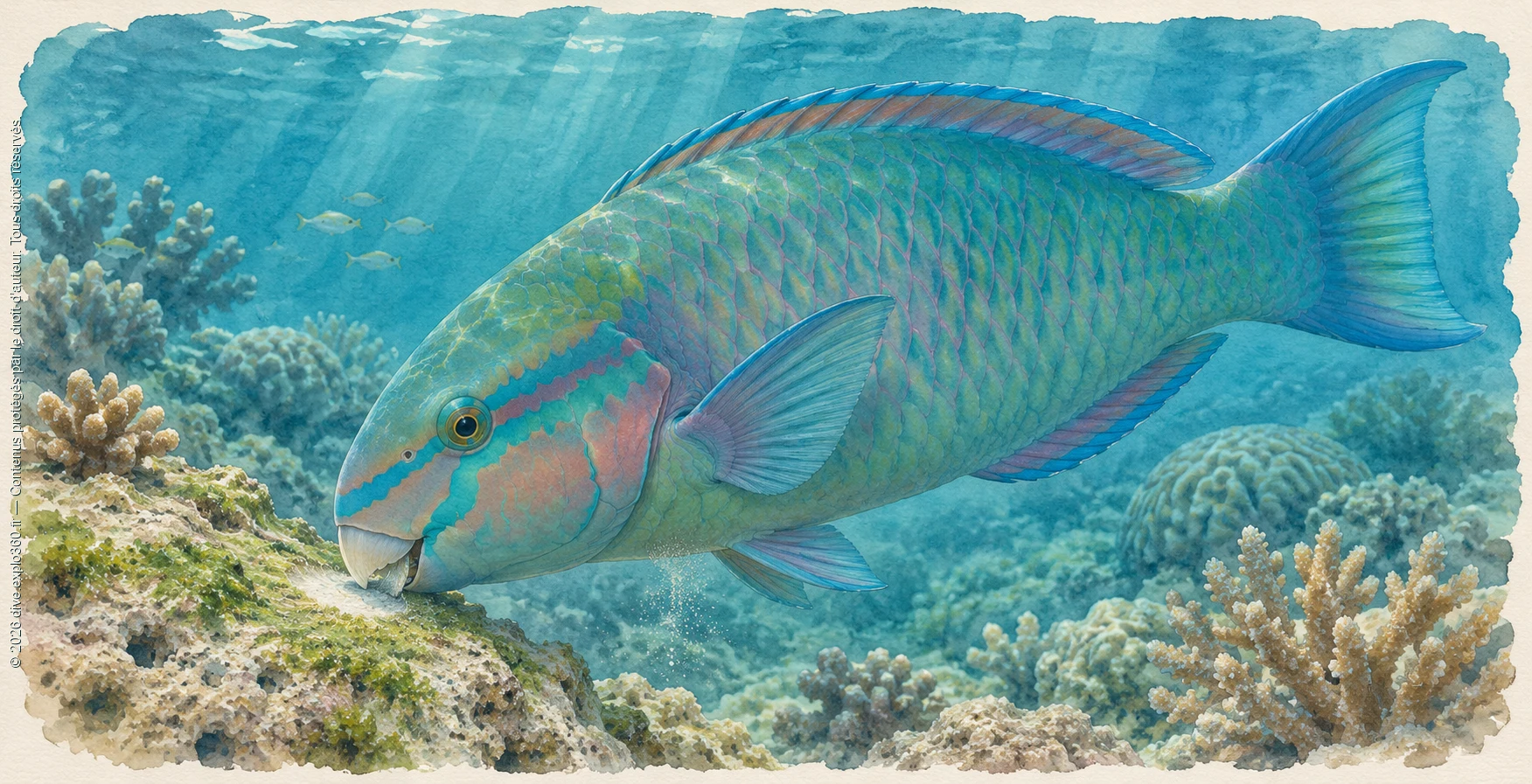
The parrotfish’s beak
Scrape, scrape! A parrotfish is biting at the reef. In many kinds of parrotfish, teeth are packed and cemented together into two strong plates, making a beak. Some fish scrape the surface; others bite deeper. They collect tiny living things, including algae, cyanobacteria and other microbes, on and just inside the limestone. Bits of rock go in too. Teeth in the throat grind the mouthful. The fish digests its food, and much of the mineral material passes out as sediment. On some reefs, this helps make sand. All that biting slowly changes the rock.
GO FURTHER WITH AMIGANSEAU
Continue reading
Discover full species guides, in-depth content and interactive tools available with your licence.
Dive.Explo360 is an independent, self-funded nonprofit. Every licence helps us create new content, improve our teaching tools and keep some of our resources free and ad-free.
Choose a licence that suits your needs for personal, educational or professional use.
Open-access resources remain available without a subscription.