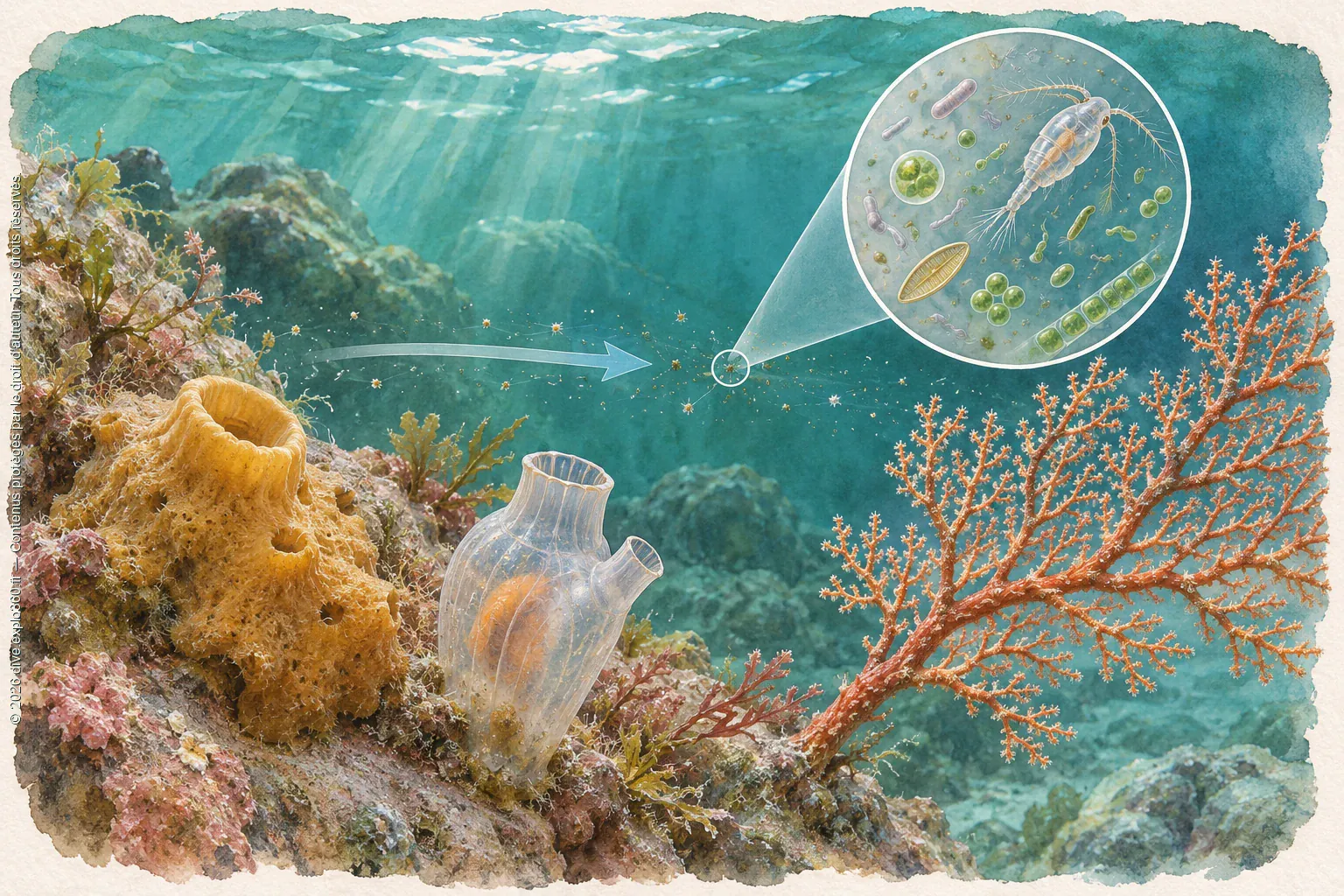
Using what the water carries
Apparently clear seawater carries bacteria, microscopic algae, larvae, small crustaceans, organic fragments and dissolved substances. Currents continually renew this supply.
The sponge’s hidden pumps
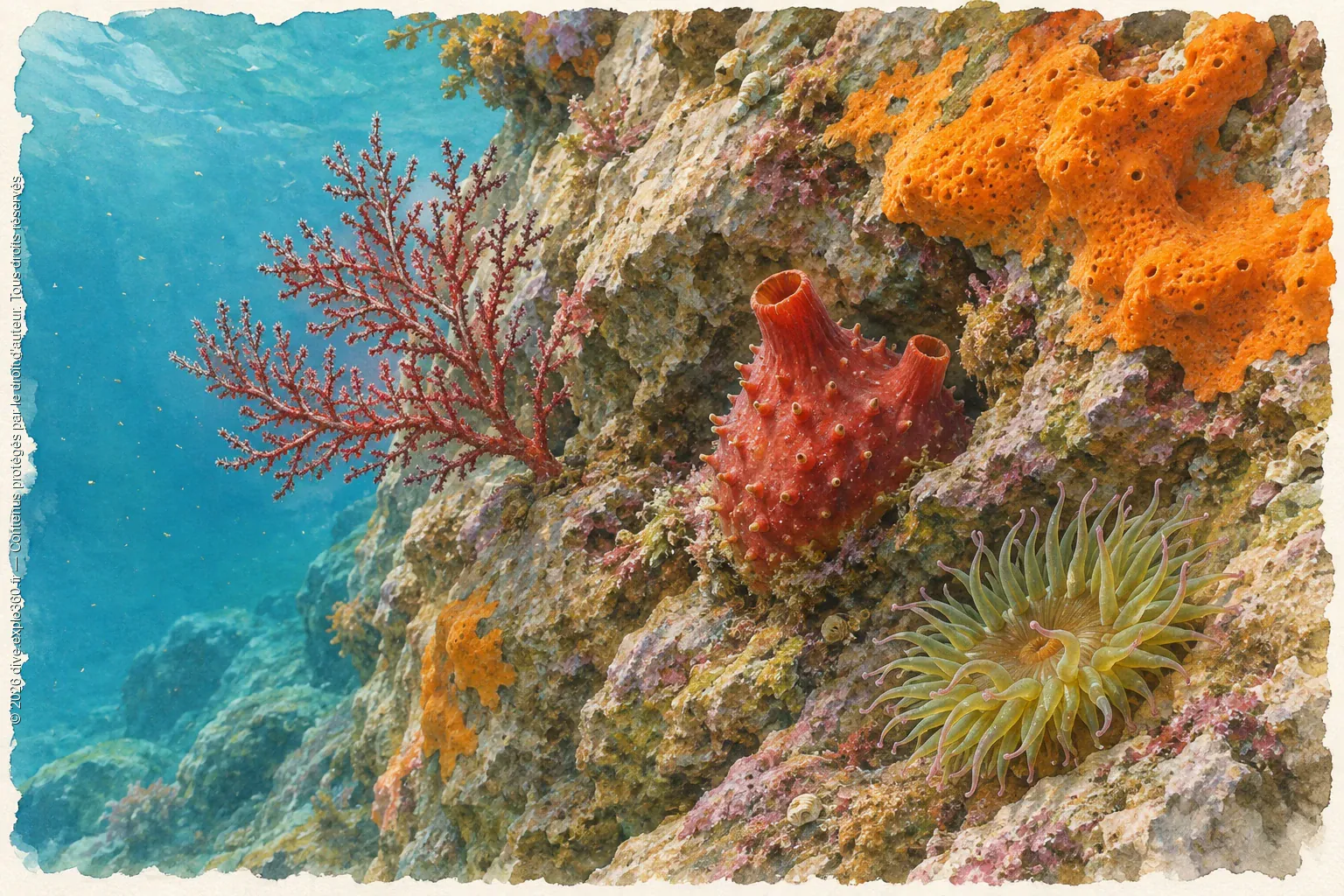
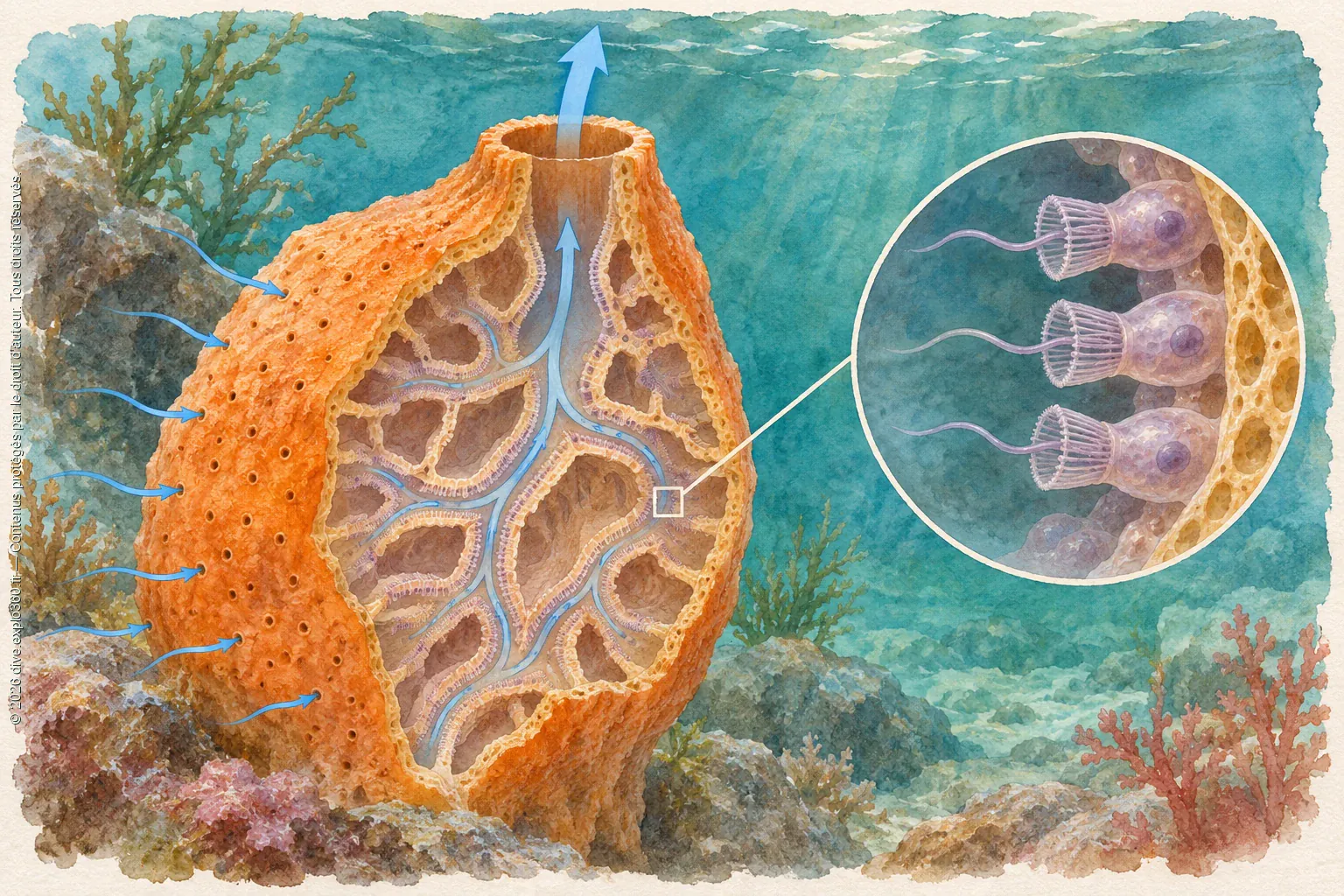
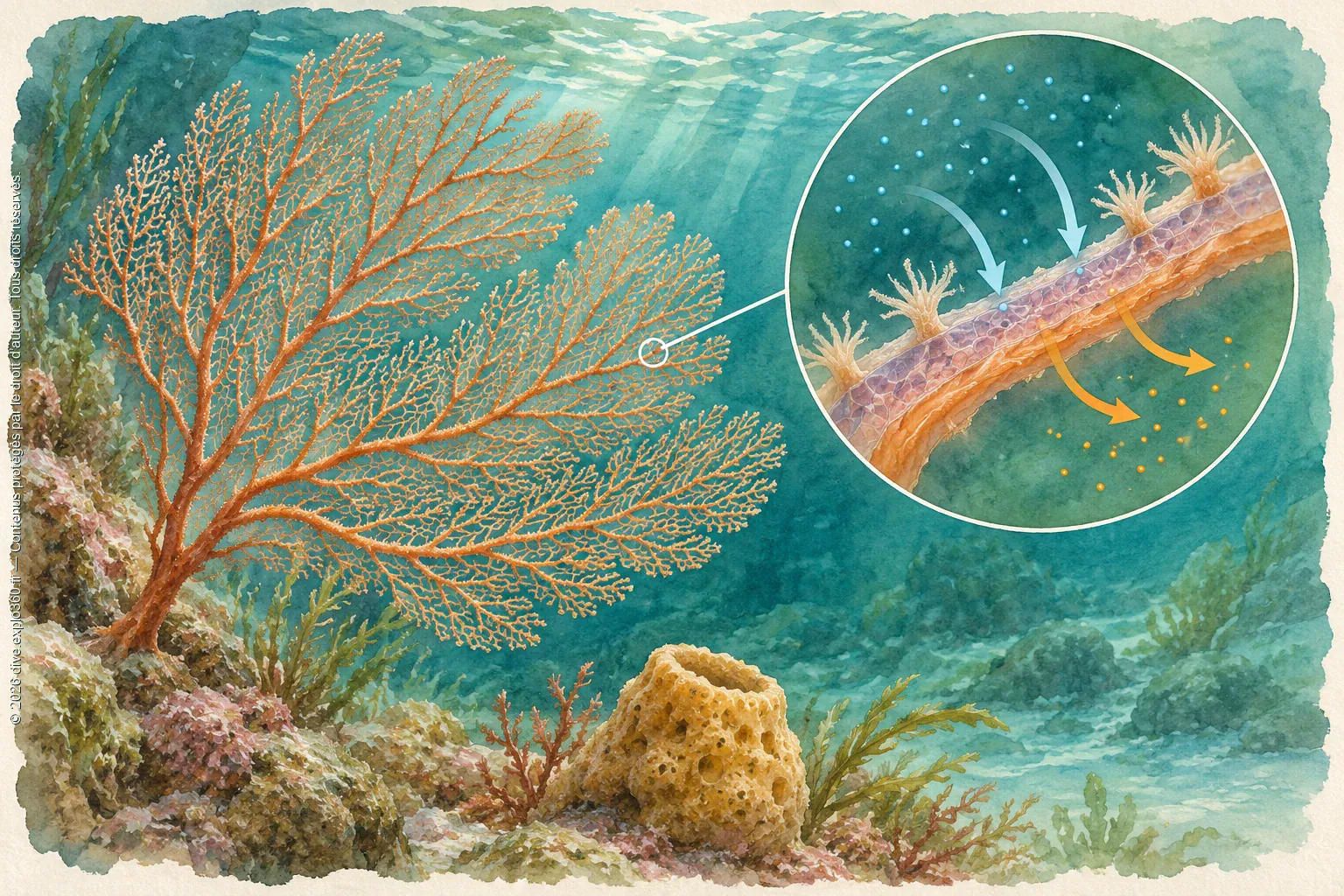
A sponge has no mouth, stomach, intestine, heart or gills, yet feeds, breathes and removes waste. Pores admit water into channels; larger openings, the oscula, discharge it.
Choanocytes each carry a flagellum and surrounding collar. Beating drives circulation; collars help retain particles that cells absorb. Some species also obtain much of their nutrition from dissolved organic matter, sometimes with associated microbes. Large tube-sponge outlets are visible, while the pumping remains largely hidden.
Two siphons and a meal
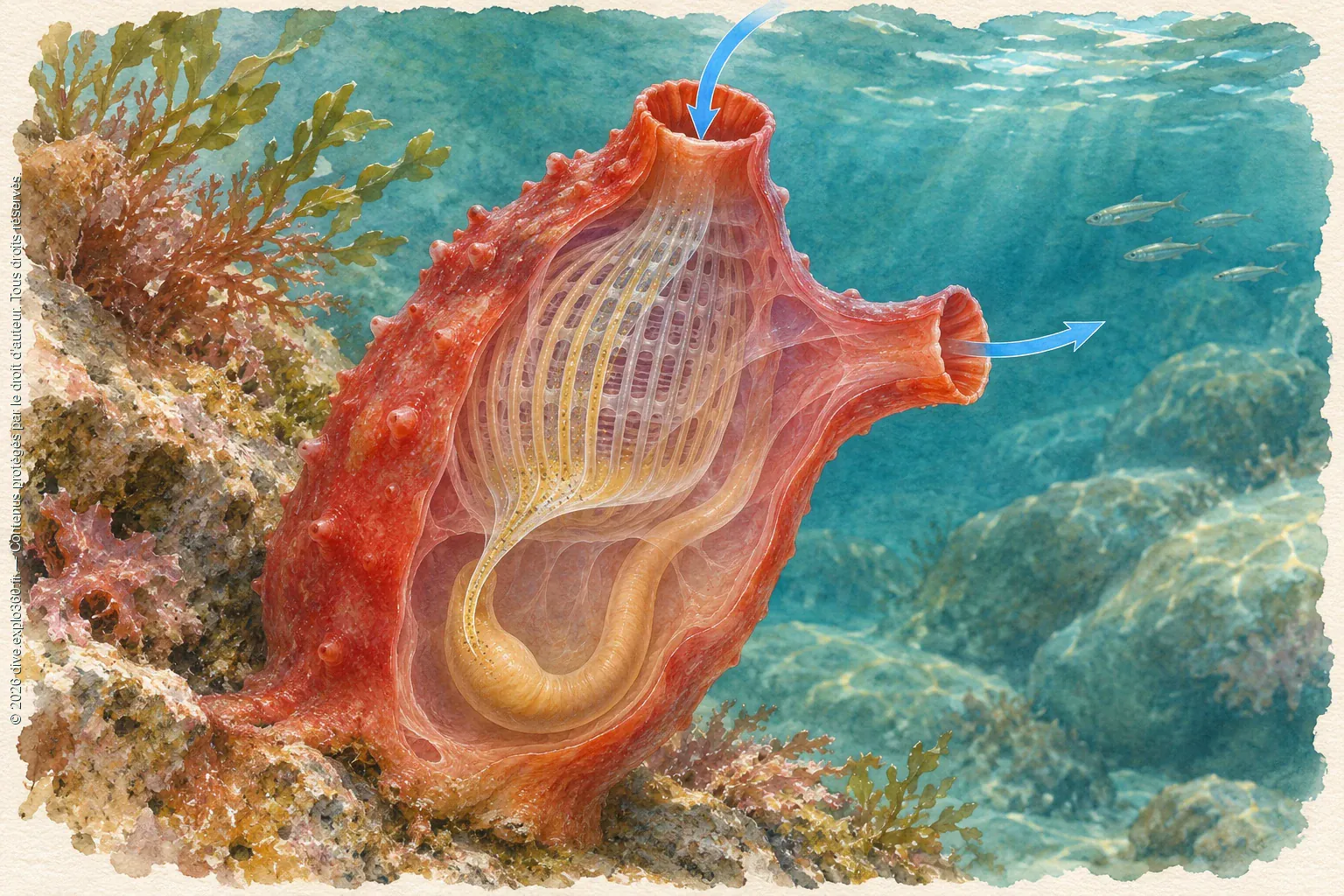
In the red sea squirt, Halocynthia papillosa, water enters one siphon and leaves another. A perforated pharynx, mucus from the endostyle and moving cilia trap and transport food towards the gut. Unlike a sponge, it has a digestive system.
Contraction can close the siphons and expel water. Species may live alone or form colonies. In Botryllus schlosseri, individuals form star-shaped groups around shared outlets, retaining their own feeding apparatus while sharing some structures.
Predation and photosynthetic partners
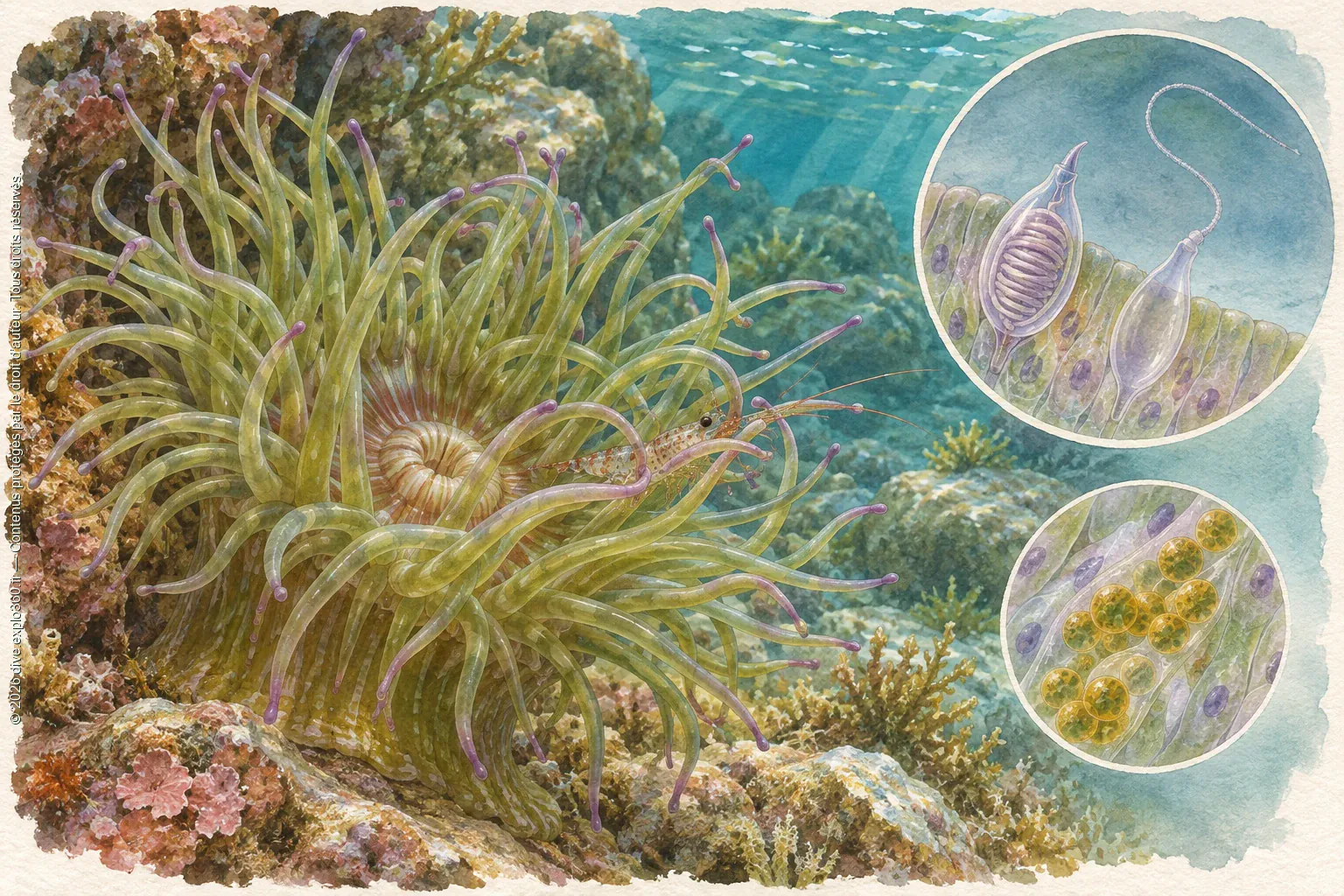
The snakelocks anemone, Anemonia viridis, catches prey directly. Its tentacles carry cnidocytes with capsules that fire microscopic threads. Some pierce tissue and deliver substances that help immobilise prey.
Tentacles bring the meal to a mouth in the oral disc, leading to a digestive cavity with one main opening. Microscopic algae inside the tissues also supply some products of photosynthesis. Many tropical anemones share such partnerships, but not all anemones have symbionts.
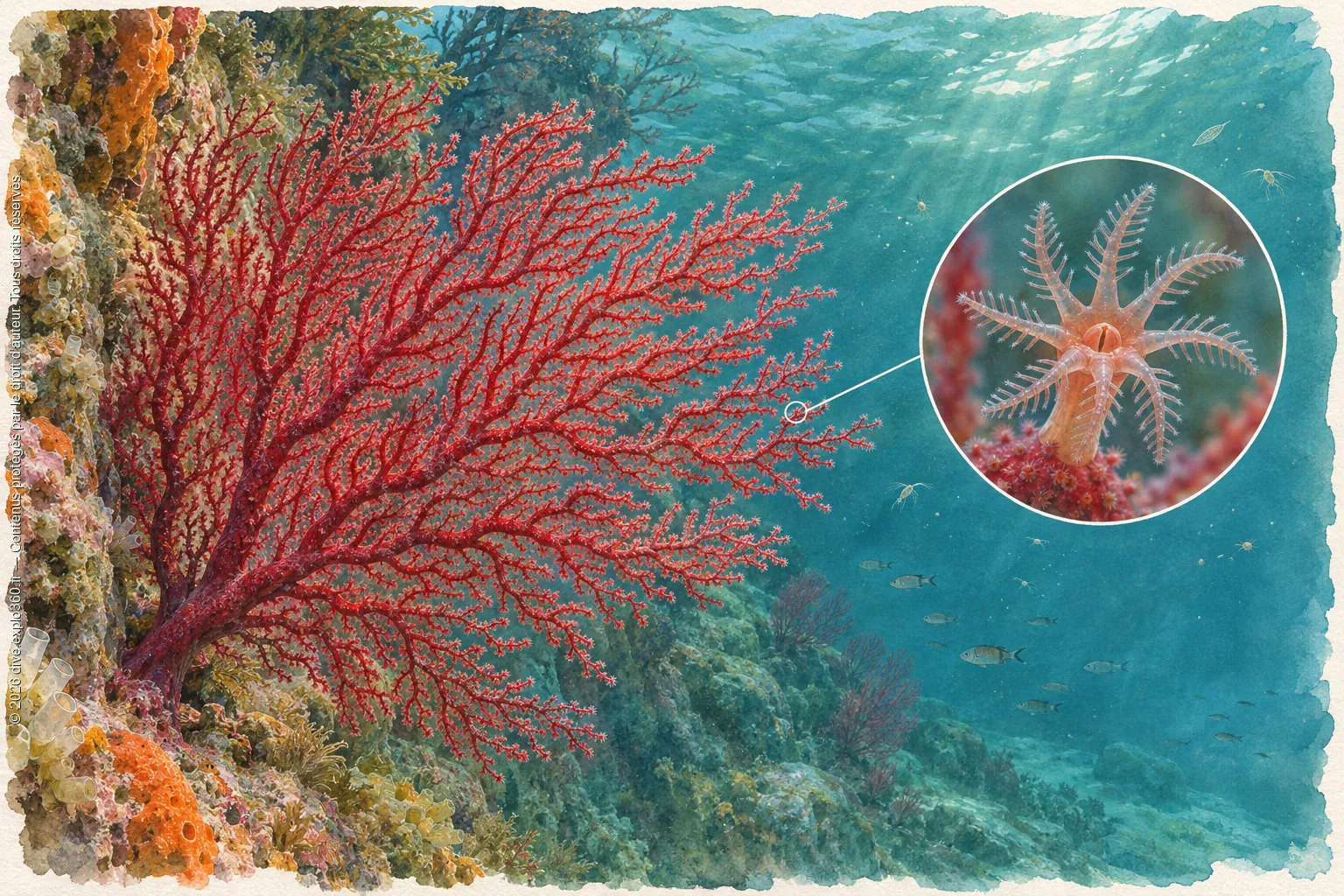
A sea fan multiplies its feeding surfaces
A red sea fan, Paramuricea clavata, is a colony of polyps. Each has a mouth and eight finely branched tentacles. Extended polyps give the branches a fluffy appearance while catching plankton and particles.
Tissue and channels connect the polyps and allow nutrient transfer, among other functions. Height and branching expose more mouths without covering an equivalent area of rock. Fans often intercept prevailing flows, although this shape is vulnerable to storm breakage or detachment.
A crown above a safe retreat
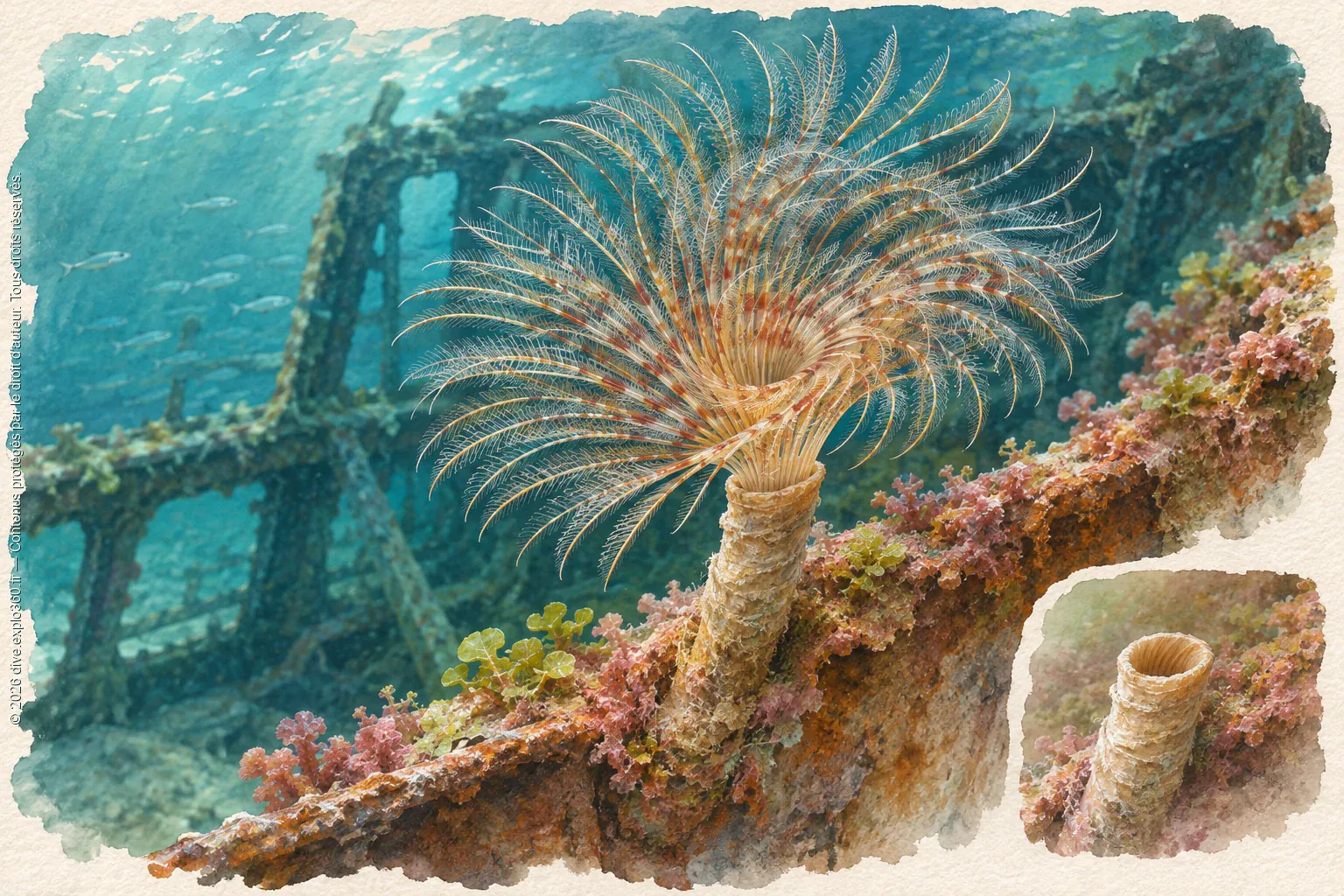
The Mediterranean fan worm, Sabella spallanzanii, exposes a spiral crown while its body stays in a tube. Branching filaments and cilia help capture particles and carry food to the mouth. The crown also supports gas exchange.
It withdraws rapidly at a disturbance, then gradually reopens. Permanent shelter and feeding in passing water are combined. Serpulids use similar methods inside limestone tubes.
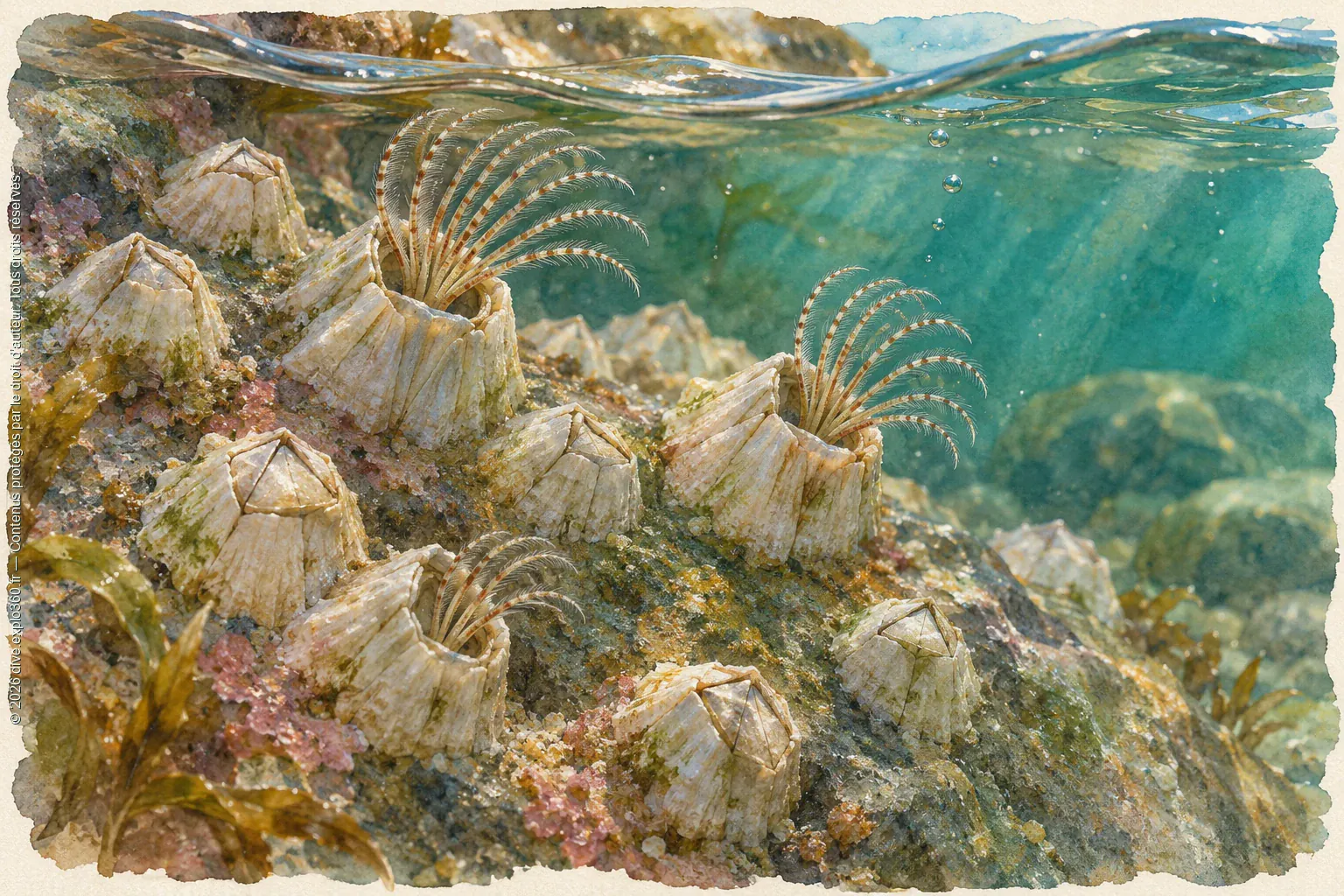
Barnacles reshape their limbs
Barnacles are crustaceans, despite their resemblance to miniature limestone volcanoes. Underwater, adults open their closing plates and extend feathery cirri.
Fresh water for breathing
In sponges and sea squirts, the water flow used for feeding also supports respiration. Anemones and sea fans exchange gases largely across their tissues. Thin surfaces, branches and channels facilitate contact with water.
If flow slows, the layer beside the animal can become depleted in oxygen and accumulate waste. Renewing it matters. Low oxygen, settled sediment and lasting changes in circulation can therefore strongly affect attached species.
GO FURTHER WITH AMIGANSEAU
Continue reading
Discover full species guides, in-depth content and interactive tools available with your licence.
Dive.Explo360 is an independent, self-funded nonprofit. Every licence helps us create new content, improve our teaching tools and keep some of our resources free and ad-free.
Choose a licence that suits your needs for personal, educational or professional use.
Open-access resources remain available without a subscription.