Building a collection, one piece at a time
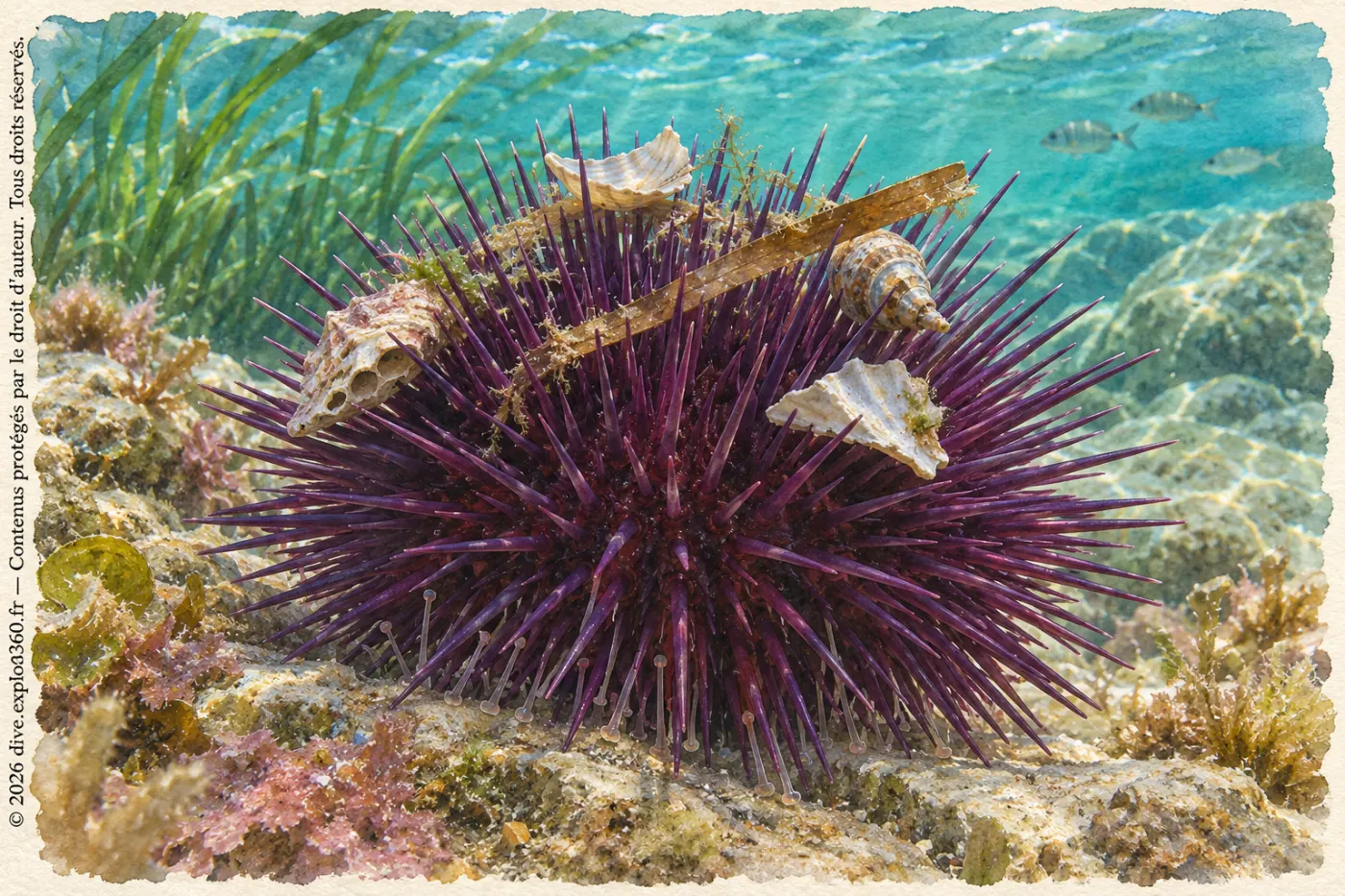
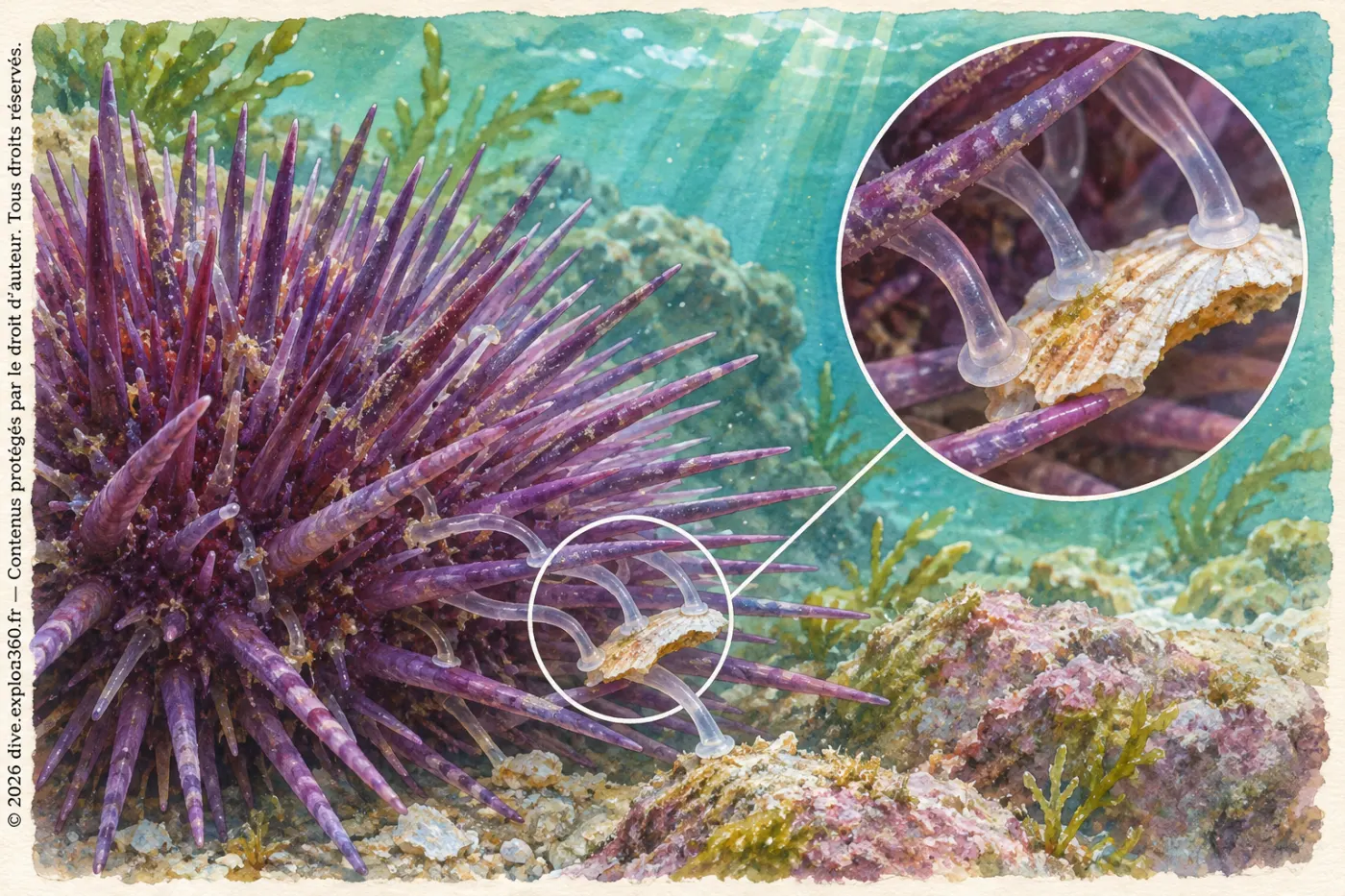
A purple sea urchin uses flexible tube feet between its spines to grip fragments and pass them upwards. An internal water vascular system operates the feet, and the spines help manoeuvre pieces. The collection changes as the animal adds or drops material while moving.
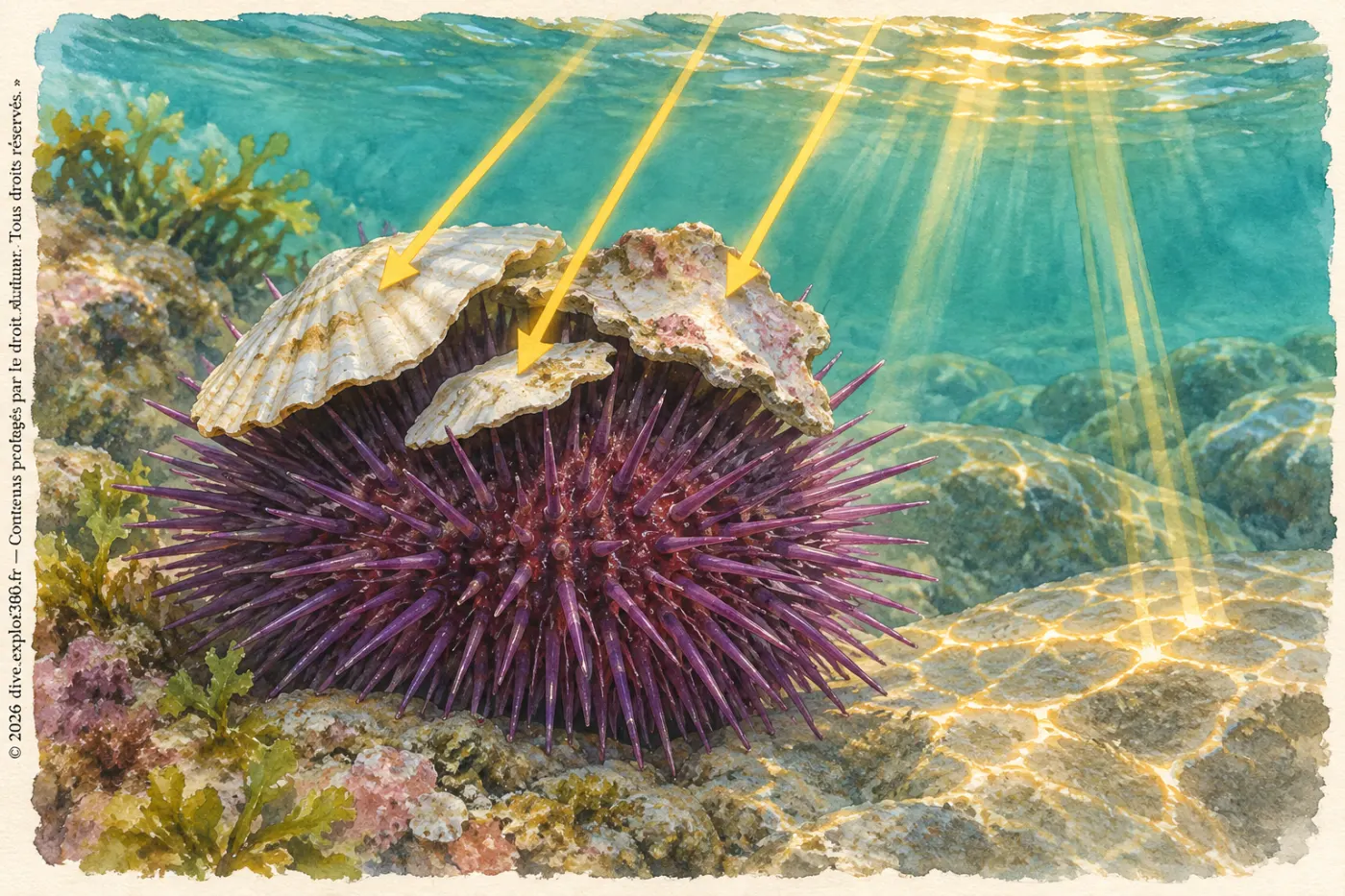
Shade from a shell
Urchins lack fish-like eyes, but light-sensitive cells let them respond to brightness. Some cover themselves more in intense light, including ultraviolet radiation. Opaque shells screen some rays in shallow water. Yet covering also happens in dim light, so shade is not the only possible benefit.
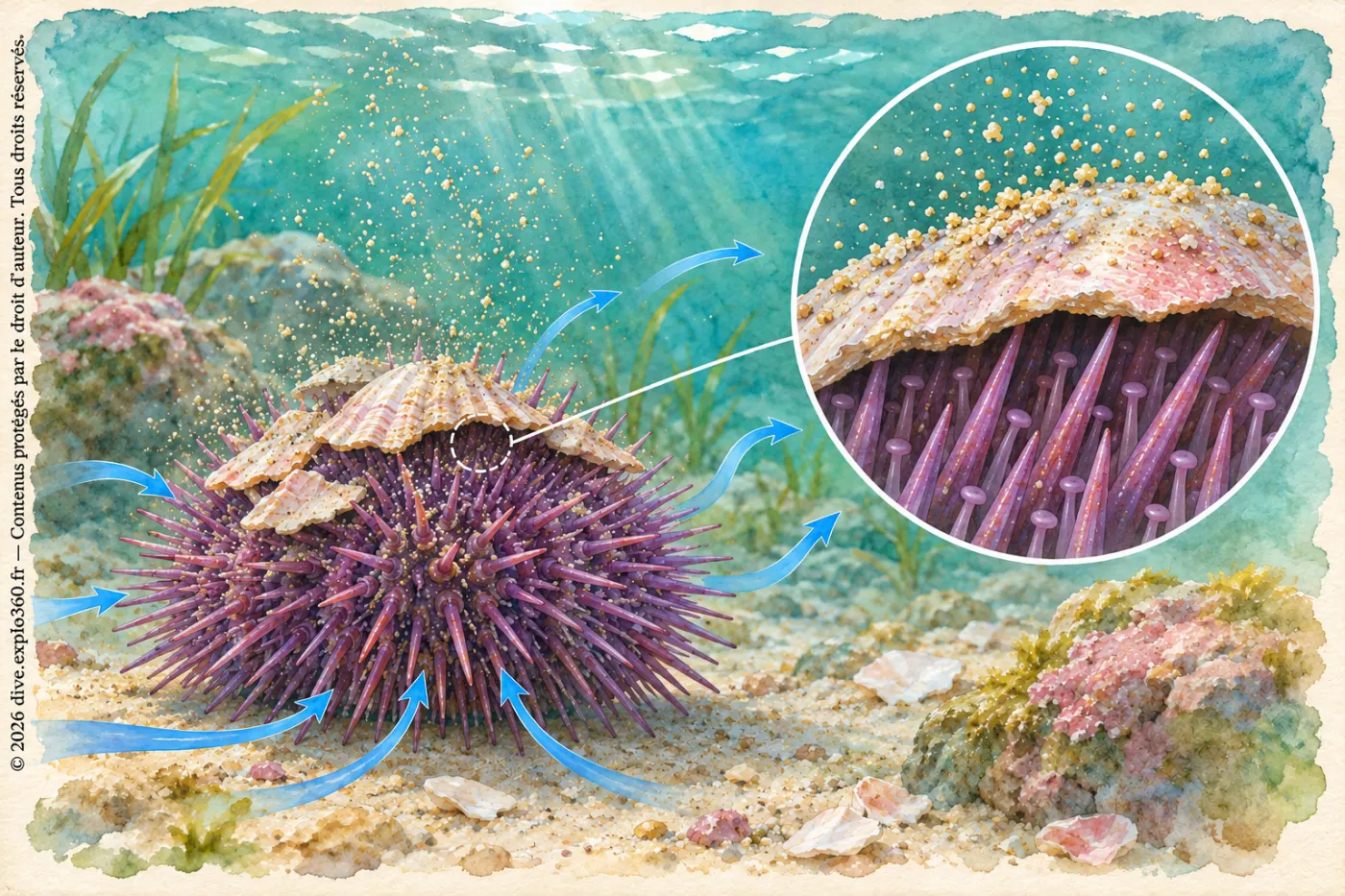
A roof against drifting sand
A Banyuls-sur-Mer experiment published in 2000 found purple sea urchins using more shells when sand was suspended in the water. Shells might act like small umbrellas, limiting deposits near the madreporite, a porous structure associated with the tube feet’s water system.
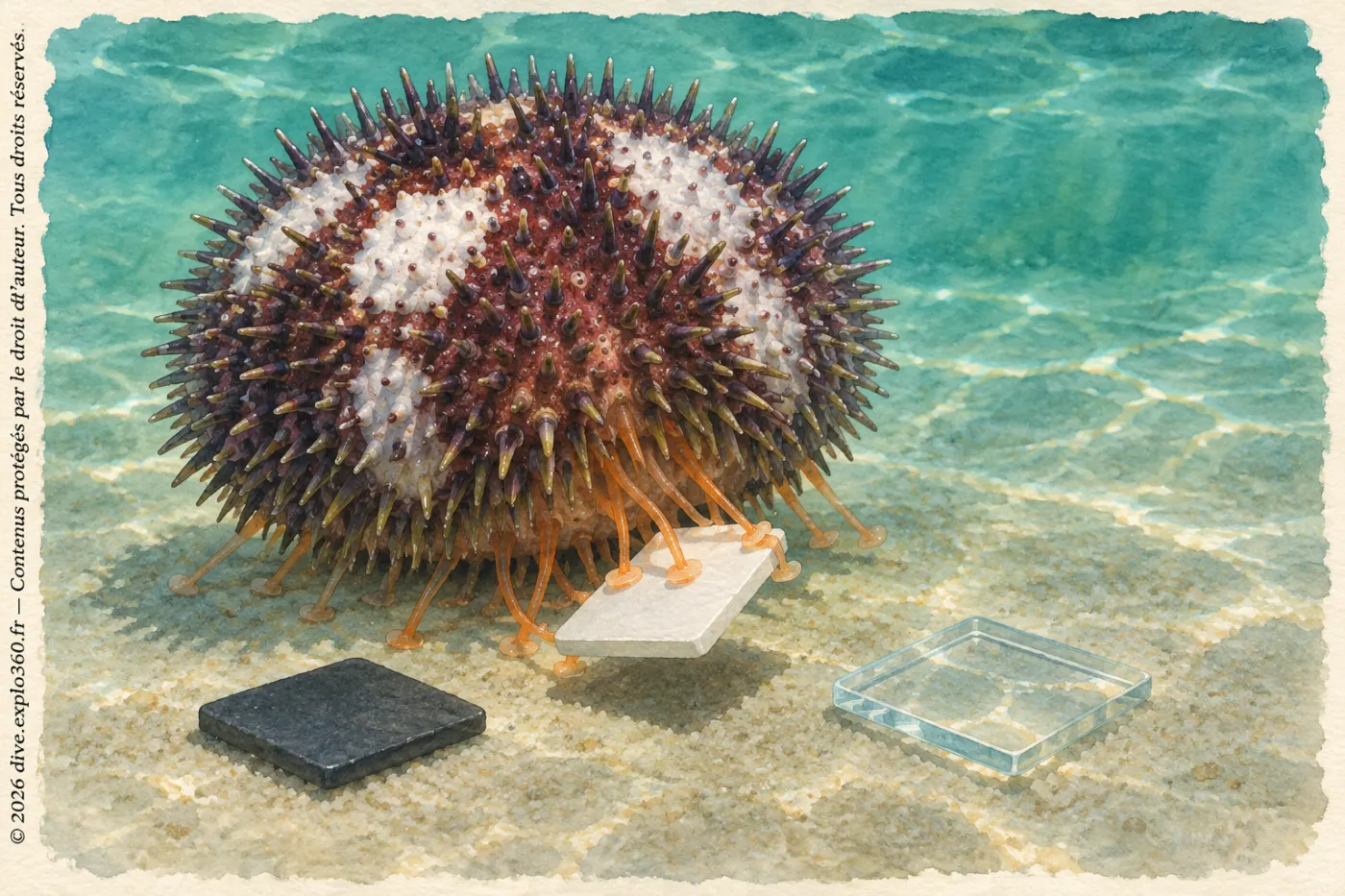
Choosing the useful pieces
In French Polynesia, collector urchins, Tripneustes gratilla, preferred opaque plastic pieces to more transparent ones and increased covering in bright light. Size and weight influence choices in other species. Sensory responses can favour useful material without an understanding of the science behind it.
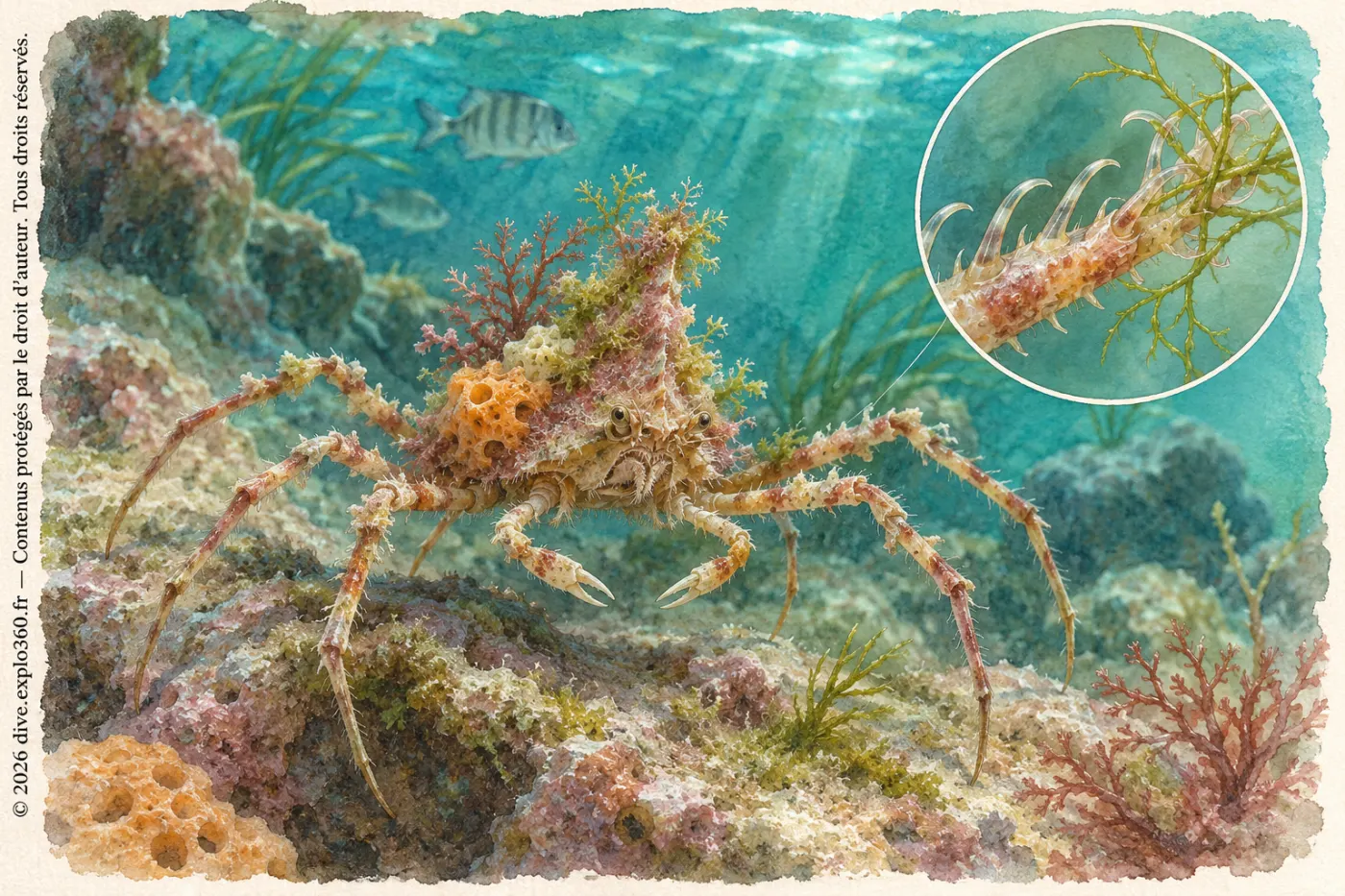
A walking disguise
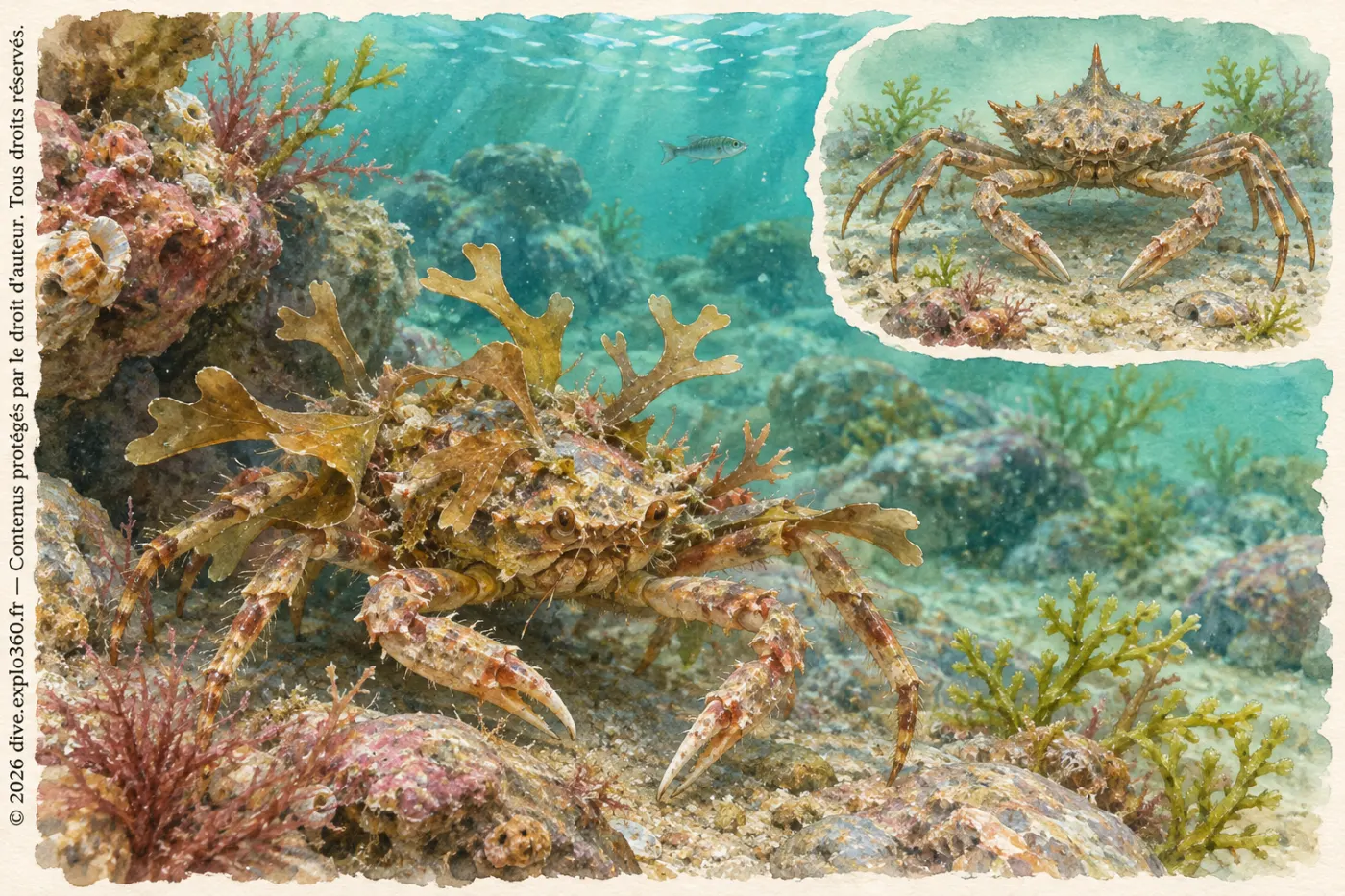
Decorator crabs prepare algae, sponge or hydroid fragments with claws and mouthparts, then press them onto hooked bristles. Several belong to the majoids, the group including spider crabs. Unlike an urchin, the crab need not keep holding every piece: the disguise stays attached as it walks and feeds.
Borrowing an alga’s defences
Young Libinia dubia use Dictyota menstrualis, an alga many fish avoid because of its chemicals. Stachowicz and Hay found fewer fatal attacks on crabs wearing it than on those with another alga. Decoration and food choices differed. Northern populations use other materials where Dictyota is absent.
GO FURTHER WITH AMIGANSEAU
Continue reading
Discover full species guides, in-depth content and interactive tools available with your licence.
Dive.Explo360 is an independent, self-funded nonprofit. Every licence helps us create new content, improve our teaching tools and keep some of our resources free and ad-free.
Choose a licence that suits your needs for personal, educational or professional use.
Open-access resources remain available without a subscription.