Building a collection, one piece at a time
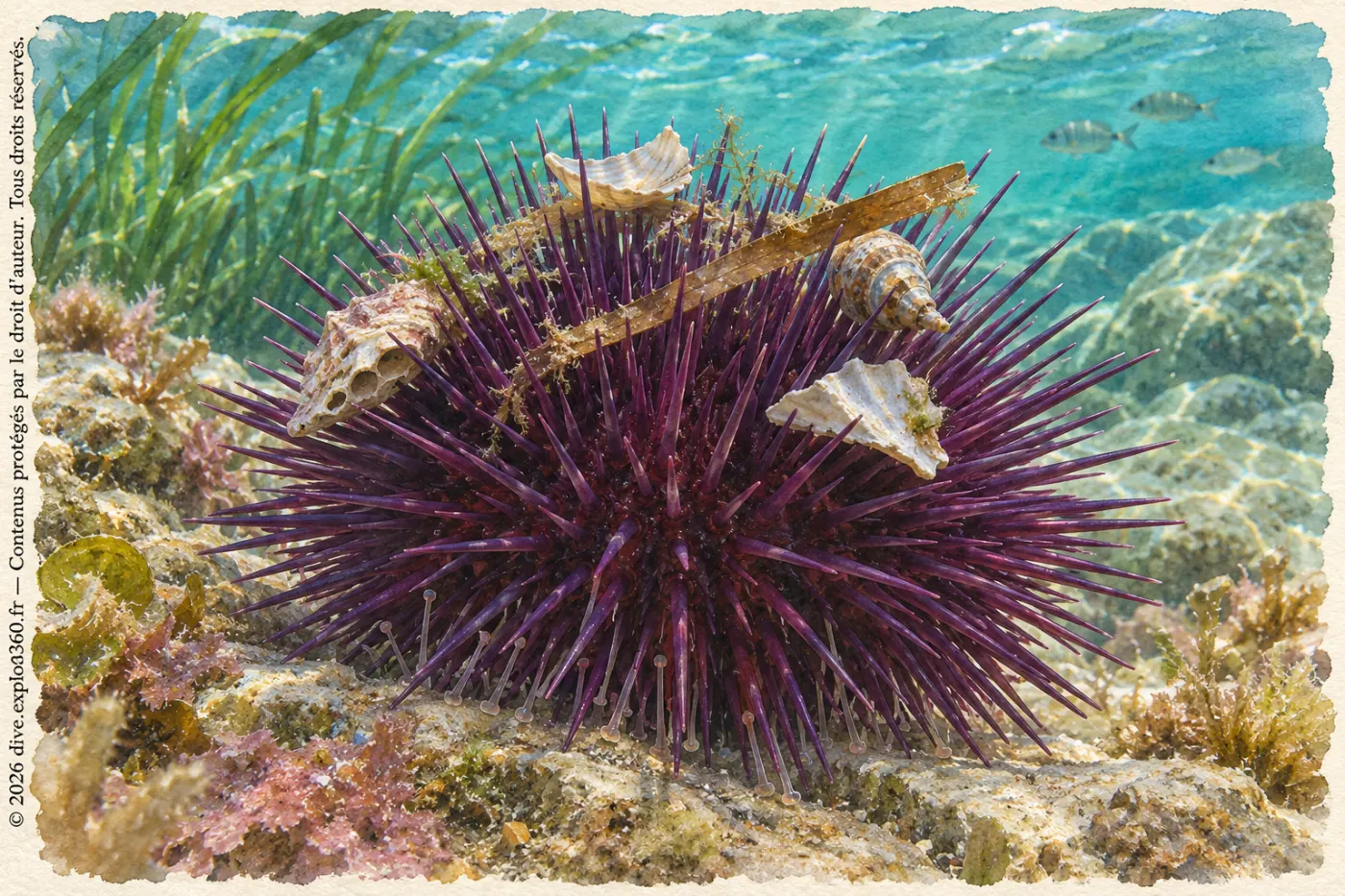
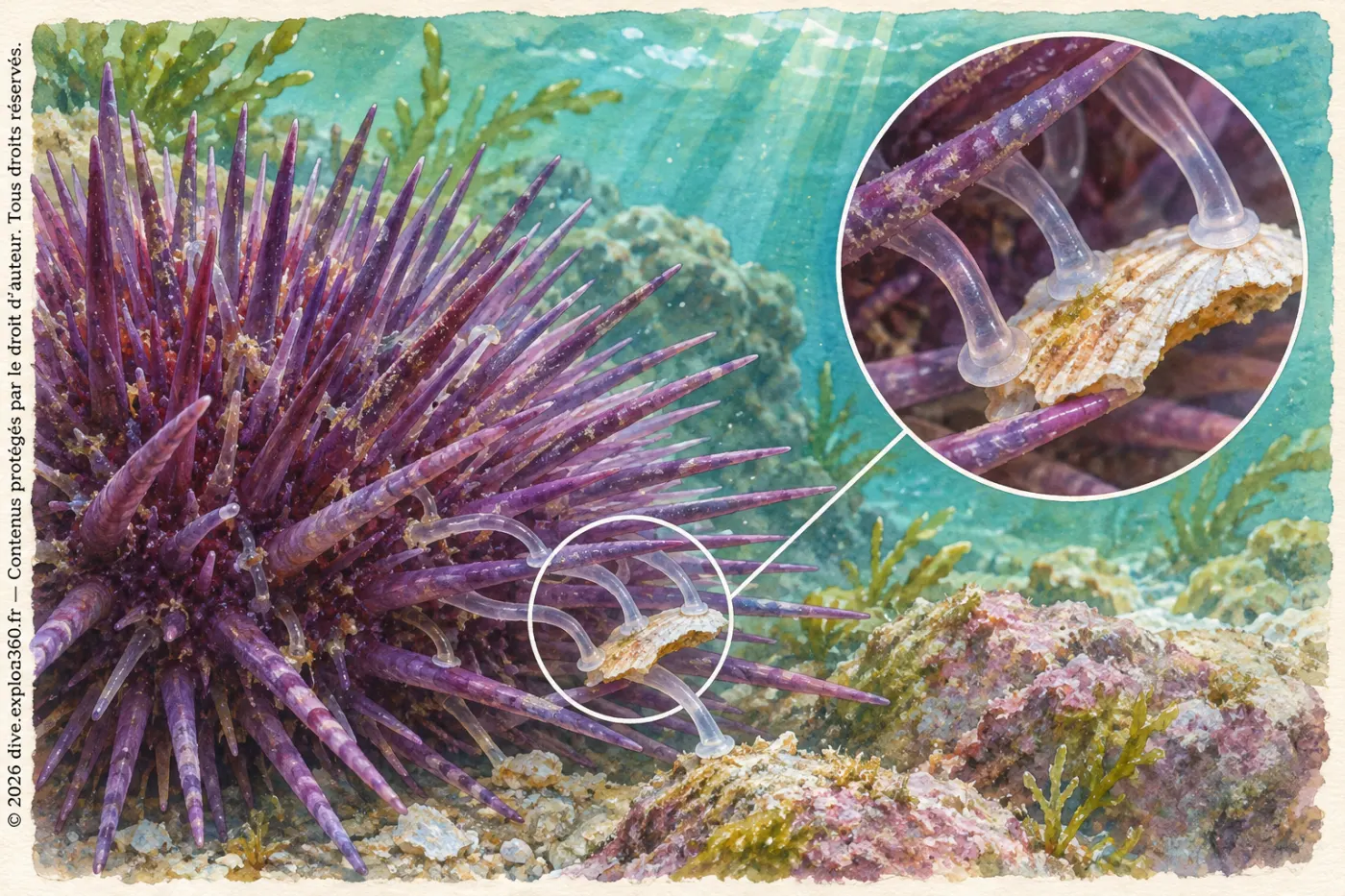
In the purple sea urchin, Paracentrotus lividus, tube feet and spines move fragments onto the upper surface. The water vascular system operates the feet, whose adhesive tips retain material during travel. Pieces are added, moved and discarded as suitable objects are encountered.
Shade from a shell
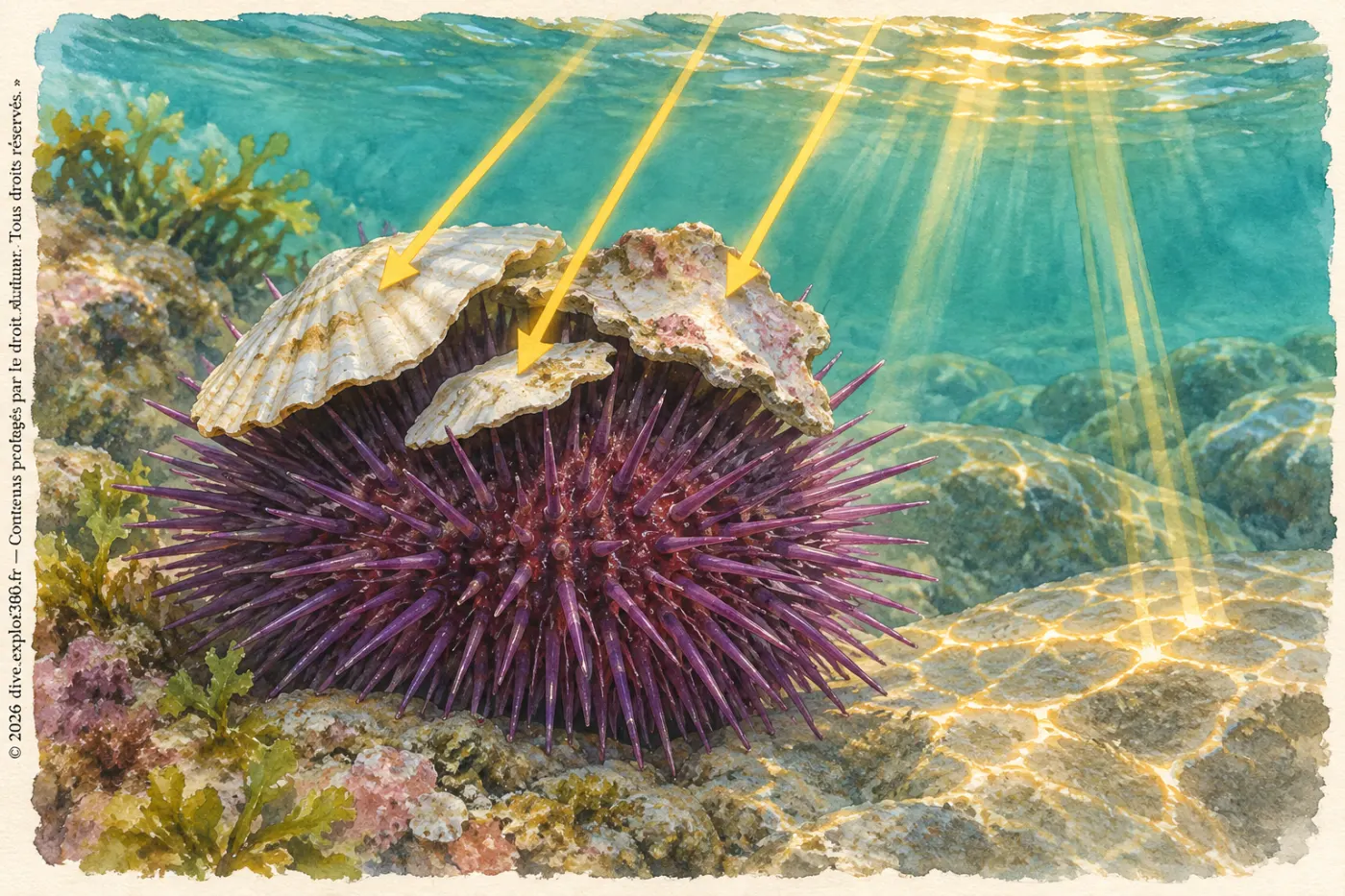
Light-sensitive cells, including those in tube feet, allow responses to brightness and, in some species, direction. Experiments associate ultraviolet exposure with increased covering. Opaque pieces provide a screen in shallow water, but covering under low light indicates additional influences.
A roof against drifting sand
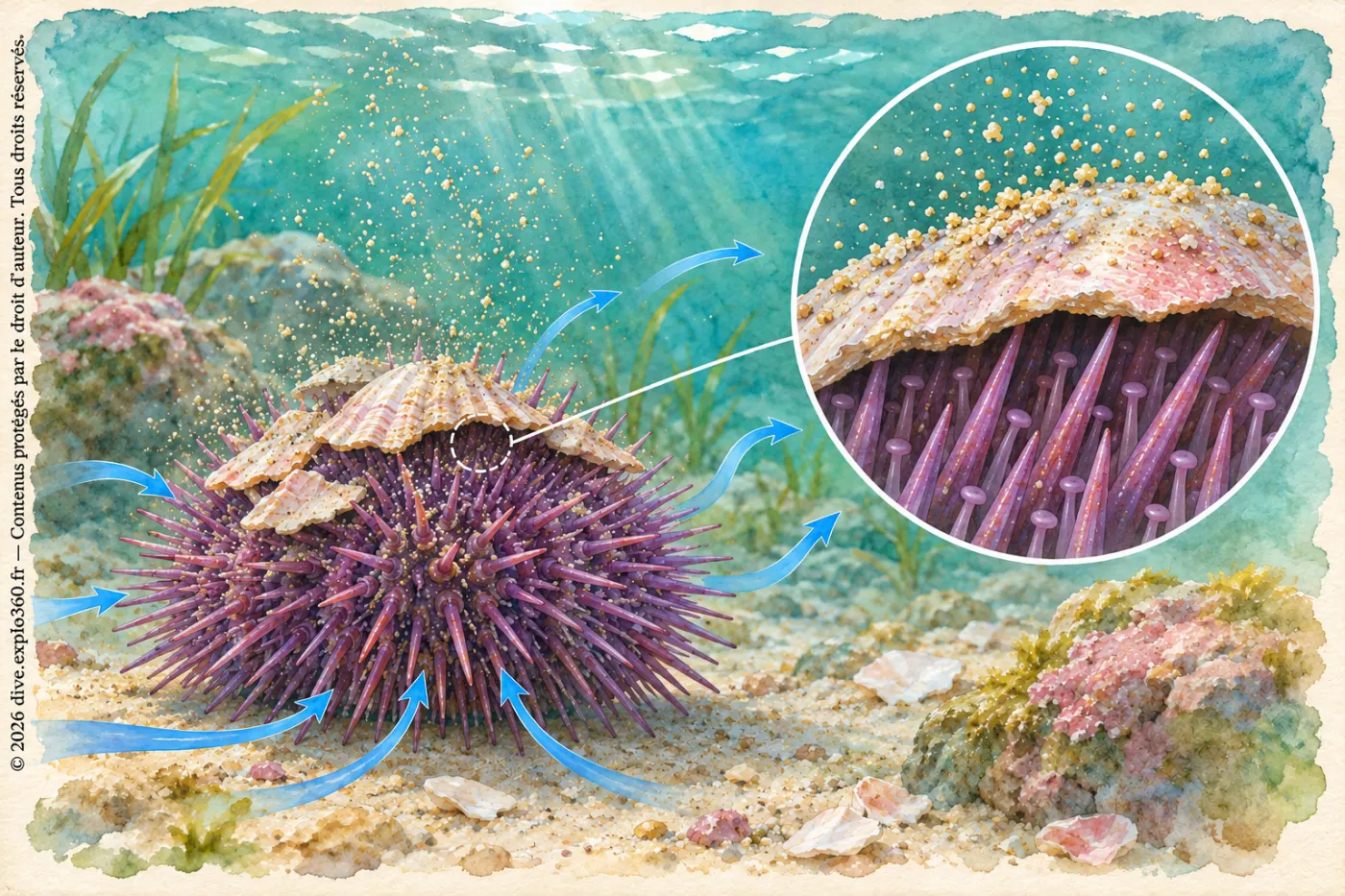
The Banyuls study published in 2000 measured increased covering in response to suspended sand. The authors proposed that shells shield the upper surface, including the madreporite region associated with the water vascular system. The behavioural result and the suggested protective function are distinct claims.
Choosing the useful pieces
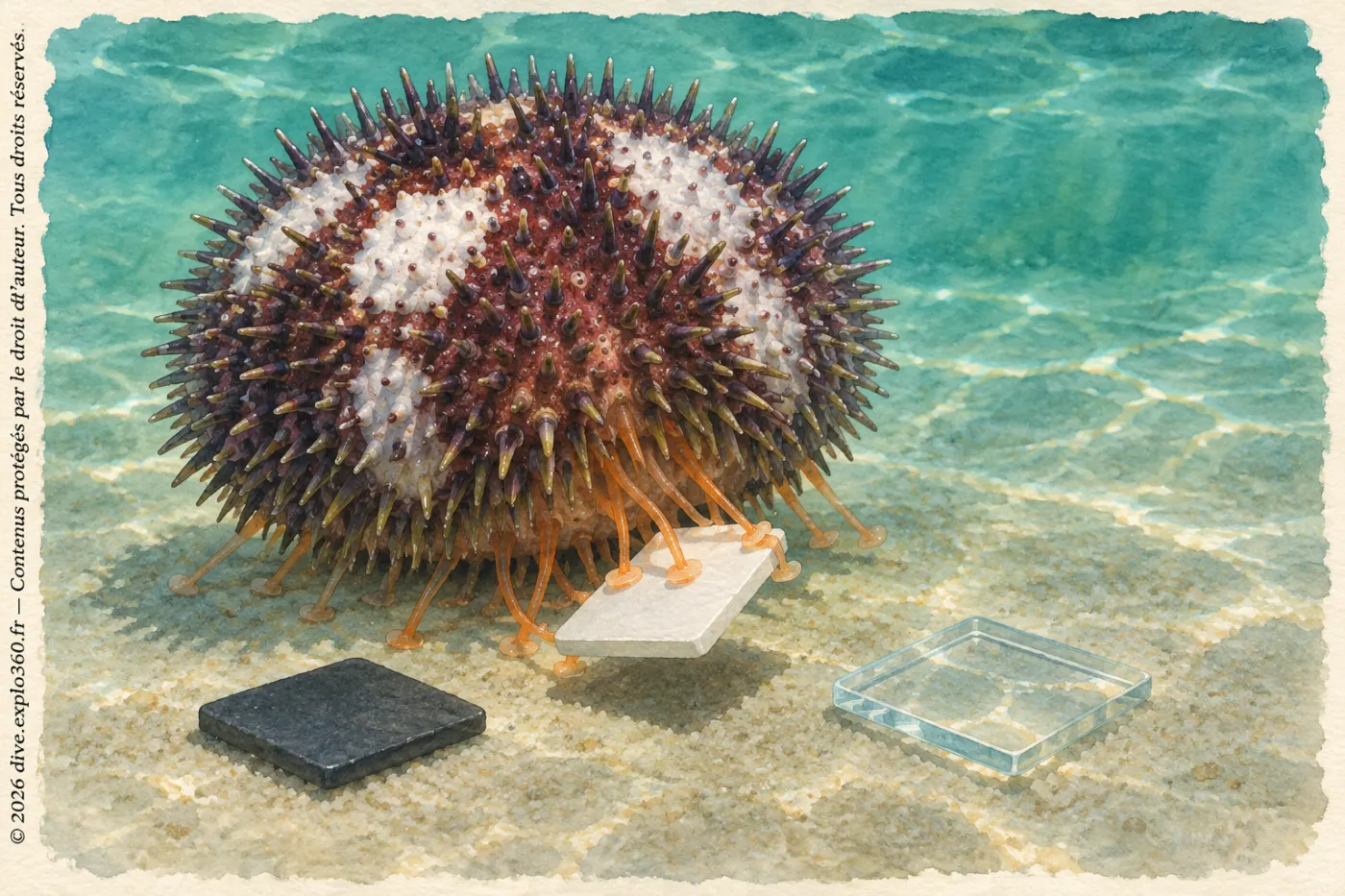
Experiments with Tripneustes gratilla found selection linked to opacity and illumination. Size and mass influence object choice in other urchins too. Such responses can favour useful material without a cognitive understanding of its optical or mechanical properties.
A walking disguise
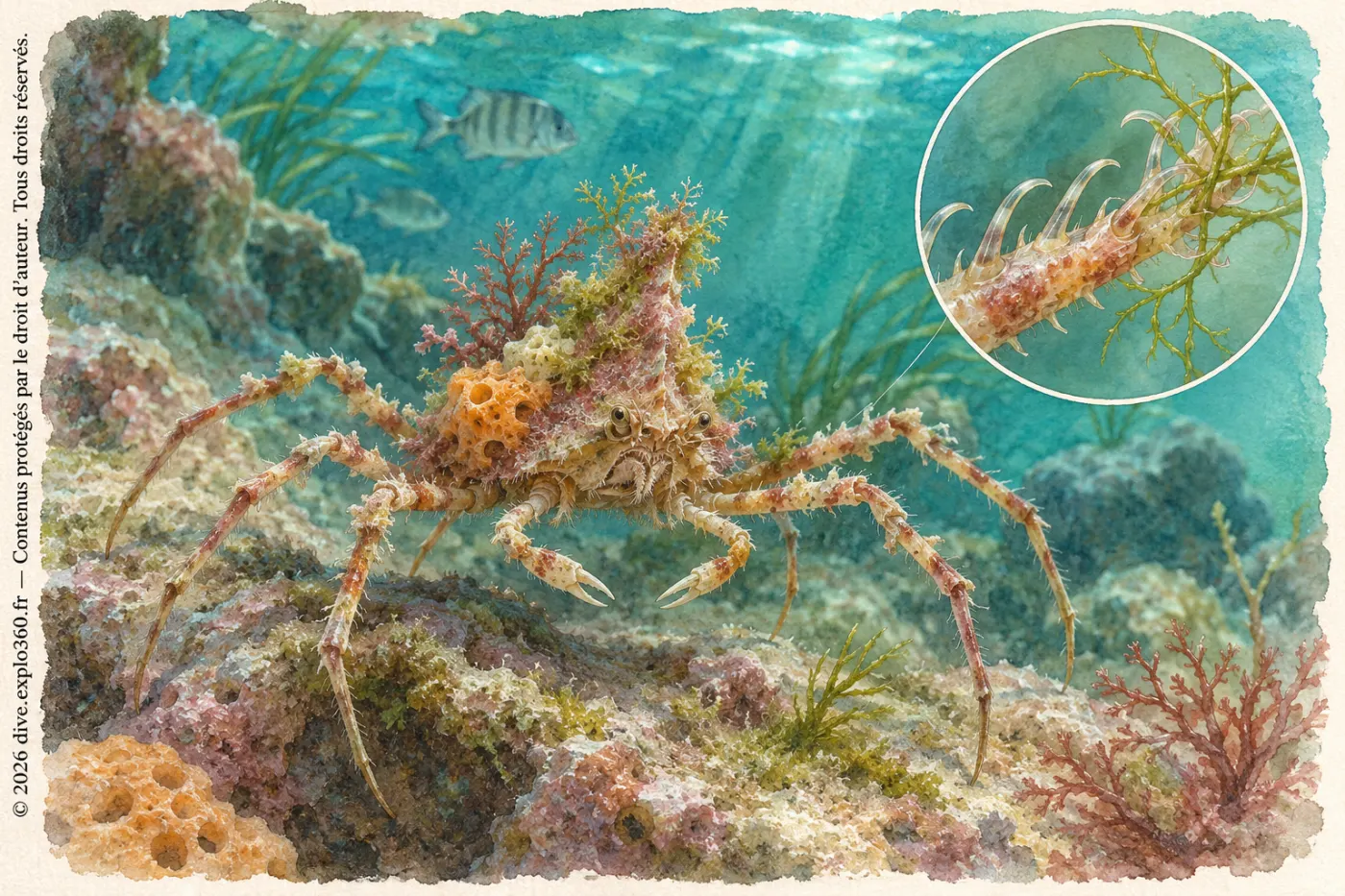
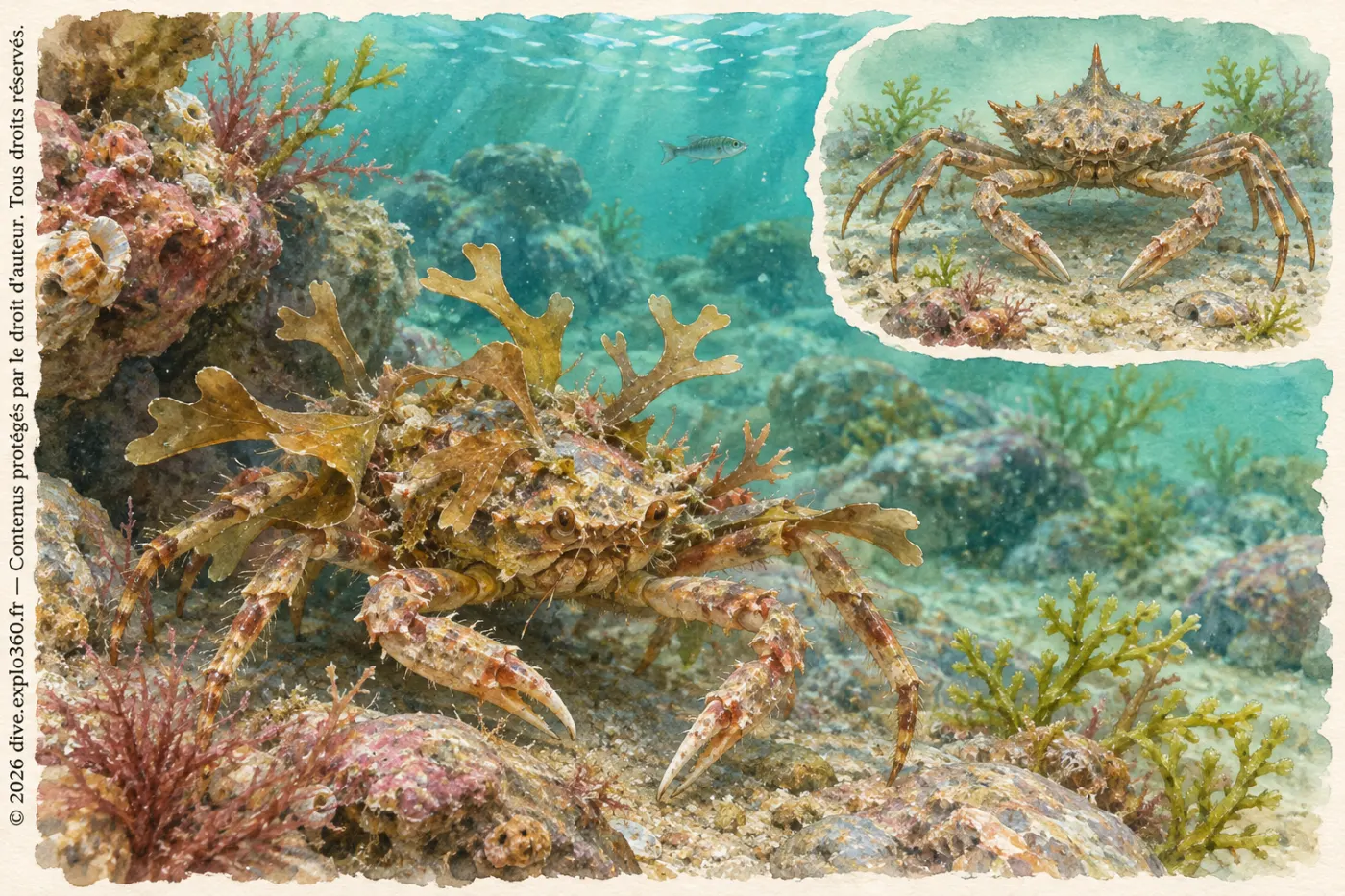
Several majoid crabs prepare algae, sponges or hydroids with claws and mouthparts and secure them on hooked bristles called setae. Attachment allows retention without continual gripping, unlike an urchin’s covering. The crab can walk and feed while carrying its disguise.
Borrowing an alga’s defences
Stachowicz and Hay distinguished decoration from dietary choice in Libinia dubia. Juveniles carrying chemically defended Dictyota menstrualis suffered less predation than crabs wearing another alga. Large adults beyond the main local fish predators’ size range stopped decorating. Materials also varied geographically where Dictyota was absent.
GO FURTHER WITH AMIGANSEAU
Continue reading
Discover full species guides, in-depth content and interactive tools available with your licence.
Dive.Explo360 is an independent, self-funded nonprofit. Every licence helps us create new content, improve our teaching tools and keep some of our resources free and ad-free.
Choose a licence that suits your needs for personal, educational or professional use.
Open-access resources remain available without a subscription.