


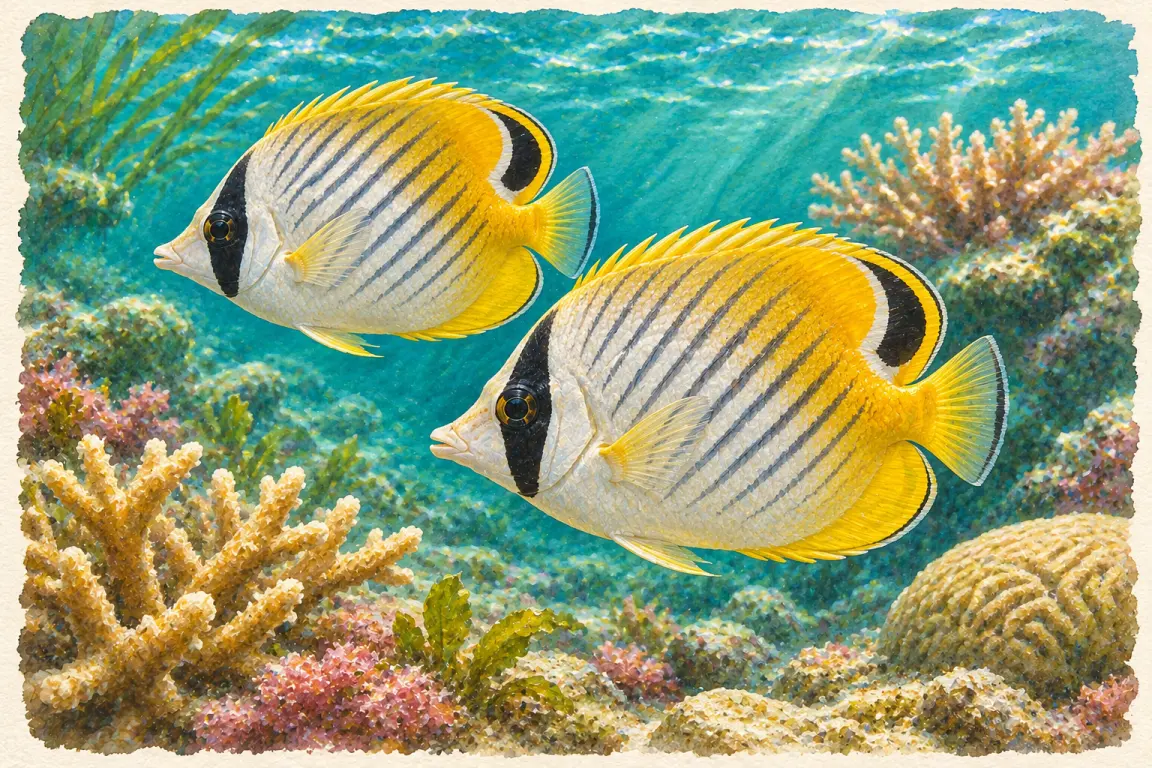
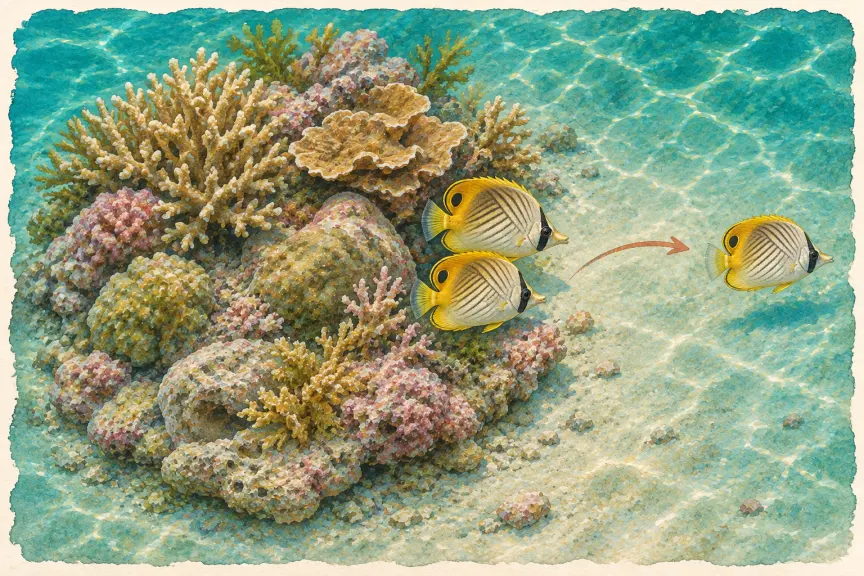
Two fish, one feeding patch
For a coral-feeding butterflyfish, food stays in predictable places. Another fish eating the same coral is a competitor, yet a familiar partner can help guard the supply. On the Great Barrier Reef, researchers found mainly paired populations of Chaetodon lunulatus, C. baronessa and C. vagabundus, while species such as C. trifascialis were mainly solitary. Even in the usually paired species, some fish lived alone.
Researchers replaced one partner in established pairs of two species. At first, the new partners showed more conflict and defended food less effectively together. Familiarity had value: keeping an established partner could be worthwhile even when another was available. The share of defensive work varied with species and sex.
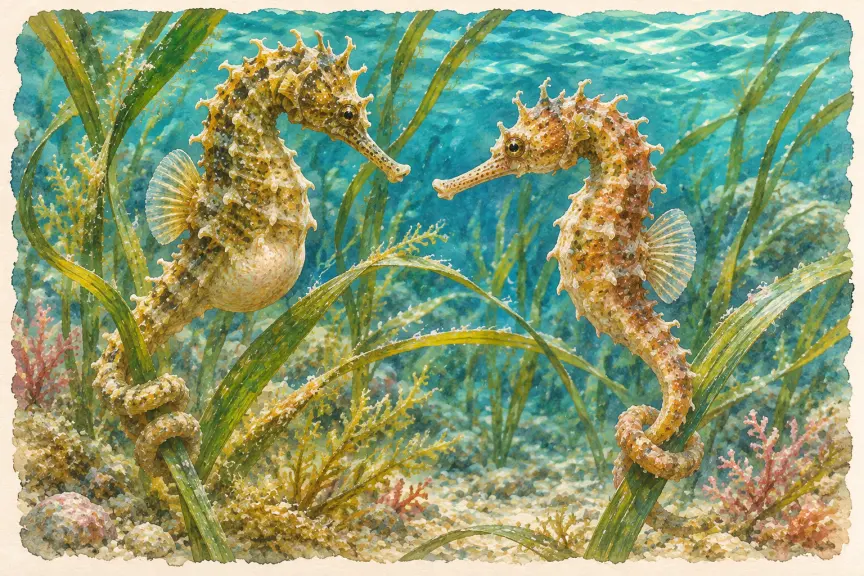
A partner and a brood pouch
Courting seahorses may rise from the seabed together. Their movements must align for the female to transfer eggs into the male’s brood pouch. The embryos develop inside before he releases the young. Where mates are scattered, maintaining contact can save another search between broods.
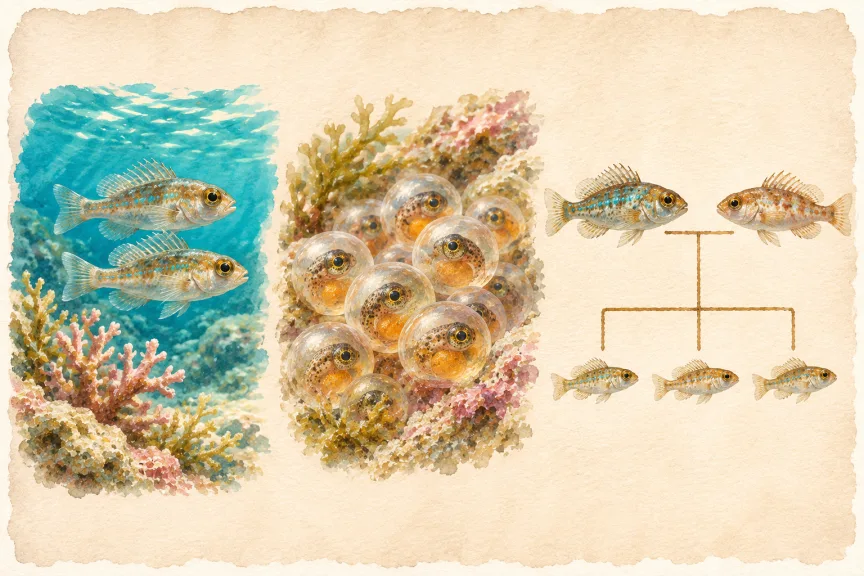
Staying together and breeding exclusively are different claims. Social monogamy describes a stable association; sexual monogamy concerns exclusive mating; genetic monogamy concerns exclusive parentage over a defined period. Repeat sightings reveal association. Genetic sampling across broods tests parentage. Long-snouted seahorse studies have documented serial monogamy, with partnerships capable of changing between breeding seasons.
Three kinds of evidence
GO FURTHER WITH AMIGANSEAU
Continue reading
Discover full species guides, in-depth content and interactive tools available with your licence.
Dive.Explo360 is an independent, self-funded nonprofit. Every licence helps us create new content, improve our teaching tools and keep some of our resources free and ad-free.
Choose a licence that suits your needs for personal, educational or professional use.
Open-access resources remain available without a subscription.