Skin more sensitive than it looks
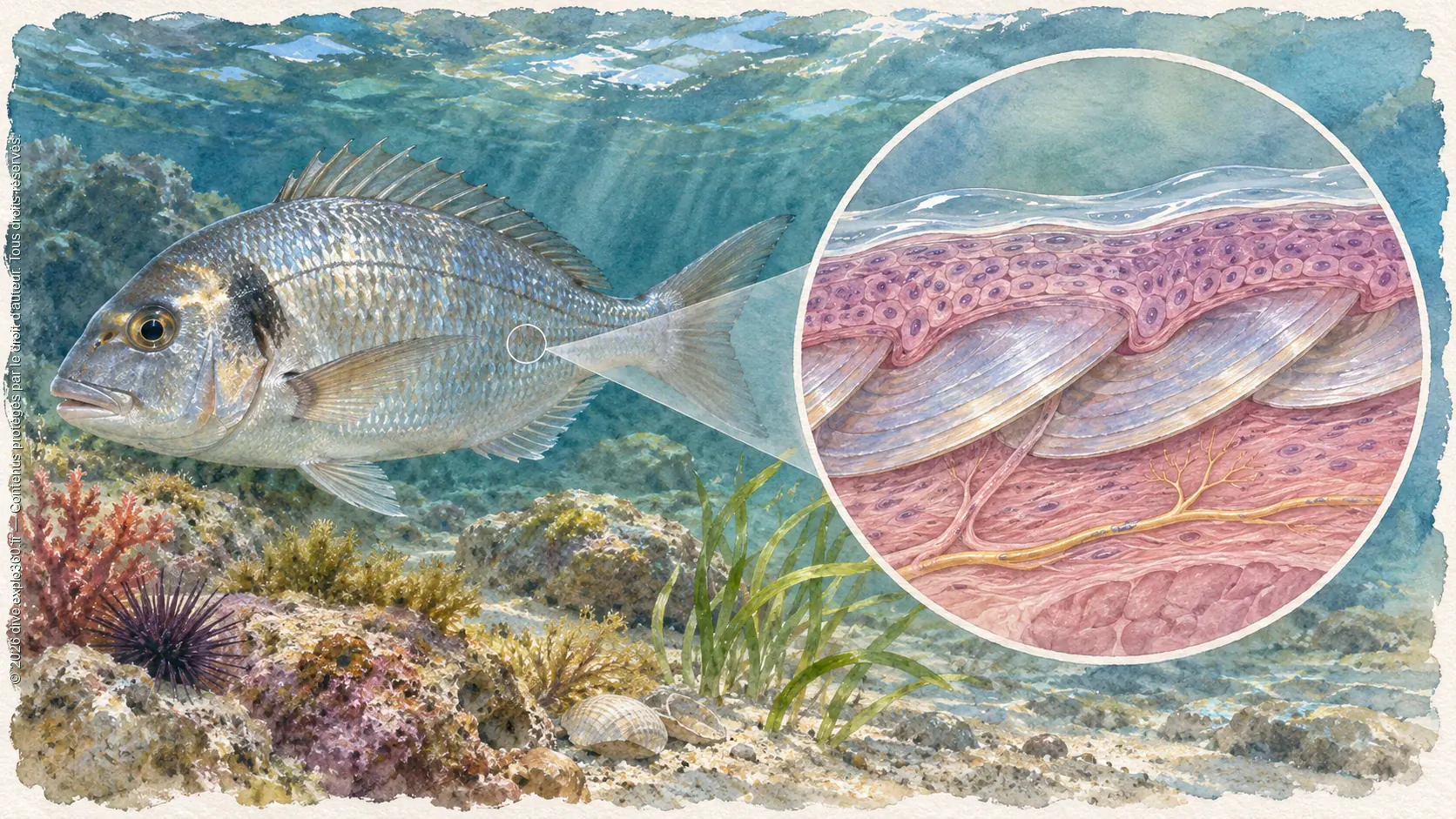
Scales can make a fish appear armour-plated. In most bony fish, however, they are not the outermost surface.
The scales are embedded in the dermis and covered by a living epidermis. This contains cells that produce mucus.
The transparent film has several functions. It contributes to protection against microorganisms, participates in exchanges with the surrounding water and helps limit some mechanical damage.
It also contains molecules involved in immune defence, including enzymes and antibodies.
Unlike our skin, whose outer layer consists mainly of dead cells, a fish’s epidermis remains largely composed of living cells in contact with water.
Nerve endings detect mechanical and chemical stimuli. Irritation, injury or an organism attached to the skin can therefore trigger a sensory response.
A fish has no hands or fingers to reach the affected area. Its movements and available surfaces provide other possibilities.
Unwelcome passengers
A fish’s surface provides a habitat for many parasites.
Some consume mucus or superficial cells; others take blood or other body fluids. Several possess attachment structures that hold them firmly despite their host’s movements.
They are called ectoparasites when they live on the body surface or on structures directly exposed to the environment, such as the gills.
They include crustaceans, flatworms and various single-celled organisms.
Their presence can cause lesions, inflammation or increased mucus production.
Rubbing against a hard surface may dislodge a superficial organism. It may also temporarily change the sensory stimulation associated with irritation.
It is not a foolproof method. Some parasites remain so firmly attached that they resist the fish’s movements.
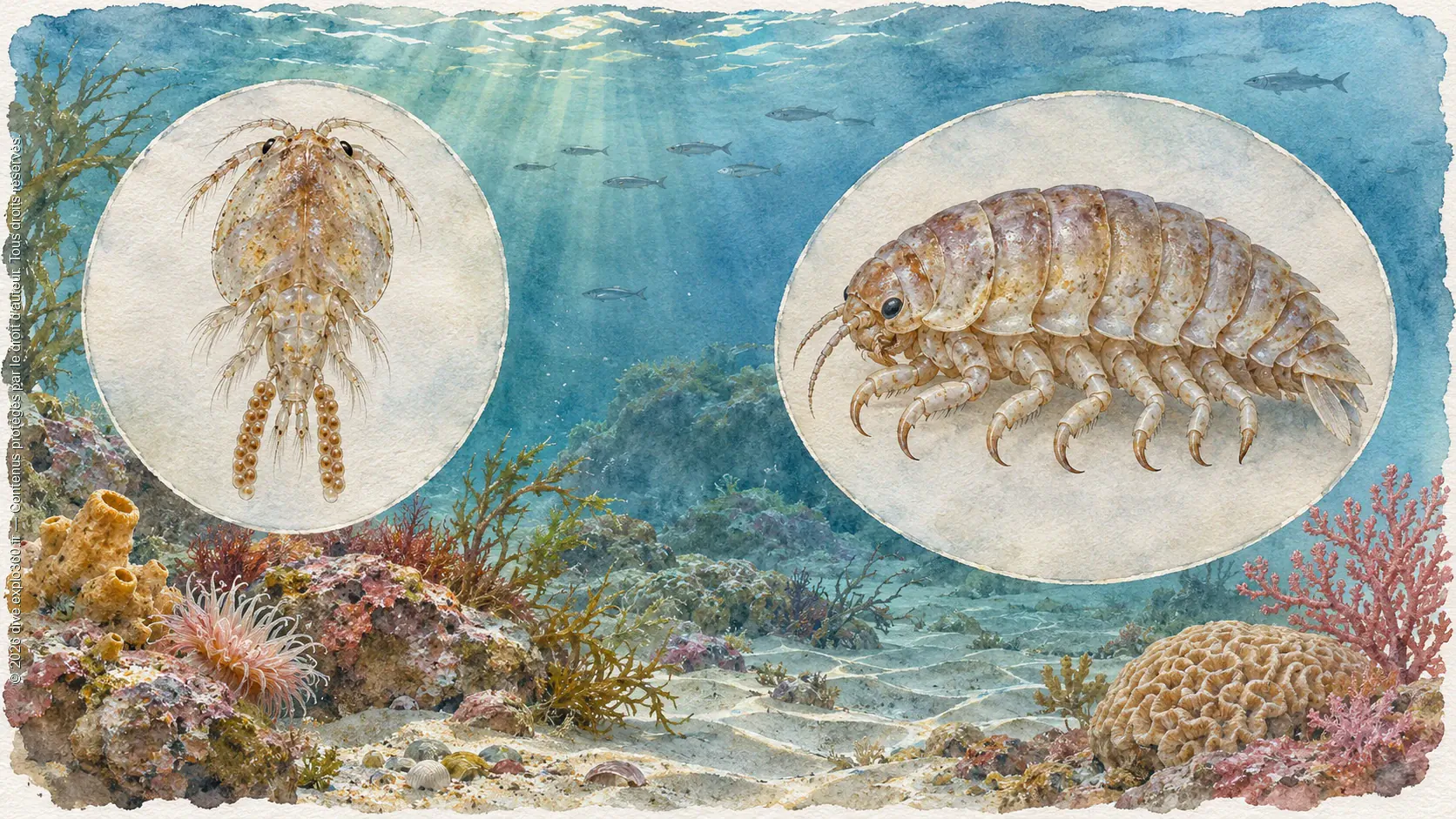
Crustaceans that hold on
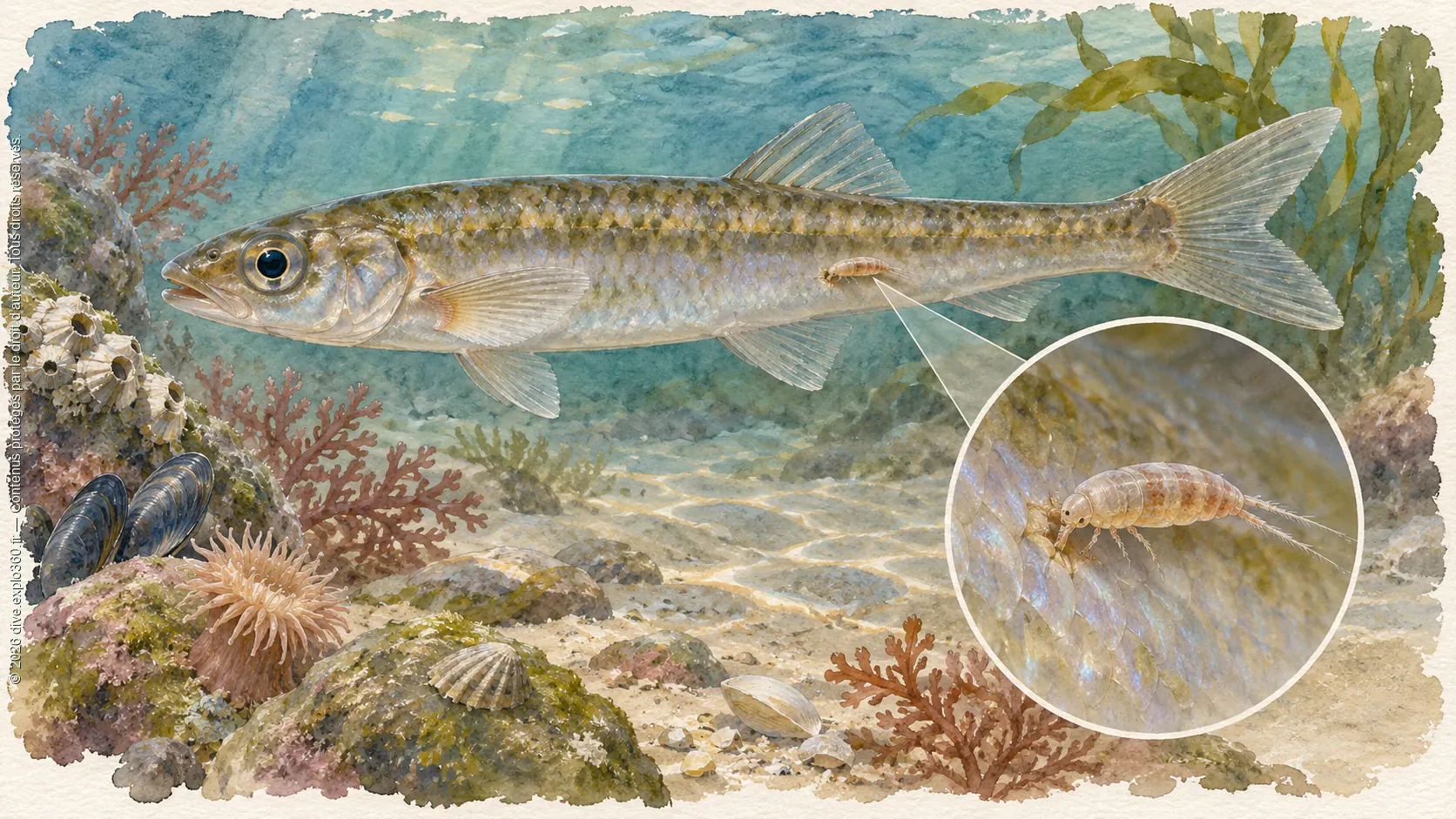
In the Mediterranean and tropical seas, various crustaceans parasitise fish.
Caligid copepods, often called sea lice, have flattened bodies and specialised structures for holding on to their hosts.
Depending on the species, they may move over the fish or remain associated with particular body regions. Their feeding can damage the epidermis and disrupt its protective mucus layer.
Other crustaceans, the isopods, can grow much larger.
Cymothoids, for example, may occupy the skin, mouth or gill cavities. Hooked appendages give them a particularly firm grip.
A simple rub against a rock is unlikely to remove a parasite lodged deep in the mouth or gill cavity.
The fish’s response may nevertheless be associated with the irritation and damage it causes.
Almost invisible parasites
A fish that looks healthy from a few metres away may carry numerous microscopic parasites.
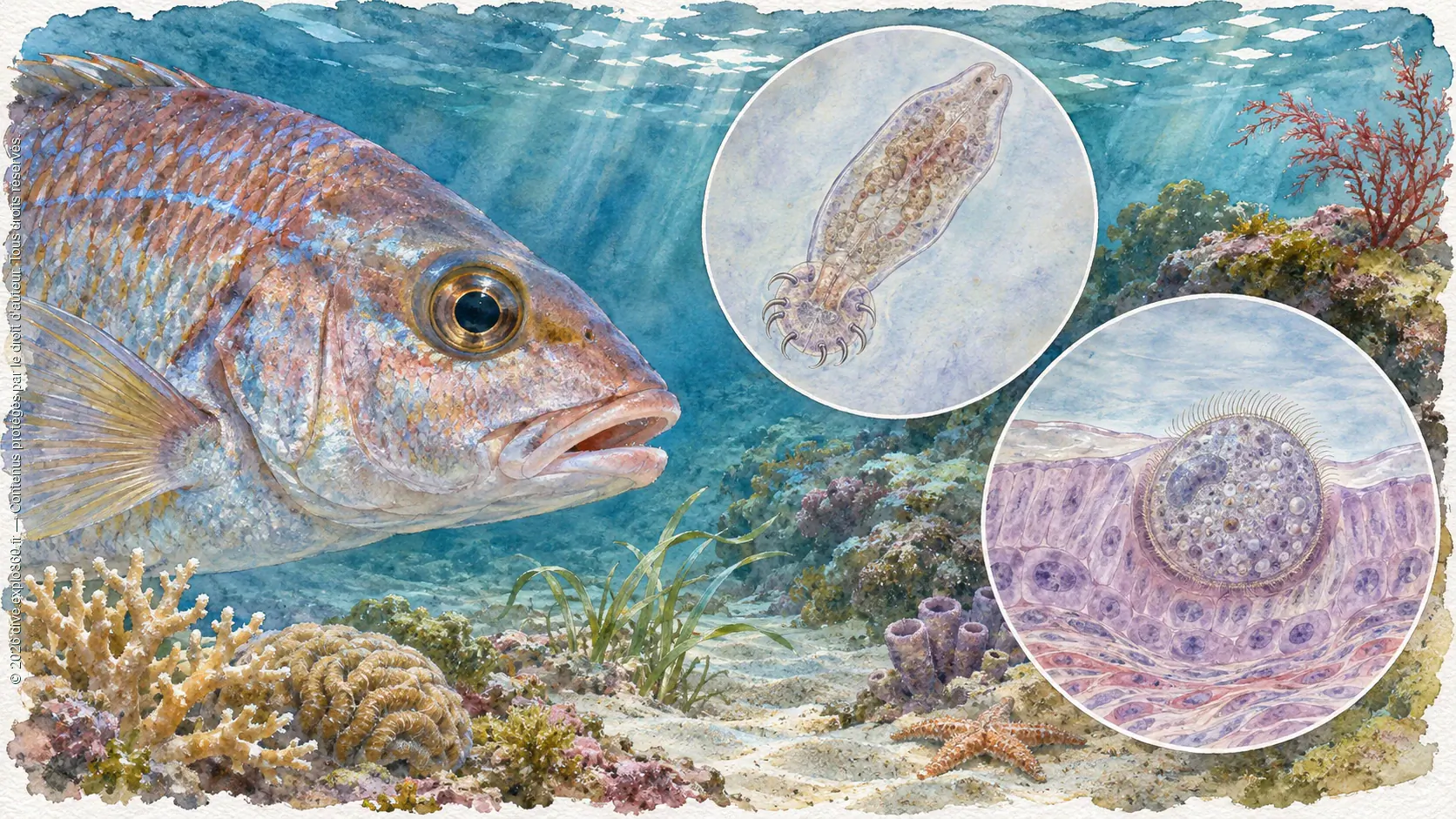
Monogeneans are small flatworms living on skin or gills. They generally possess an attachment organ equipped with hooks or clamps.
Some species consume mucus and superficial cells; others feed on their host’s blood.
When numerous, they can cause substantial irritation and interfere with gill function.
Another parasite, Cryptocaryon irritans, is familiar to marine aquarists. This single-celled ciliate develops in superficial tissues and may produce small whitish spots.
Infected fish sometimes show repeated rubbing, excess mucus and breathing difficulties.
These signs are particularly well documented in aquaria and fish farms, where concentrated hosts can promote transmission.
Rubbing in response to irritation
Parasites are not required to trigger rubbing.
A superficial wound, inflammation, infection or chemical irritation can produce a similar response.
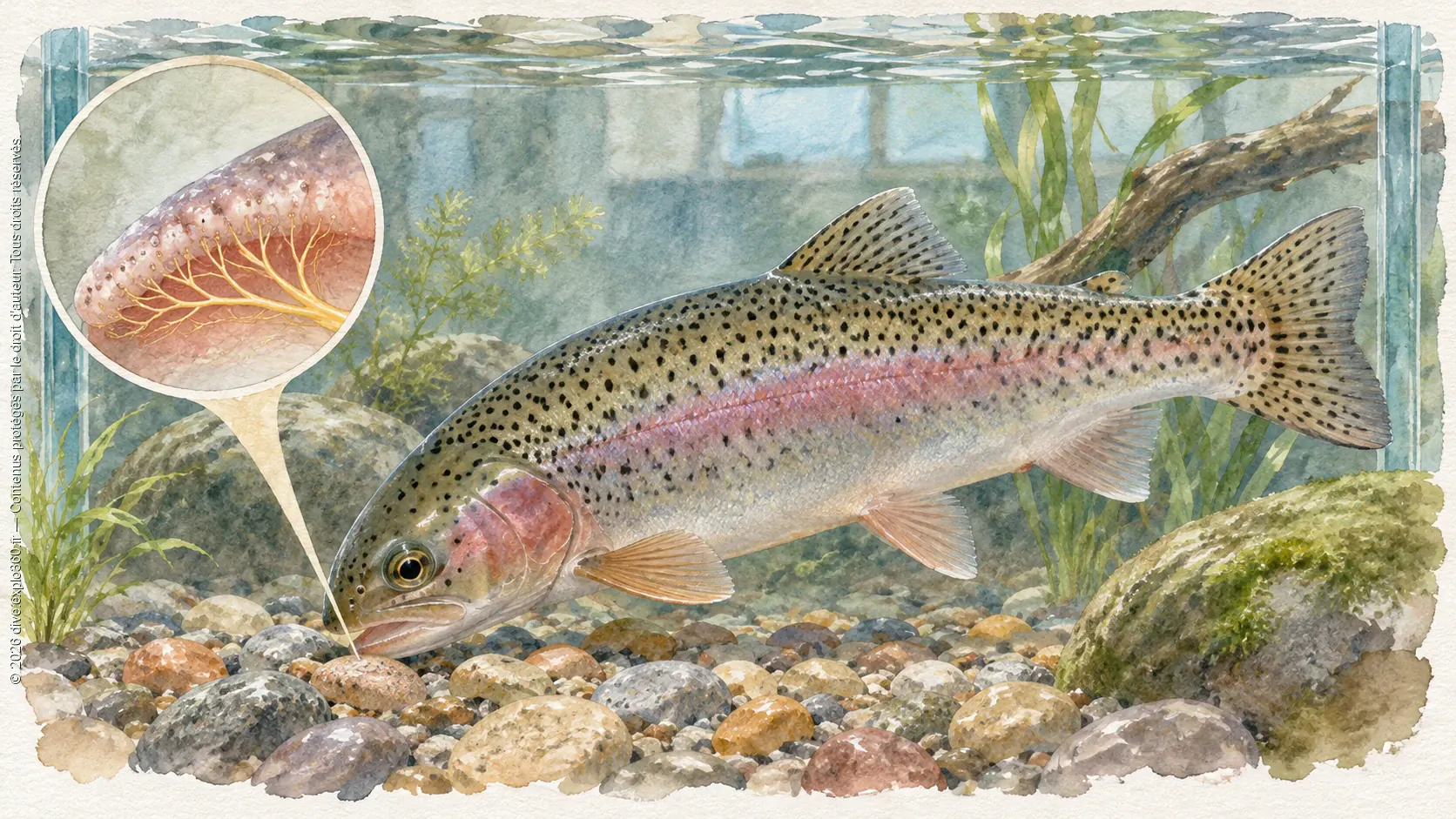
In 2003, researchers studying pain sensitivity in rainbow trout, Oncorhynchus mykiss, observed fish given an irritating substance at the lips rubbing their mouths against gravel or aquarium walls.
The behaviour targeted the affected region and continued after the initial stimulus.
The experiment shows that fish can use environmental surfaces in response to local irritation independently of parasites.
Does that amount to an itch like the one we feel after a mosquito bite? The exact sensation remains difficult to establish. Neural mechanisms specifically associated with itch in fish are less well understood than those involved in pain.
We can observe the response without identifying the sensation behind it with certainty.
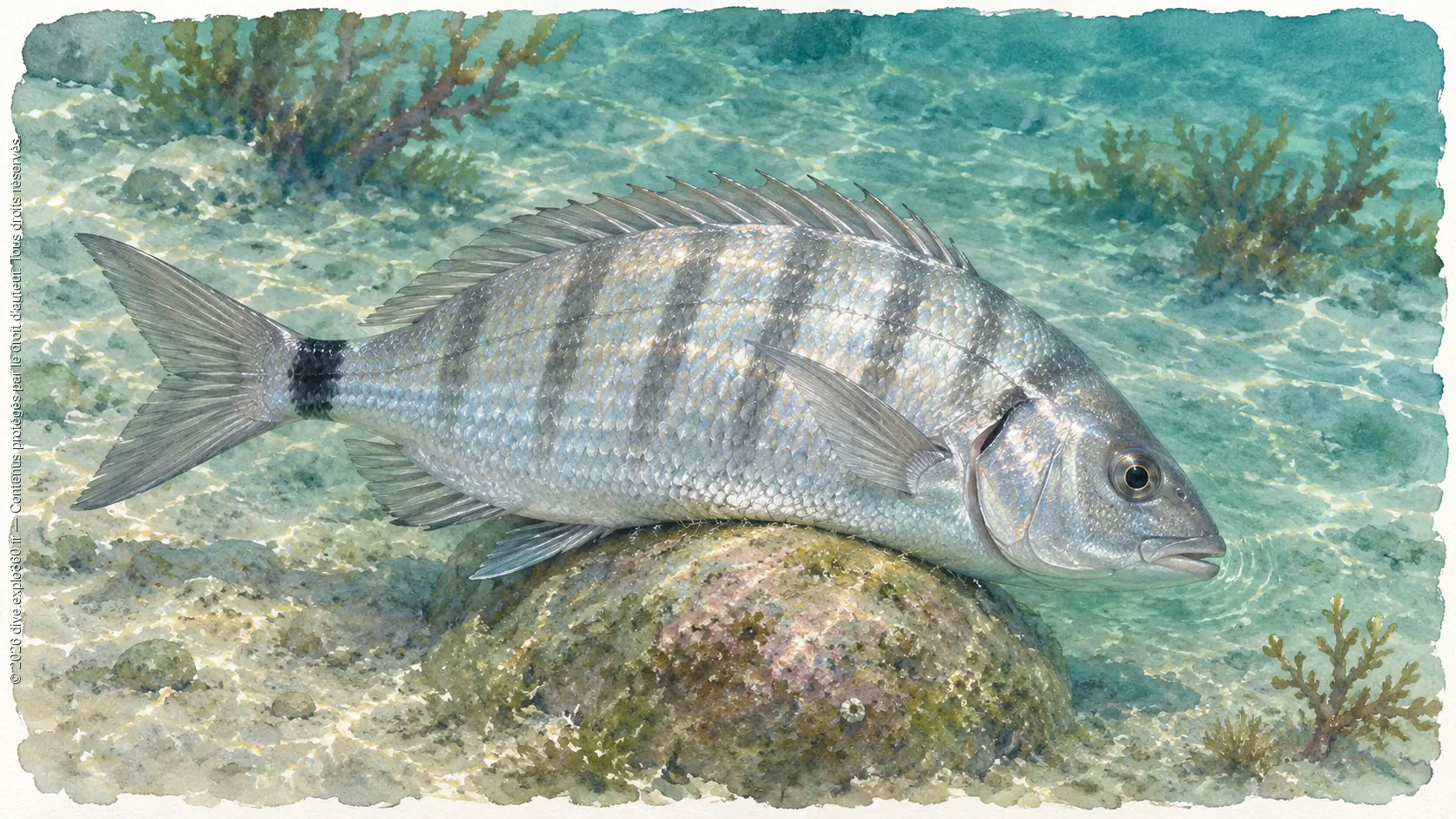
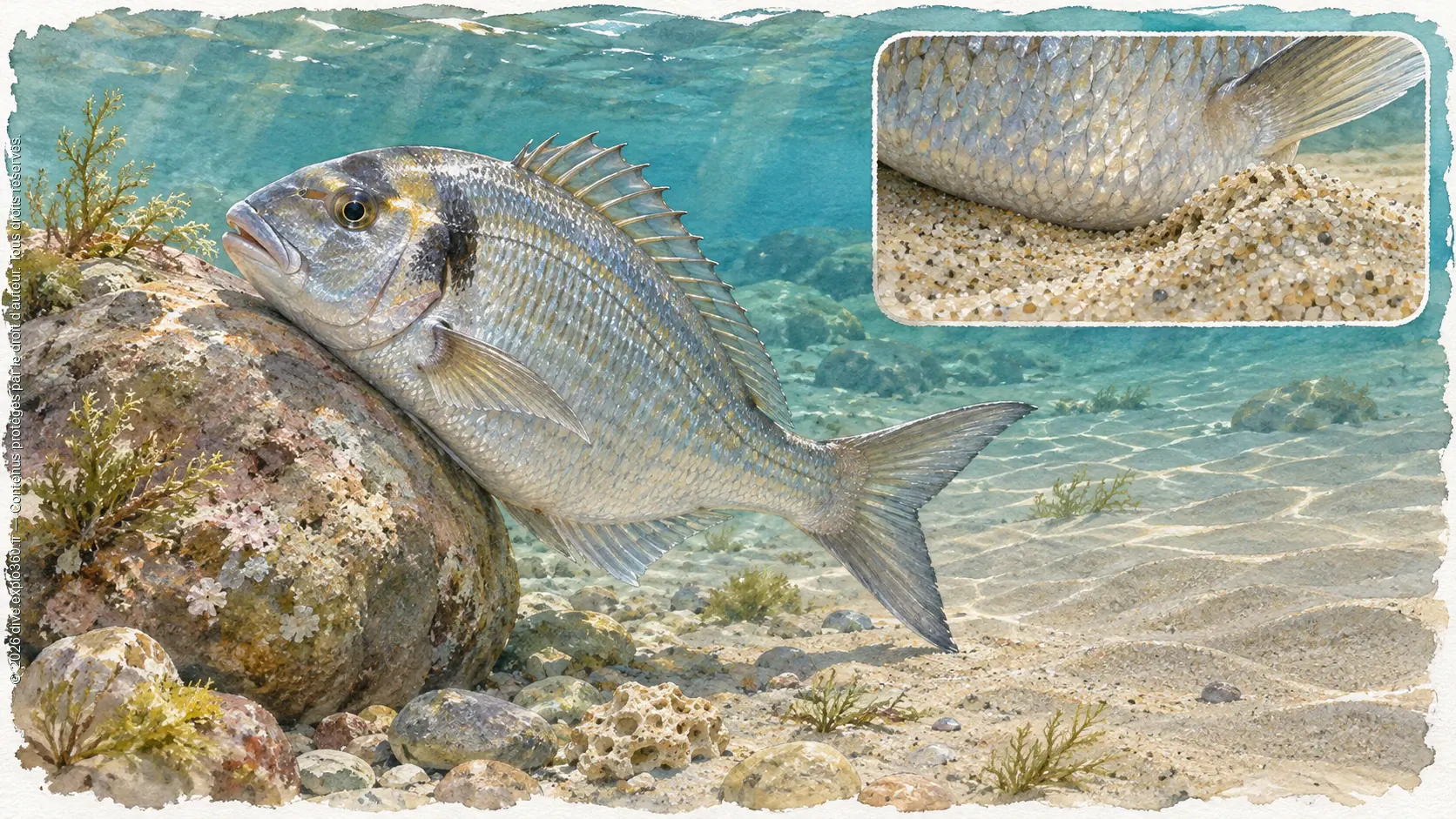
Why choose rock rather than sand?
Surfaces differ in their mechanical properties.
An irregular rock resists the fish’s movement. Its roughness may help detach particles or organisms on the skin.
Sand gives way under pressure, although its grains still provide an abrasive surface that some fish use.
Shape matters too. A rounded stone may contact the flank, whereas a rock edge may reach behind the gill cover.
The movement often combines acceleration with tilting or bending, bringing a particular body region against the substrate.
There is a drawback. Vigorous rubbing can damage the epidermis or remove protective mucus, potentially facilitating further infection.
The outcome therefore depends on both the surface used and the skin’s resilience.
GO FURTHER WITH AMIGANSEAU
Continue reading
Discover full species guides, in-depth content and interactive tools available with your licence.
Dive.Explo360 is an independent, self-funded nonprofit. Every licence helps us create new content, improve our teaching tools and keep some of our resources free and ad-free.
Choose a licence that suits your needs for personal, educational or professional use.
Open-access resources remain available without a subscription.